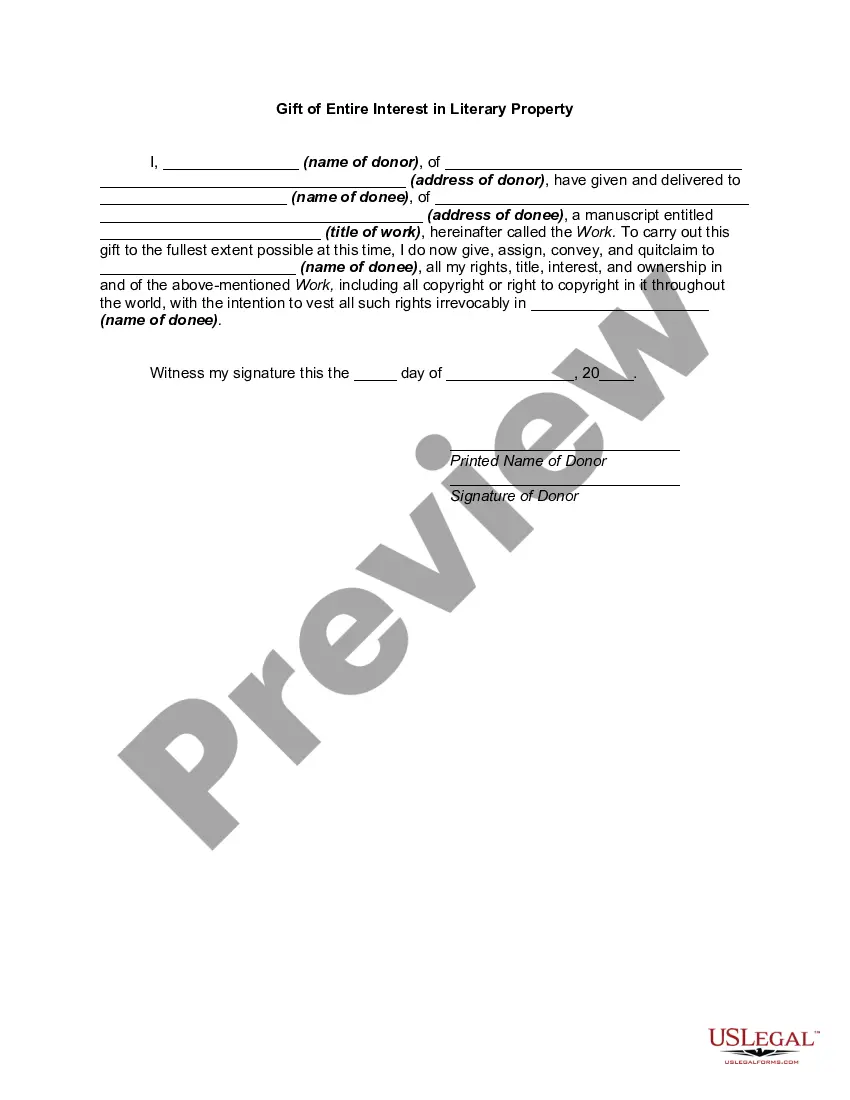
Literary Propert Trusts With The Future
Description
Get your form ready online
Our built-in tools help you complete, sign, share, and store your documents in one place.
Make edits, fill in missing information, and update formatting in US Legal Forms—just like you would in MS Word.
Download a copy, print it, send it by email, or mail it via USPS—whatever works best for your next step.
Sign and collect signatures with our SignNow integration. Send to multiple recipients, set reminders, and more. Go Premium to unlock E-Sign.
If this form requires notarization, complete it online through a secure video call—no need to meet a notary in person or wait for an appointment.
We protect your documents and personal data by following strict security and privacy standards.

Make edits, fill in missing information, and update formatting in US Legal Forms—just like you would in MS Word.

Download a copy, print it, send it by email, or mail it via USPS—whatever works best for your next step.

Sign and collect signatures with our SignNow integration. Send to multiple recipients, set reminders, and more. Go Premium to unlock E-Sign.

If this form requires notarization, complete it online through a secure video call—no need to meet a notary in person or wait for an appointment.

We protect your documents and personal data by following strict security and privacy standards.
Looking for another form?
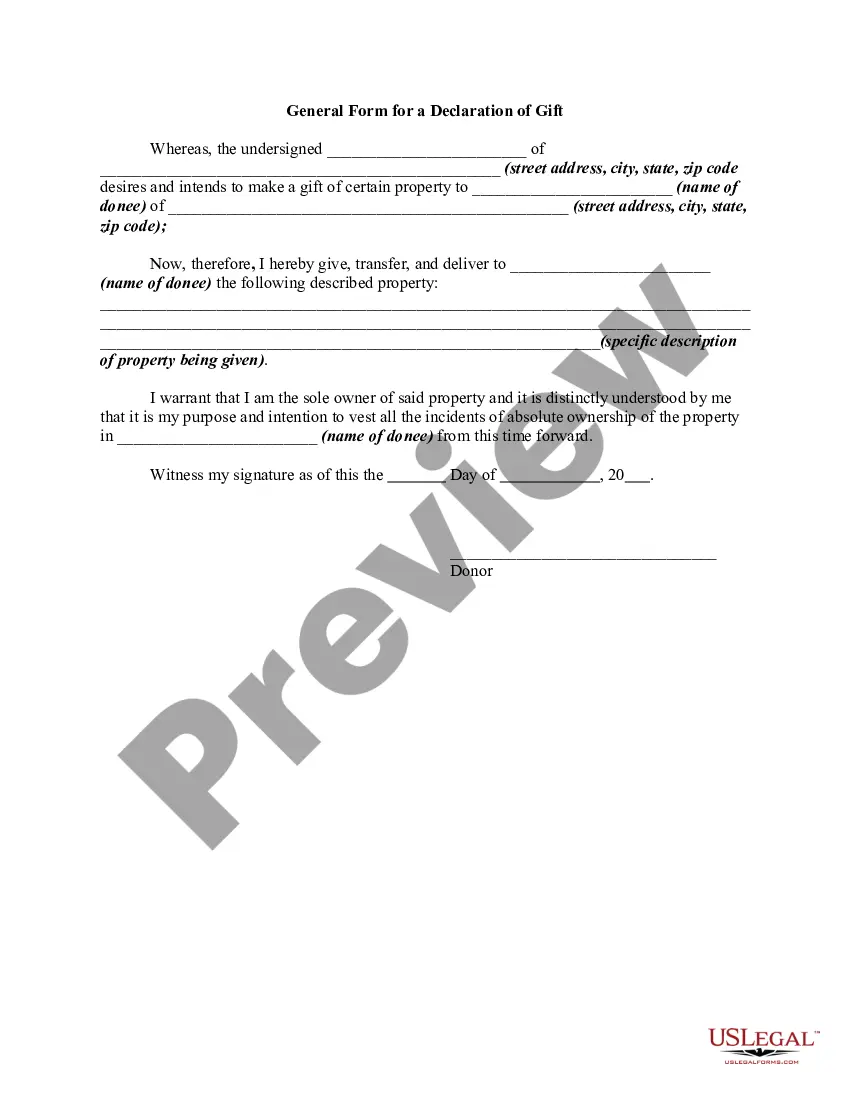
How to fill out Gift Of Entire Interest In Literary Property?
- For returning users, log in to your account and select the desired form template. Ensure that your subscription is current, and if it isn’t, renew it as needed.
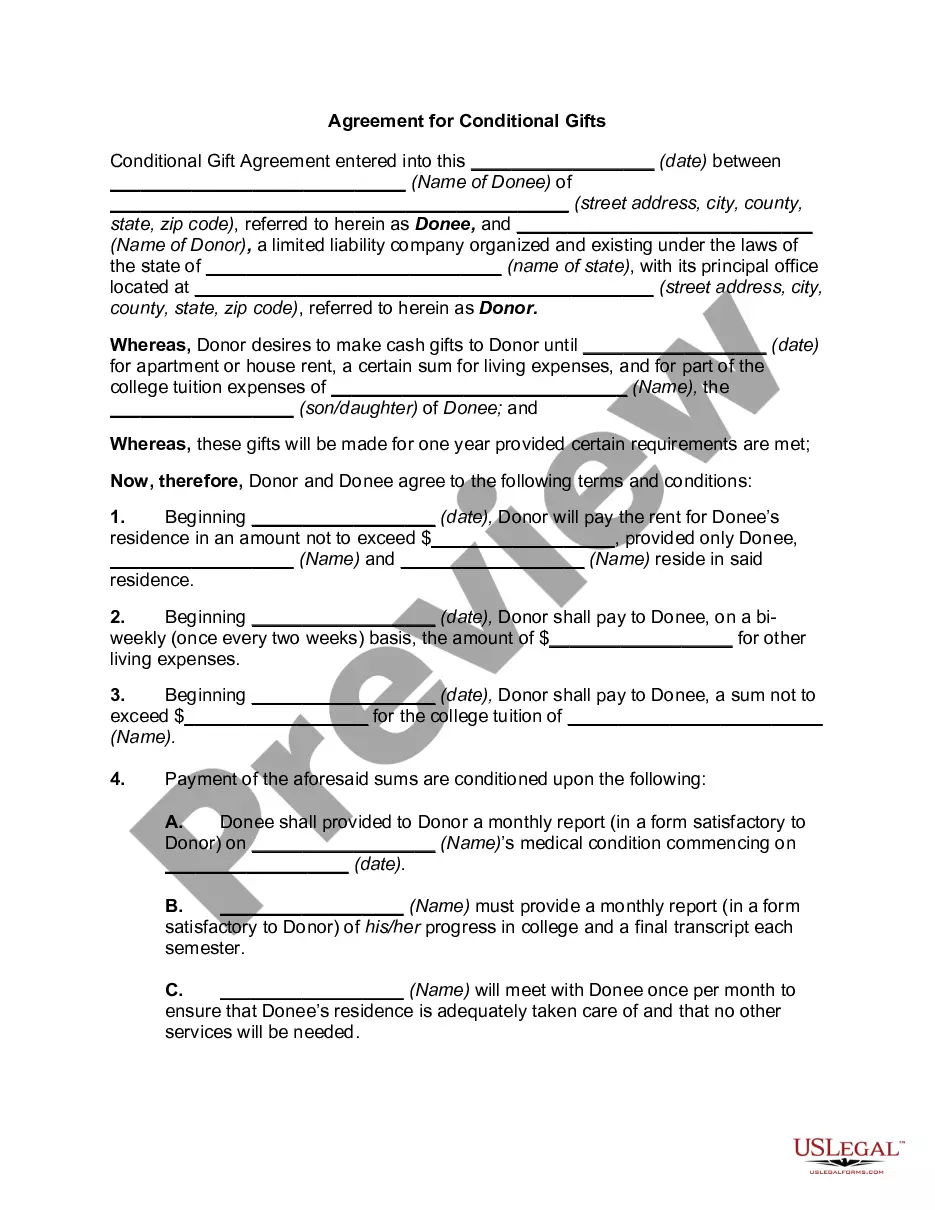
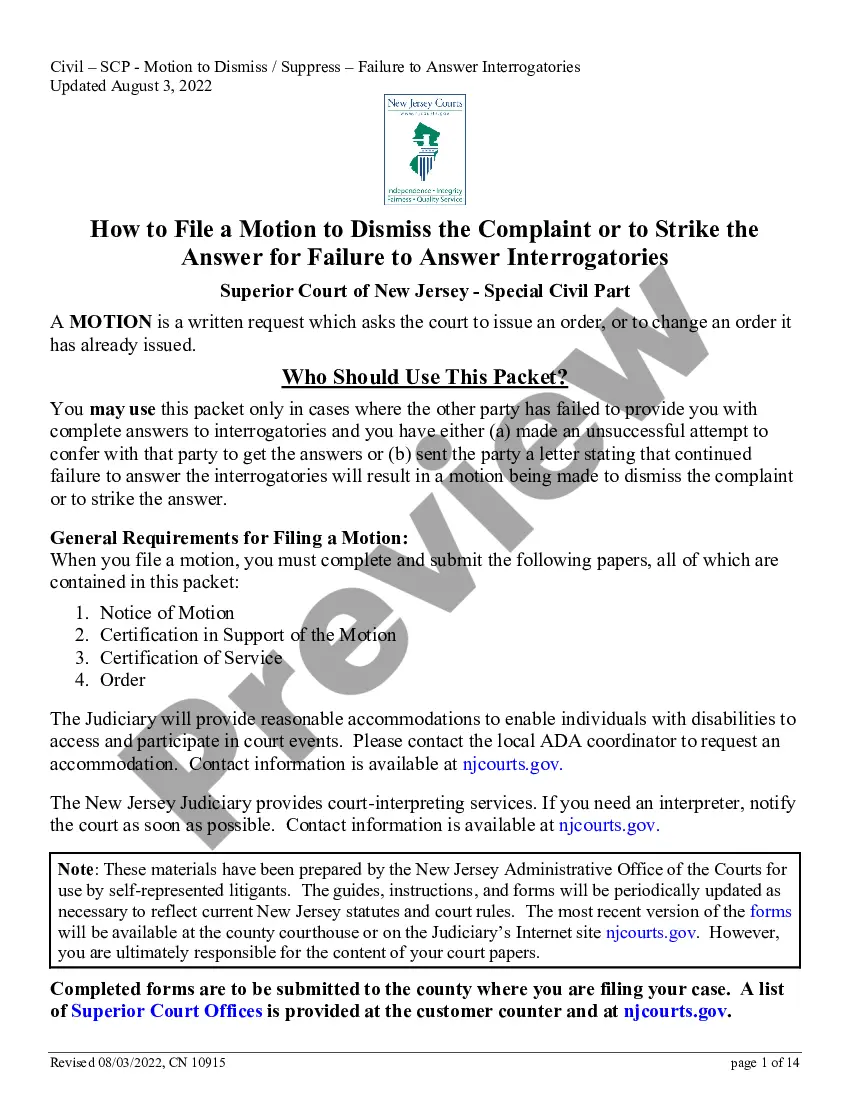
- If you're a new user, start by previewing the form descriptions and ensure you select one that meets your needs and complies with local laws.
- In case of discrepancies, utilize the Search tab to locate an alternate template that aligns with your requirements.
- Once you've selected the appropriate document, click the Buy Now button. Choose your preferred subscription plan to proceed.
- Complete your registration by providing payment details through credit card or PayPal to finalize your subscription.
- After your purchase, download the template to your device. Access it later under the My Forms section of your profile.
US Legal Forms is dedicated to empowering individuals and legal professionals alike by simplifying the document creation process. Their extensive collection of over 85,000 editable templates caters to a wide range of legal needs.
In conclusion, taking advantage of US Legal Forms can significantly streamline your document preparation. Don't hesitate—start your journey toward securing your literary property trusts with the future today!
Form popularity
FAQ
One of the most common mistakes parents make when setting up a trust fund is failing to clearly define their goals and the intended use of the funds. This can lead to confusion and misuse of the assets by beneficiaries. When establishing literary property trusts with the future, it is essential to communicate your vision and ensure all details are outlined effectively.
While trusts can be effective tools for managing your assets, they can come with drawbacks. Trusts require careful administration, which can be time-consuming and costly. Moreover, when establishing literary property trusts with the future, ensure you consider the legal implications and ongoing responsibilities involved.
Deciding whether to gift a house or place it in a trust depends on your financial circumstances and future goals. Gifting can simplify the process, while putting a house in a trust offers more control over the property. Exploring literary property trusts with the future can provide insights into managing assets that align with your objectives.
The 5 year rule for trusts generally refers to the look-back period for Medicaid and federal benefits eligibility. If an asset is transferred into a trust within five years before applying for such benefits, it may still be considered part of the individual’s estate. Understanding literary property trusts with the future, and their impact on eligibility, is crucial for effective estate planning.
While there are many advantages to putting property in trust, some disadvantages exist. Trusts can incur management fees and require detailed record-keeping, which can be cumbersome. When considering literary property trusts with the future, potential property owners should be aware of these costs and complexities.
Many wealthy individuals choose to place their homes in a trust to protect their assets from legal challenges and to simplify wealth transfer to heirs. This strategy helps to avoid estate taxes and ensures that their literary property trusts with the future are secured. By doing so, they maintain privacy and control over their significant investments.
Holding property in a trust offers several benefits, such as avoiding probate and providing privacy in estate management. However, it can come with challenges, like the initial setup costs and ongoing maintenance. Ultimately, when considering literary property trusts with the future, it is essential to weigh these factors against your long-term goals.
To create a valid trust, you need a sound mind to establish the trust, a clear intention to form it, ascertainable beneficiaries, lawful property, and a definitive trust purpose. Meeting these five requirements ensures your literary property trusts with the future are durable and enforceable. Adhering to these guidelines can help avoid future legal disputes and facilitate a smooth transition of your assets.
A literary executor is responsible for managing and distributing the literary estate of a deceased author according to their will. This role often involves overseeing the rights associated with the literary property trusts with the future, ensuring that the author's wishes regarding their works are honored. Choosing a knowledgeable executor can make the difference in how effectively these literary assets are managed.
Components of a trust include the trustor, trustee, beneficiaries, trust property, and the trust document. Each component works harmoniously to facilitate the management and distribution of your literary property trusts with the future. By understanding these components, you can better navigate the creation of trusts that align with your goals.