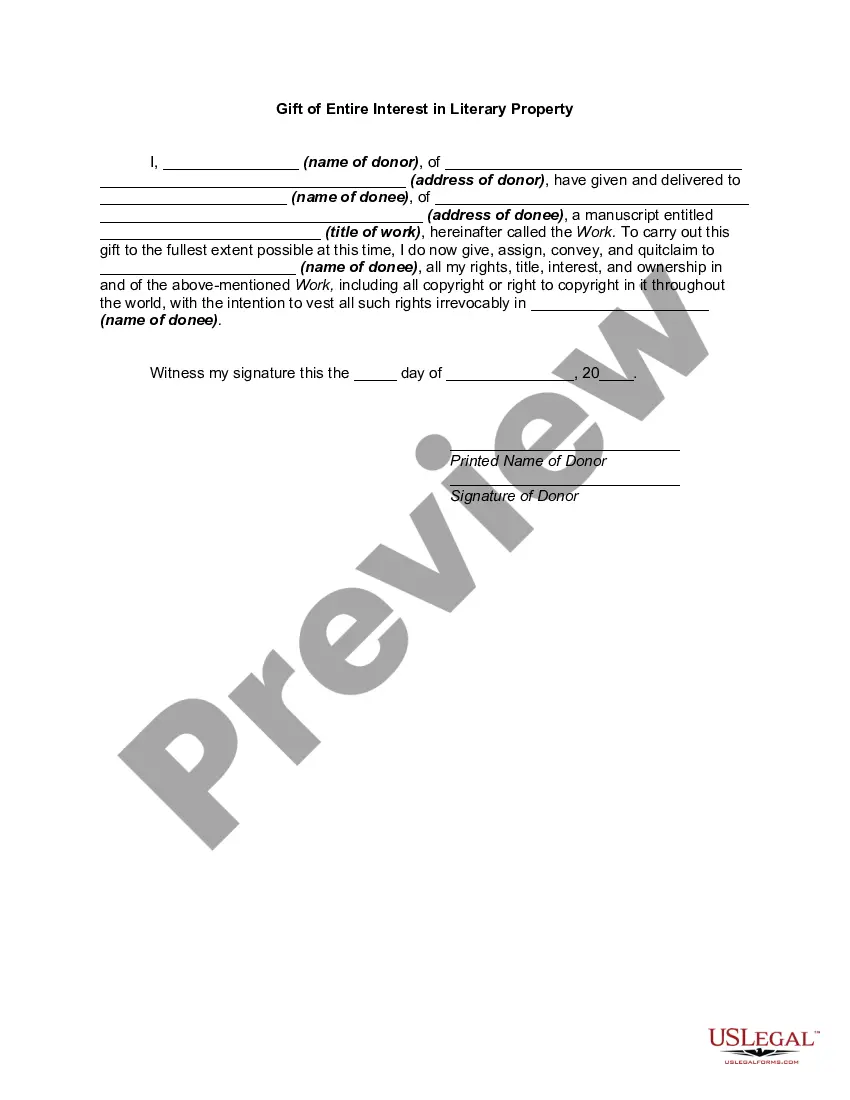
Gift Property Form For Tax Purposes
Description
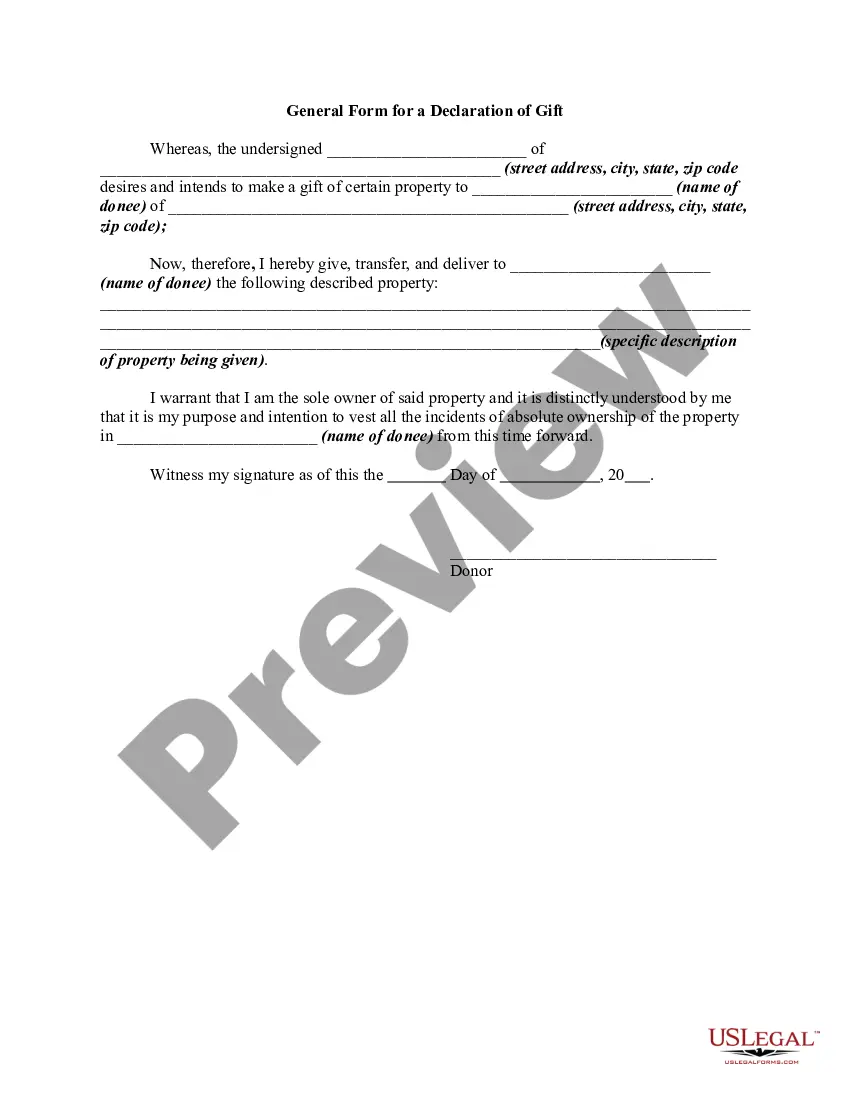
Get your form ready online
Our built-in tools help you complete, sign, share, and store your documents in one place.
Make edits, fill in missing information, and update formatting in US Legal Forms—just like you would in MS Word.
Download a copy, print it, send it by email, or mail it via USPS—whatever works best for your next step.
Sign and collect signatures with our SignNow integration. Send to multiple recipients, set reminders, and more. Go Premium to unlock E-Sign.
If this form requires notarization, complete it online through a secure video call—no need to meet a notary in person or wait for an appointment.
We protect your documents and personal data by following strict security and privacy standards.

Make edits, fill in missing information, and update formatting in US Legal Forms—just like you would in MS Word.

Download a copy, print it, send it by email, or mail it via USPS—whatever works best for your next step.

Sign and collect signatures with our SignNow integration. Send to multiple recipients, set reminders, and more. Go Premium to unlock E-Sign.

If this form requires notarization, complete it online through a secure video call—no need to meet a notary in person or wait for an appointment.

We protect your documents and personal data by following strict security and privacy standards.
Looking for another form?
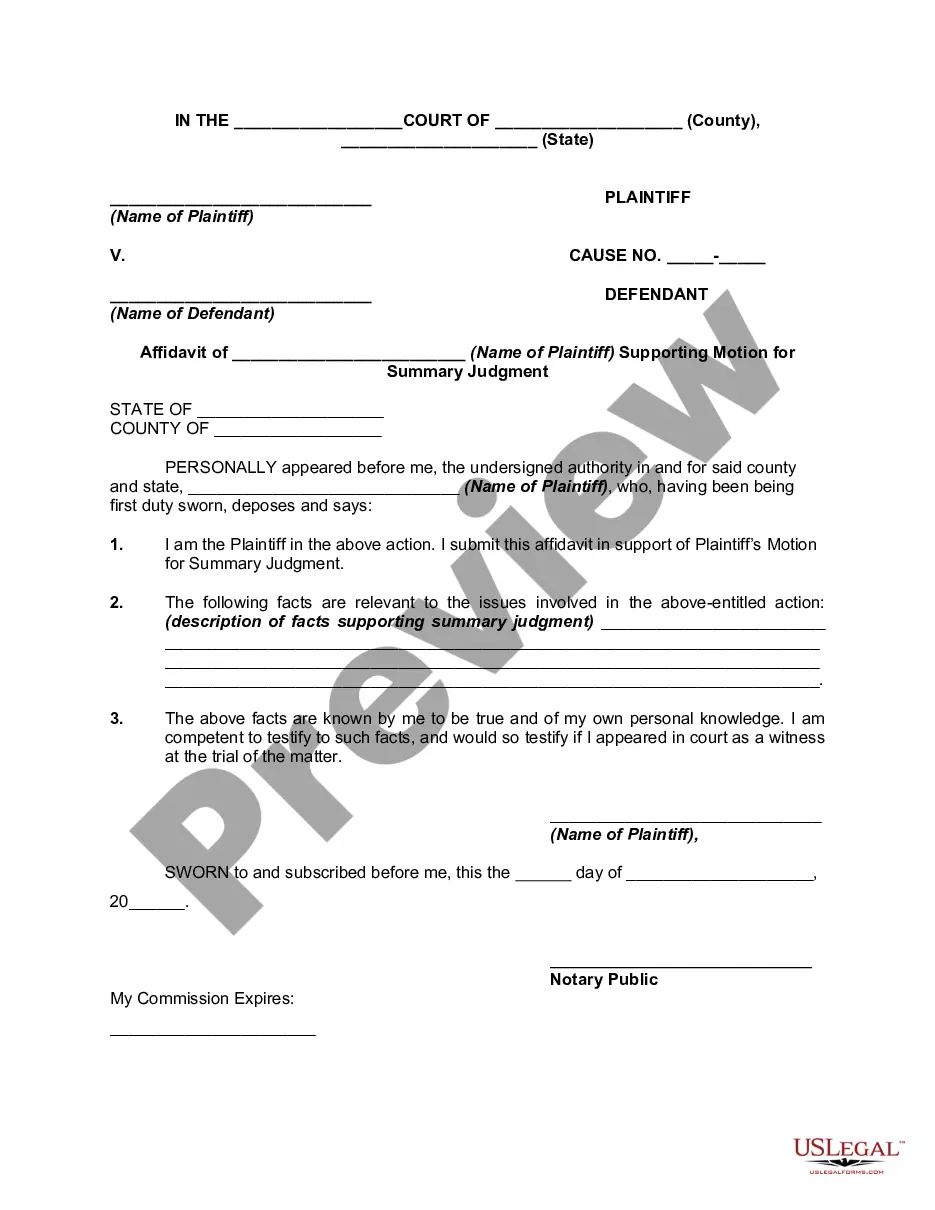
How to fill out Gift Of Entire Interest In Literary Property?
Managing legal documents can be exasperating, even for experienced professionals.
If you are looking for a Gift Property Form For Tax Purposes and lack the time to search for the correct and current version, the process can be challenging.
Leverage advanced tools to complete and oversee your Gift Property Form For Tax Purposes.
Gain access to a knowledge base filled with articles, guidelines, and materials pertinent to your circumstances and requirements.
Ensure this is the appropriate form by reviewing it and checking its details.
- Conserve time and energy by utilizing US Legal Forms' sophisticated search and Preview feature to locate and obtain the Gift Property Form For Tax Purposes.
- If you currently hold a subscription, sign in to your US Legal Forms account, find the form, and retrieve it.
- Visit the My documents section to review the documents you have previously acquired and to organize your folders as desired.
- If it is your initial encounter with US Legal Forms, create an account and enjoy unlimited access to all features of the platform.
- Here are the steps to follow once you've accessed the form you require.
- Utilize a powerful online form library to revolutionize how you handle these cases efficiently.
- US Legal Forms stands as a top provider of digital legal documents, boasting over 85,000 state-specific legal forms available at any given time.
- Take advantage of US Legal Forms to cater to your needs comprehensively from personal to business paperwork, all conveniently located in one place.
Form popularity
FAQ
When you gift property, the IRS considers it a transfer of wealth, which may have tax implications. Generally, the person giving the gift is responsible for any taxes owed, not the recipient. By using a gift property form for tax purposes, you can properly report the transaction and ensure compliance with tax laws. It's important to understand the annual exclusion limit and lifetime gift tax exemption, as these can affect the overall taxation of your gifted property.
Form 709 is required if you gave gifts exceeding the annual exclusion amount to any individual in a given tax year. It documents taxable gifts and is essential for reporting purposes. If you engage in gifting for tax purposes, knowing when to file this form can help you manage your tax liability effectively.
Form 1041 is used to report income for estates and trusts, while Form 706 is specifically for reporting the federal estate tax. If you are handling an estate, you might need to use both forms. Understanding these differences is crucial for fulfilling gift property form for tax purposes correctly.
When a property is gifted, ownership transfers from the donor to the recipient without a sale. This process usually triggers the requirement to file a gift property form for tax purposes. The recipient may not be liable for taxes immediately, but they should be aware of future capital gains taxes if they decide to sell the property. Understanding these implications is crucial for both parties involved.
The individual who makes the gift, known as the donor, is responsible for filling out the gift tax form. This person provides details about the gift and ensures it aligns with IRS guidelines. Using a gift property form for tax purposes, like Form 709, helps keep your records straight and avoids issues with tax compliance. It is advisable to seek assistance if you have complex gift transactions.
Form 709 and Form 706 cater to different aspects of taxation. Form 709 is used for reporting gifts during your lifetime, functioning as a gift property form for tax purposes. On the other hand, Form 706 is the estate tax return filed after a person's death. While Form 709 handles gift taxes, Form 706 focuses on calculating the estate's tax liability, making them distinct but related.
Taxes on gifted property depend on its value and the relationship between the donor and recipient. When you give property, the IRS allows an annual exclusion limit for gifts. If the property exceeds this limit, you may need to report it using a gift property form for tax purposes, such as Form 709. However, the recipient typically does not owe taxes unless they sell the property later.
The primary tax form for gifting property is Form 709, the United States Gift (and Generation-Skipping Transfer) Tax Return. This form acts as a gift property form for tax purposes, allowing you to report the value of gifts you made during the tax year. Completing Form 709 accurately will help avoid potential tax liabilities and ensure compliance with IRS regulations. Consider consulting professionals if you have questions about how to fill it out.
Yes, filing Form 709 may be necessary, particularly when your gifts exceed the annual exclusion limit. This form serves as a gift property form for tax purposes, reporting the total value of gifts you made in the year. Even if you do not owe tax, it is essential to file to keep accurate records with the IRS. Failing to file could lead to complications in future tax years.
To document a gift for tax purposes, you need to complete a gift property form for tax purposes. Start by providing details about the gift, including its value and the identities of both the giver and receiver. Keep copies of any relevant documents, such as appraisals and bank statements. This documentation helps when reporting to the IRS.