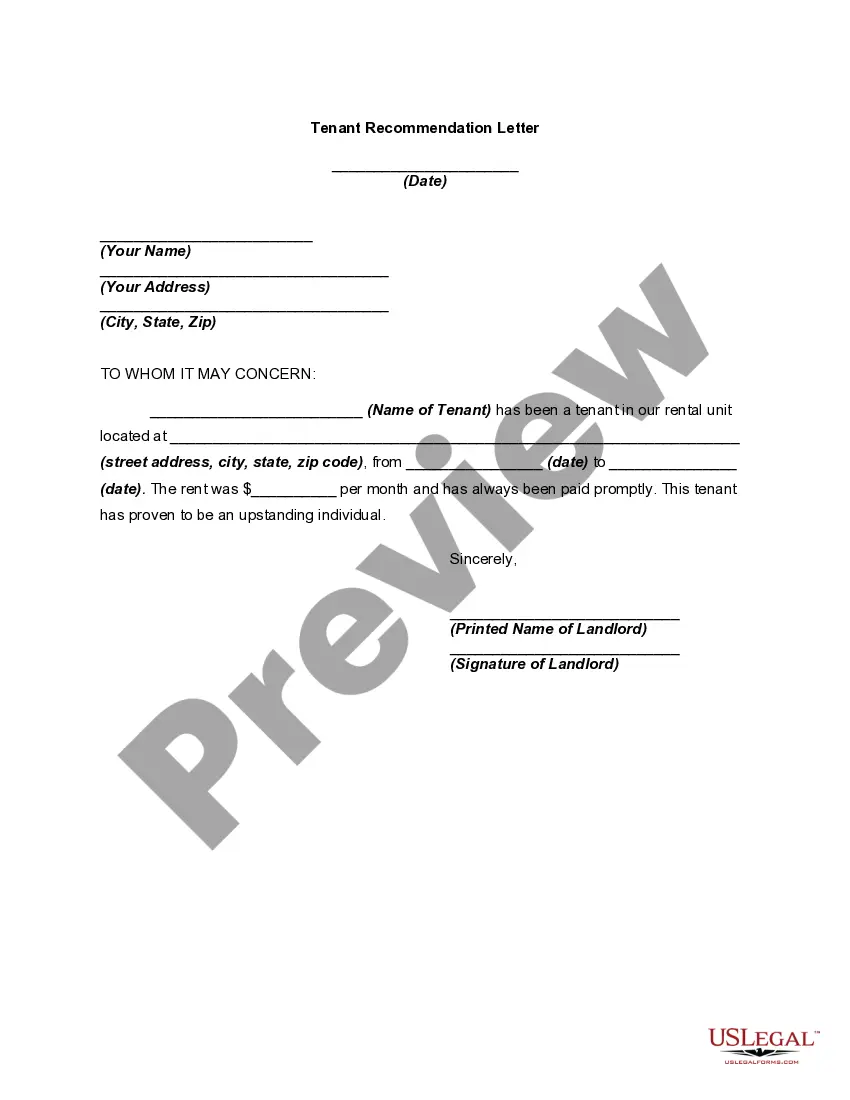
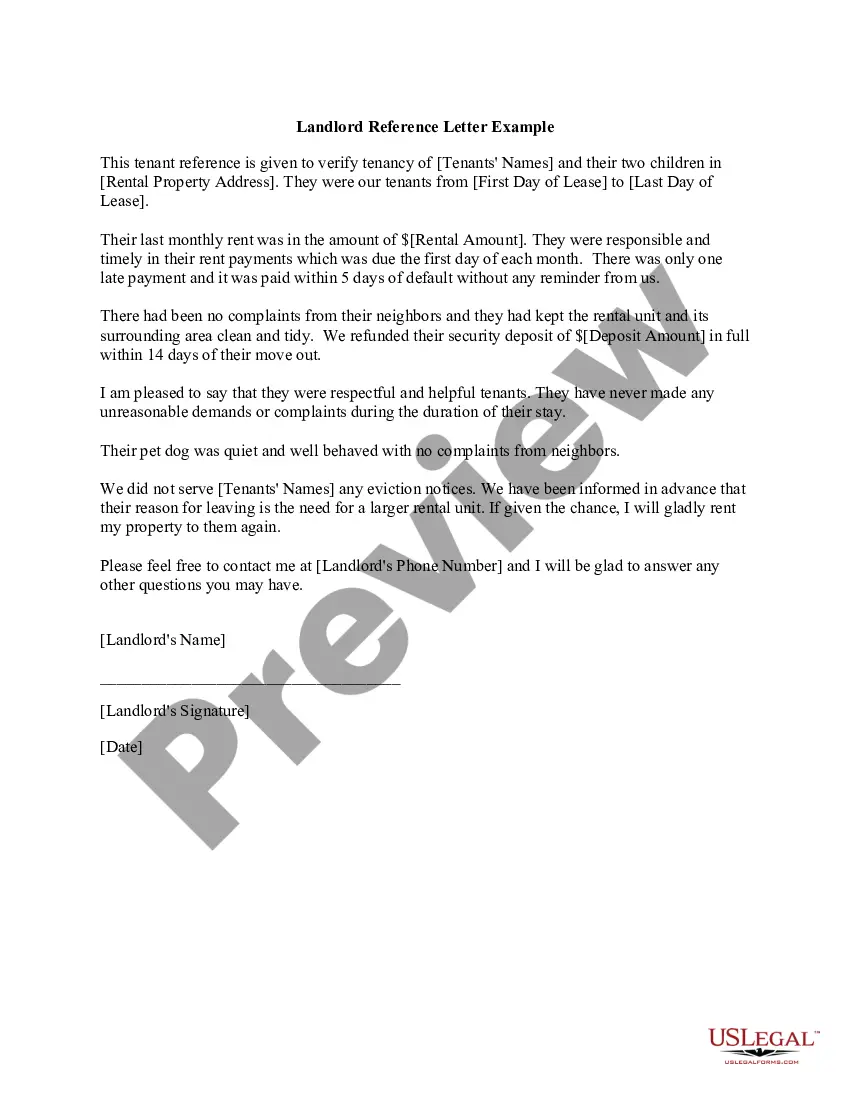
Tenant Reference Letter Example
Description
Get your form ready online
Our built-in tools help you complete, sign, share, and store your documents in one place.
Make edits, fill in missing information, and update formatting in US Legal Forms—just like you would in MS Word.
Download a copy, print it, send it by email, or mail it via USPS—whatever works best for your next step.
Sign and collect signatures with our SignNow integration. Send to multiple recipients, set reminders, and more. Go Premium to unlock E-Sign.
If this form requires notarization, complete it online through a secure video call—no need to meet a notary in person or wait for an appointment.
We protect your documents and personal data by following strict security and privacy standards.
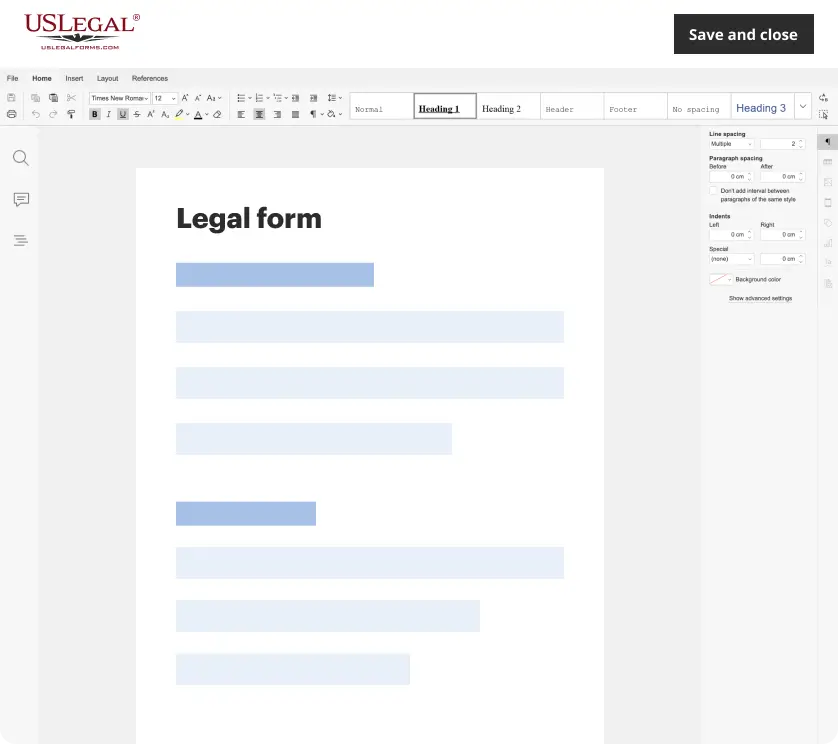
Make edits, fill in missing information, and update formatting in US Legal Forms—just like you would in MS Word.
Download a copy, print it, send it by email, or mail it via USPS—whatever works best for your next step.
Sign and collect signatures with our SignNow integration. Send to multiple recipients, set reminders, and more. Go Premium to unlock E-Sign.

If this form requires notarization, complete it online through a secure video call—no need to meet a notary in person or wait for an appointment.
We protect your documents and personal data by following strict security and privacy standards.
Looking for another form?


How to fill out Tenant Recommendation Letter?
Managing legal documents can be exasperating, even for the most talented professionals.
If you are looking for an example of a Tenant Reference Letter and don't have the time to search for the correct and updated version, the procedures can become overwhelming.
Through US Legal Forms, you are able to.
Access legal and business forms that are specific to your state or county. US Legal Forms meets all your needs, from personal to business documentation, all in one location.
If this is your first experience with US Legal Forms, create an account to gain unlimited access to all the platform's benefits. Here are the steps to follow after obtaining the document you need: Verify that it is the correct form by previewing it and reviewing its details.
- Employ sophisticated tools to complete and manage your Tenant Reference Letter Example.
- Utilize a valuable repository of articles, guidelines, manuals, and resources relevant to your circumstances and requirements.
- Conserve time and effort in sourcing the documents you require, utilizing US Legal Forms’ advanced search and Preview function to find the Tenant Reference Letter Example and obtain it.
- If you possess a subscription, Log In to your US Legal Forms account, search for the document, and retrieve it.
- Check your My documents section to examine the documents you've previously saved and organize your folders as desired.
- A robust online form directory could be a transformative solution for anyone wishing to navigate these scenarios efficiently.
- US Legal Forms stands as a frontrunner in the realm of online legal forms, offering over 85,000 state-specific legal documents available to you at any time.
Form popularity
FAQ
Superior Court filing fees ActionFeeFiling Fee (each plaintiff): Complaint, Third Party Complaint, Petition or Other Action, Motion to Intervene as Plaintiff (plus $20.00 security fee for each civil case (G.L.c. 262, § 4A) and a $15.00 surcharge (G.L.c. 262, § 4C))$240.00Filing Petition to County Commissioners$30.001 more row
The Superior Court has exclusive original jurisdiction of first-degree murder cases, and has original jurisdiction of all other crimes, civil actions over $50,000, matters where parties are seeking equitable relief, and actions including labor disputes where parties are seeking injunctive relief.
Small claims courts provide a simple, informal and inexpensive option for resolving cases where the claim is $7,000 or less. You may only bring a small claim in the court for the location where either the plaintiff or the defendant lives or has a place of business or employment.
The filing fee for small claims of $500 and under is $40. The filing fee for claims of $501 to $2000 is $50. The filing fee for claims of $2001 to $5000 is $100. The filing fee for claims of $5001 to $7000 is $150.
Pro se litigation follows the same procedural rules as other claims, without help from an attorney. The individual must first file an official complaint against the party he or she wants to sue. This occurs through the District Court Clerk's Office.
The thing to remember is that the Massachusetts statute of limitations is three years from the time the cause of action accrues. Most of the time you can forget the fancy words in the last sentence but remember three years from the time of the accident is the deadline in Massachusetts.
To sue someone in Massachusetts, you have to file a complaint with the clerk of the court. A complaint is not a specific form. It is a document that contains a short statement of the facts showing your claim and why you are entitled to relief and a demand for judgment granting that relief.