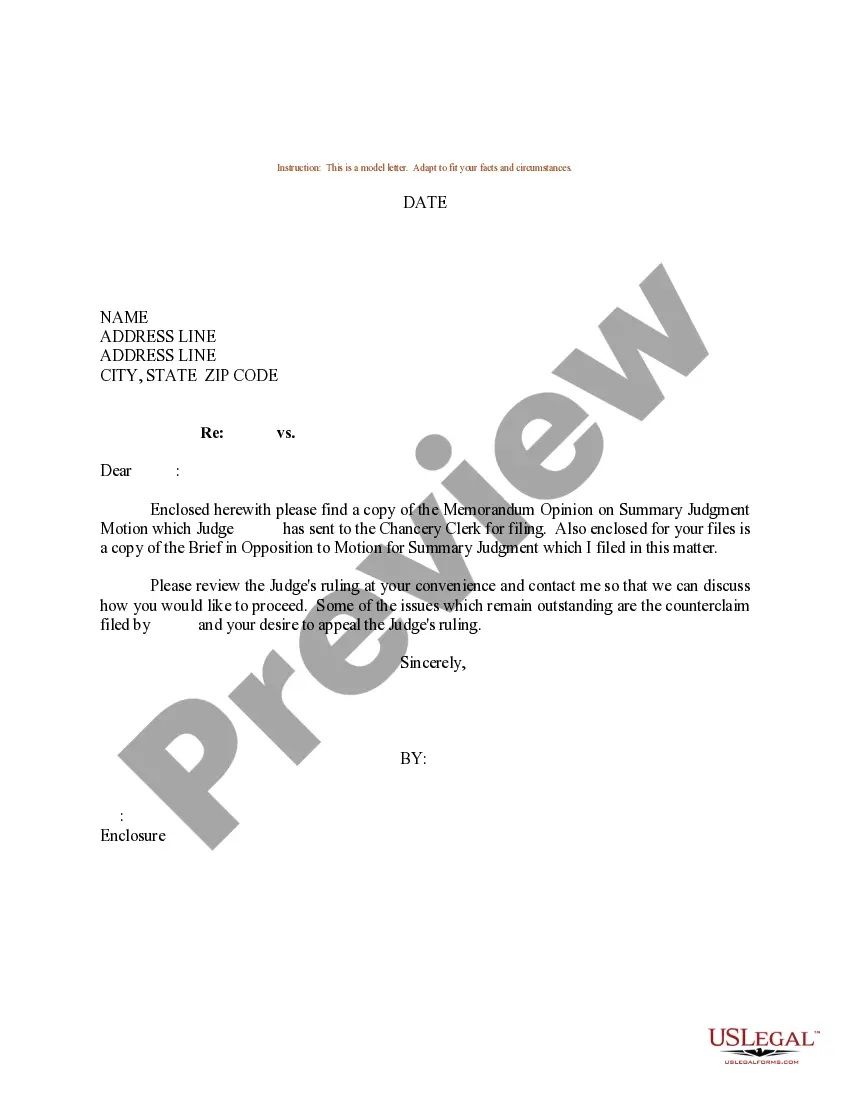
Plaintiff Summary Judgment Motion With Constant Acceleration
Description
Get your form ready online
Our built-in tools help you complete, sign, share, and store your documents in one place.
Make edits, fill in missing information, and update formatting in US Legal Forms—just like you would in MS Word.
Download a copy, print it, send it by email, or mail it via USPS—whatever works best for your next step.
Sign and collect signatures with our SignNow integration. Send to multiple recipients, set reminders, and more. Go Premium to unlock E-Sign.
If this form requires notarization, complete it online through a secure video call—no need to meet a notary in person or wait for an appointment.
We protect your documents and personal data by following strict security and privacy standards.

Make edits, fill in missing information, and update formatting in US Legal Forms—just like you would in MS Word.

Download a copy, print it, send it by email, or mail it via USPS—whatever works best for your next step.

Sign and collect signatures with our SignNow integration. Send to multiple recipients, set reminders, and more. Go Premium to unlock E-Sign.

If this form requires notarization, complete it online through a secure video call—no need to meet a notary in person or wait for an appointment.

We protect your documents and personal data by following strict security and privacy standards.
Looking for another form?
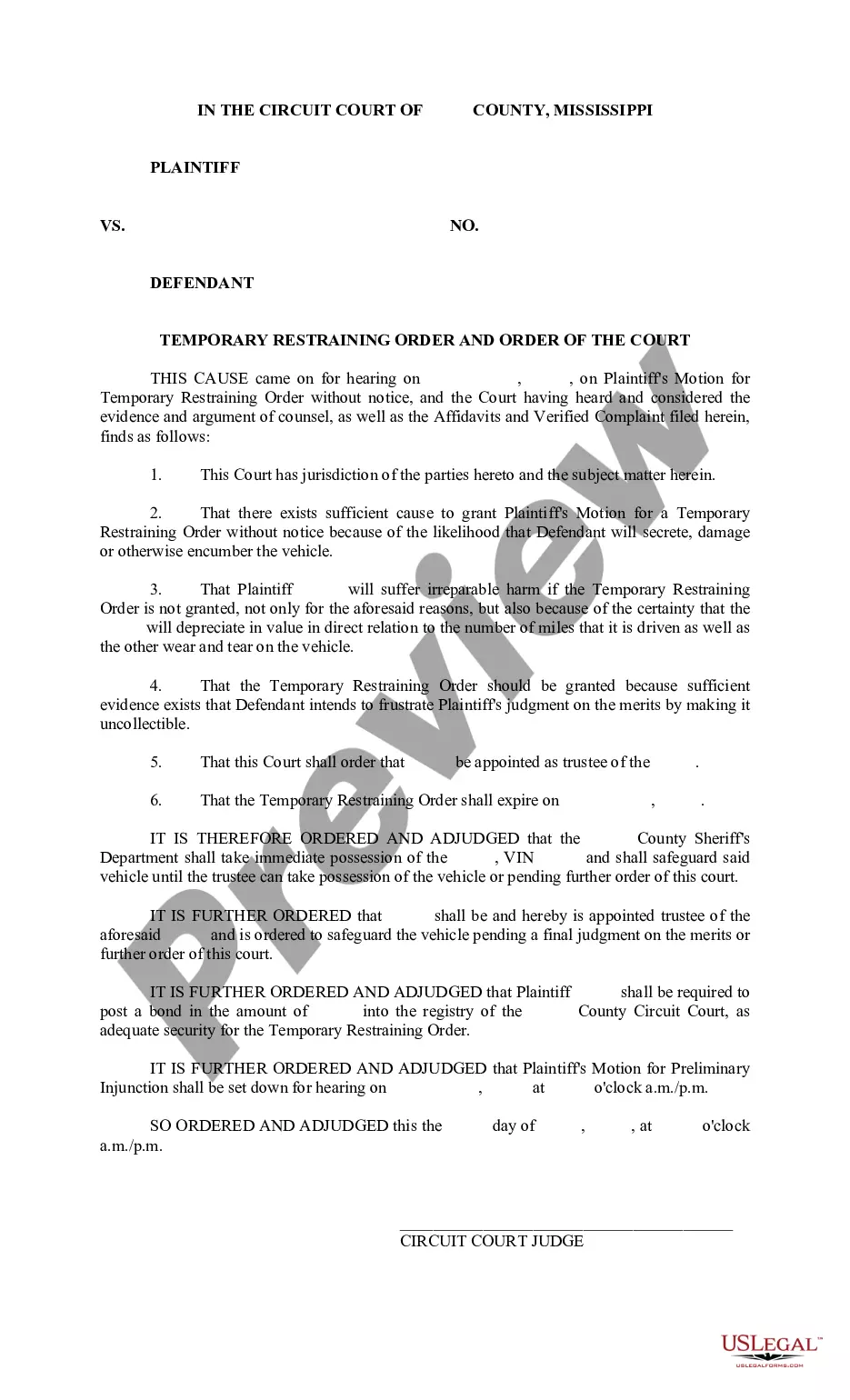






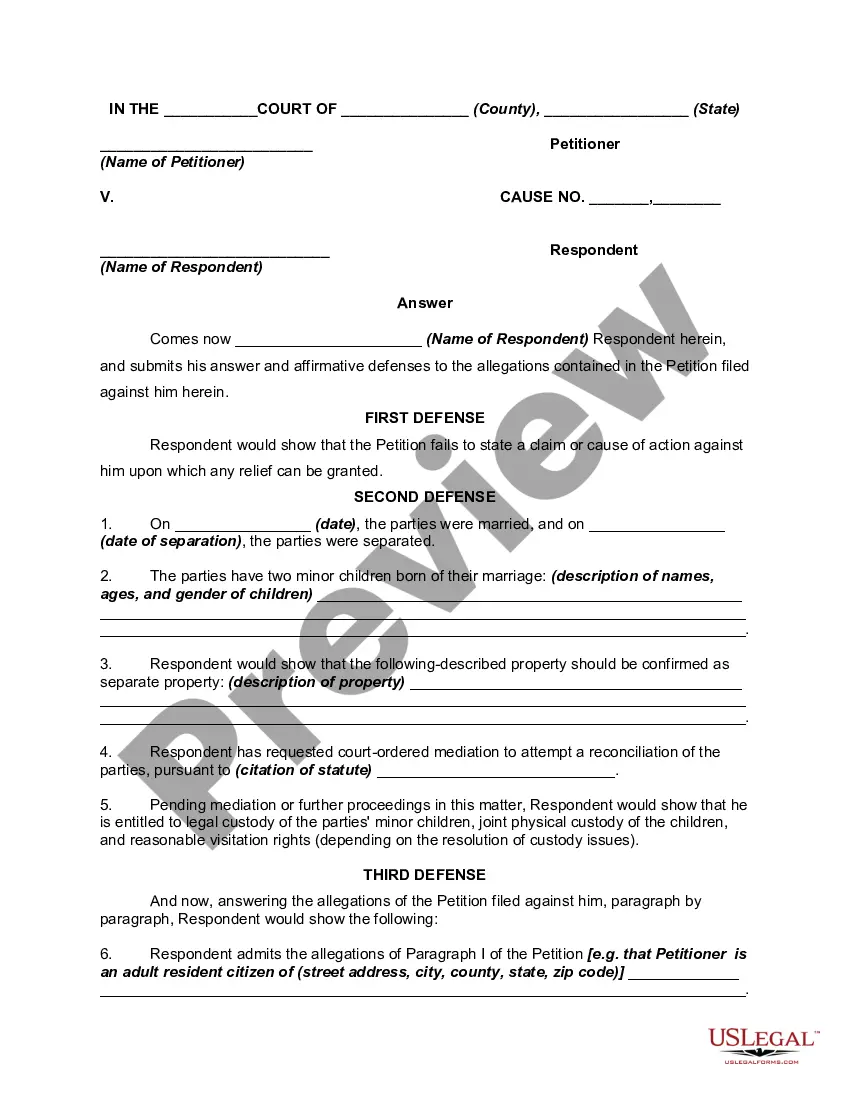
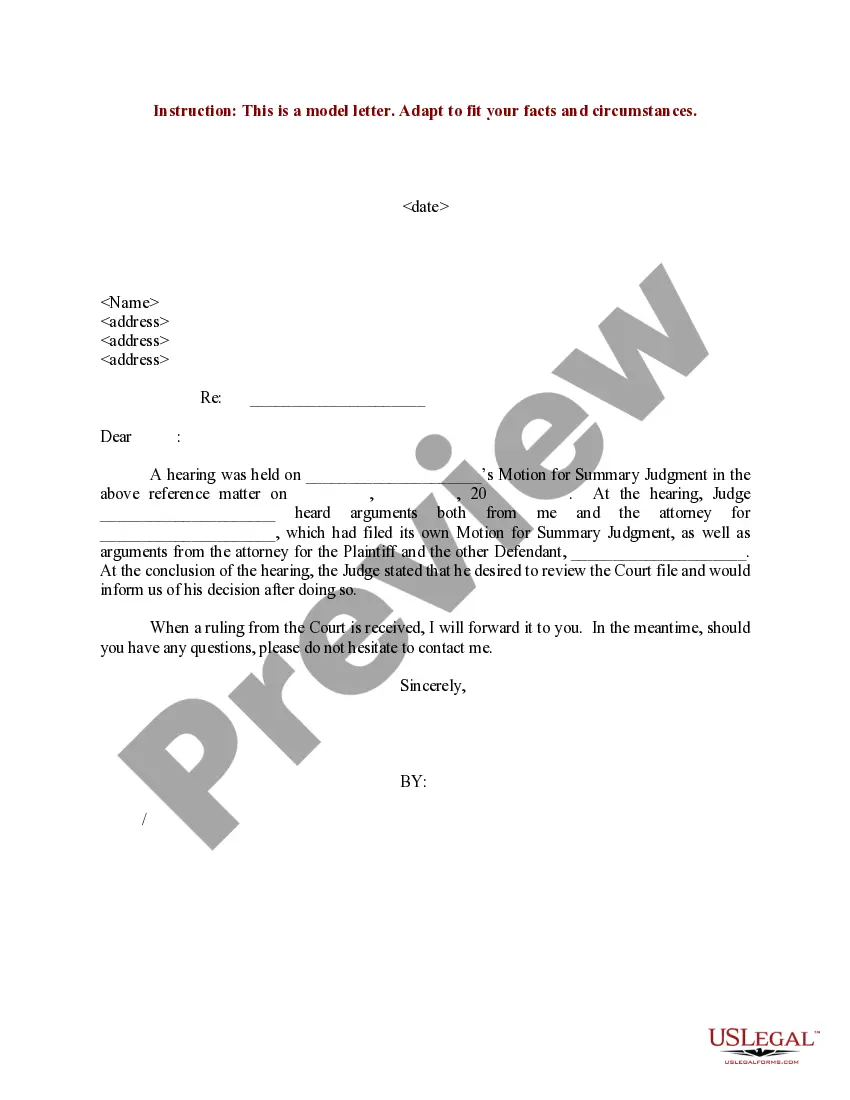
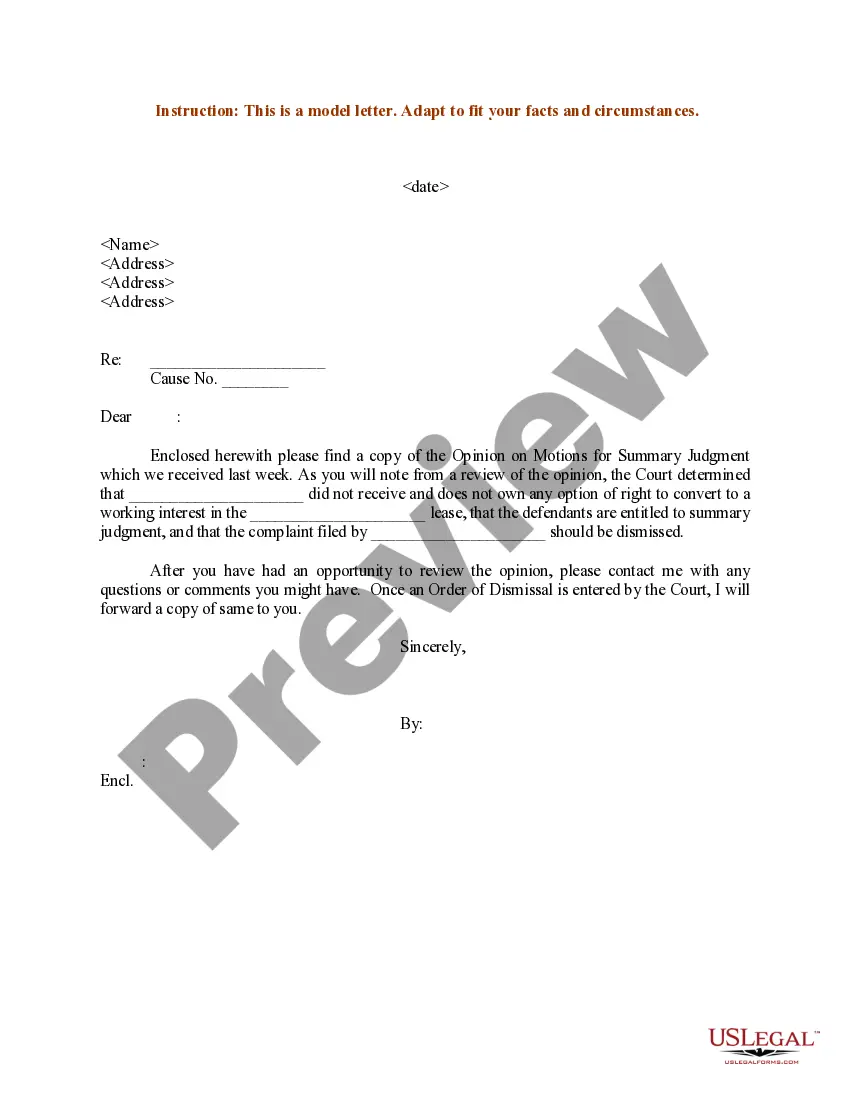
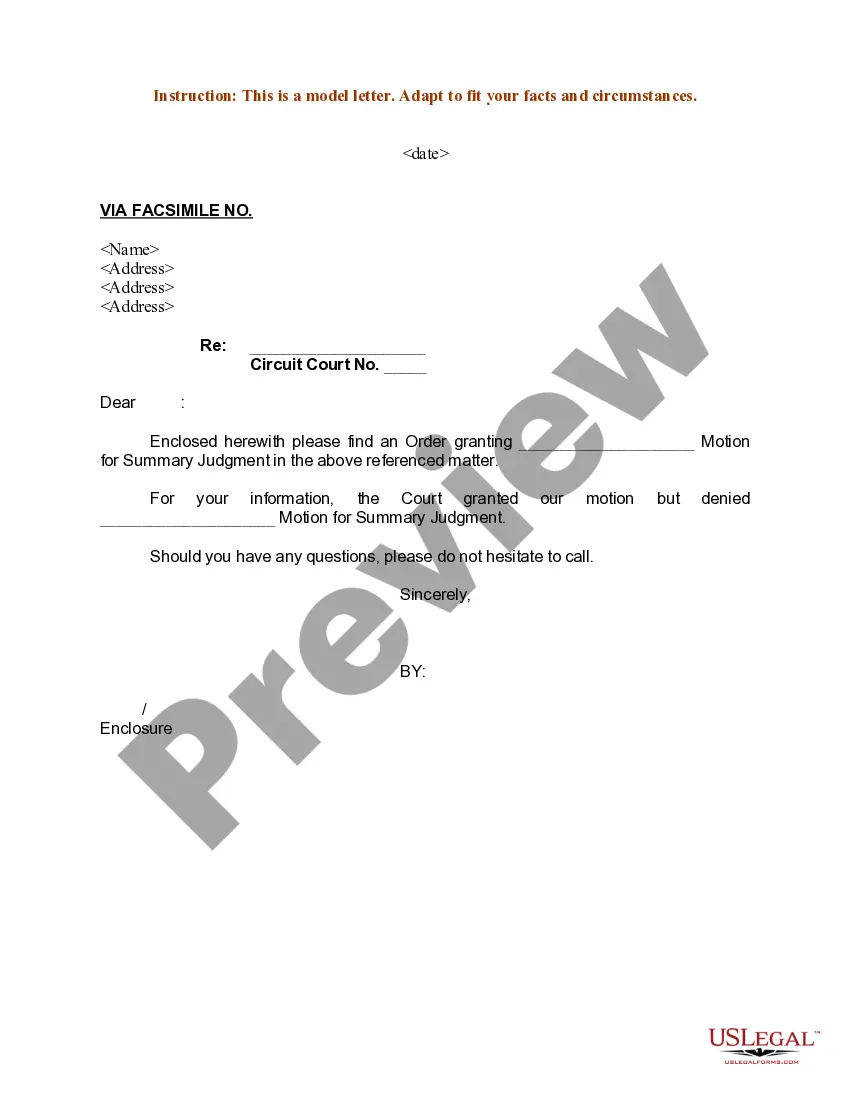
How to fill out Sample Letter Regarding Memorandum Opinion On Summary Judgment Motion?
Securing a reliable source for obtaining the most up-to-date and pertinent legal templates is half the battle when dealing with bureaucracy. Finding the appropriate legal documents demands precision and carefulness, which is why it is crucial to obtain samples of Plaintiff Summary Judgment Motion With Constant Acceleration solely from reputable providers, such as US Legal Forms. An incorrect template will squander your time and prolong your current situation. With US Legal Forms, you can rest easy. You can access and examine all the specifics regarding the document’s applicability and significance for your situation and in your state or county.
Consider the following steps to complete your Plaintiff Summary Judgment Motion With Constant Acceleration.
Once you have the form on your device, you may modify it with the editor or print it out and fill it in by hand. Eliminate the complications associated with your legal paperwork. Browse the extensive US Legal Forms collection to discover legal templates, assess their relevance to your situation, and download them immediately.
- Utilize the library navigation or search bar to locate your template.
- Review the form’s description to ensure it aligns with the requirements of your state and locality.
- Check the form preview, if available, to confirm the template is the one you need.
- Return to the search and look for the correct document if the Plaintiff Summary Judgment Motion With Constant Acceleration does not meet your needs.
- When you are certain about the form’s applicability, download it.
- If you are a registered user, click Log in to verify and access your selected templates in My documents.
- If you do not have an account yet, click Buy now to acquire the template.
- Select the pricing plan that meets your needs.
- Proceed to the registration to complete your purchase.
- Finalize your purchase by choosing a payment method (credit card or PayPal).
- Select the document format for downloading Plaintiff Summary Judgment Motion With Constant Acceleration.
Form popularity
FAQ
A plaintiff motion for summary judgment is a legal request made by the plaintiff to the court, seeking a ruling in their favor without a trial. This motion asserts that there is enough evidence to support their claims and that no disputes exist that would require further examination. When you file a plaintiff summary judgment motion with constant acceleration, you aim to expedite the legal process and achieve a favorable outcome more efficiently. Utilizing platforms like US Legal Forms can provide you with the necessary resources and templates to navigate this process effectively.
A summary judgment can be beneficial for both plaintiffs and defendants in a legal case. It allows for a quicker resolution by eliminating the need for a lengthy trial if the evidence is clear-cut. When a plaintiff files a summary judgment motion with constant acceleration, it strengthens their position by demonstrating that there are no genuine disputes regarding material facts. Therefore, understanding the implications of summary judgment can help you decide the best course of action.
Therefore, to win on summary judgment you have to convince a judge that it is a good use of his or her very limited time and resources to write the decision. This means that your written material has to demonstrate that the law and facts support summary judgment, and contain no misstatements of law or fact.
Show that the law does not support judgment on the undisputed facts. Your legal research may reveal case law that shows judgment isn't warranted in your case, even when no facts are in dispute. Show that discovery is incomplete and could raise a disputed material fact when completed.
In a summary judgment, one party may contend there are no facts that need to be decided, or the parties may agree on what the facts are. Either side (and sometimes both sides) may bring a motion for summary judgment arguing that they are entitled to a judgment in their favor without a trial.
The odds of winning a summary judgment, known as the grant rate, vary widely by case type. The most common grant of summary judgment is in Title VII and employment cases. These are granted in whole in 49.2% of cases, in part in 23.3% of cases, and denied in 27.5% of cases.
Stated differently, to successfully defend against summary judgment the non-moving party (you) should seek to demonstrate that indeed there are material facts in dispute. Alternatively, the non-moving party (you) can argue that the undisputed facts support a judgment as a matter of law in your favor.