Intestate Succession Explained With Pictures
Description
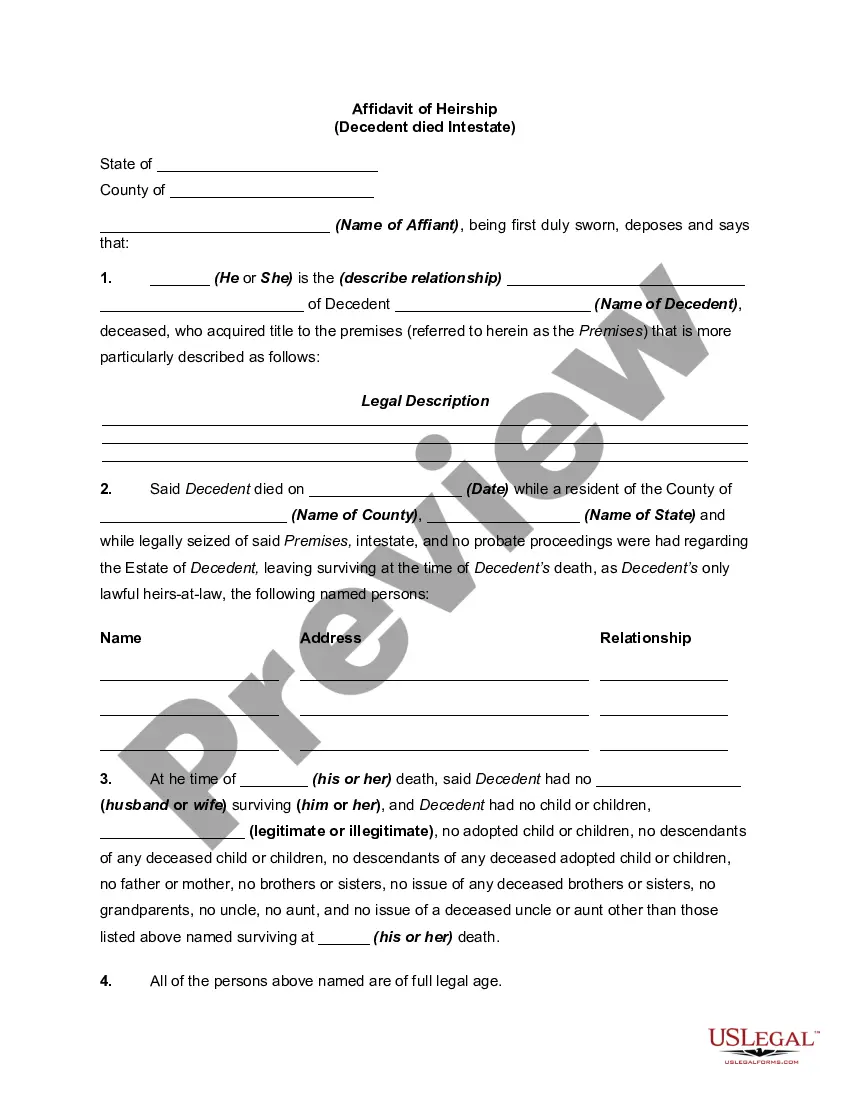
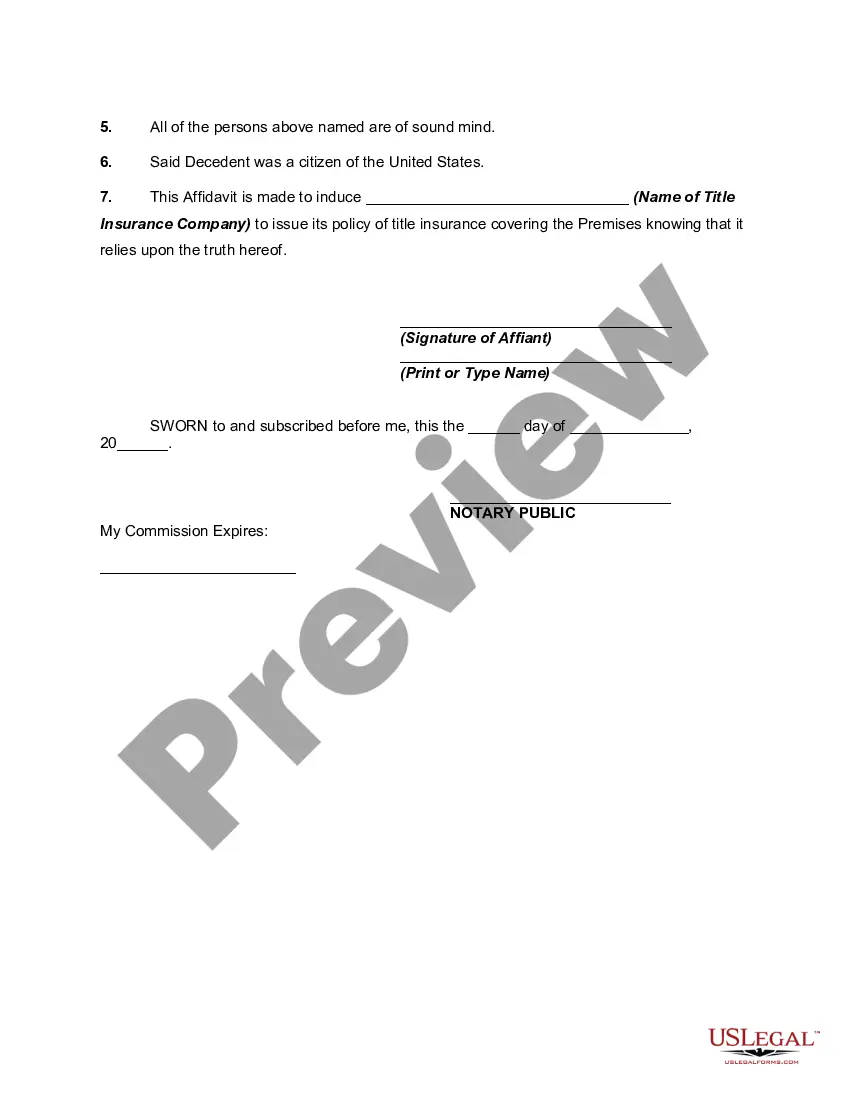
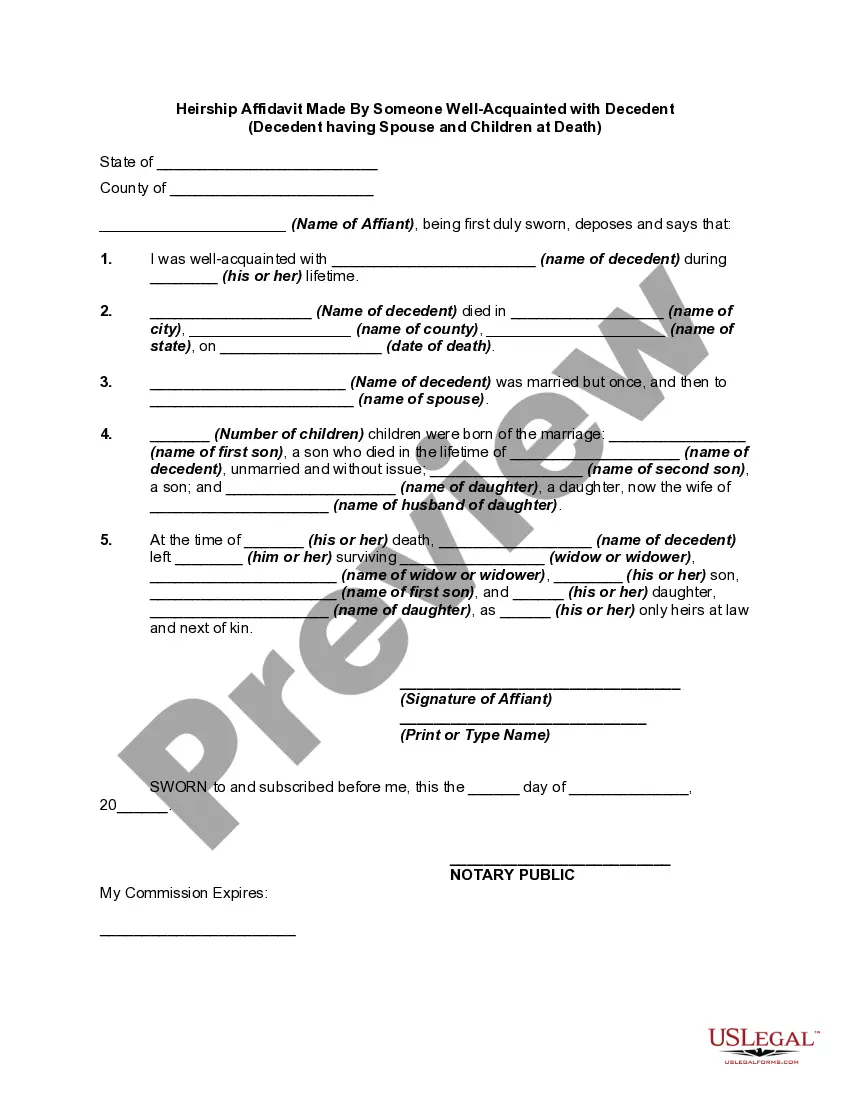
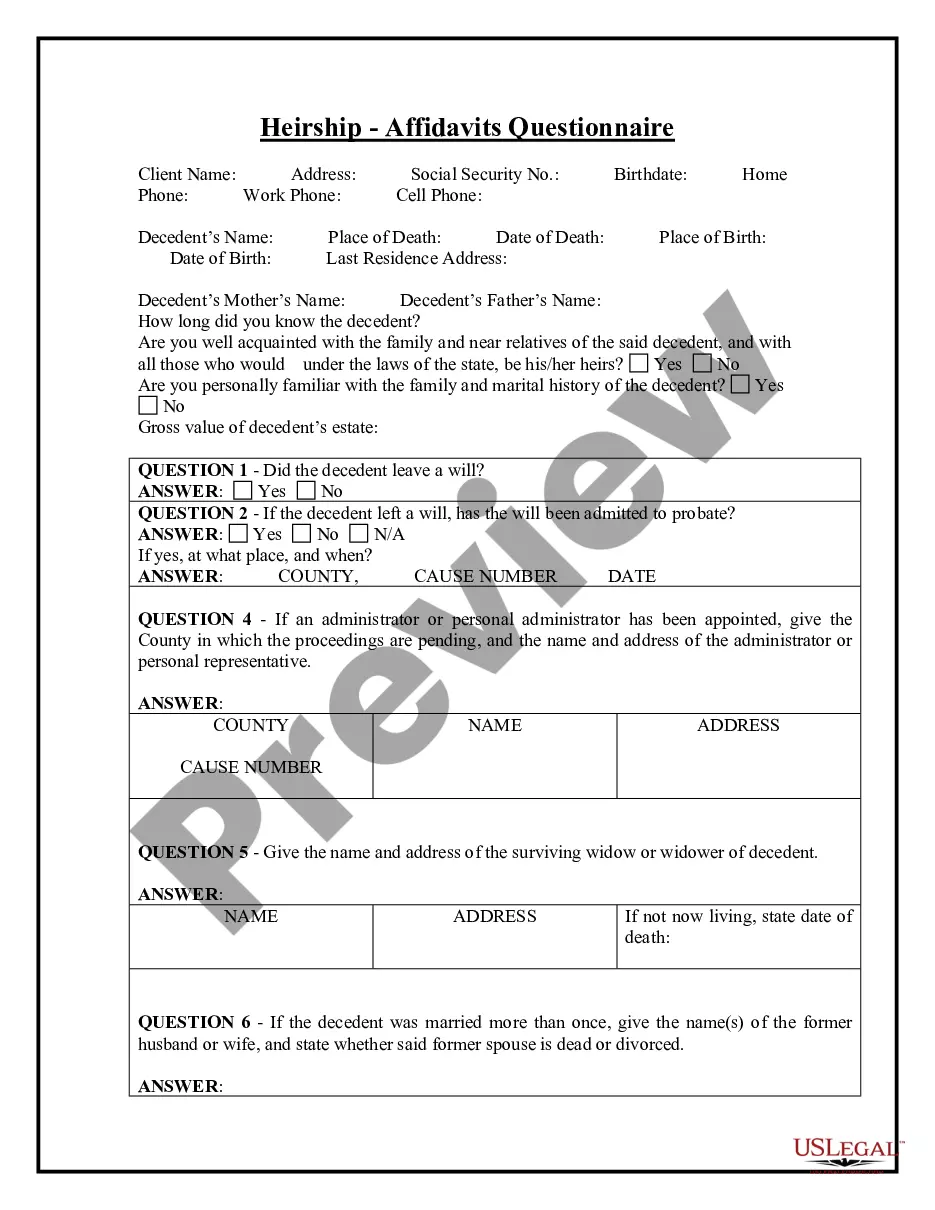
Get your form ready online
Our built-in tools help you complete, sign, share, and store your documents in one place.
Make edits, fill in missing information, and update formatting in US Legal Forms—just like you would in MS Word.
Download a copy, print it, send it by email, or mail it via USPS—whatever works best for your next step.
Sign and collect signatures with our SignNow integration. Send to multiple recipients, set reminders, and more. Go Premium to unlock E-Sign.
If this form requires notarization, complete it online through a secure video call—no need to meet a notary in person or wait for an appointment.
We protect your documents and personal data by following strict security and privacy standards.

Make edits, fill in missing information, and update formatting in US Legal Forms—just like you would in MS Word.

Download a copy, print it, send it by email, or mail it via USPS—whatever works best for your next step.

Sign and collect signatures with our SignNow integration. Send to multiple recipients, set reminders, and more. Go Premium to unlock E-Sign.

If this form requires notarization, complete it online through a secure video call—no need to meet a notary in person or wait for an appointment.

We protect your documents and personal data by following strict security and privacy standards.
Looking for another form?



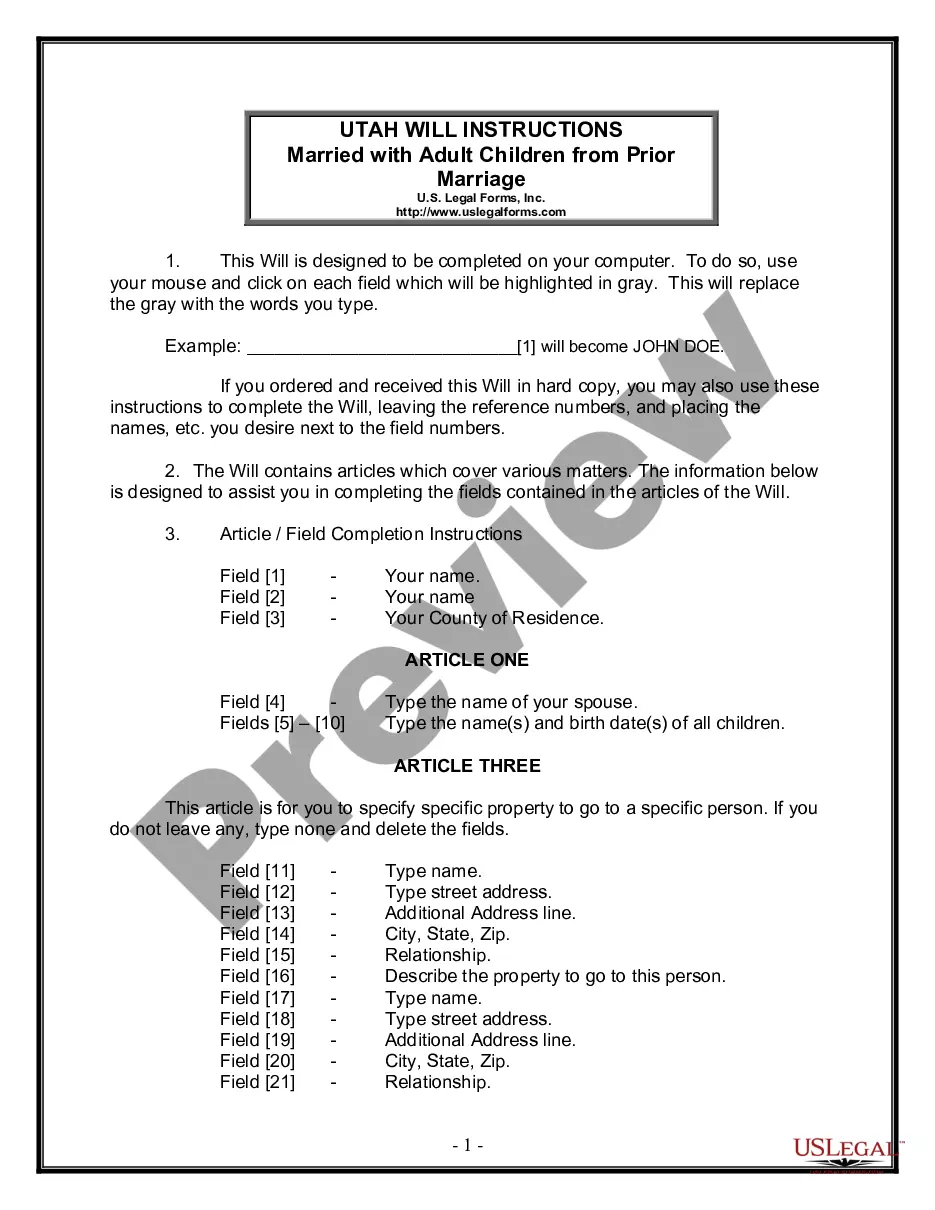
How to fill out Affidavit Of Heirship, Next Of Kin Or Descent - Decedent Died Intestate?
Whether for commercial reasons or for personal matters, everyone eventually has to confront legal circumstances in their life.
Completing legal documentation requires meticulous care, starting with selecting the correct form template. For instance, if you select an incorrect version of the Intestate Succession Explained With Pictures, it will be rejected upon submission. Thus, it is vital to obtain a trustworthy source of legal documents like US Legal Forms.
With a comprehensive US Legal Forms catalog available, you do not need to waste time searching for the appropriate template online. Utilize the library’s straightforward navigation to find the correct form for any situation.
- Acquire the template you require by using the search bar or catalog browsing.
- Examine the form’s description to confirm it aligns with your situation, state, and county.
- Click on the form’s preview to view it.
- If it is the incorrect document, return to the search feature to locate the Intestate Succession Explained With Pictures template you need.
- Obtain the file when it fits your criteria.
- If you already have a US Legal Forms account, simply click Log in to access previously saved files in My documents.
- If you do not possess an account yet, you can download the form by clicking Buy now.
- Select the appropriate pricing option.
- Fill out the profile registration form.
- Choose your payment method: use a credit card or PayPal account.
- Select the file format you desire and download the Intestate Succession Explained With Pictures.
- Once it is saved, you can complete the form using editing software or print it and finish it manually.
Form popularity
FAQ
In most cases, inheritance laws are decided via state or USA policies and can range depending on the situation. While being the oldest infant might also keep sentimental value, it does no longer robotically warranty that they will inherit everything.
If you have a surviving spouse but no children, your spouse gets 100% of your estate. If you have a spouse and children, your spouse gets 1/3 of your estate and the remaining 2/3 is divided equally between your children. If you only have children, your entire estate is divided evenly among them.
In an intestate situation, the surviving spouse receives all of the community property and a portion of the separate property based on a predetermined formula set out in probate law. If the decedent was not married but has children, then the children will inherit everything equally.
When a person does not have a valid will when they die, it is called an intestacy. When this happens, Ontario's Succession Law Reform Act sets out how the estate is distributed. In general, when a person dies without a will, the people who can inherit their estate include their spouse and closest next-of-kin.
Basic Principles If there is no spouse or descendants, the testator's parents and/or their descendants (collateral relatives of the testator) inherit the estate. If there are no parents or descendants of parents, grandparents and other collateral relatives inherit the estate per capita.?