Intestate Succession Explained For Students
Description
Get your form ready online
Our built-in tools help you complete, sign, share, and store your documents in one place.
Make edits, fill in missing information, and update formatting in US Legal Forms—just like you would in MS Word.
Download a copy, print it, send it by email, or mail it via USPS—whatever works best for your next step.
Sign and collect signatures with our SignNow integration. Send to multiple recipients, set reminders, and more. Go Premium to unlock E-Sign.
If this form requires notarization, complete it online through a secure video call—no need to meet a notary in person or wait for an appointment.
We protect your documents and personal data by following strict security and privacy standards.

Make edits, fill in missing information, and update formatting in US Legal Forms—just like you would in MS Word.

Download a copy, print it, send it by email, or mail it via USPS—whatever works best for your next step.

Sign and collect signatures with our SignNow integration. Send to multiple recipients, set reminders, and more. Go Premium to unlock E-Sign.

If this form requires notarization, complete it online through a secure video call—no need to meet a notary in person or wait for an appointment.

We protect your documents and personal data by following strict security and privacy standards.
Looking for another form?






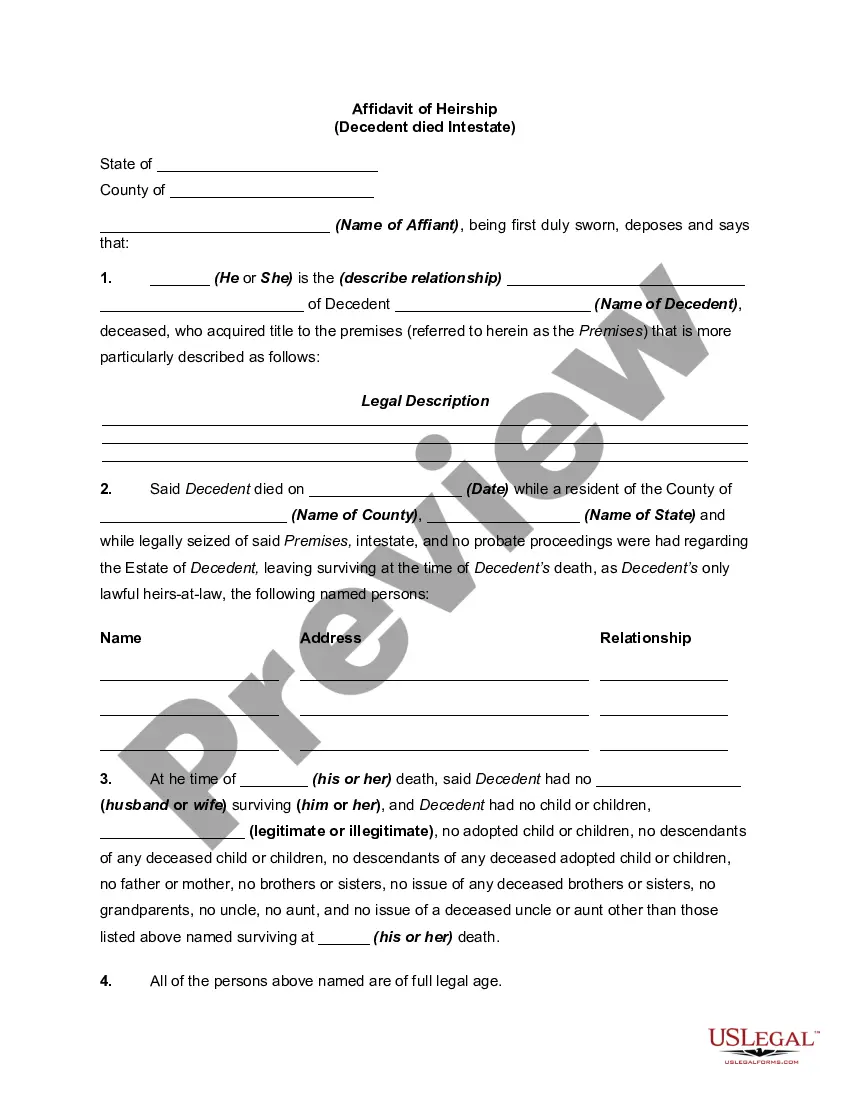
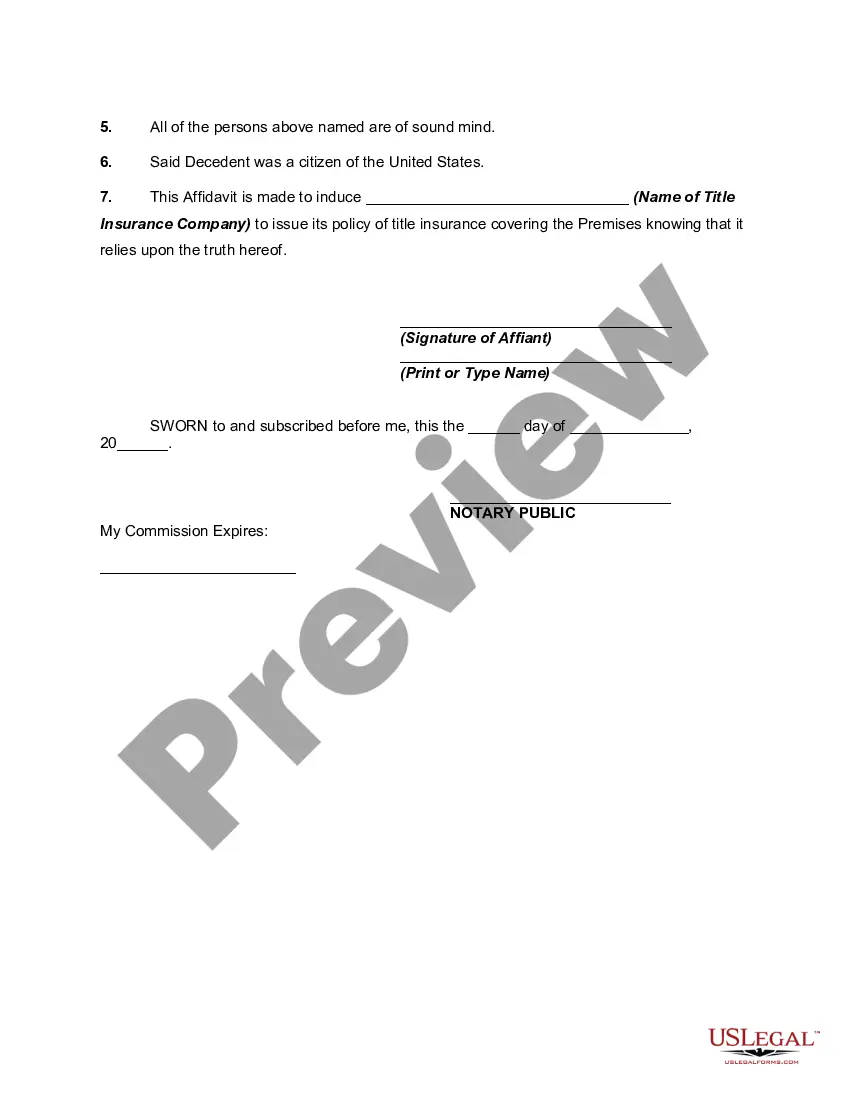
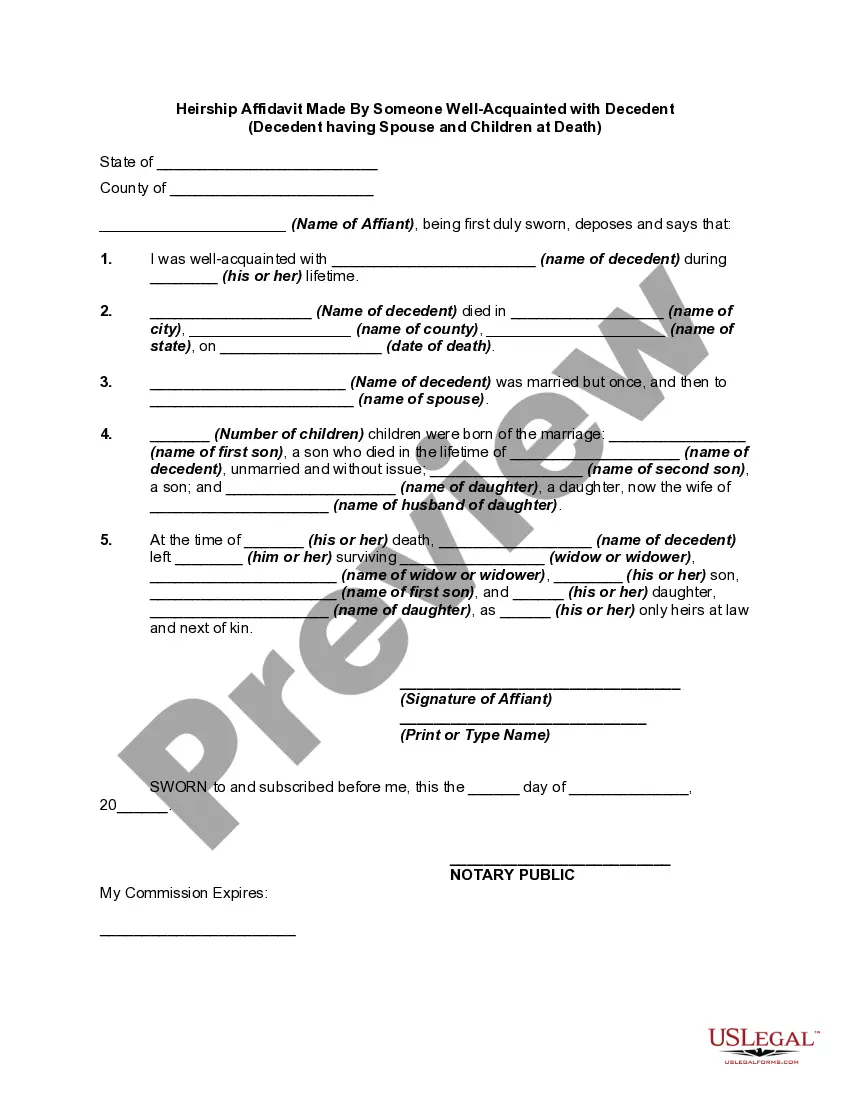
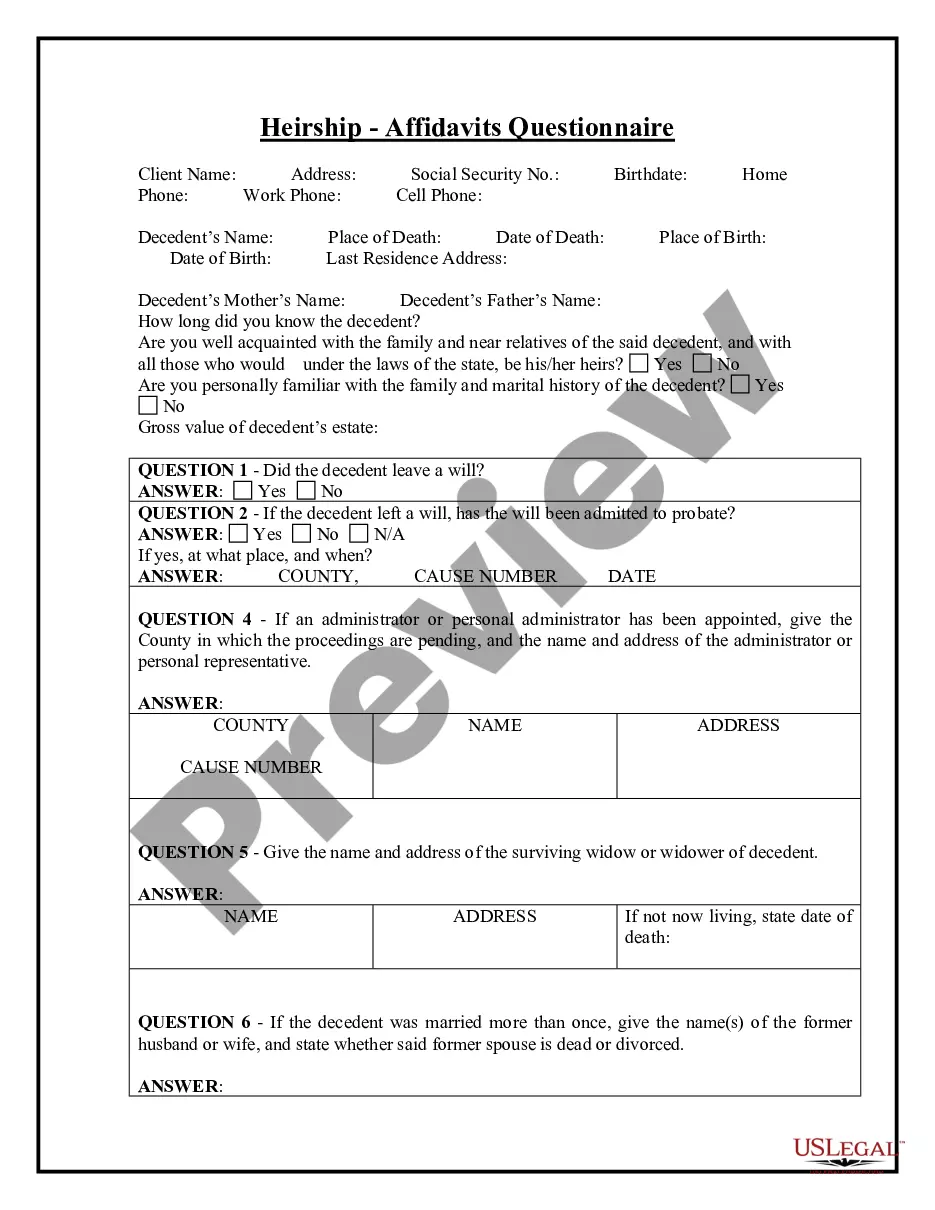
How to fill out Affidavit Of Heirship, Next Of Kin Or Descent - Decedent Died Intestate?
Creating legal documents from the ground up can frequently be daunting.
Certain situations may require extensive research and substantial expenses.
If you're looking for a simpler and more economical method of preparing Intestate Succession Explained For Students or other forms without unnecessary hurdles, US Legal Forms is readily available.
Our online collection of over 85,000 current legal documents covers nearly every facet of your financial, legal, and personal affairs.
Review the form preview and descriptions to confirm that you have located the form you need. Ensure the form you choose adheres to the laws and regulations of your state and county. Select the appropriate subscription option to acquire the Intestate Succession Explained For Students. Download the form, then complete, certify, and print it out. US Legal Forms boasts an impeccable reputation and over 25 years of experience. Join us today and make form execution a straightforward and efficient process!
- With just a few clicks, you can swiftly obtain state- and county-specific forms meticulously prepared by our legal experts.
- Utilize our platform whenever you require dependable and trustworthy services to quickly locate and download the Intestate Succession Explained For Students.
- If you’re already familiar with our services and have previously established an account with us, simply Log In to your account, choose the template, and download it or re-download it at any time in the My documents section.
- Not signed up yet? No worries. It only takes a few minutes to set up and explore the library.
- But before diving straight into downloading Intestate Succession Explained For Students, keep these pointers in mind.
Form popularity
FAQ
Basic Principles If there is no spouse or descendants, the testator's parents and/or their descendants (collateral relatives of the testator) inherit the estate. If there are no parents or descendants of parents, grandparents and other collateral relatives inherit the estate per capita.?
Funeral arrangements A will is not the right place in which to set down your funeral wishes. Whilst some people do include a clause as to whether they wish to be buried or cremated, the fact remains that your body is not under the control of your estate, and so your wishes may not be carried out.
The probate court watches over cases whether the person was testate or intestate upon petition by an interested party. If no Will exists, the property (estate) is divided among the person's heirs. In California, if the person has a spouse and/or children, the property first goes to them.
Other relatives. If you die intestate leaving no surviving spouse or civil partner, your estate will be distributed in a strict order, which is: If you have children, they will inherit all of your estate in equal shares. If a child has already died, his or her children will inherit their share of the estate.
Under the rules of intestacy, the order of priority for applying to be the Administrator of the estate is the same as it is for inheritance. Therefore, the most likely people to be appointed are: The surviving spouse or civil partner. The children of the Deceased.