Intestate Heirs In Texas
Description
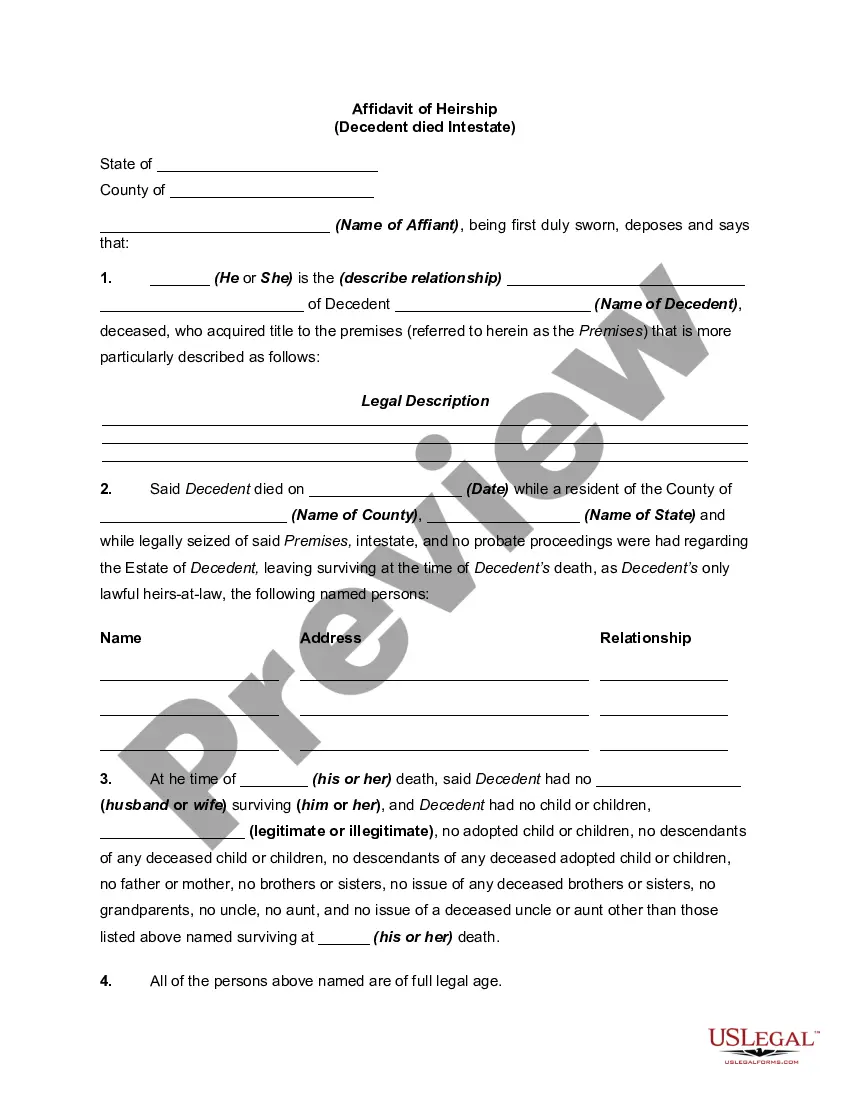
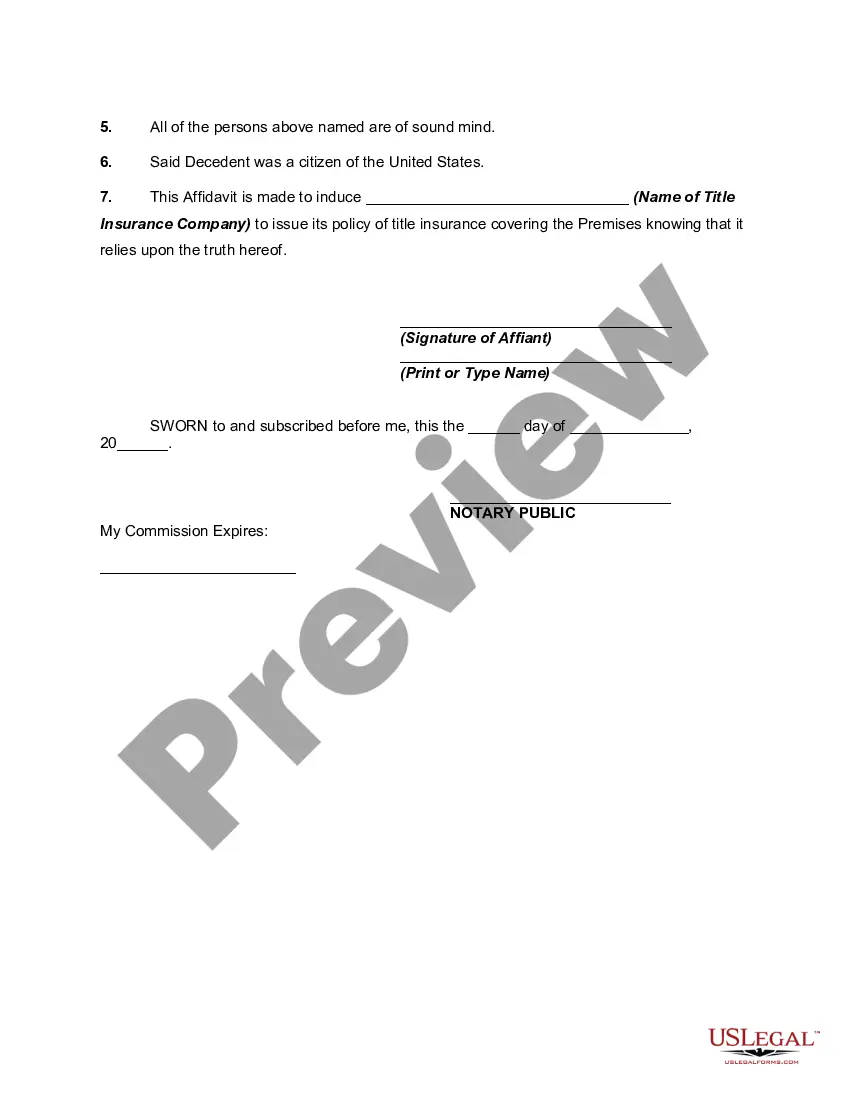
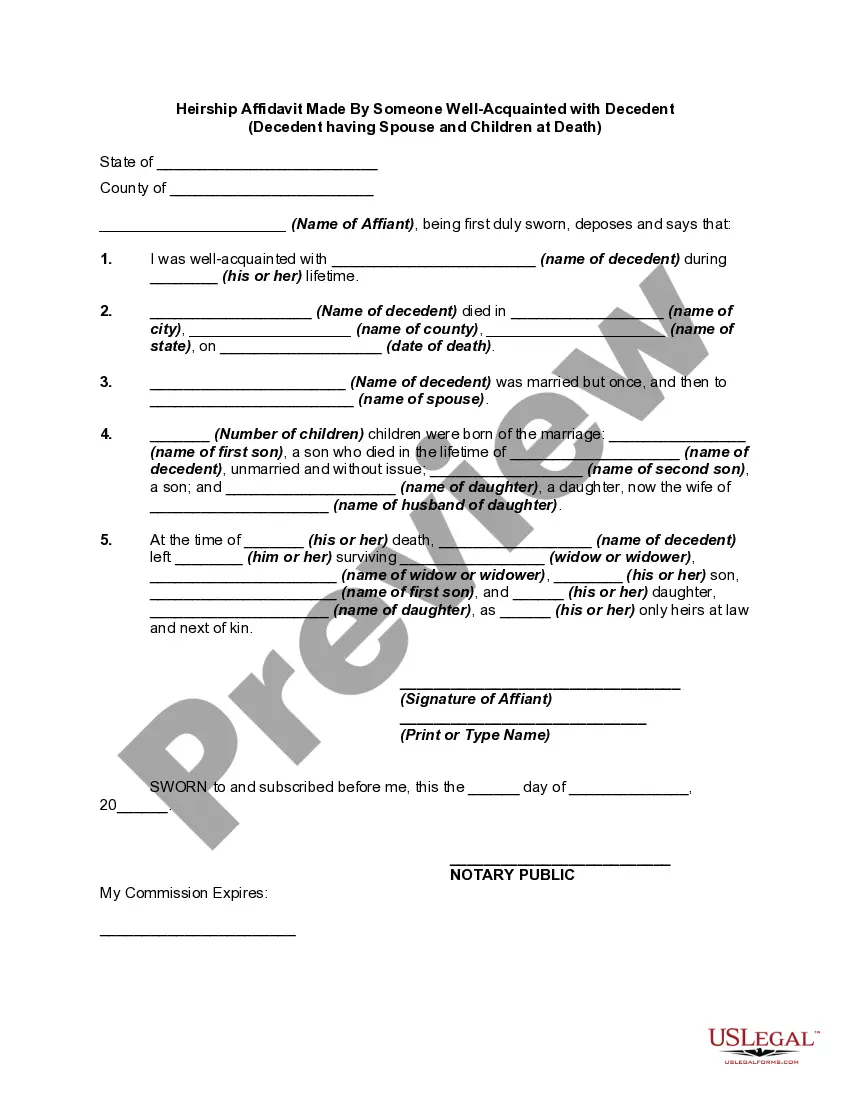
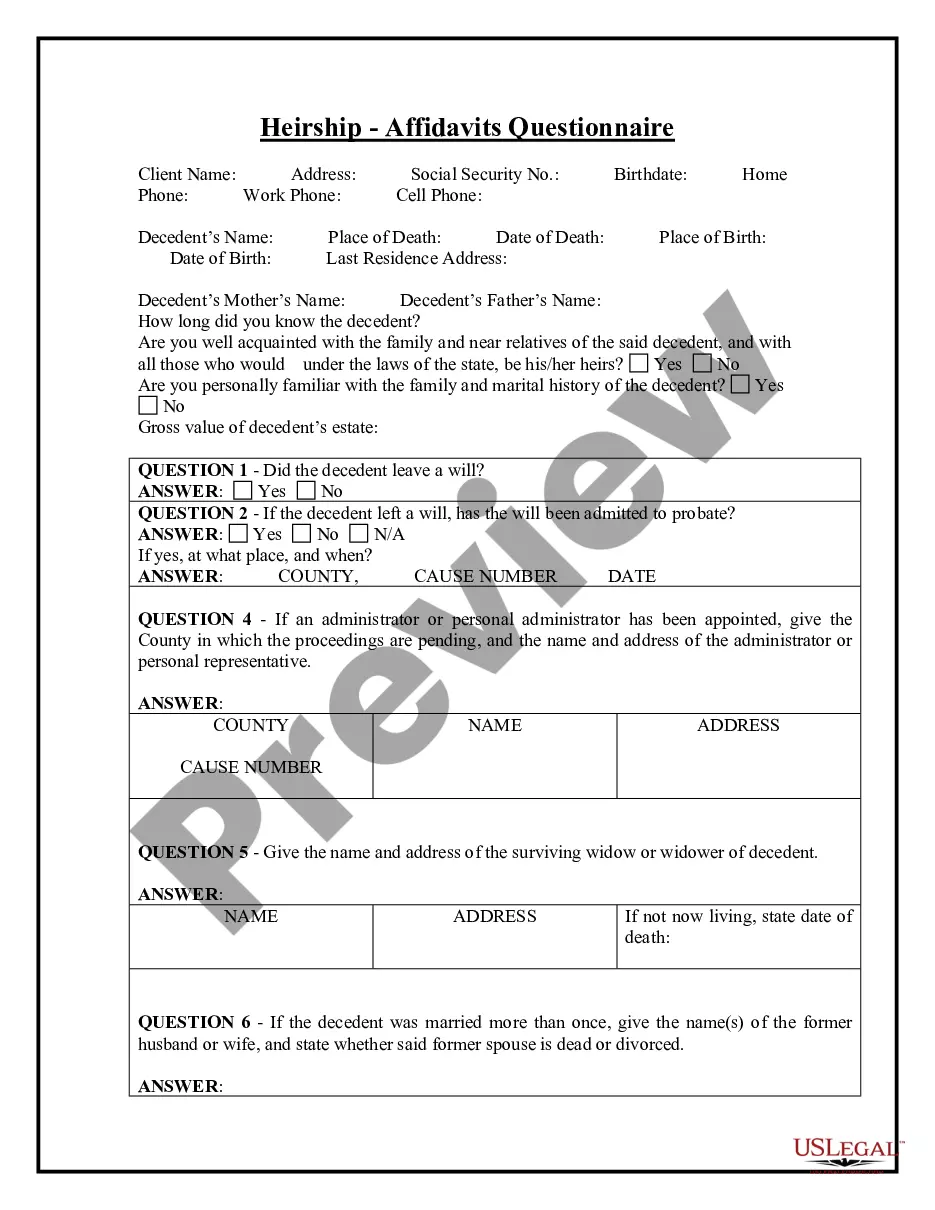
Get your form ready online
Our built-in tools help you complete, sign, share, and store your documents in one place.
Make edits, fill in missing information, and update formatting in US Legal Forms—just like you would in MS Word.
Download a copy, print it, send it by email, or mail it via USPS—whatever works best for your next step.
Sign and collect signatures with our SignNow integration. Send to multiple recipients, set reminders, and more. Go Premium to unlock E-Sign.
If this form requires notarization, complete it online through a secure video call—no need to meet a notary in person or wait for an appointment.
We protect your documents and personal data by following strict security and privacy standards.

Make edits, fill in missing information, and update formatting in US Legal Forms—just like you would in MS Word.

Download a copy, print it, send it by email, or mail it via USPS—whatever works best for your next step.

Sign and collect signatures with our SignNow integration. Send to multiple recipients, set reminders, and more. Go Premium to unlock E-Sign.

If this form requires notarization, complete it online through a secure video call—no need to meet a notary in person or wait for an appointment.

We protect your documents and personal data by following strict security and privacy standards.
Looking for another form?


How to fill out Affidavit Of Heirship, Next Of Kin Or Descent - Decedent Died Intestate?
The Intestate Heirs In Texas displayed on this page is a reusable formal framework created by expert attorneys adhering to federal and state statutes and regulations.
For over 25 years, US Legal Forms has supplied individuals, enterprises, and legal practitioners with more than 85,000 authenticated, state-specific documents for any commercial and personal circumstances.
Register with US Legal Forms to access verified legal templates for every stage of life.
- Search for the document you require and review it.
- Browse through the example you found and preview it or examine the form description to ensure it meets your criteria. If it does not, use the search feature to locate the appropriate one. Click Buy Now when you have identified the template you need.
- Register and sign in.
- Select the payment plan that best fits your needs and set up an account. Use PayPal or a credit card for a quick transaction. If you already have an account, Log In and review your subscription to continue.
- Acquire the editable template.
- Select the format you prefer for your Intestate Heirs In Texas (PDF, Word, RTF) and download the sample onto your device.
- Complete and sign the documentation.
- Print the template to fill it out by hand. Alternatively, utilize an online multifunctional PDF editor to swiftly and accurately fill out and sign your form with a legally-binding electronic signature.
- Re-download your documents one more time.
- Use the same document multiple times when necessary. Access the My documents section in your profile to redownload any previously purchased forms.
Form popularity
FAQ
An affidavit of heirship must be signed and sworn to before a notary public by a person who knew the decedent and the decedent's family history. This person can be a friend of the decedent, an old friend of the family, or a neighbor, for example.
A properly prepared Texas Affidavit of Heirship must provide the following information: The deceased owner's full name, last address, date of birth and date and place of death. It should list all real estate owned by the deceased owner.
To start the judicial heirship proceeding, you will need to file a petition with the probate court in the county where the decedent died. You will need to provide evidence and documentation to support your claim of heirship. The court will then hold a hearing to determine who the legal heirs of the estate are.
If one parent and siblings (or siblings' descendants) are still living, ½ goes to surviving parent and ½ to siblings. If one parent and no siblings are still living, all goes to surviving parent. If siblings but no parents are still living, all goes to surviving siblings.
You simply file the affidavit with the county clerk of the counties where the decedent owned property or resided at the time of death. The affidavit must be notarized and signed by two disinterested people (i.e., persons that have no financial interest in the decedent's estate).