Qualified Income Trust Qit Form Georgia
Description
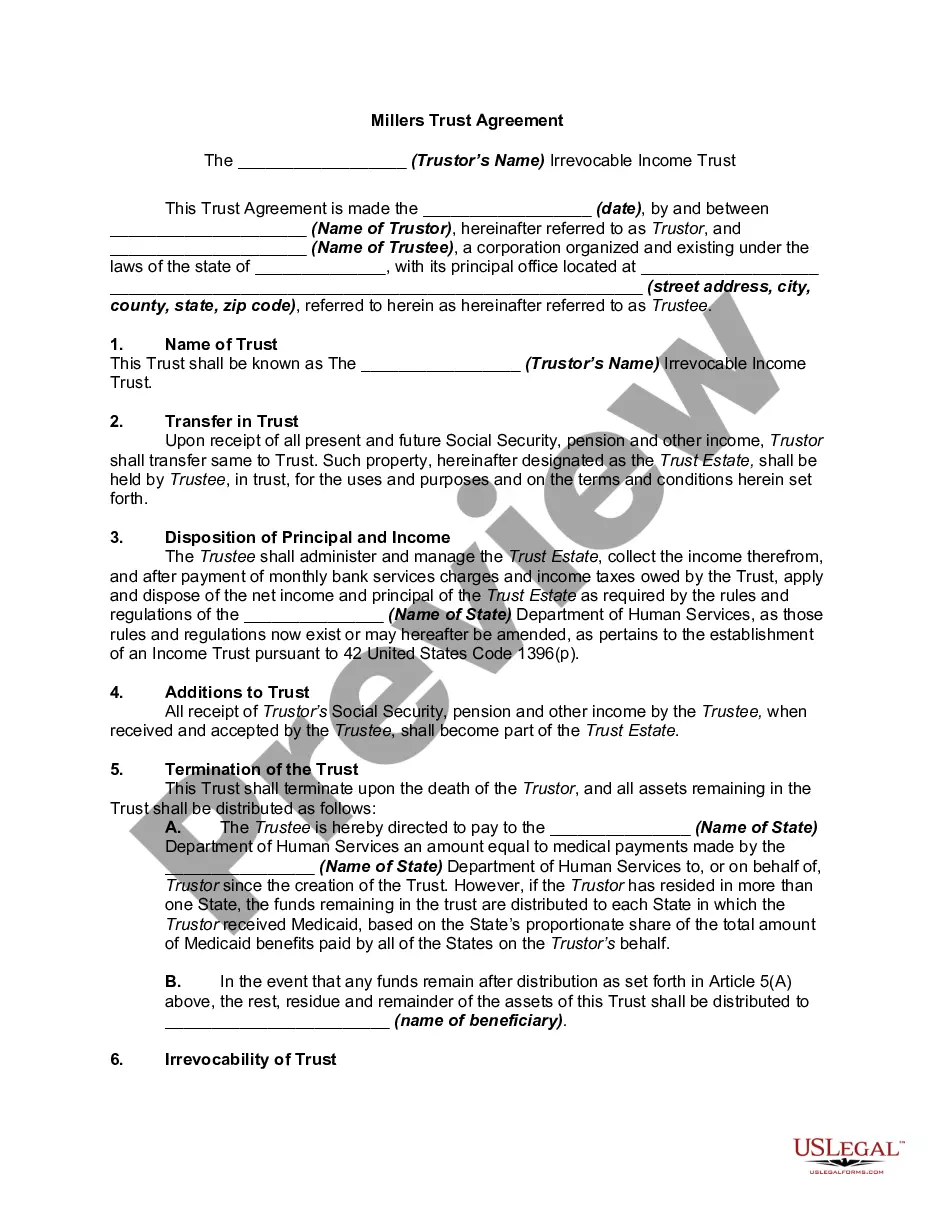
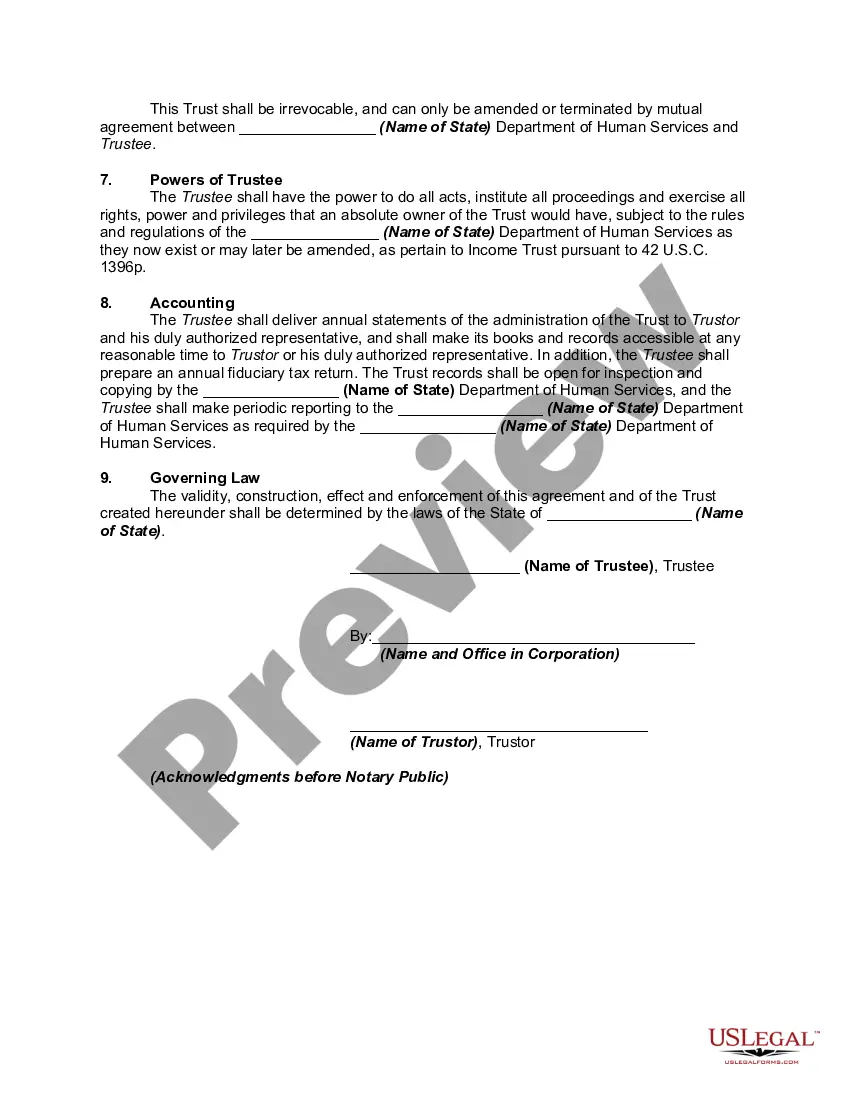
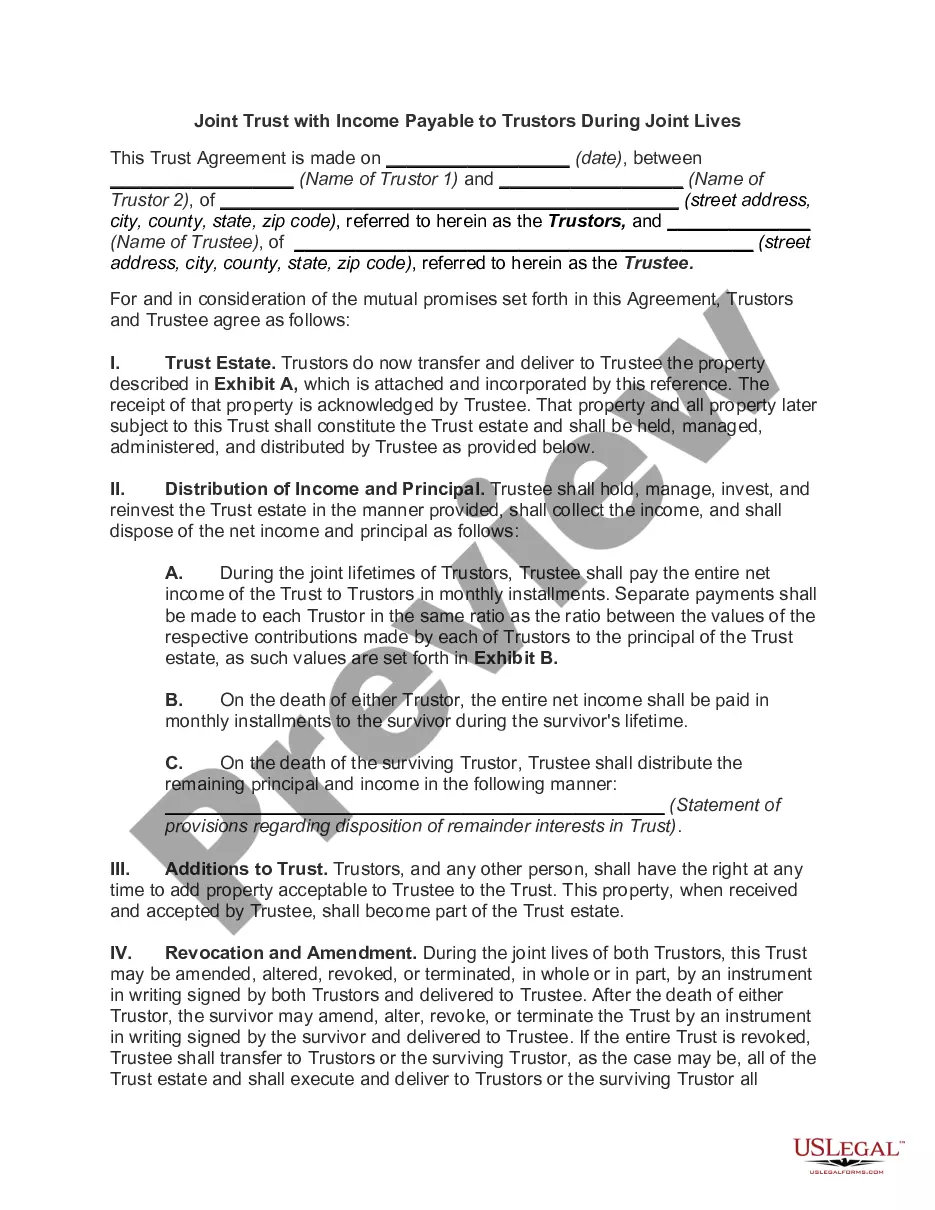

Get your form ready online
Our built-in tools help you complete, sign, share, and store your documents in one place.
Make edits, fill in missing information, and update formatting in US Legal Forms—just like you would in MS Word.
Download a copy, print it, send it by email, or mail it via USPS—whatever works best for your next step.
Sign and collect signatures with our SignNow integration. Send to multiple recipients, set reminders, and more. Go Premium to unlock E-Sign.
If this form requires notarization, complete it online through a secure video call—no need to meet a notary in person or wait for an appointment.
We protect your documents and personal data by following strict security and privacy standards.

Make edits, fill in missing information, and update formatting in US Legal Forms—just like you would in MS Word.

Download a copy, print it, send it by email, or mail it via USPS—whatever works best for your next step.

Sign and collect signatures with our SignNow integration. Send to multiple recipients, set reminders, and more. Go Premium to unlock E-Sign.

If this form requires notarization, complete it online through a secure video call—no need to meet a notary in person or wait for an appointment.

We protect your documents and personal data by following strict security and privacy standards.
Looking for another form?



How to fill out Qualified Income Miller Trust?
Whether for commercial intentions or for individual concerns, everyone eventually needs to manage legal circumstances in their lifetime.
Filling out legal documents requires meticulous care, beginning with selecting the appropriate form template.
Once saved, you can complete the form using editing software or print it out and finish it by hand. With an extensive catalog of US Legal Forms available, there’s no need to waste time searching for the ideal sample online. Utilize the library’s user-friendly navigation to find the right template for any occasion.
- For example, if you choose an incorrect version of a Qualified Income Trust Qit Form Georgia, it will be rejected upon submission.
- Thus, it is crucial to have a reliable source for legal documents like US Legal Forms.
- If you need to acquire a Qualified Income Trust Qit Form Georgia template, follow these simple steps.
- Locate the sample you require using the search box or catalog browsing.
- Review the form’s details to ensure it aligns with your situation, state, and locality.
- Click on the form’s preview for a closer look.
- If it is the wrong document, return to the search option to find the Qualified Income Trust Qit Form Georgia template you seek.
- Download the file once it meets your requirements.
- If you already possess a US Legal Forms account, click Log in to access previously stored documents in My documents.
- If you don’t have an account yet, you can acquire the form by clicking Buy now.
- Select the appropriate pricing option.
- Fill out the account registration form.
- Select your payment method: you may use a credit card or PayPal account.
- Choose the document format you desire and download the Qualified Income Trust Qit Form Georgia.
Form popularity
FAQ
Creating a qualified income trust involves several steps, including drafting the trust document and designating a trustee. You will need to ensure it meets the requirements set forth by Medicaid in Georgia. To simplify this process and ensure compliance with regulations, consider using the qualified income trust QIT form provided by US Legal Forms. They offer comprehensive guides and forms to facilitate the creation of your trust.
While it is possible to have a trust without an EIN, it is not advisable for irrevocable or qualified income trusts. Without an EIN, managing tax reporting for the trust can become cumbersome. For your qualified income trust QIT form in Georgia, having an EIN simplifies tax responsibilities and fosters smooth operations. Turn to US Legal Forms to help you with the necessary paperwork.
The trustee or the person establishing the trust usually applies for the EIN. This ensures that the trust is properly identified for tax purposes and adheres to regulations. When creating a qualified income trust QIT form in Georgia, having an EIN is a crucial step, and leveraging platforms like US Legal Forms can streamline this application process.
Irrevocable trusts typically need an EIN. Once established, the IRS treats them as separate tax entities. The adoption of an EIN for your irrevocable trust helps in managing tax obligations efficiently. When dealing with qualified income trust QIT form in Georgia, consider using resources such as US Legal Forms to ensure you have the correct documentation.
Yes, a qualified income trust often requires an Employer Identification Number, or EIN. This number is essential for tax purposes, as it helps the IRS identify the trust as a separate entity. Obtaining an EIN for your qualified income trust QIT form in Georgia is straightforward and can typically be done online through the IRS website. Using platforms like US Legal Forms can simplify this process by providing the necessary forms and guidance.
Setting up a QTIP trust, or Qualified Terminable Interest Property trust, involves a few steps to secure your assets for your spouse. You need to create the trust document, specifying that your spouse will receive income from the trust during their lifetime. After defining the terms, appoint a trustee to manage the trust. While setting up a QTIP trust differs from establishing a Qualified Income Trust QIT, using resources like USLegalForms can streamline the process and ensure compliance.
A Qualified Income Trust (QIT), also known as a Miller Trust, in Georgia is a legal arrangement that allows individuals to qualify for Medicaid while exceeding the state's income limits. By placing excess income into a QIT, applicants can meet financial eligibility requirements for Medicaid benefits. This setup protects your income while ensuring access to necessary medical care. Understanding the Qualified Income Trust QIT form Georgia is essential for compliance.
To set up a Qualified Income Trust (QIT) in Georgia, you will first need to complete the Qualified Income Trust QIT form Georgia. This includes providing information about your income and appointing a trustee to manage the trust funds. Once you finalize the form, you must sign it and have it notarized. Finally, you will submit the completed form to your local Department of Family and Children Services.
Setting up a Qualified Income Trust involves several steps, including drafting the trust agreement and appointing a trustee. It is advisable to ensure that the trust document adheres to Georgia state laws to avoid potential legal issues. You can streamline this process by using services like US Legal Forms, which provide templates and guidance for setting up your QIT appropriately.
A QIT document is a legal agreement that establishes a Qualified Income Trust, outlining the conditions for managing excess income. This document specifies the trust's purpose, the trustee's responsibilities, and the income distribution process. Creating a QIT document can often be facilitated through platforms like US Legal Forms, ensuring that you follow state-specific regulations in Georgia.