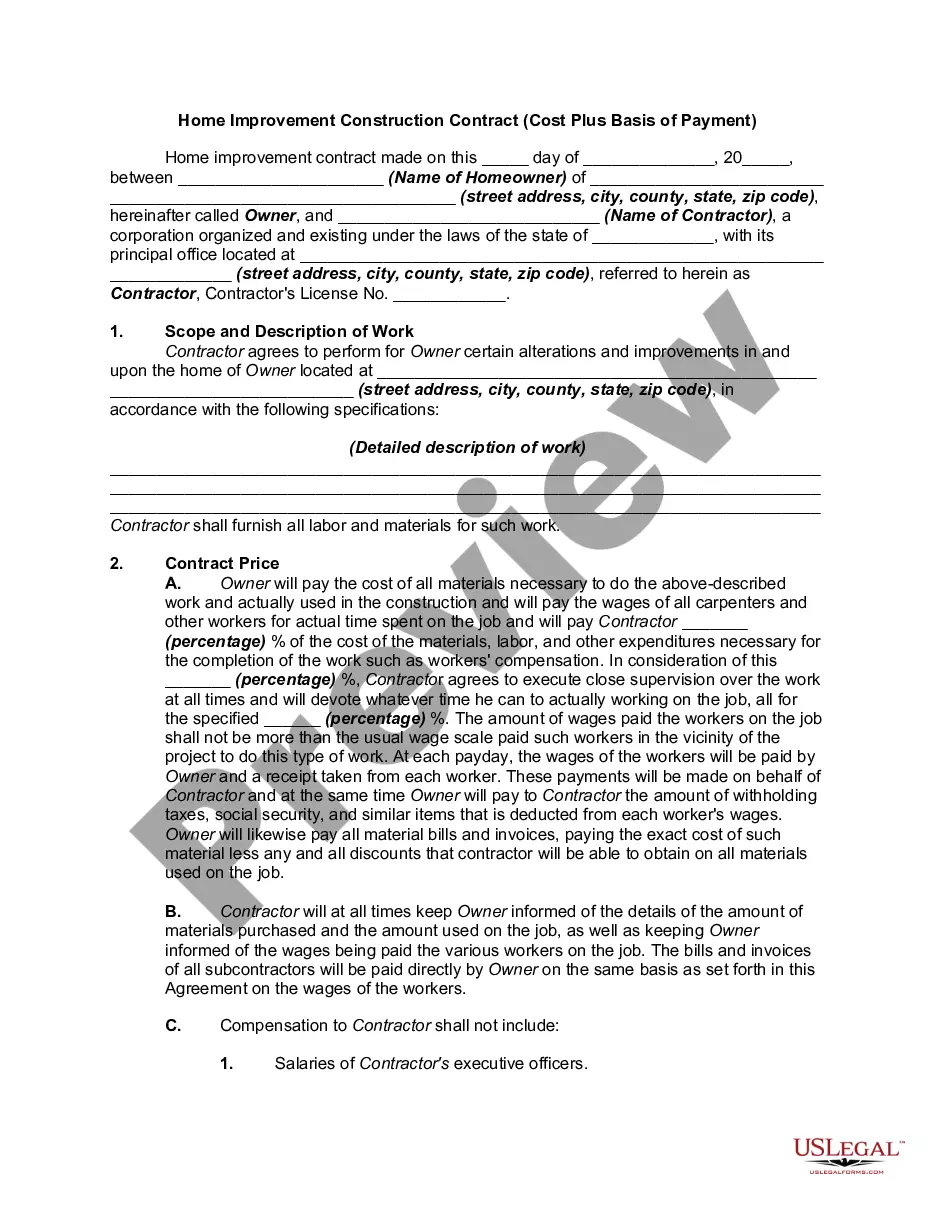
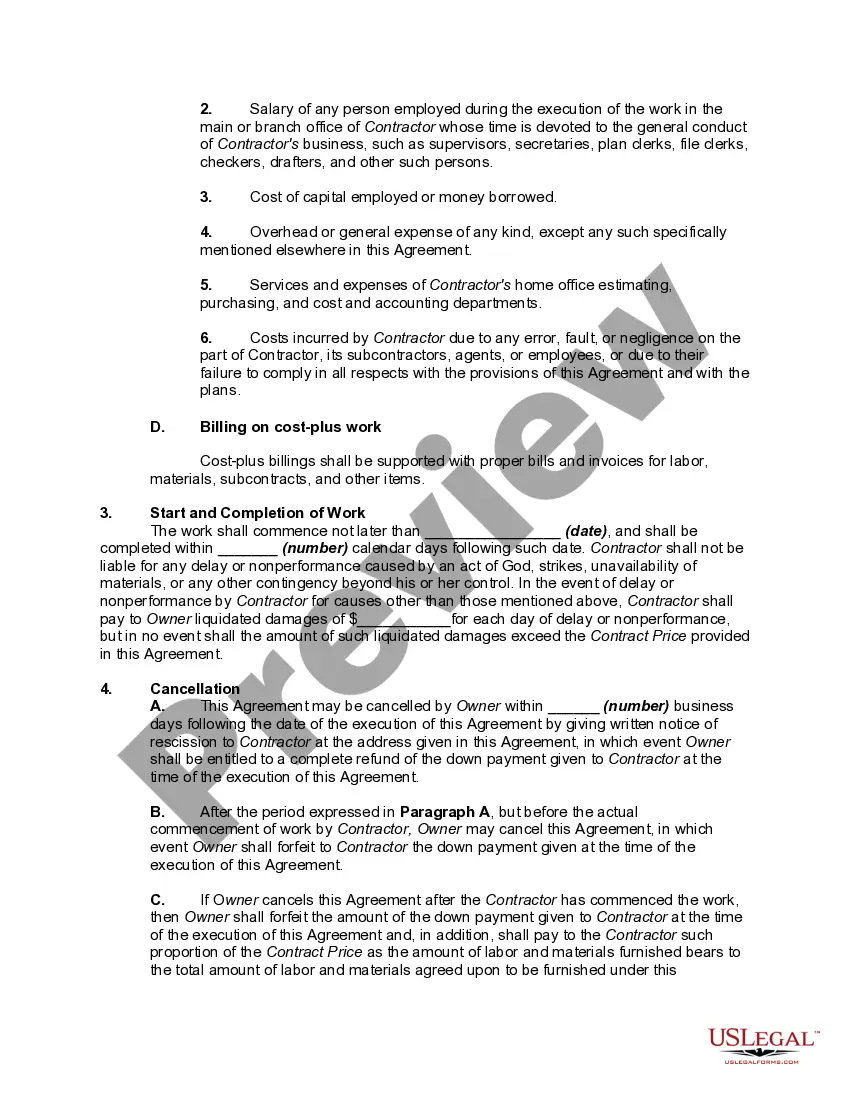
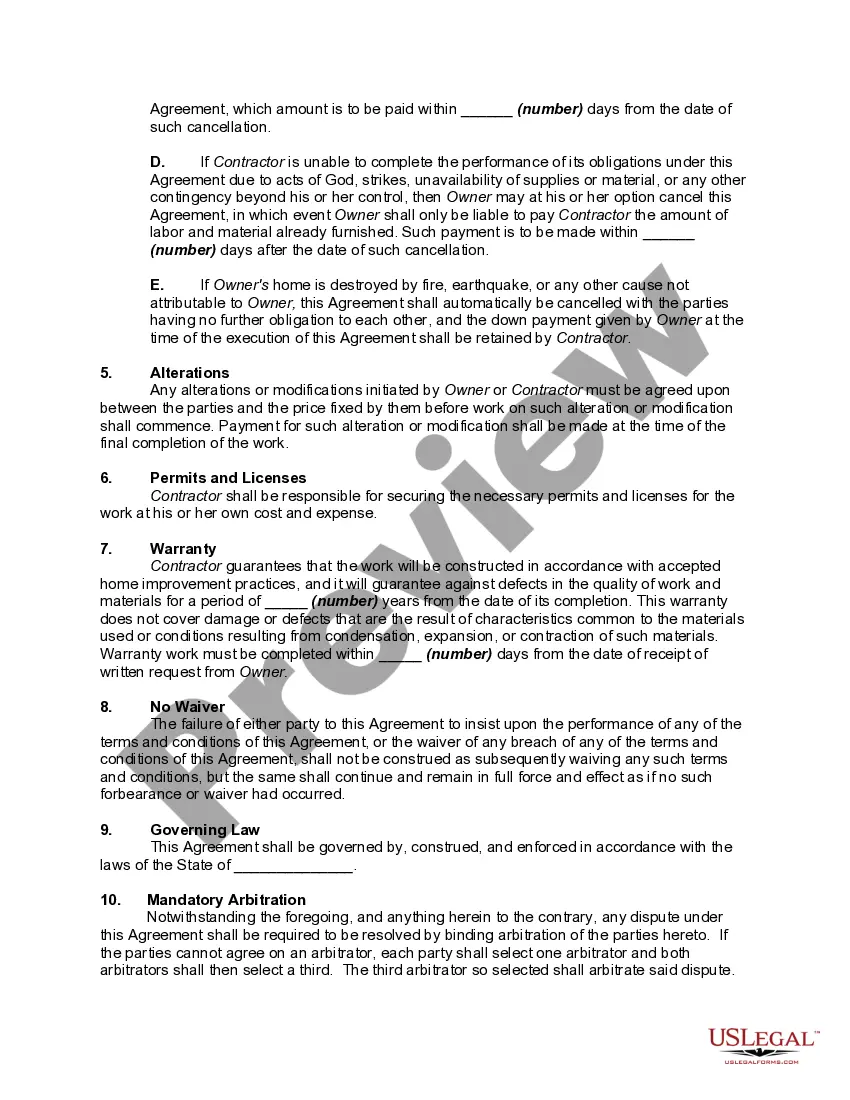
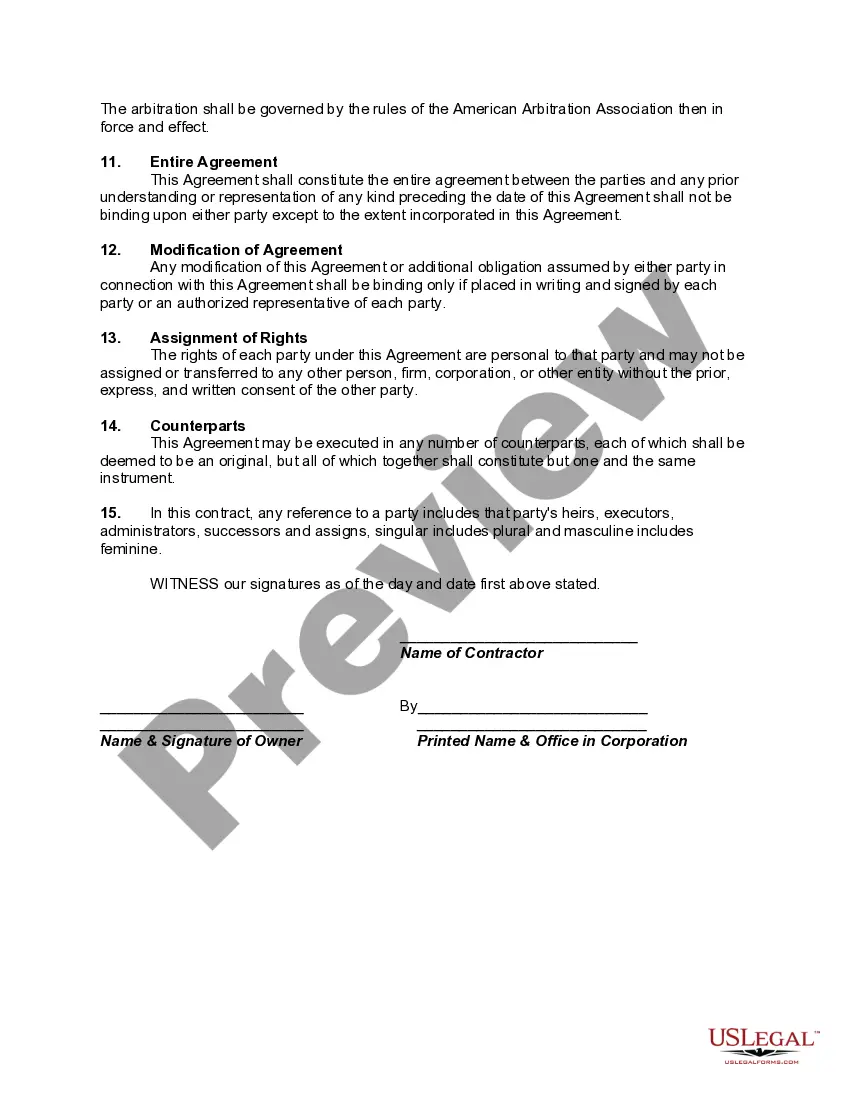
Construction Cost Plus Agreement With City
Description
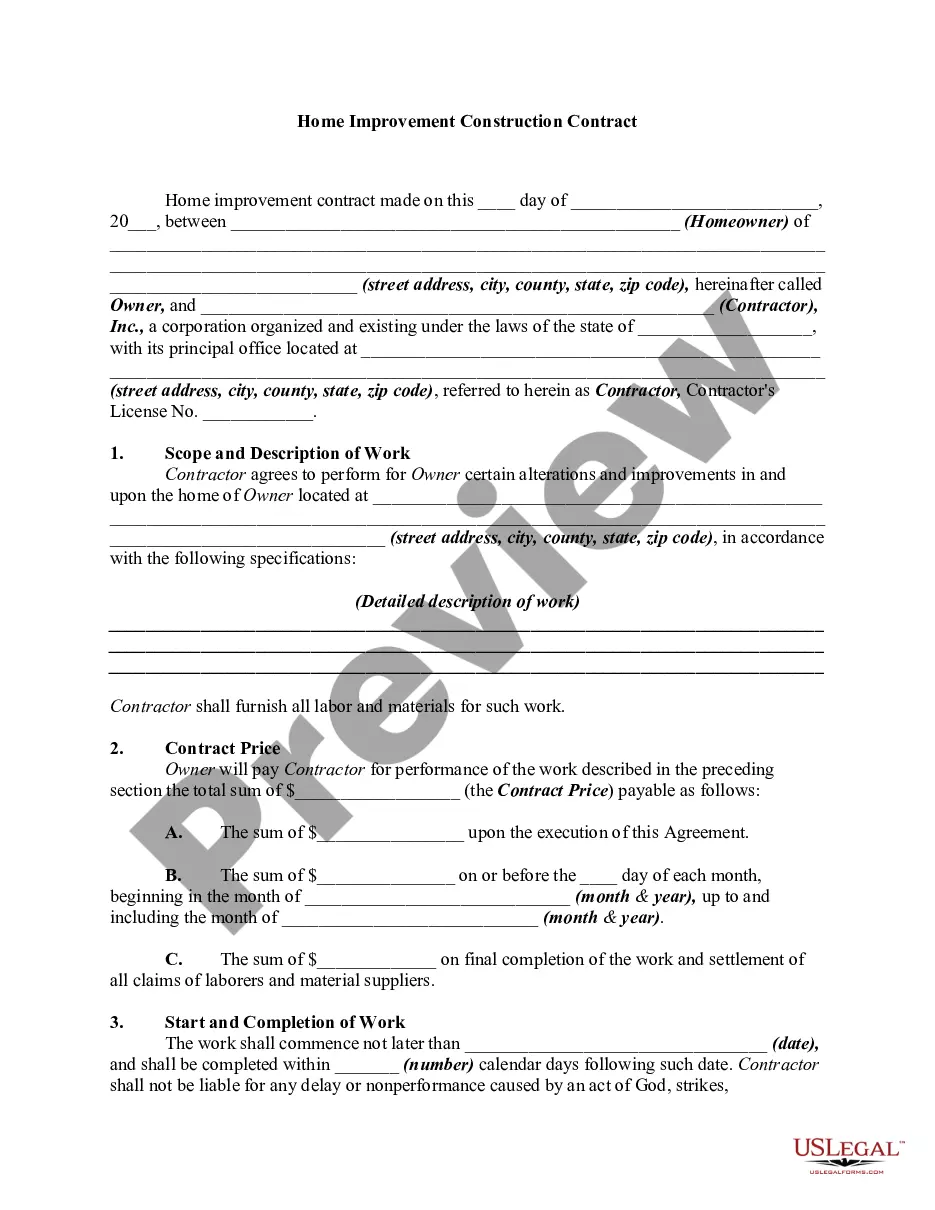
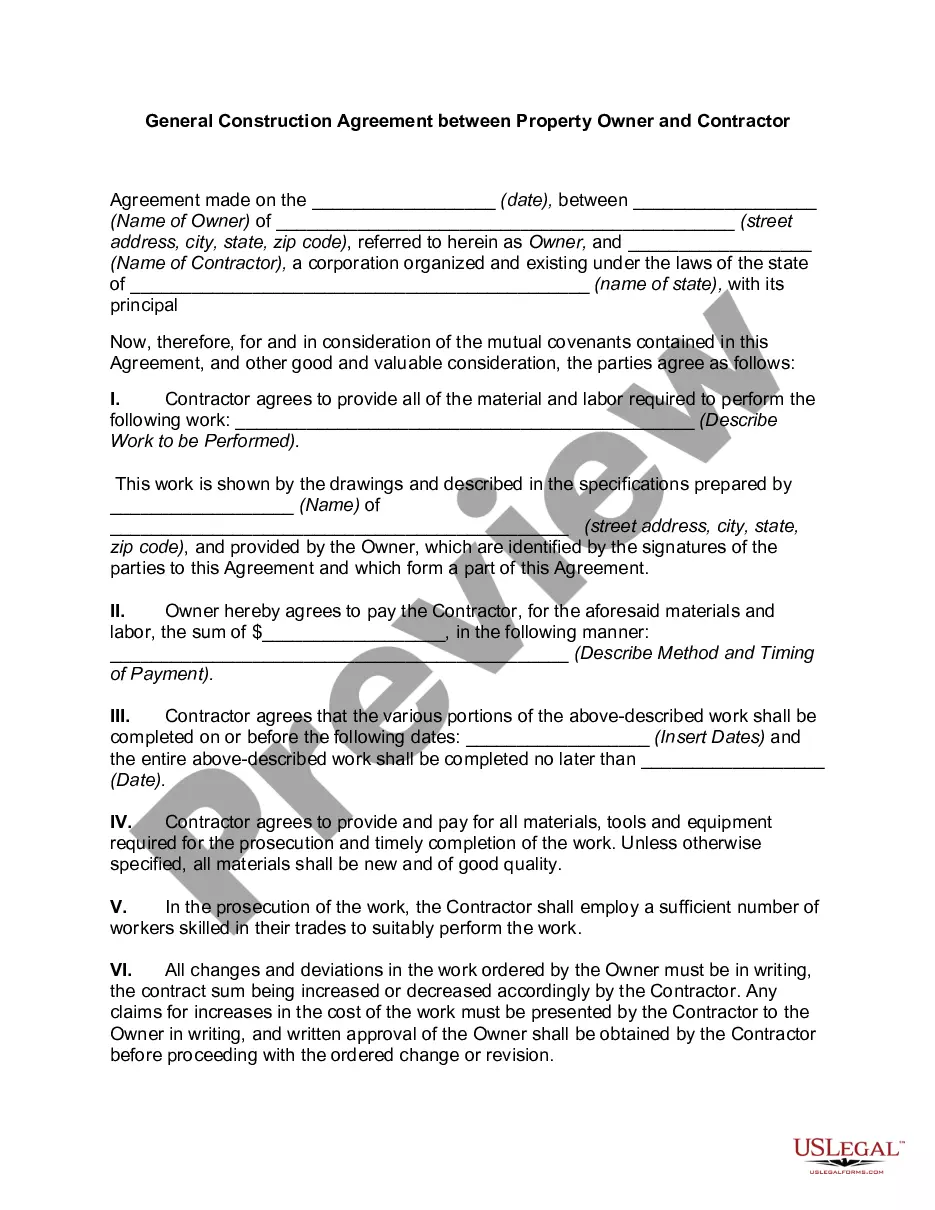
Get your form ready online
Our built-in tools help you complete, sign, share, and store your documents in one place.
Make edits, fill in missing information, and update formatting in US Legal Forms—just like you would in MS Word.
Download a copy, print it, send it by email, or mail it via USPS—whatever works best for your next step.
Sign and collect signatures with our SignNow integration. Send to multiple recipients, set reminders, and more. Go Premium to unlock E-Sign.
If this form requires notarization, complete it online through a secure video call—no need to meet a notary in person or wait for an appointment.
We protect your documents and personal data by following strict security and privacy standards.

Make edits, fill in missing information, and update formatting in US Legal Forms—just like you would in MS Word.

Download a copy, print it, send it by email, or mail it via USPS—whatever works best for your next step.

Sign and collect signatures with our SignNow integration. Send to multiple recipients, set reminders, and more. Go Premium to unlock E-Sign.

If this form requires notarization, complete it online through a secure video call—no need to meet a notary in person or wait for an appointment.

We protect your documents and personal data by following strict security and privacy standards.
Looking for another form?









How to fill out Home Improvement Or Remodeling Construction Contract - Cost Plus Basis Of Payment?
Whether for commercial interests or for personal matters, everyone must confront legal scenarios at some point in their lives.
Filling out legal documents requires meticulous care, starting from selecting the appropriate form template.
Select the file format you desire and download the Construction Cost Plus Agreement With City. Once it is saved, you may complete the form using editing software or print it out and fill it in manually. With a comprehensive US Legal Forms collection available, there's no need to waste time searching for the right template online. Utilize the library’s simple navigation to discover the suitable form for any occasion.
- For instance, if you select an incorrect version of a Construction Cost Plus Agreement With City, it will be rejected upon submission.
- Thus, it's crucial to obtain a trustworthy source of legal documents like US Legal Forms.
- If you need to acquire a Construction Cost Plus Agreement With City template, follow these straightforward steps.
- Search for the sample you require by using the search bar or browse through the catalog.
- Review the form’s description to ensure it aligns with your situation, state, and locality.
- Click on the form’s preview to analyze it.
- If it is not the correct document, return to the search option to find the Construction Cost Plus Agreement With City template you need.
- Obtain the document once it satisfies your criteria.
- If you already possess a US Legal Forms account, just click Log in to access previously saved documents in My documents.
- If you do not have an account yet, you may download the document by clicking Buy now.
- Select the appropriate pricing option.
- Fill out the profile registration form.
- Choose your payment method: either use a credit card or a PayPal account.
Form popularity
FAQ
To secure a government construction contract, start by researching available opportunities at federal, state, and local levels. Register your business in official databases and ensure you meet compliance and licensing requirements. Building relationships with key decision-makers can enhance your chances significantly. Utilizing resources like the uslegalforms platform can streamlining the process of understanding and implementing the construction cost plus agreement with city will put you ahead in the competitive bidding landscape.
Despite their benefits, cost-plus contracts have certain disadvantages. One significant concern is the potential for cost overruns, as contractors may lack the incentive to control expenses due to the reimbursement model. This construction cost plus agreement with city can sometimes lead to disputes over what constitutes reimbursable costs. Understanding these challenges is crucial for both parties to ensure a smooth project execution.
Yes, cost-plus contracts are frequently used by government entities. These agreements allow contractors to receive reimbursement for their actual costs and additional fees based on those costs. This type of construction cost plus agreement with city helps ensure that projects stay on track financially, allowing for flexibility and adaptability as project needs evolve. Governments often employ these contracts for large construction projects, where exact costs can be hard to estimate upfront.
An example of a cost-plus contract is when a city hires a contractor to build a public facility, allowing for direct reimbursement of expenses for labor, materials, and equipment, along with a percentage added for profit. This type of arrangement enables the project to adapt to unforeseen changes and maintains a clear financial framework. It's a common model in a construction cost plus agreement with city initiatives.
Billing a cost-plus contract involves documenting all project expenses thoroughly and providing regular updates to the client. Break down costs into direct expenses, such as labor and materials, and add the agreed-upon markup. Transparency is vital, so supplying itemized invoices helps maintain trust and clarity in your construction cost plus agreement with city.
When filling out a contractor agreement, be sure to include essential details such as the contractor's information, project scope, timeframe, and payment terms. Specify the cost-plus arrangement, outlining how costs will be tracked and billed. Additionally, both parties should sign and date the agreement to ensure it's legally binding, which is crucial in the construction cost plus agreement with city projects.
To effectively structure a cost-plus contract, start by clearly defining the scope of work, including the specific tasks and materials involved. Next, agree on a percentage to be added to the total costs to cover overhead and profit. Establish a budget cap to prevent excessive expenditures. This approach forms a robust construction cost plus agreement with city authorities.