Ledger For Past Due Rent
Description
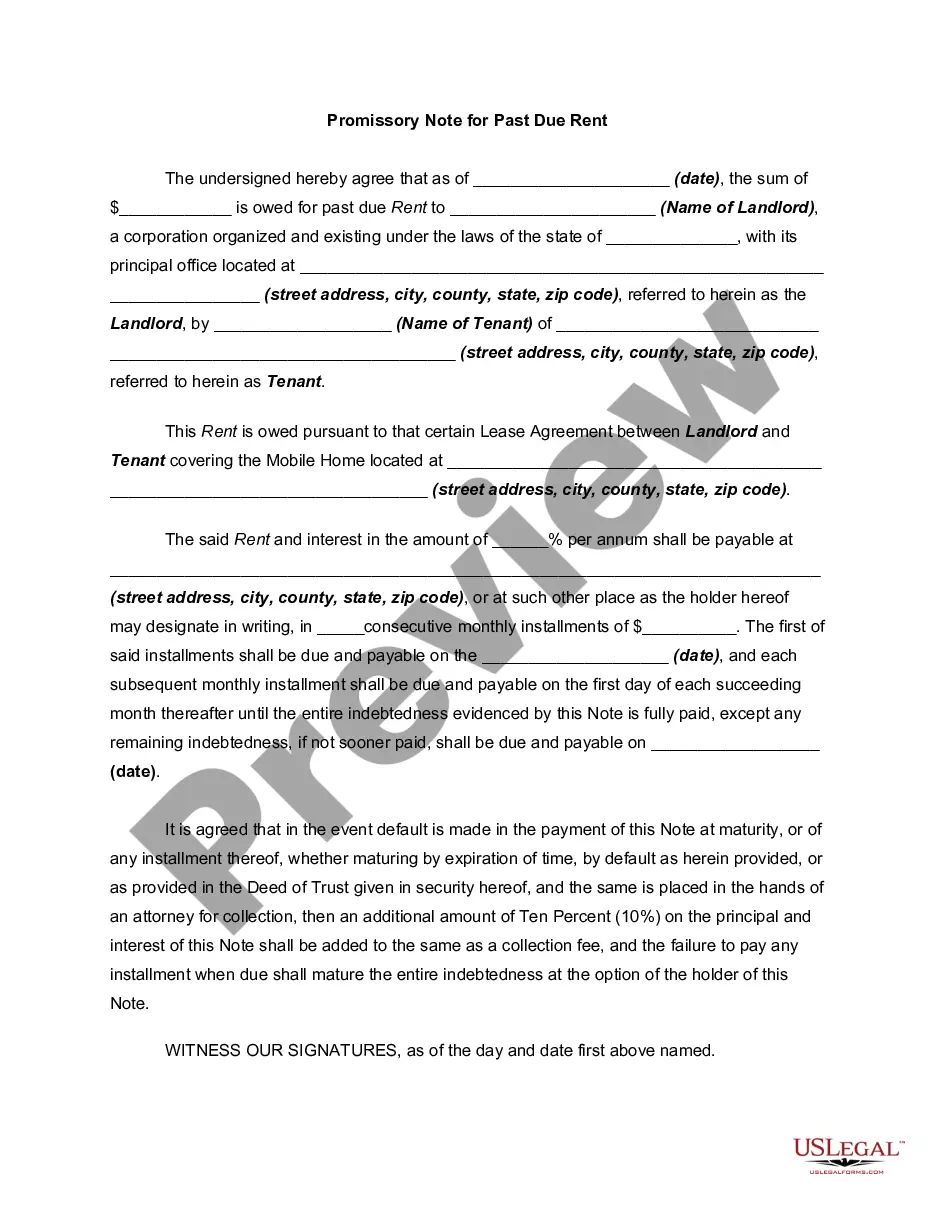

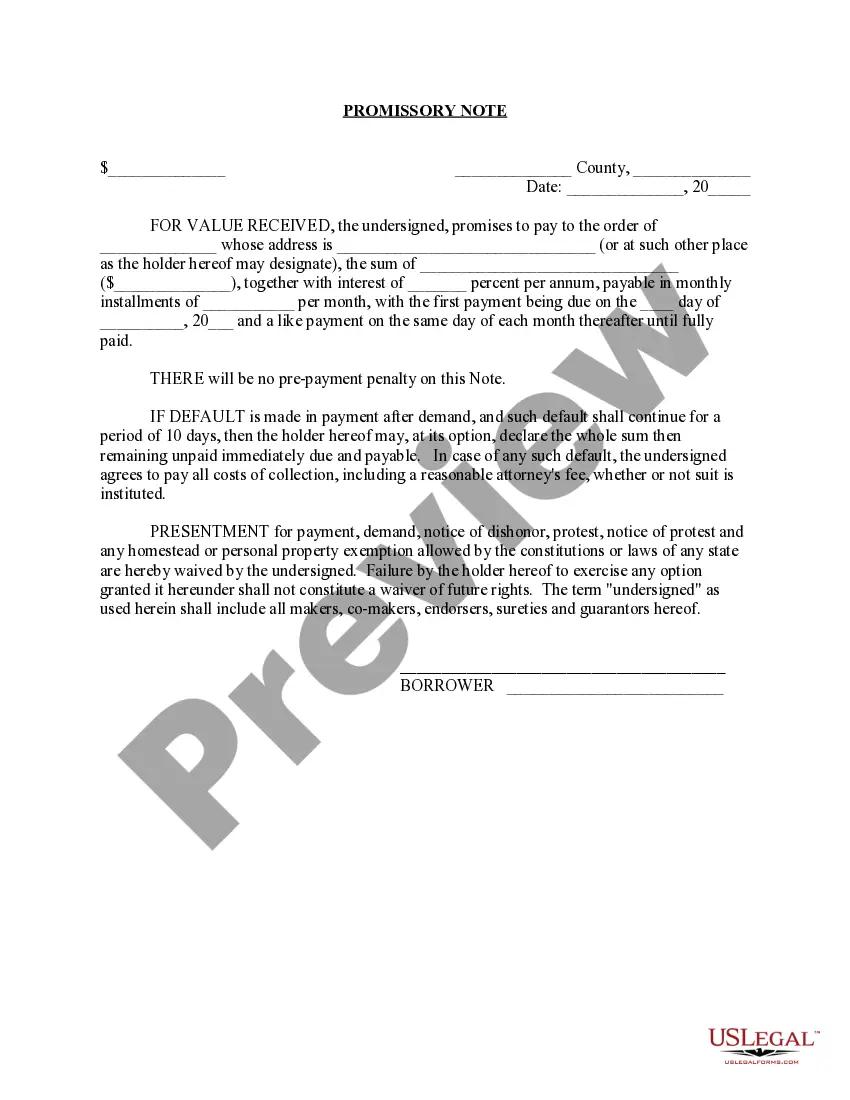


How to fill out Promissory Note For Past Due Rent?
Locating a preferred source to obtain the most up-to-date and pertinent legal samples constitutes a significant portion of the challenge involved in navigating bureaucracy.
Choosing the appropriate legal documents necessitates accuracy and meticulousness, which highlights the importance of sourcing Ledger For Past Due Rent exclusively from reliable providers, such as US Legal Forms. An incorrect template will squander your time and delay the matter at hand. With US Legal Forms, you have minimal concerns.
Eliminate the complexities associated with your legal paperwork. Explore the comprehensive US Legal Forms library to discover legal samples, assess their applicability to your situation, and download them immediately.
- Make use of the library directory or search tool to locate your sample.
- Review the form's description to confirm it meets the criteria for your state and region.
- Preview the form, if an option, to verify it is the document you seek.
- Return to the search and seek the suitable template if the Ledger For Past Due Rent does not align with your requirements.
- If you are confident about the form's applicability, proceed to download it.
- If you are a registered member, click Log in to verify your identity and access your chosen templates in My documents.
- If you haven't registered yet, click Buy now to acquire the form.
- Choose the pricing option that best suits your needs.
- Proceed to register to complete your purchase.
- Finalize your transaction by selecting a payment method (credit card or PayPal).
- Select the file format for downloading Ledger For Past Due Rent.
- Once the form is available on your device, you can modify it using the editor or print it and fill it out by hand.
Form popularity
FAQ
The journal entry for rent due includes debiting the accounts receivable and crediting the rent income. This entry helps you record expected income that is not yet received. Keeping a ledger for past due rent allows for better visibility into your financial situation and aids in planning future actions.
A ledger for outstanding rent is a detailed record that lists all tenants, the amounts they owe, and any received payments. This tool helps landlords keep track of overdue payments and follow up effectively. It is beneficial to use platforms like US Legal Forms to simplify creating and managing this ledger.
The term for unpaid rent is 'delinquent rent' or 'past due rent.' Understanding these terms is crucial for landlords in managing financial records. By utilizing a ledger for past due rent, you can monitor payments effectively and address issues with tenants promptly.
Writing a rent ledger requires organizing the information related to each tenant and their rental payments. Start by listing each tenant's name, followed by the rental amount, payment due dates, and any received payments. Maintaining a ledger for past due rent will help you ensure that you keep an accurate record of what is owed.
To record rent not received, you should maintain a ledger for past due rent. This involves noting the tenant’s name, rental amount, and the date when the payment was due. By creating a clear record, you can easily track outstanding payments and follow up with tenants accordingly.
The ledger of rent outstanding refers to a record that specifically highlights any unpaid rent amounts. It shows the total due, along with any applicable late fees or penalties. Understanding this ledger is essential for both landlords and tenants to manage future payments effectively. Tools available on uslegalforms can assist you in maintaining an accurate ledger to prevent confusion and support timely payments.
Yes, a tenant has the right to request and review the ledger for past due rent. This document allows tenants to verify the accuracy of their payment history and understand any outstanding balances. Open communication regarding the ledger fosters trust between landlords and tenants, promoting a collaborative approach to resolving any disputes. Utilizing uslegalforms can help both parties keep accurate records, ensuring clarity.
Creating a ledger for past due rent involves several straightforward steps. First, gather your rental agreements, payment records, and any related correspondence. Next, organize this information in a clear format, listing the payment dates, amounts due, and any outstanding balances. For ease of access, consider using uslegalforms, which provides templates and tools specifically for tracking past due rent efficiently.
To send past due rent to collections, start by documenting all communications with the tenant regarding late payments. Next, use a ledger for past due rent to clearly outline the amount owed, along with due dates and any late fees incurred. Once you have this information, consider reaching out to a collection agency that specializes in tenant debts. Leveraging a platform like US Legal Forms can streamline the process, providing necessary forms and guidelines to ensure you handle the situation correctly.