What Is A Subpoena For Court
Description

Get your form ready online
Our built-in tools help you complete, sign, share, and store your documents in one place.
Make edits, fill in missing information, and update formatting in US Legal Forms—just like you would in MS Word.
Download a copy, print it, send it by email, or mail it via USPS—whatever works best for your next step.
Sign and collect signatures with our SignNow integration. Send to multiple recipients, set reminders, and more. Go Premium to unlock E-Sign.
If this form requires notarization, complete it online through a secure video call—no need to meet a notary in person or wait for an appointment.
We protect your documents and personal data by following strict security and privacy standards.

Make edits, fill in missing information, and update formatting in US Legal Forms—just like you would in MS Word.

Download a copy, print it, send it by email, or mail it via USPS—whatever works best for your next step.

Sign and collect signatures with our SignNow integration. Send to multiple recipients, set reminders, and more. Go Premium to unlock E-Sign.

If this form requires notarization, complete it online through a secure video call—no need to meet a notary in person or wait for an appointment.

We protect your documents and personal data by following strict security and privacy standards.
Looking for another form?







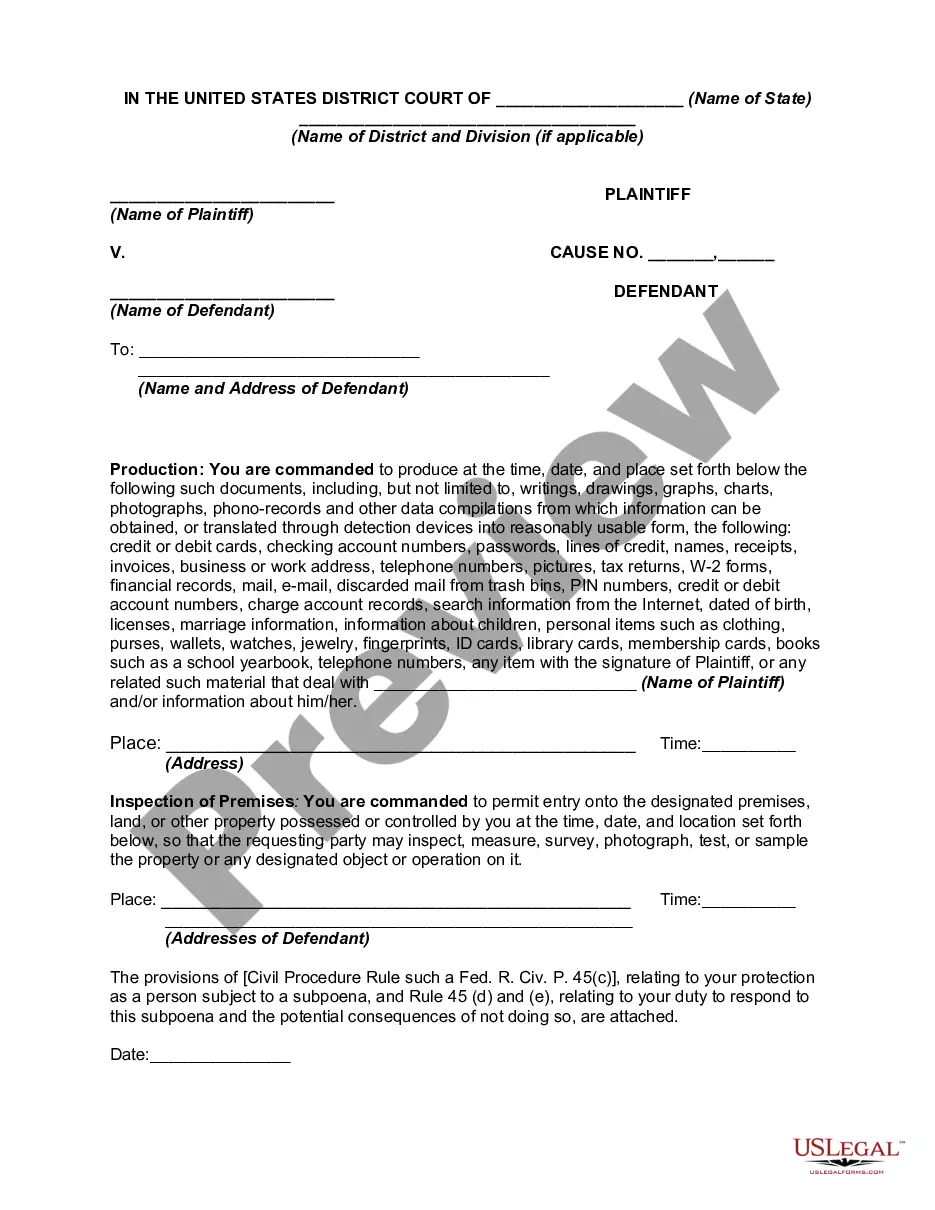
How to fill out Subpoena To Produce Documents, Information, Or Objects Or Permit Inspection Of Premises In A Civil Action Involving Identity Theft?
- Begin by logging into your existing account on US Legal Forms. Verify that your subscription is active; renew if necessary.
- For first-time users, start by exploring the online library. Review the preview and description of each form to confirm compatibility with your jurisdiction.
- If the desired form is not found, utilize the Search function to locate the right document.
- Select the form you need and click 'Buy Now'. Choose a subscription plan that fits your needs and register for an account.
- Complete your purchase by entering credit card details or using PayPal.
- Download the form and save it on your device. You can find it later in the 'My Forms' section of your profile whenever needed.
In conclusion, US Legal Forms provides a comprehensive, user-friendly solution for accessing legal documents like subpoenas for court. Their extensive library and expert assistance ensure that you can quickly and accurately complete any legal form you need.
Don’t hesitate—visit US Legal Forms today to streamline your legal document needs!
Form popularity
FAQ
Writing your own subpoena requires careful organization of the necessary information. Begin by stating the court, case title, and specific information required. Remember, knowing what a subpoena for court entails can simplify the process. USLegal can assist by providing customizable templates to streamline this task, making sure you meet all legal requirements.
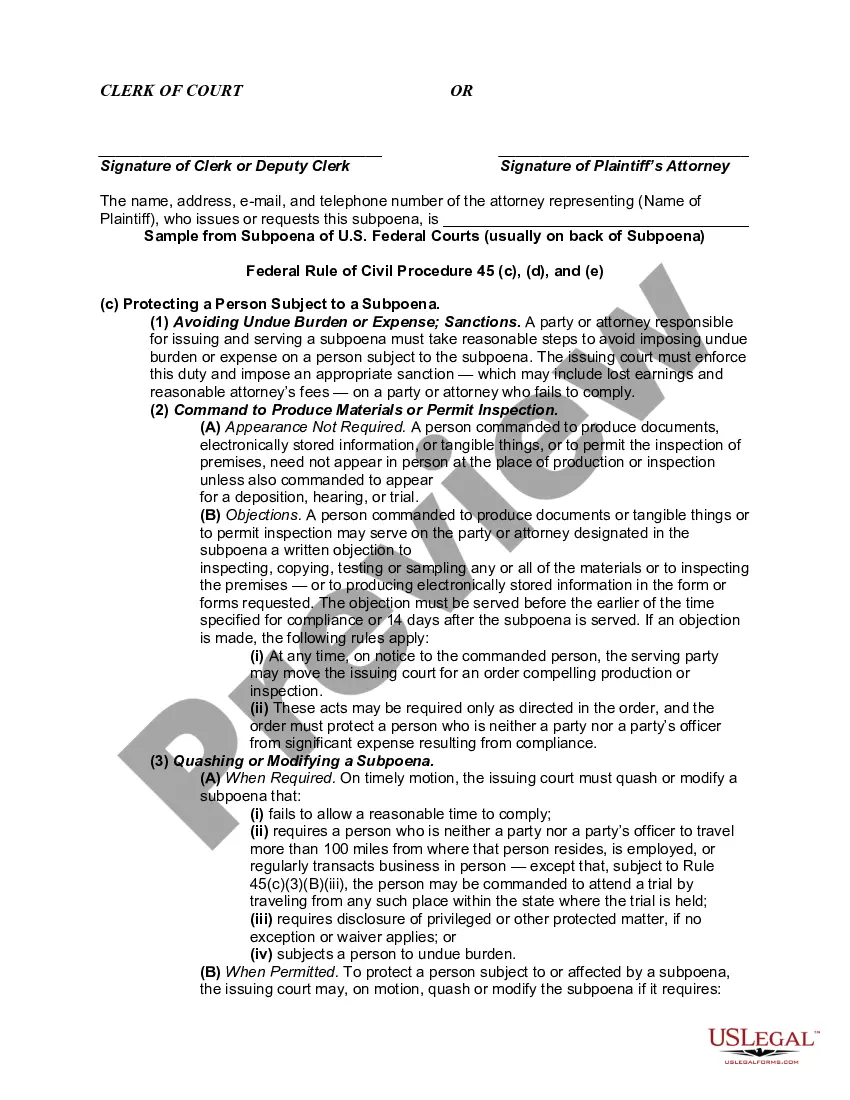
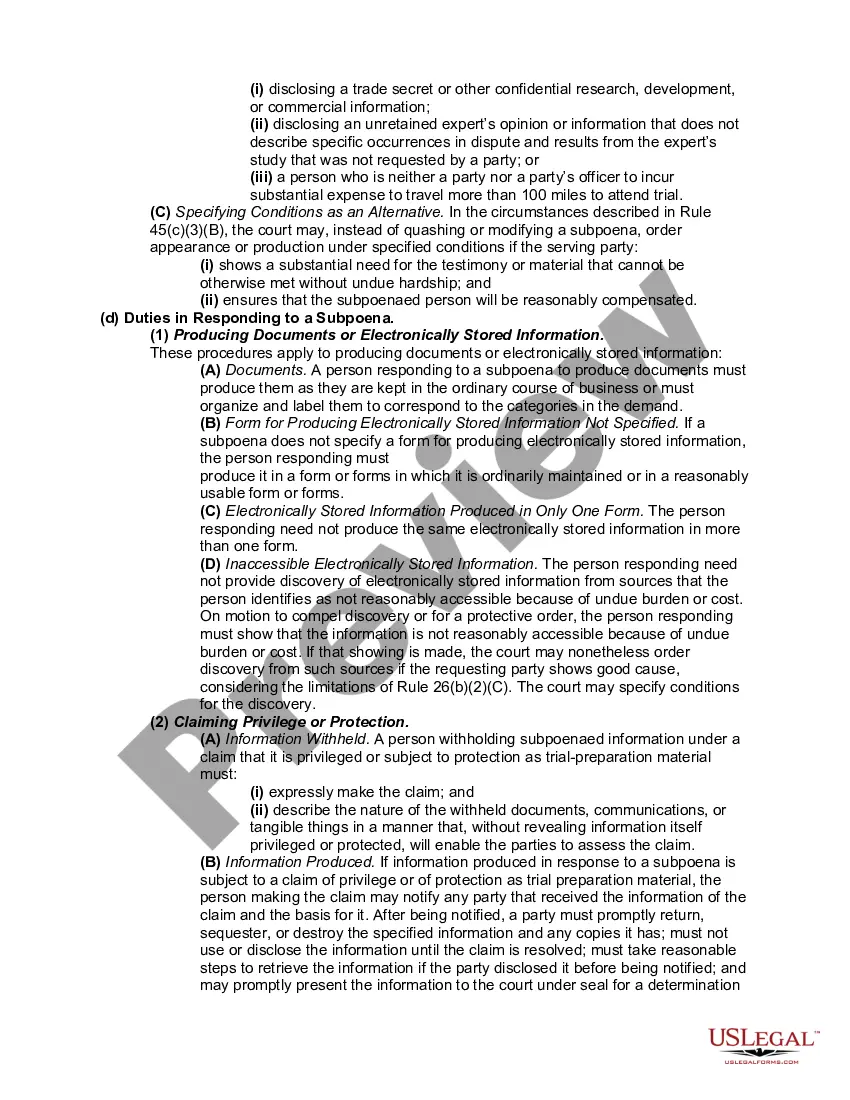
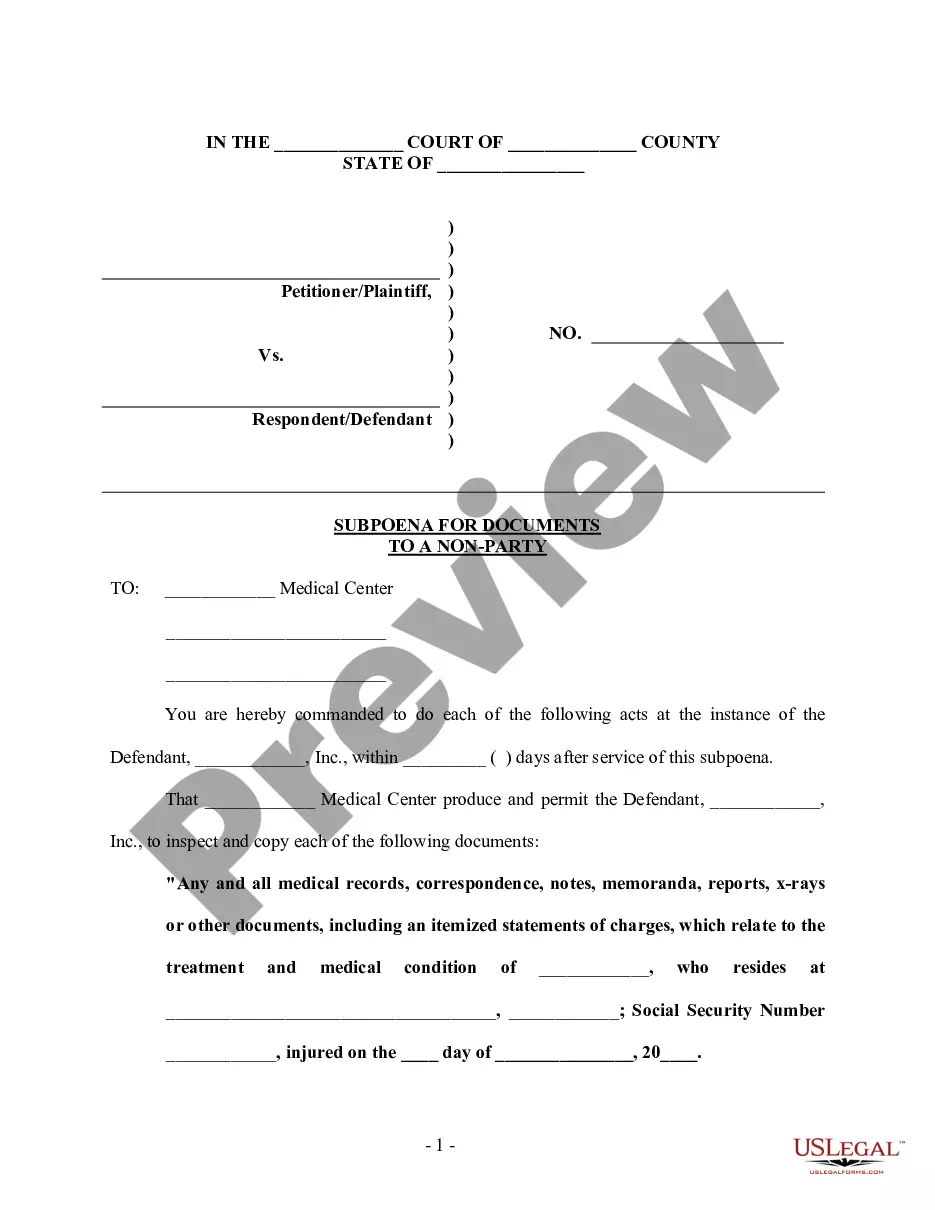
An example of a subpoena might be one that requests the production of documents from a business related to a legal dispute. This subpoena would include clear identifiers like case number, parties involved, and detailed descriptions of the documents needed. Understanding what a subpoena for court looks like can help you formulate your own or recognize how others serve you.
To write your own subpoena, you need to include essential details such as the case name, court information, and specific items or testimony you seek. Make sure it aligns with the legal standards required in your jurisdiction. If you're unsure how to begin, USLegal offers user-friendly templates that can guide you through creating an effective subpoena for court.
Yes, you can subpoena your own client if necessary to gather information vital to your case. However, the ethics of doing so may vary based on the context and your professional obligations. It's important to consider the implications and consult resources like USLegal to clarify how a subpoena for court applies in your situation.
When serving a subpoena, introduce yourself and clearly state that you are delivering a subpoena for court. It is helpful to explain what the subpoena entails and its purpose. As you understand what a subpoena for court is, communicating transparently cultivates trust and cooperation from the individual being served.
In most cases, a subpoena does not need to be notarized. However, you must ensure that it is properly signed and issued by the appropriate authority. Knowing what a subpoena for court requires can help you meet necessary legal standards, and USLegal can provide templates to simplify this process.
Yes, you can subpoena records yourself, but you must follow legal procedures carefully. Understanding what a subpoena for court entails is crucial, as it varies by jurisdiction. You may want to consult legal resources or seek assistance from qualified professionals, like those at USLegal, to ensure your subpoena meets all requirements.
Refusing to testify after being subpoenaed can lead to serious legal consequences, including contempt of court charges. Courts take subpoenas seriously, and non-compliance may result in fines or even jail time. If you are unsure about your ability to testify, consult a legal expert to discuss your options while fully understanding what a subpoena for court means.
While you are not required to hire a lawyer after receiving a subpoena, consulting with one is highly recommended. A lawyer can help you understand your rights, obligations, and the consequences of complying or refusing. Engaging legal assistance can ensure that you navigate the process correctly and protect your interests.
Receiving a subpoena does not automatically imply that you are in trouble. It simply means that your testimony or documents are needed in a legal matter. However, it is advisable to take the subpoena seriously and understand its implications, especially as it relates to what a subpoena for court involves.