Pet Agreement Forms For Landlords
Description

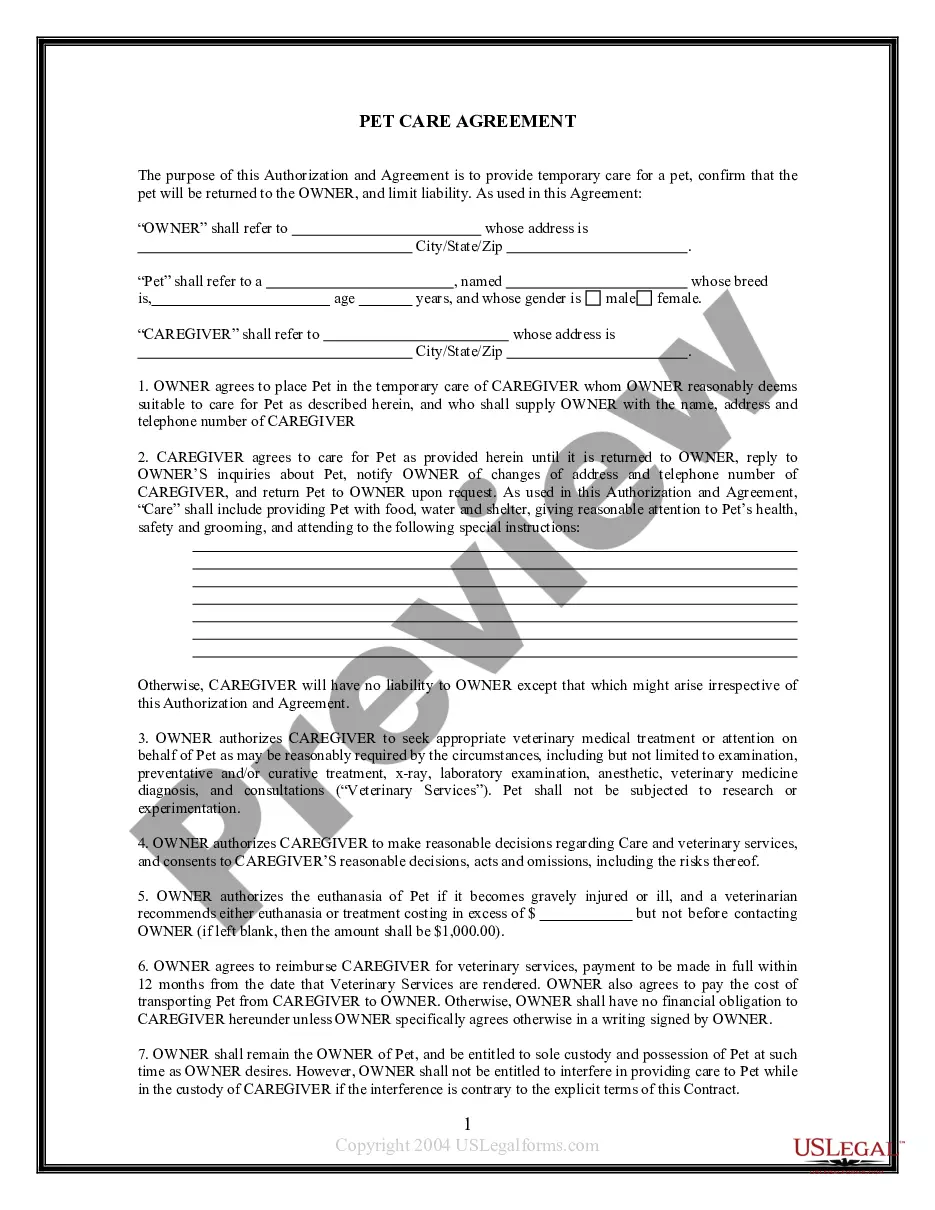
Get your form ready online
Our built-in tools help you complete, sign, share, and store your documents in one place.
Make edits, fill in missing information, and update formatting in US Legal Forms—just like you would in MS Word.
Download a copy, print it, send it by email, or mail it via USPS—whatever works best for your next step.
Sign and collect signatures with our SignNow integration. Send to multiple recipients, set reminders, and more. Go Premium to unlock E-Sign.
If this form requires notarization, complete it online through a secure video call—no need to meet a notary in person or wait for an appointment.
We protect your documents and personal data by following strict security and privacy standards.

Make edits, fill in missing information, and update formatting in US Legal Forms—just like you would in MS Word.

Download a copy, print it, send it by email, or mail it via USPS—whatever works best for your next step.

Sign and collect signatures with our SignNow integration. Send to multiple recipients, set reminders, and more. Go Premium to unlock E-Sign.

If this form requires notarization, complete it online through a secure video call—no need to meet a notary in person or wait for an appointment.

We protect your documents and personal data by following strict security and privacy standards.
Looking for another form?
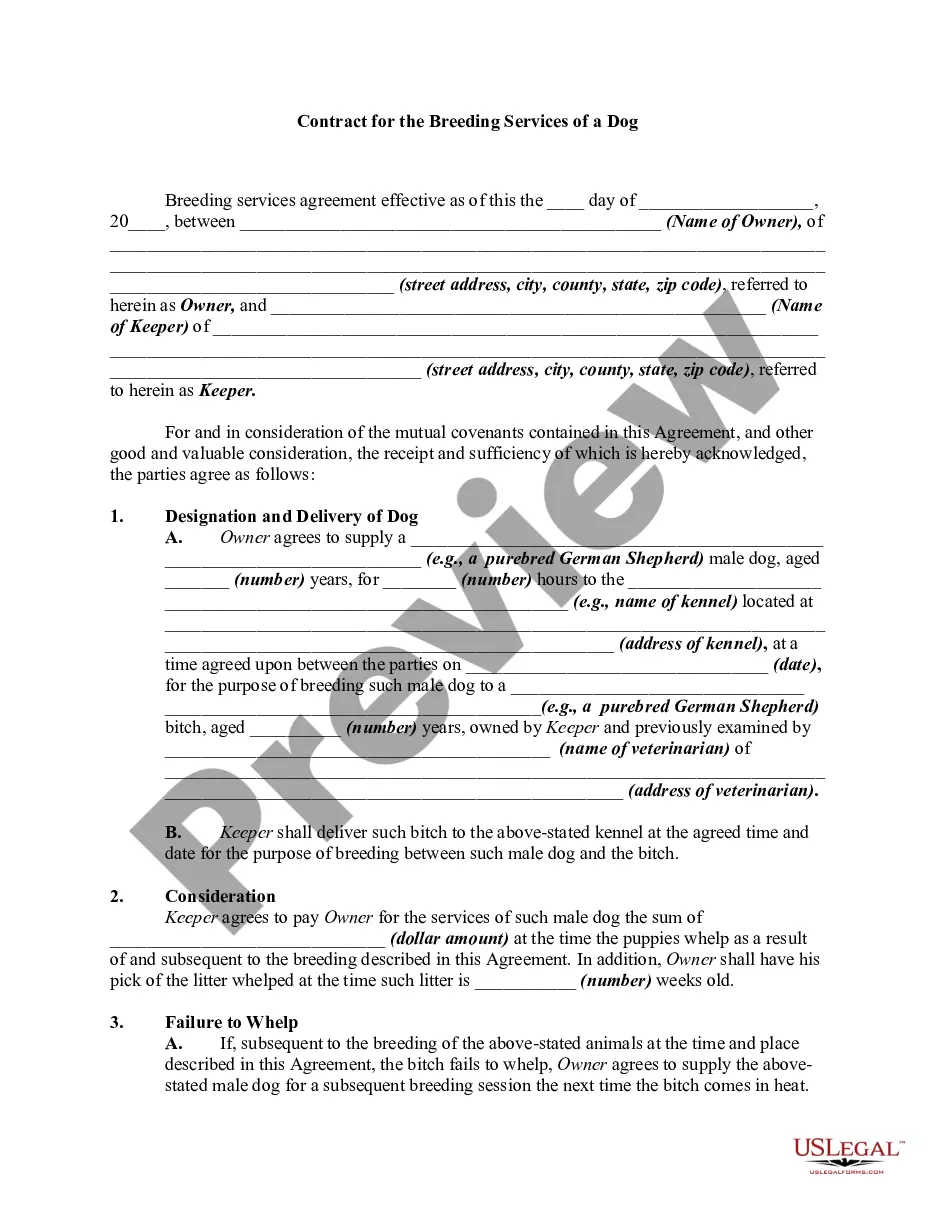



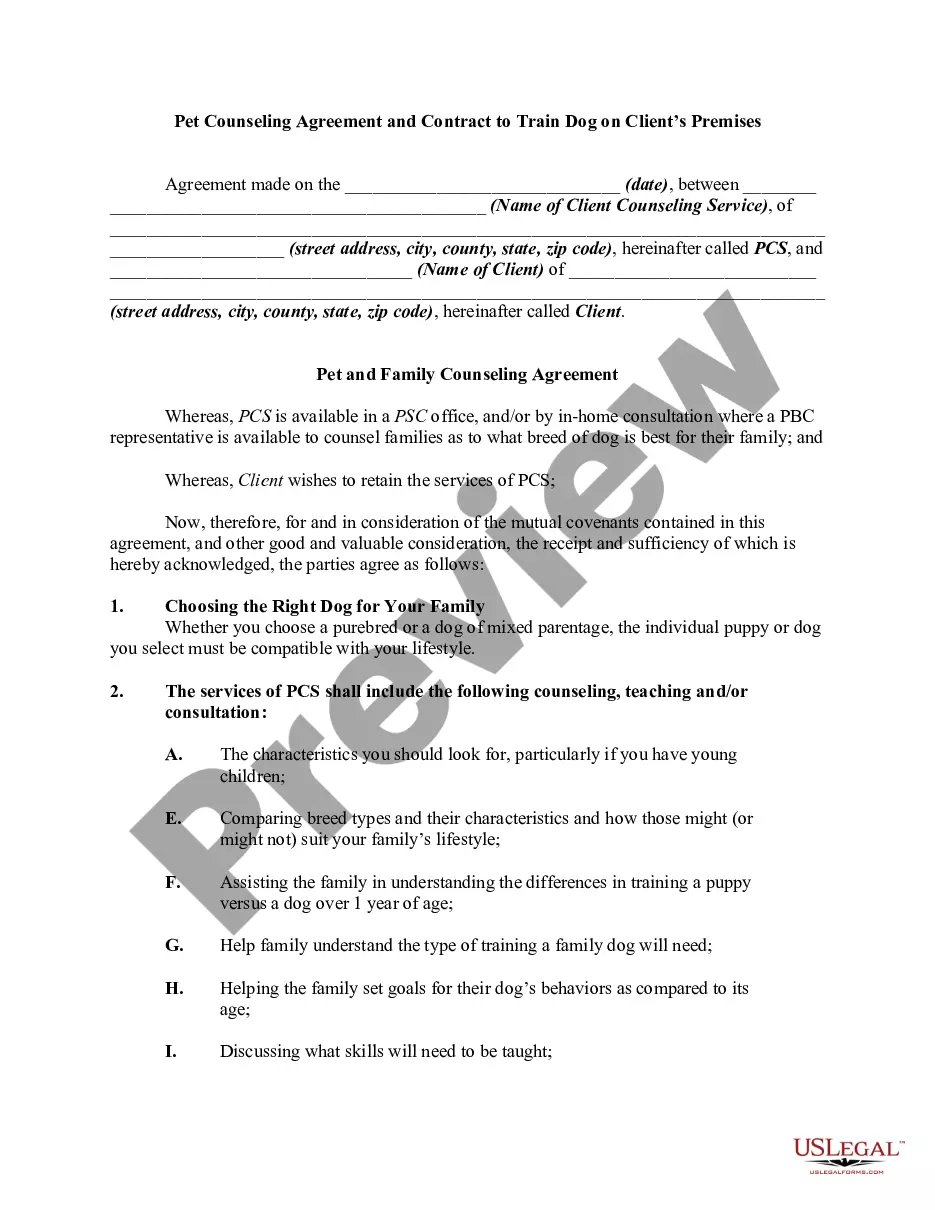
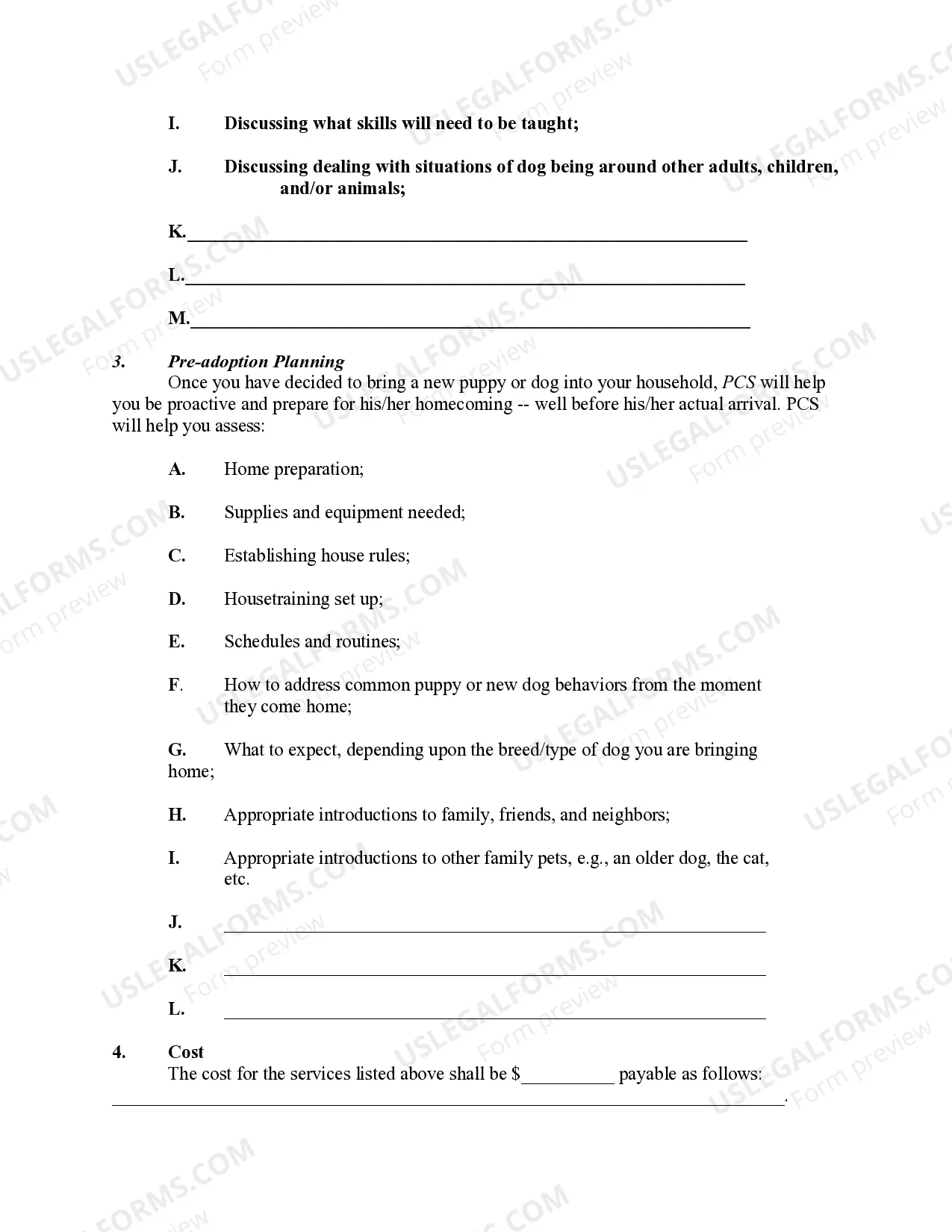
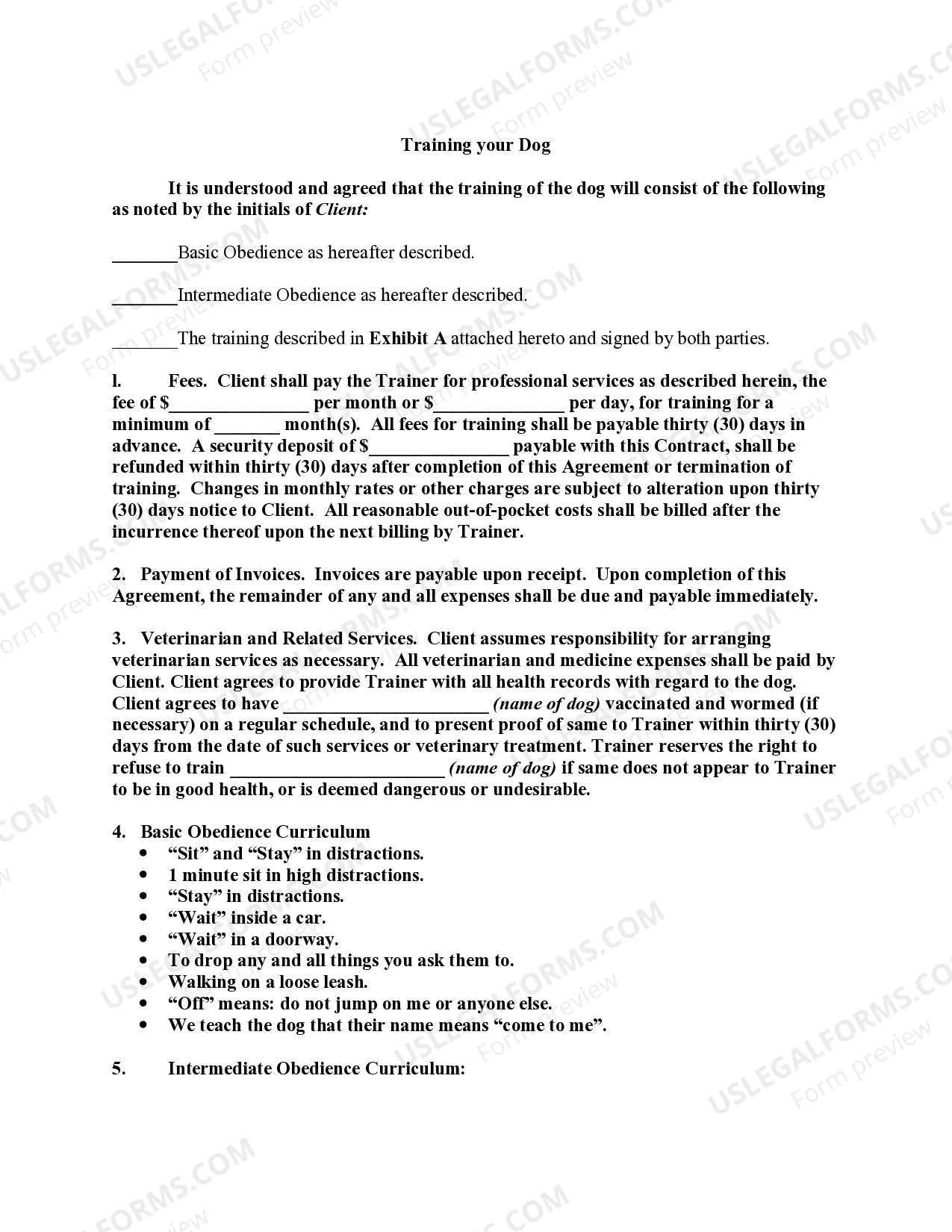
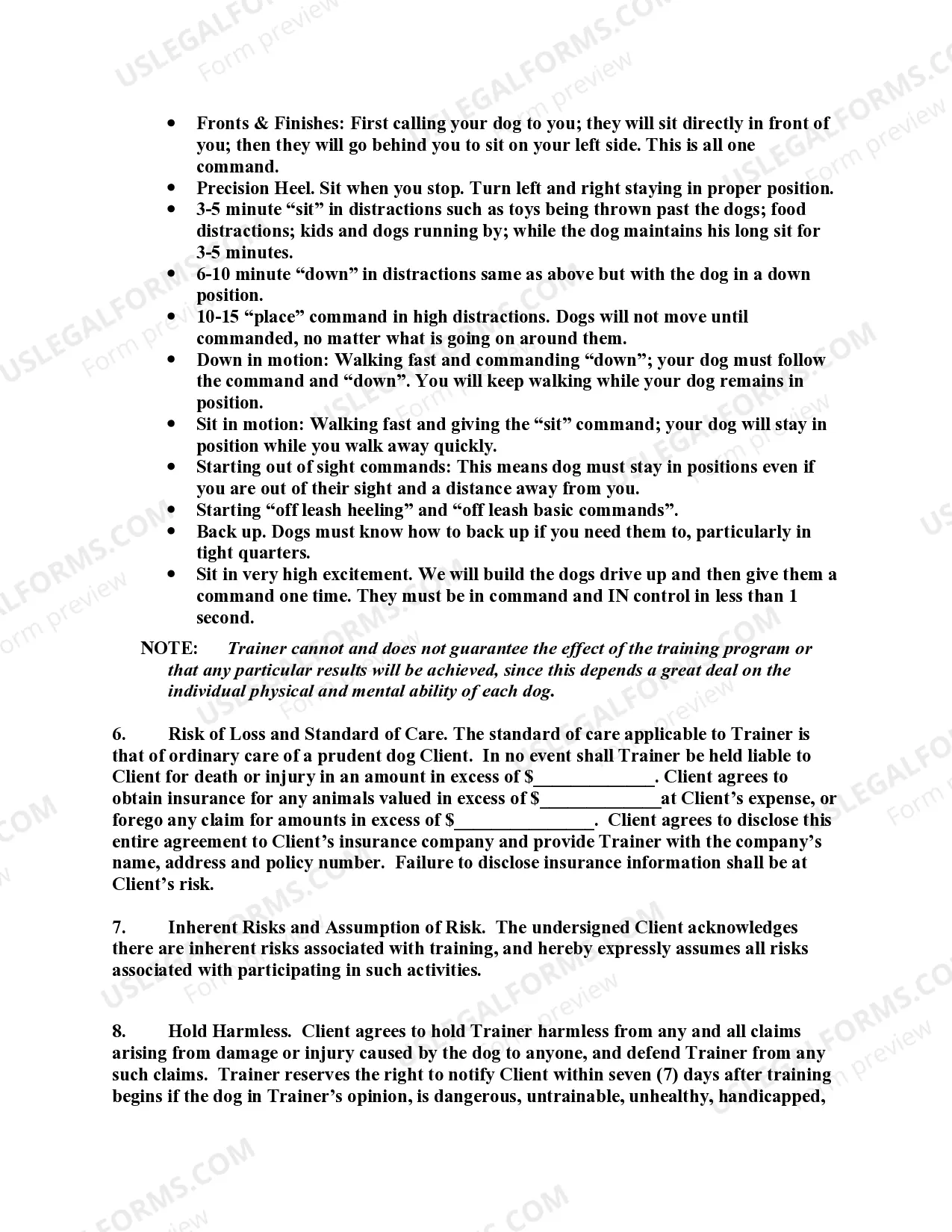
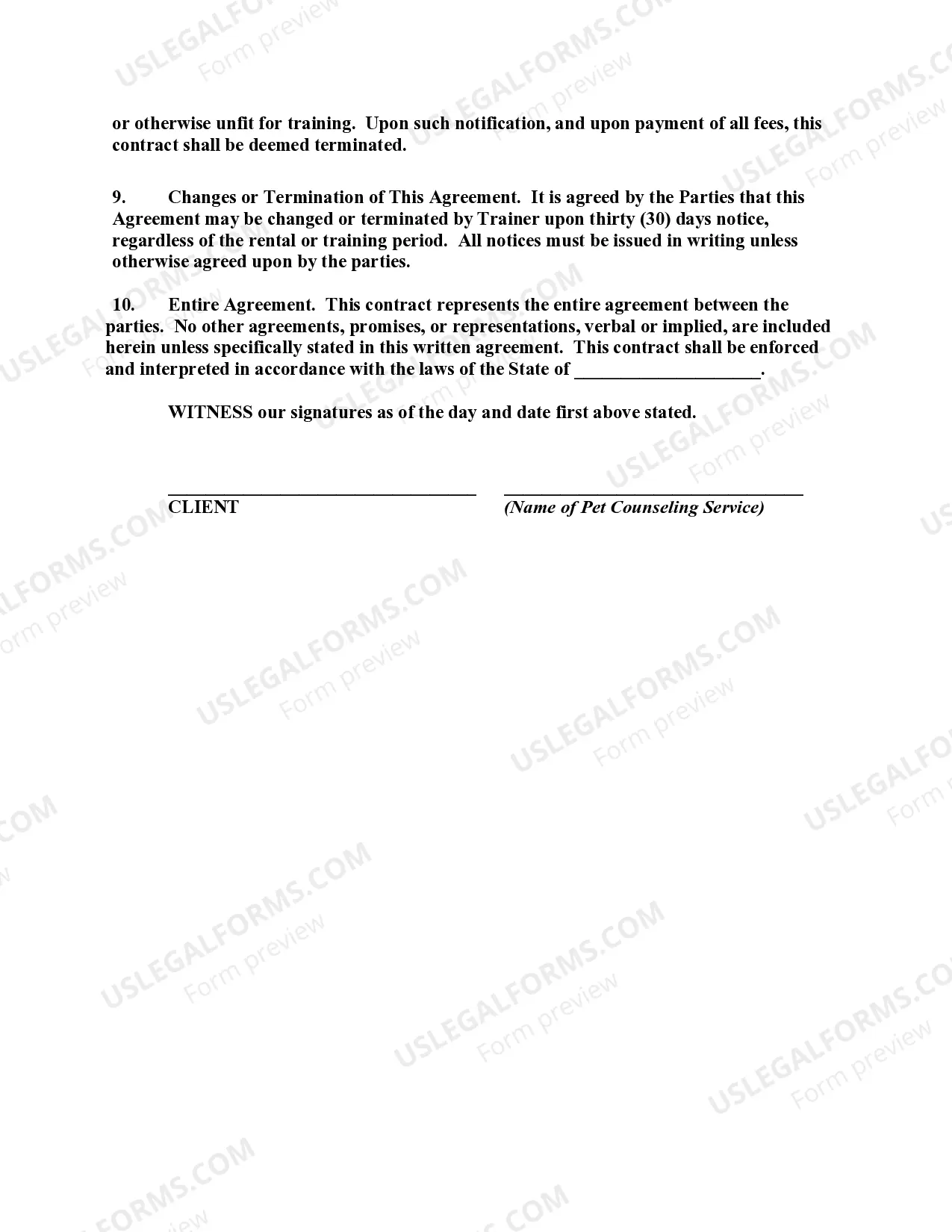
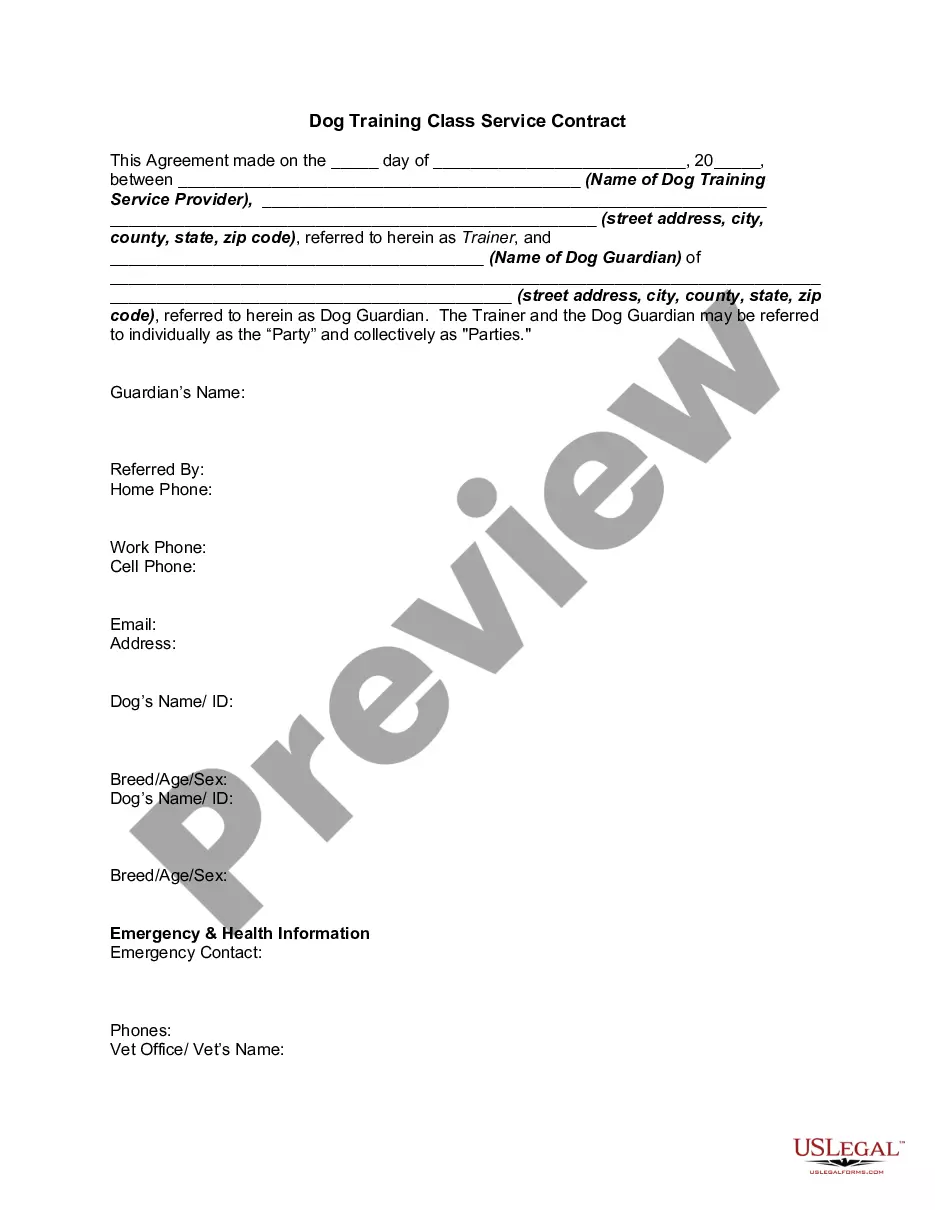
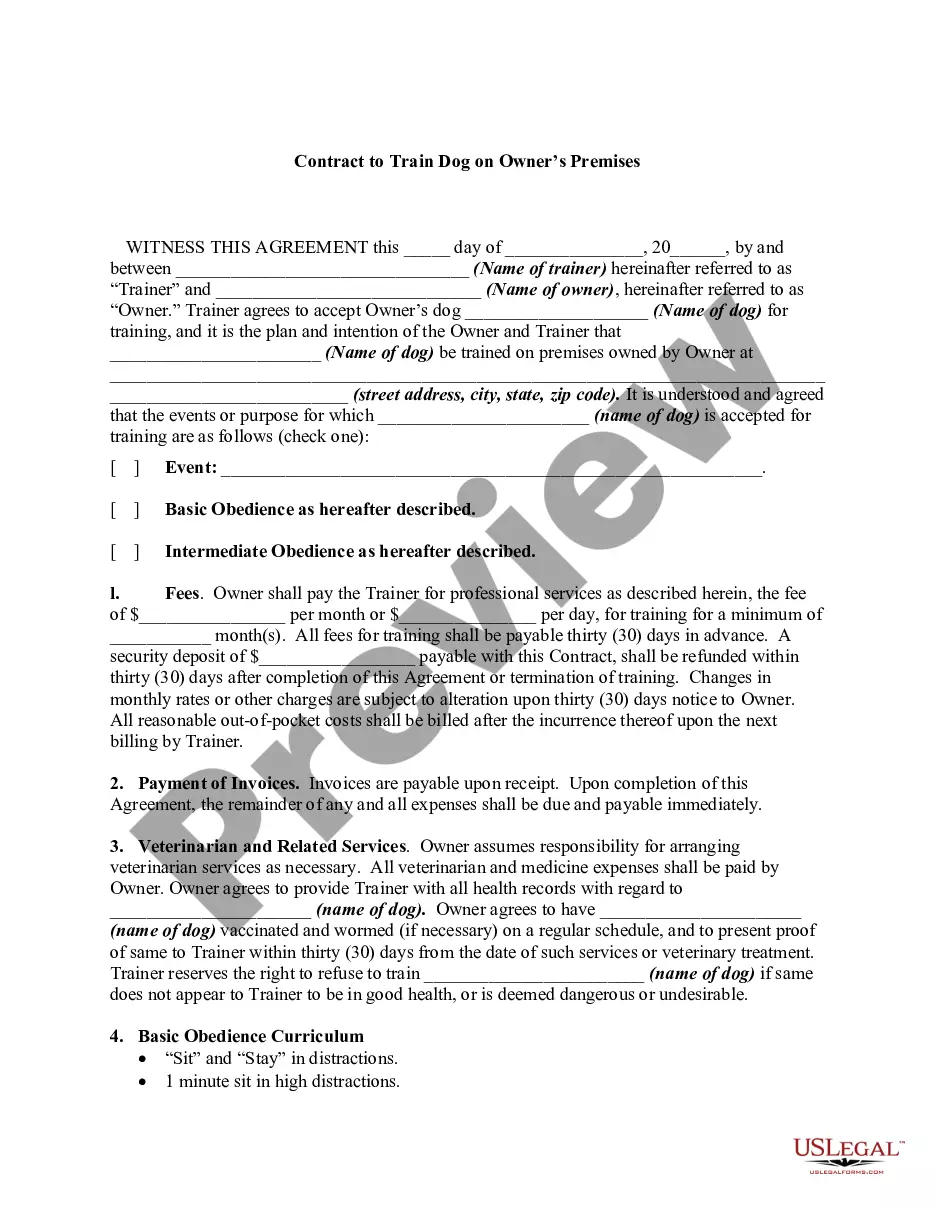
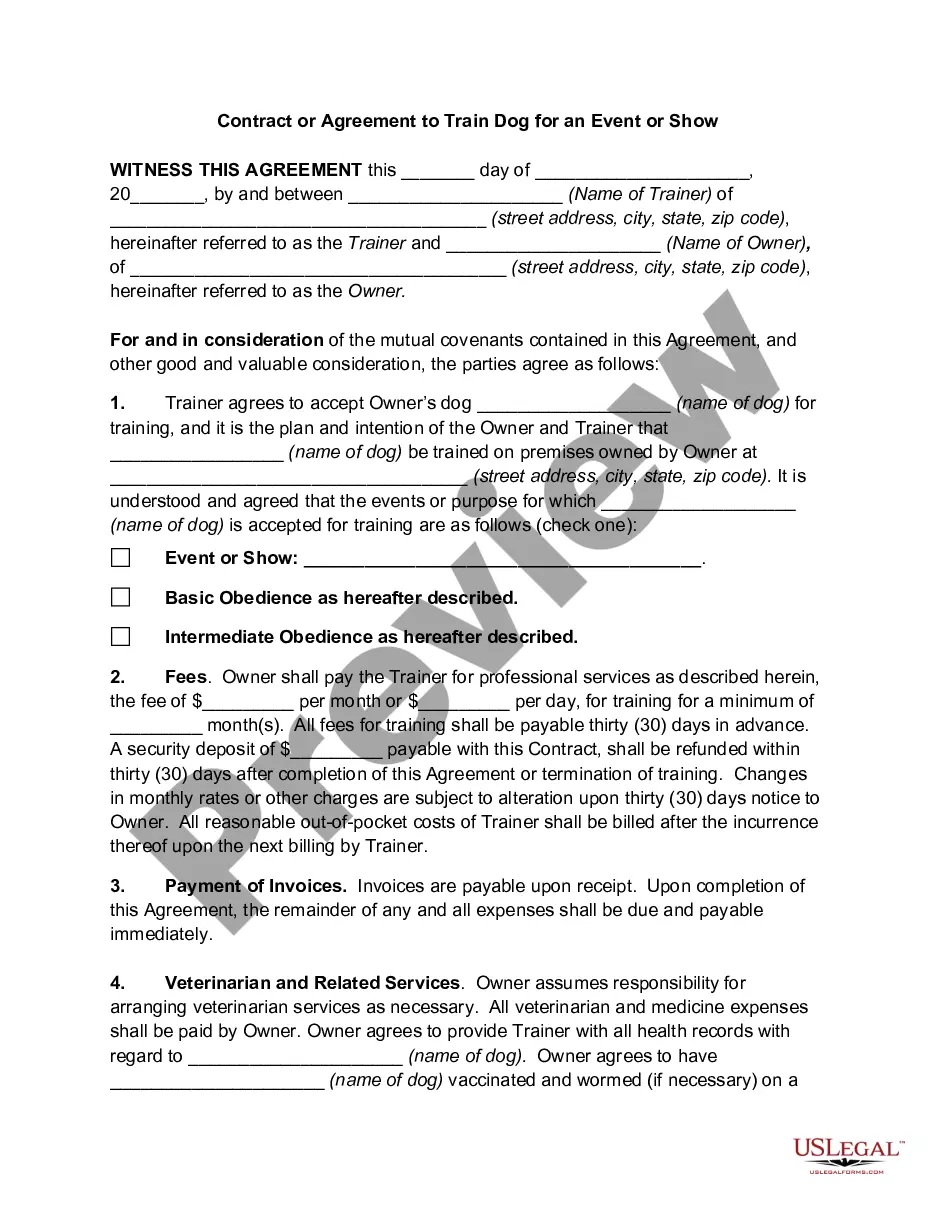
How to fill out Pet Counseling Agreement And Contract To Train Dog On Client's Premises?
- If you're an existing user, log in to your account on the US Legal Forms website and download the desired template by clicking the Download button. Ensure your subscription is up to date.
- For new users, start by exploring the extensive library. Check the Preview mode and form descriptions to select the pet agreement form that aligns with your specific needs and local regulations.
- Should you require a different form, utilize the Search tab to find the correct document that suits your requirements.
- To acquire the selected form, click on the Buy Now button and choose the subscription plan that best fits your needs. Registering an account is necessary to access all library resources.
- Complete your purchase by entering your credit card details or using your PayPal account to finalize the payment process.
- Once purchased, download the form and save it on your device. You can access it anytime via the My Forms menu in your profile.
By using US Legal Forms, you benefit from an extensive library of over 85,000 legal documents, ensuring you find everything you need to create sound agreements. This service empowers landlords and tenants alike with precise and legally compliant forms.
Get started today with US Legal Forms to streamline your rental management process. Unlock the power of legally sound agreements to enhance your rental experience!
Form popularity
FAQ
To write a pet addendum, you should reference the original lease agreement and specify that it allows for pet ownership under certain conditions. Include details like the type of pet, designated pet areas, and any required fees. By incorporating pet agreement forms for landlords, you ensure all parties follow a consistent framework. This clarity helps avoid future disputes.
An example of a pet agreement includes sections detailing pet ownership terms, a description of the pet, and rules around pet care. It might also mention any fees associated with pet ownership and the consequences of non-compliance. Using pet agreement forms for landlords can help ensure that all important factors are covered. This thoughtful approach can lead to a smooth rental experience.
Writing a pet agreement requires a clear outline of expectations and responsibilities. Start with details such as the type of pet, pet behavior, and ownership responsibilities. Incorporate pet agreement forms for landlords to address any specifics related to rental properties, like potential damage or noise issues. This document should protect both you and your landlord.
When writing a letter to your landlord about a pet, be concise and respectful. Start by stating your request clearly and include reasons why having a pet would be beneficial. Mention your willingness to use pet agreement forms for landlords to propose terms that protect both you and the property. This positive approach helps convey your seriousness and commitment.
A pet agreement is a written document that outlines terms and conditions for pet ownership in rental properties. It typically includes information such as pet responsibilities, allowed pet types, and potential fees. Utilizing pet agreement forms for landlords can simplify this process and provide clarity for both tenants and landlords. This ensures all parties are on the same page regarding pet policies.
Writing a pet sitting contract involves outlining the responsibilities of both the pet owner and the sitter. Include details about payment, services offered, and any unique care instructions. Additionally, incorporating pet agreement forms for landlords can help clarify rules and expectations if the pet owner is renting. This ensures everyone understands their roles and protects against future misunderstandings.
To navigate a no pet lease, start by having an open discussion with your landlord. You can propose specific pet agreement forms for landlords, which outline responsibilities and expectations for pet ownership. Be prepared to offer a pet deposit or additional rent to ease their concerns. Building trust with your landlord can lead to a more flexible arrangement.
To write a pet agreement, start by detailing essential terms such as pet ownership responsibilities, pet deposits, and rules regarding pet behavior. Clearly state what will happen if these terms are violated, ensuring both parties understand their obligations. Using pet agreement forms for landlords simplifies this process, providing a structured format that covers all necessary details, which helps protect your interests as a property manager.
When informing your landlord about your pet, clear communication is vital. Write a polite, concise letter or email explaining that you have obtained a pet and are willing to adhere to the pet policy. Include any required documents, such as pet registration or vaccination records, and offer to fill out any pet agreement forms for landlords. This proactive approach helps maintain a positive relationship with your landlord.
Adding a pet to a lease can be straightforward if you follow the right steps. First, you should check your current lease agreement to see if it includes a pet policy. If your policy allows for pets, simply complete the necessary pet agreement forms for landlords to officially document the addition. This process ensures that both you and your tenant have a mutual understanding regarding pet ownership.