Pet Agreement For Tenants
Description

Get your form ready online
Our built-in tools help you complete, sign, share, and store your documents in one place.
Make edits, fill in missing information, and update formatting in US Legal Forms—just like you would in MS Word.
Download a copy, print it, send it by email, or mail it via USPS—whatever works best for your next step.
Sign and collect signatures with our SignNow integration. Send to multiple recipients, set reminders, and more. Go Premium to unlock E-Sign.
If this form requires notarization, complete it online through a secure video call—no need to meet a notary in person or wait for an appointment.
We protect your documents and personal data by following strict security and privacy standards.

Make edits, fill in missing information, and update formatting in US Legal Forms—just like you would in MS Word.

Download a copy, print it, send it by email, or mail it via USPS—whatever works best for your next step.

Sign and collect signatures with our SignNow integration. Send to multiple recipients, set reminders, and more. Go Premium to unlock E-Sign.

If this form requires notarization, complete it online through a secure video call—no need to meet a notary in person or wait for an appointment.

We protect your documents and personal data by following strict security and privacy standards.
Looking for another form?

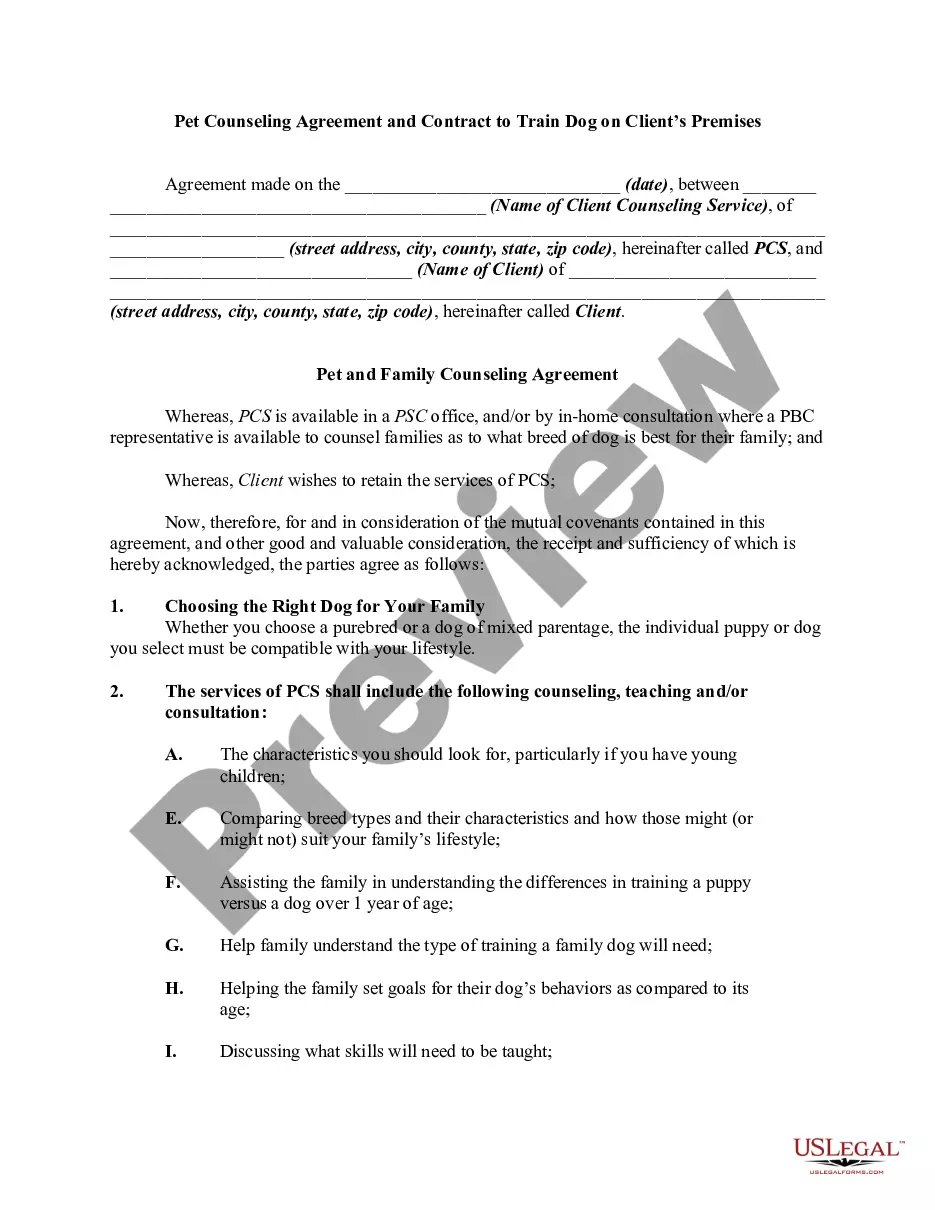
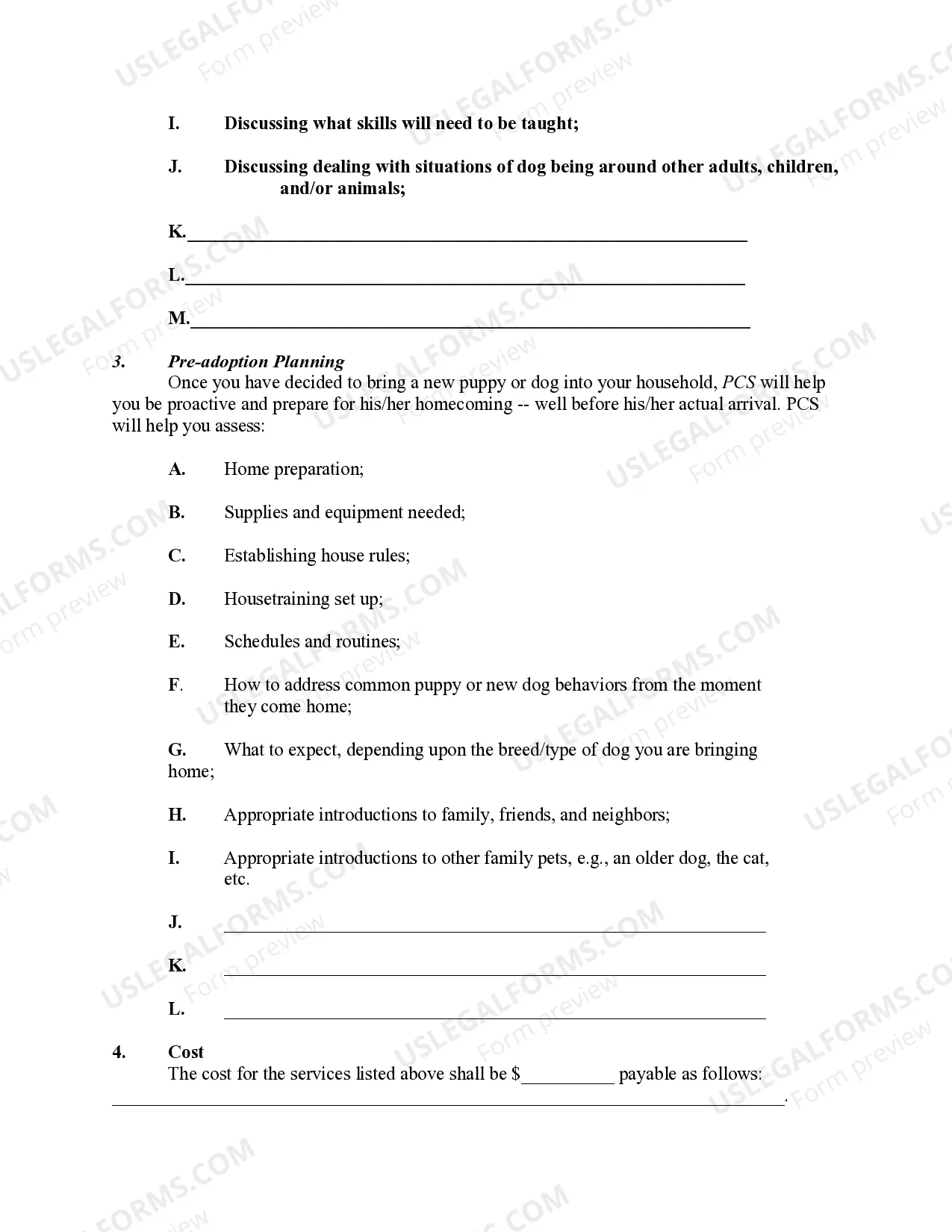
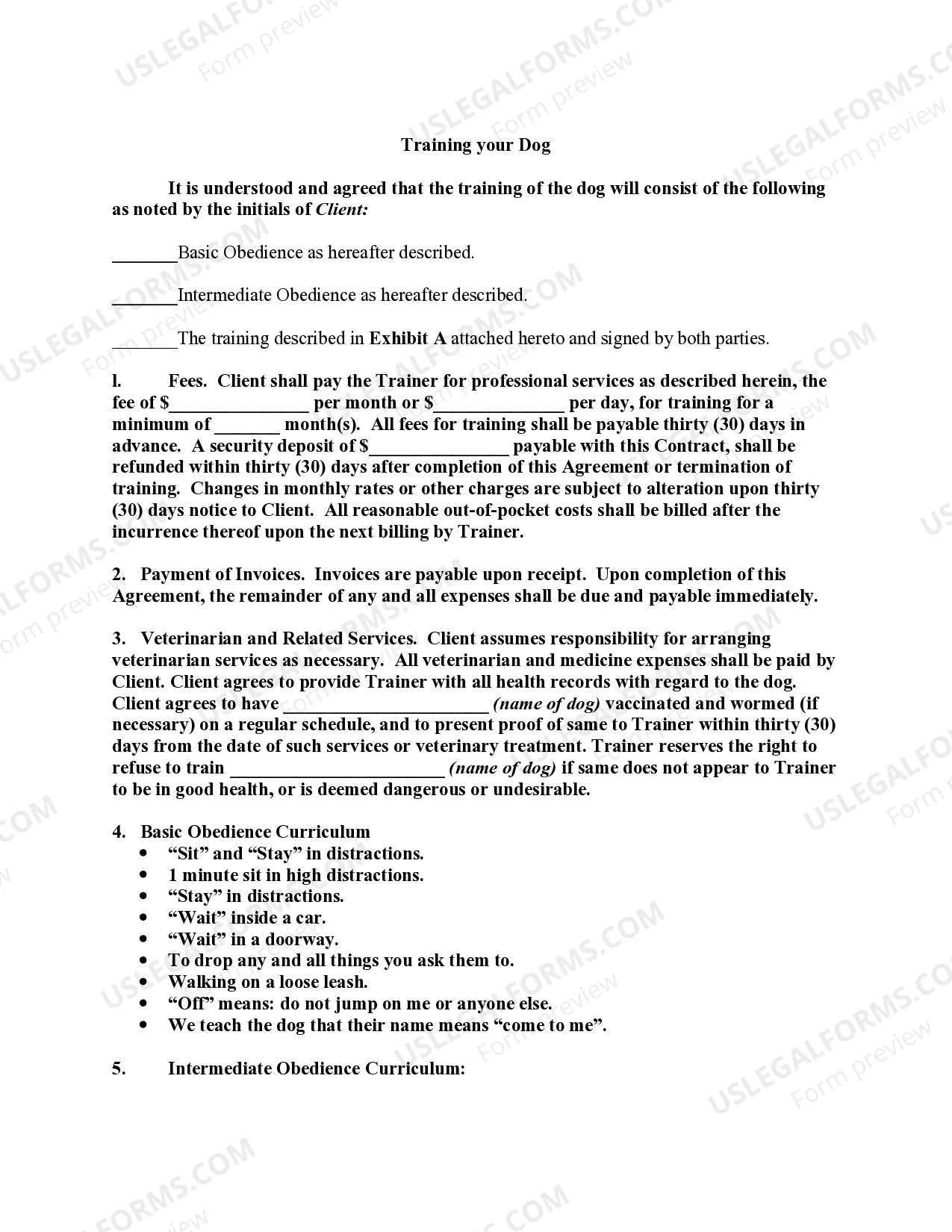
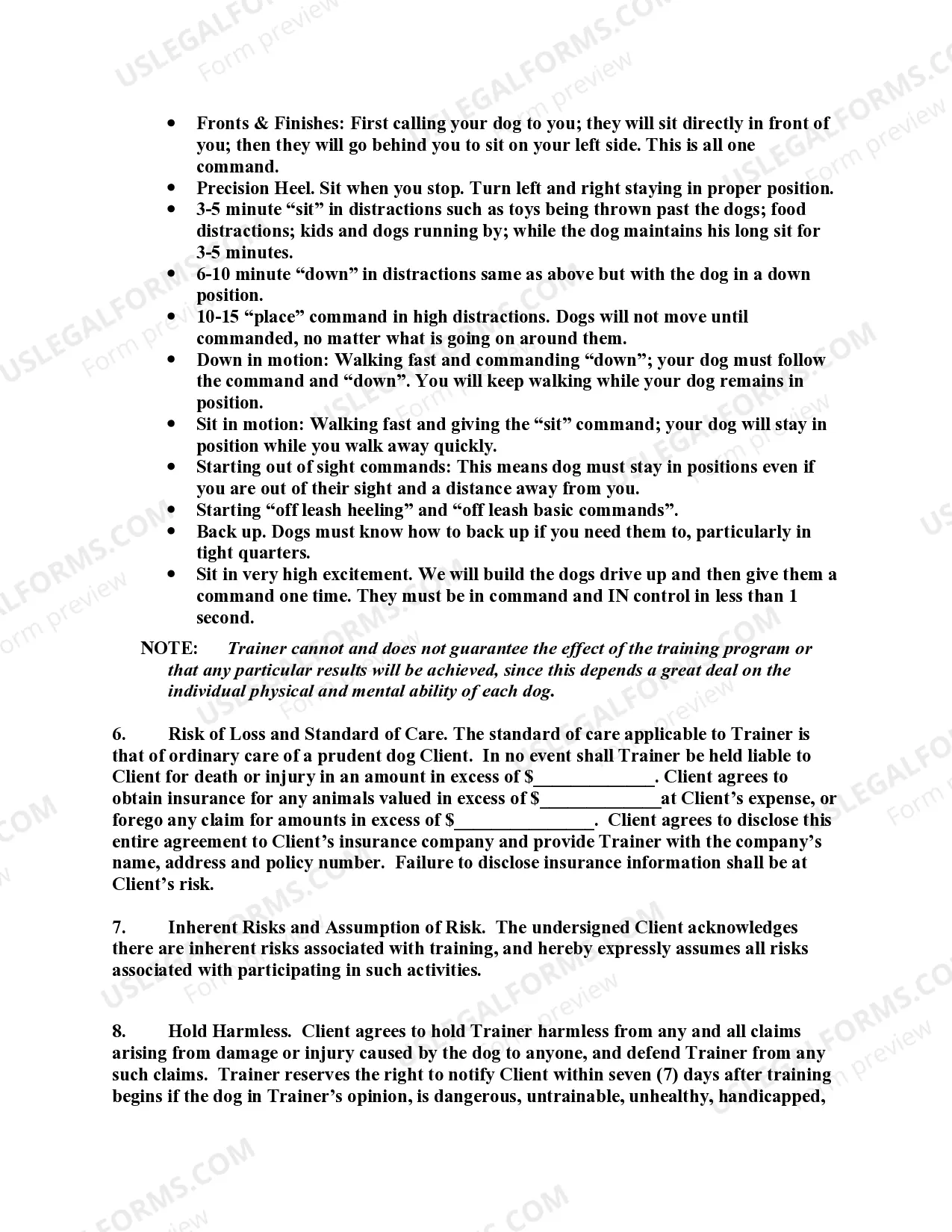
How to fill out Pet Counseling Agreement And Contract To Train Dog On Client's Premises?
- Start by logging into your existing US Legal Forms account. If you're a new user, create an account to access the document library.
- In the search bar, type 'Pet agreement for tenants' and review the available templates. Ensure the one you choose aligns with your local regulations.
- If you don’t find a suitable template, utilize the search feature to refine your options until you locate the right agreement.
- Select the 'Buy Now' option next to the desired document and choose your preferred subscription plan.
- Complete the payment process by entering your credit card information or using your PayPal account.
- Once payment is confirmed, download your pet agreement. You can find it later in the 'My Forms' section of your account for any future reference.
By utilizing US Legal Forms, you gain access to an extensive library of over 85,000 forms and receive support from premium experts. This ensures not only convenience but also accuracy in your legal documents.
Create your pet agreement today and enjoy peace of mind while living with your furry friend. Visit US Legal Forms now to start!
Form popularity
FAQ
If you have a pet against your lease, you may face several consequences, such as fines or eviction notices. Landlords often include clauses specifically outlining pet policies, making it crucial to adhere to these terms. To avoid penalties, consider negotiating a pet agreement for tenants with your landlord. This proactive approach can help you enjoy pet ownership while maintaining a good relationship with your landlord.
To add a pet to your lease, you should first review your existing rental agreement for any pet policies. If your landlord allows pets, you will need to discuss it with them and possibly draft a pet agreement for tenants. This agreement typically outlines pet responsibilities, fees, and any additional rules. Be sure to document everything to ensure clarity and prevent any future disputes.
Writing a pet sitting contract involves outlining the duties and responsibilities of the pet sitter to ensure the pet’s well-being. Clearly state the services provided, any specific instructions, and payment terms. Utilizing a pet agreement for tenants can help streamline the communication between pet owners and sitters, ensuring a positive experience for everyone involved.
To write a pet addendum, begin with clear identification of the parties involved, followed by a description of the pet or pets allowed. Include the terms regarding pet deposits, rules for behavior, and any restrictions. A well-crafted pet agreement for tenants can serve as a valuable tool to ensure both tenant and landlord understand their responsibilities.
The pet liability clause in a lease agreement addresses the responsibilities of the tenant regarding any damage caused by their pets. This clause typically requires tenants to cover costs for repairs or clean-up due to pet-related incidents. Including a pet agreement for tenants can enhance clarity and enhance accountability.
The no pet clause on a lease is a provision that explicitly prohibits tenants from having pets in the rental property. This clause protects the landlord's property by reducing the risk of damage and ensuring cleanliness. If you require a pet agreement for tenants, this clause can be replaced by a pet addendum that outlines specific pet policies.
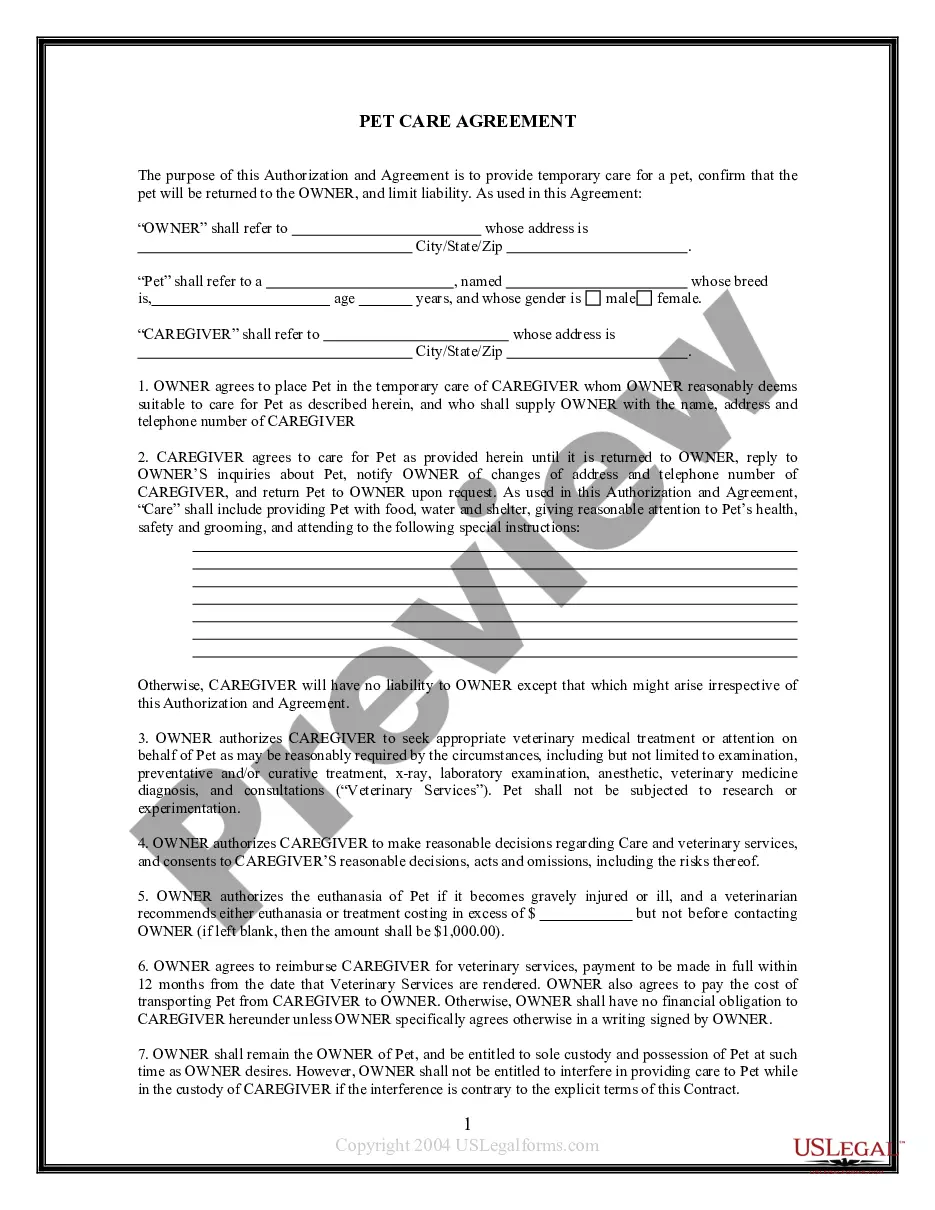
A pet agreement for tenants is a written document that outlines the responsibilities and rights of both the tenant and the landlord regarding pet ownership in a rental property. For instance, it can specify which types of pets are allowed, any additional fees, and the rules for pet behavior. This agreement helps protect the property and provides clear guidelines, ensuring a harmonious living environment.
Generally, you cannot add a pet to your lease without your landlord's consent. However, if you discuss your situation and the possibility of adding a pet, you can negotiate an amendment to your existing lease. Creating a formal pet agreement for tenants can help formalize this addition.
It is essential to respect the rules set by your landlord. Instead of trying to circumvent a no pet policy, consider discussing the possibility of an exception. Propose a pet agreement for tenants that outlines your willingness to comply with specific conditions that address the landlord's concerns.
To persuade your landlord, emphasize your ability to be a responsible pet owner. Share your pet's good behavior and your plans for their care. Offer to draft a pet agreement for tenants that lays out your commitments, which may help alleviate your landlord's concerns.