Pet Agreement For Rental Property
Description

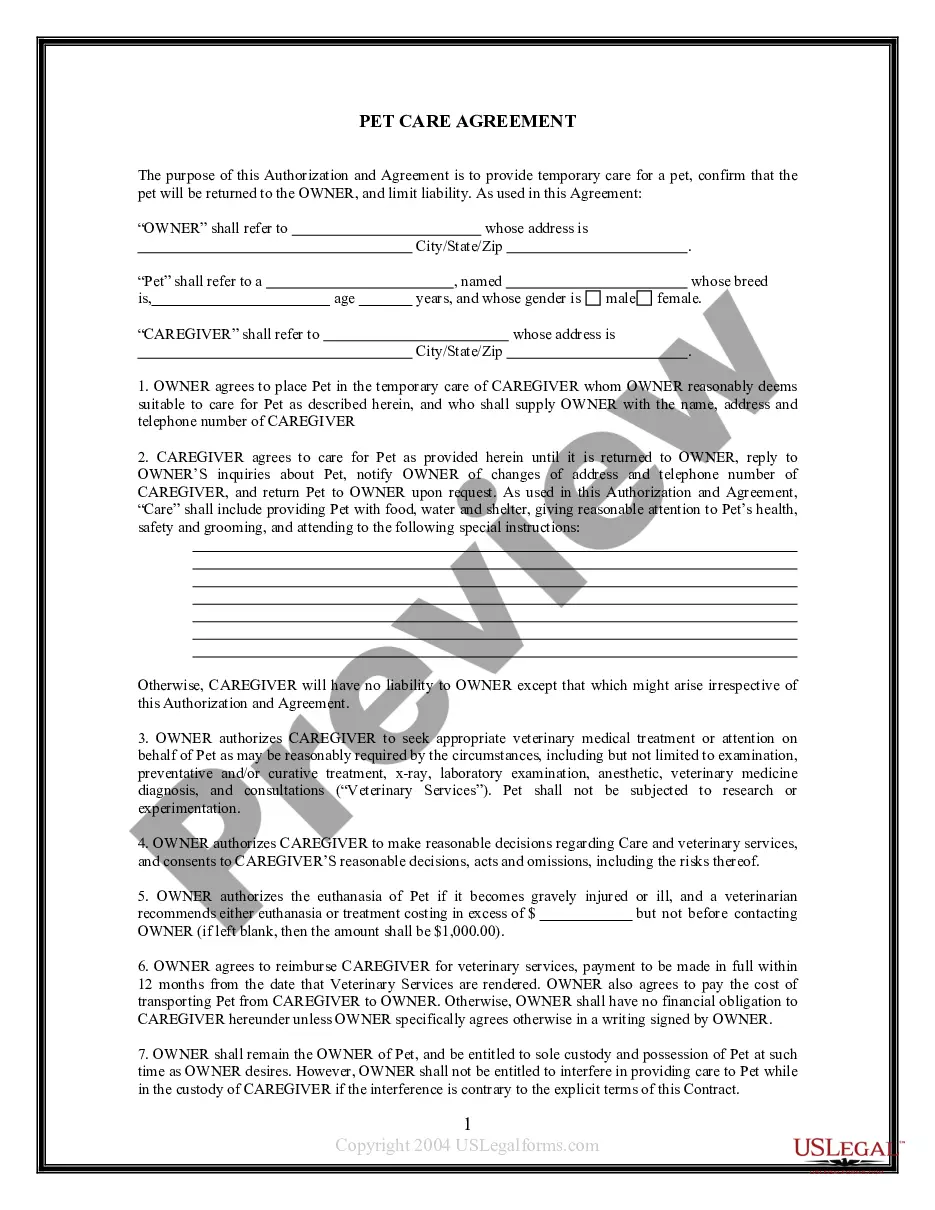
Get your form ready online
Our built-in tools help you complete, sign, share, and store your documents in one place.
Make edits, fill in missing information, and update formatting in US Legal Forms—just like you would in MS Word.
Download a copy, print it, send it by email, or mail it via USPS—whatever works best for your next step.
Sign and collect signatures with our SignNow integration. Send to multiple recipients, set reminders, and more. Go Premium to unlock E-Sign.
If this form requires notarization, complete it online through a secure video call—no need to meet a notary in person or wait for an appointment.
We protect your documents and personal data by following strict security and privacy standards.

Make edits, fill in missing information, and update formatting in US Legal Forms—just like you would in MS Word.

Download a copy, print it, send it by email, or mail it via USPS—whatever works best for your next step.

Sign and collect signatures with our SignNow integration. Send to multiple recipients, set reminders, and more. Go Premium to unlock E-Sign.

If this form requires notarization, complete it online through a secure video call—no need to meet a notary in person or wait for an appointment.

We protect your documents and personal data by following strict security and privacy standards.
Looking for another form?

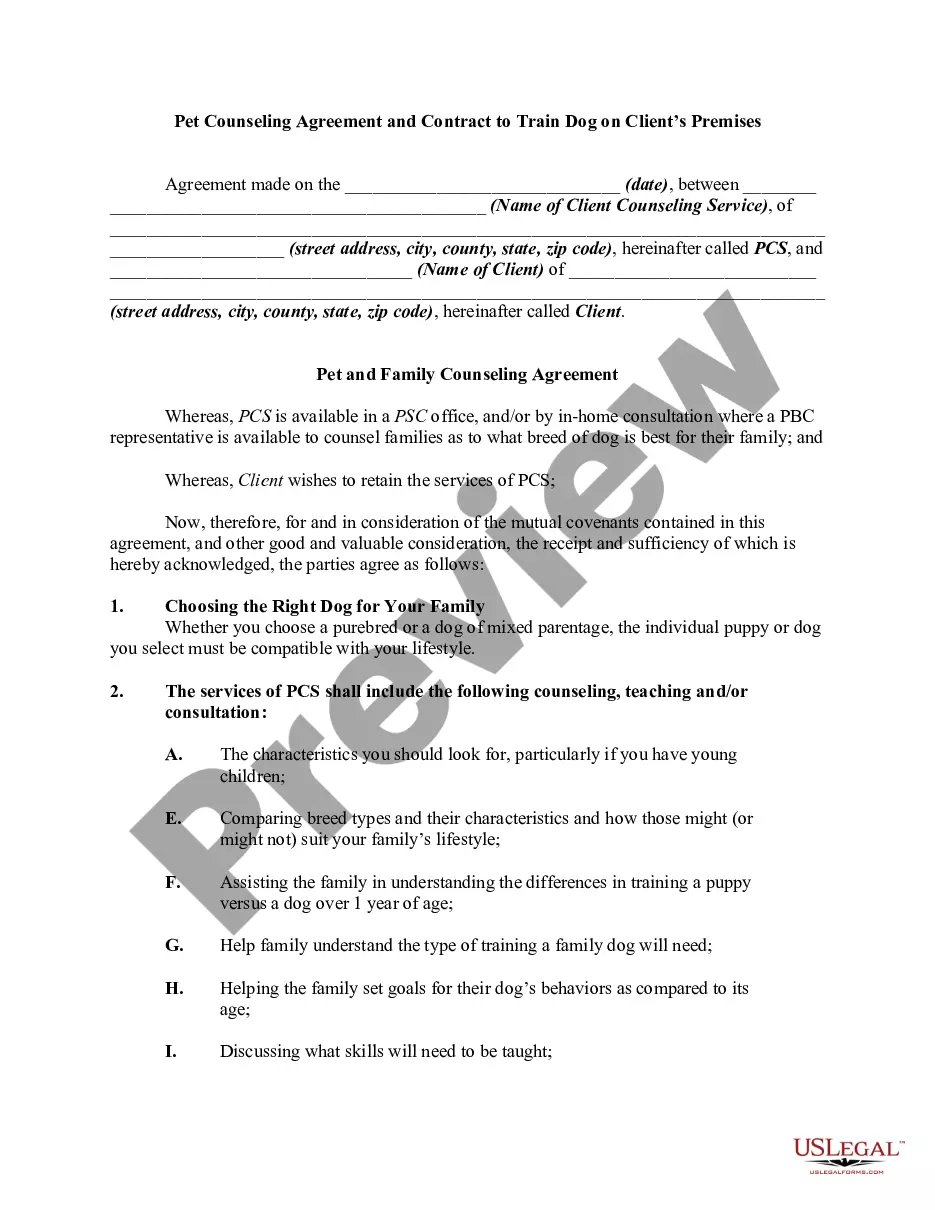
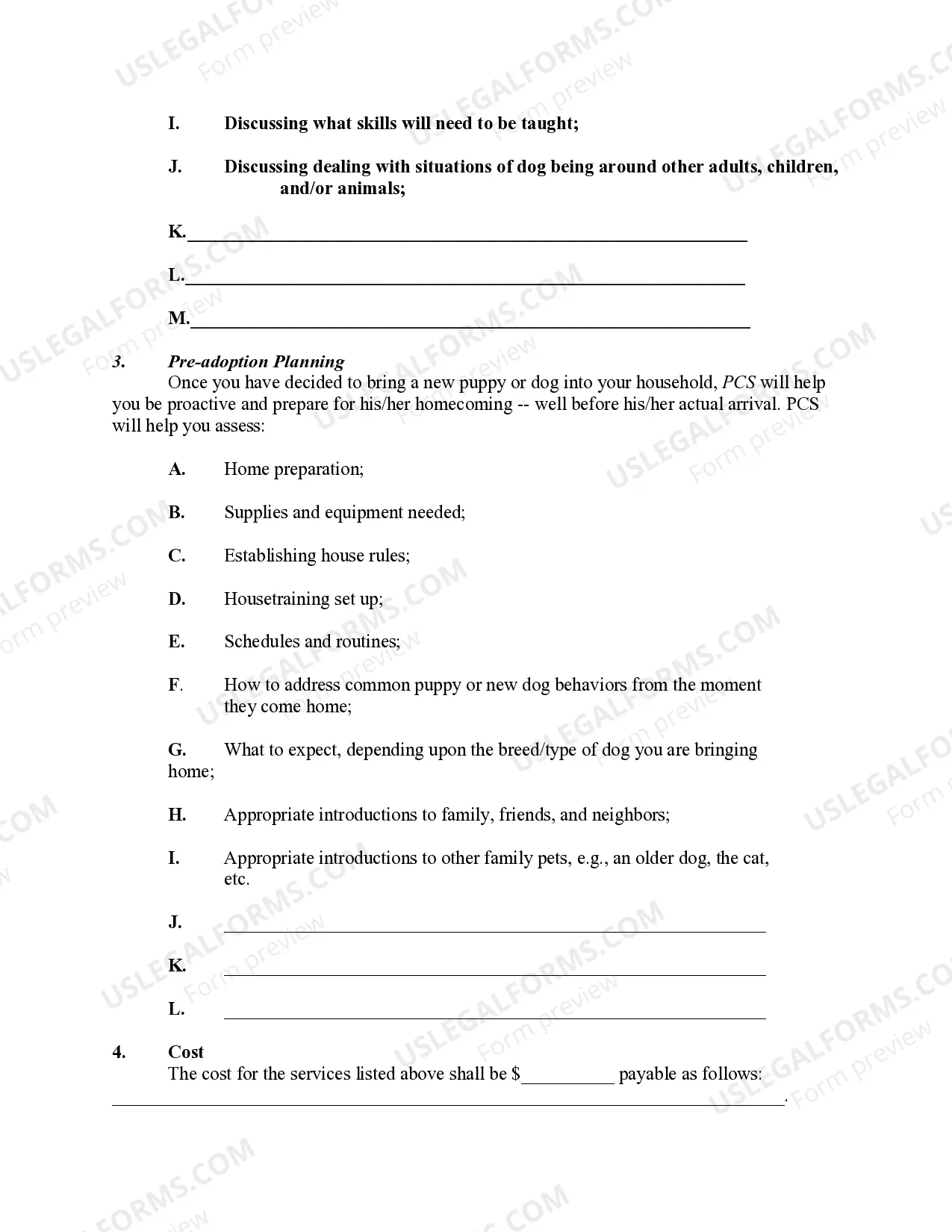
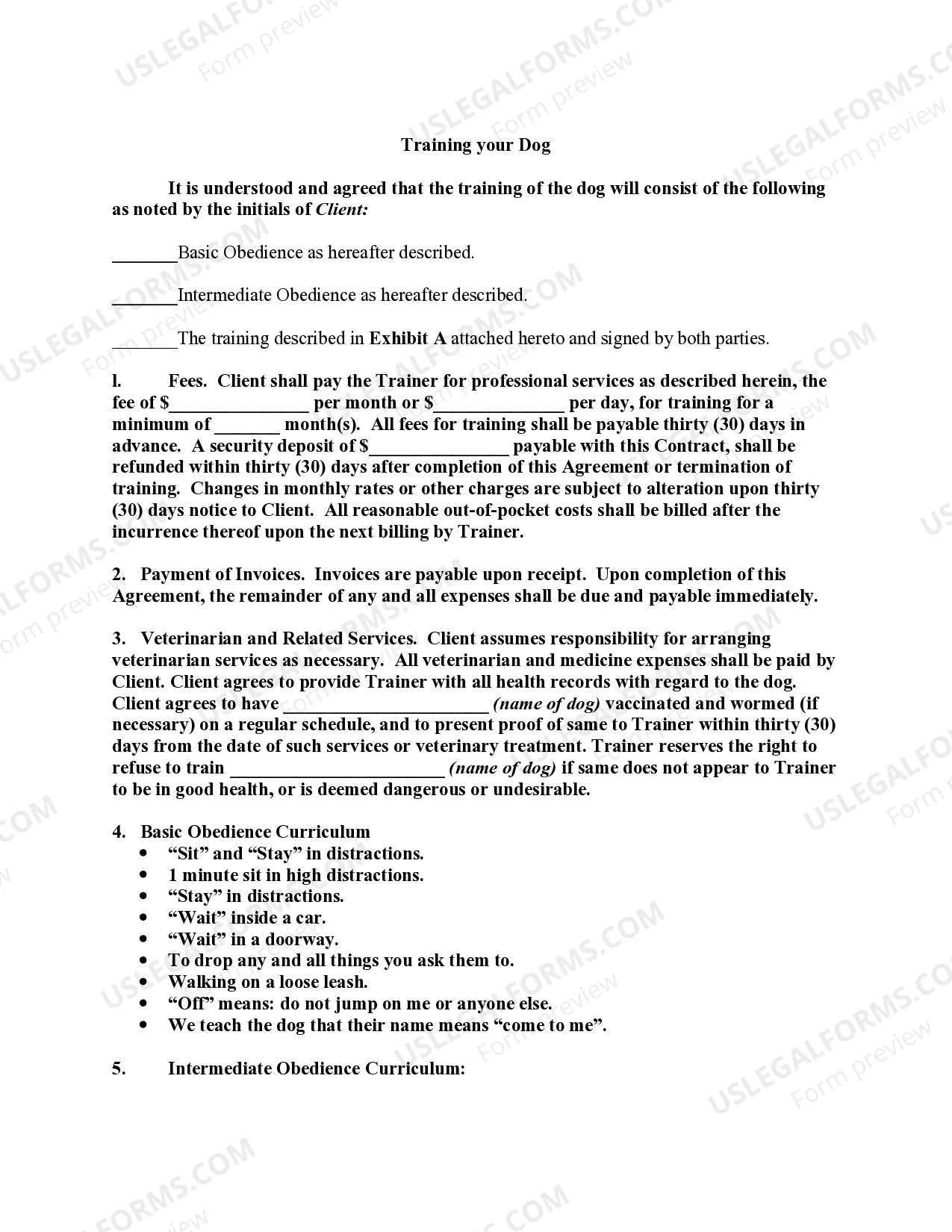
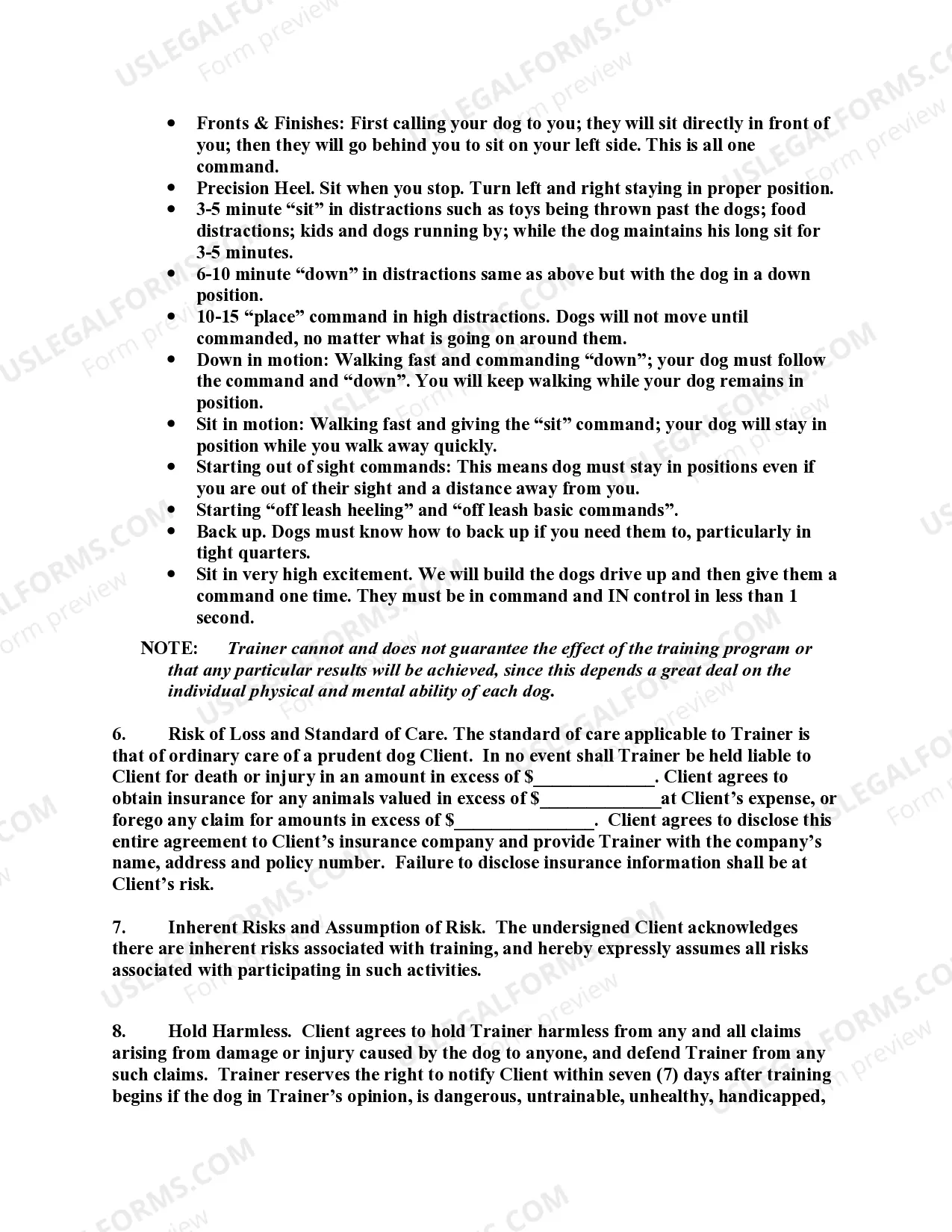
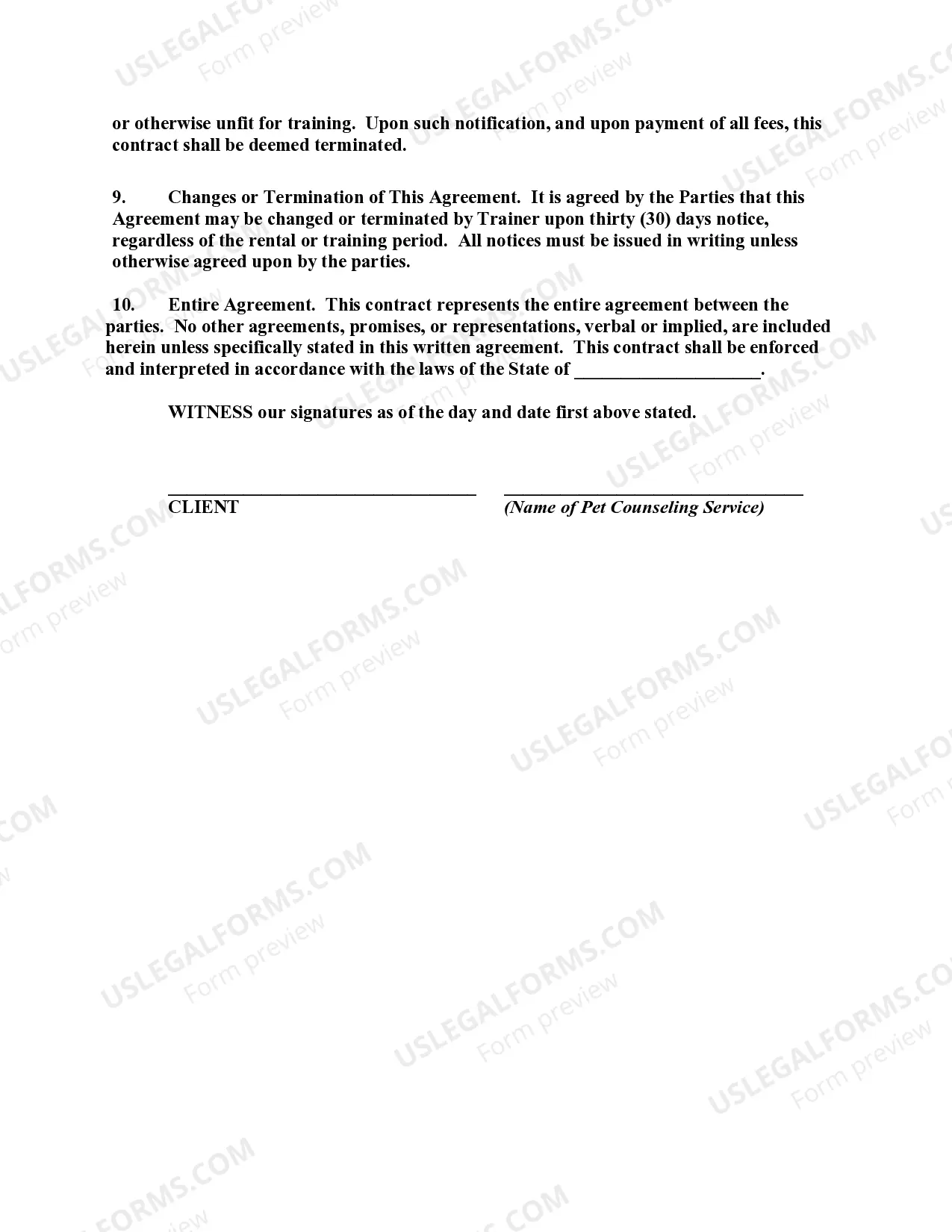
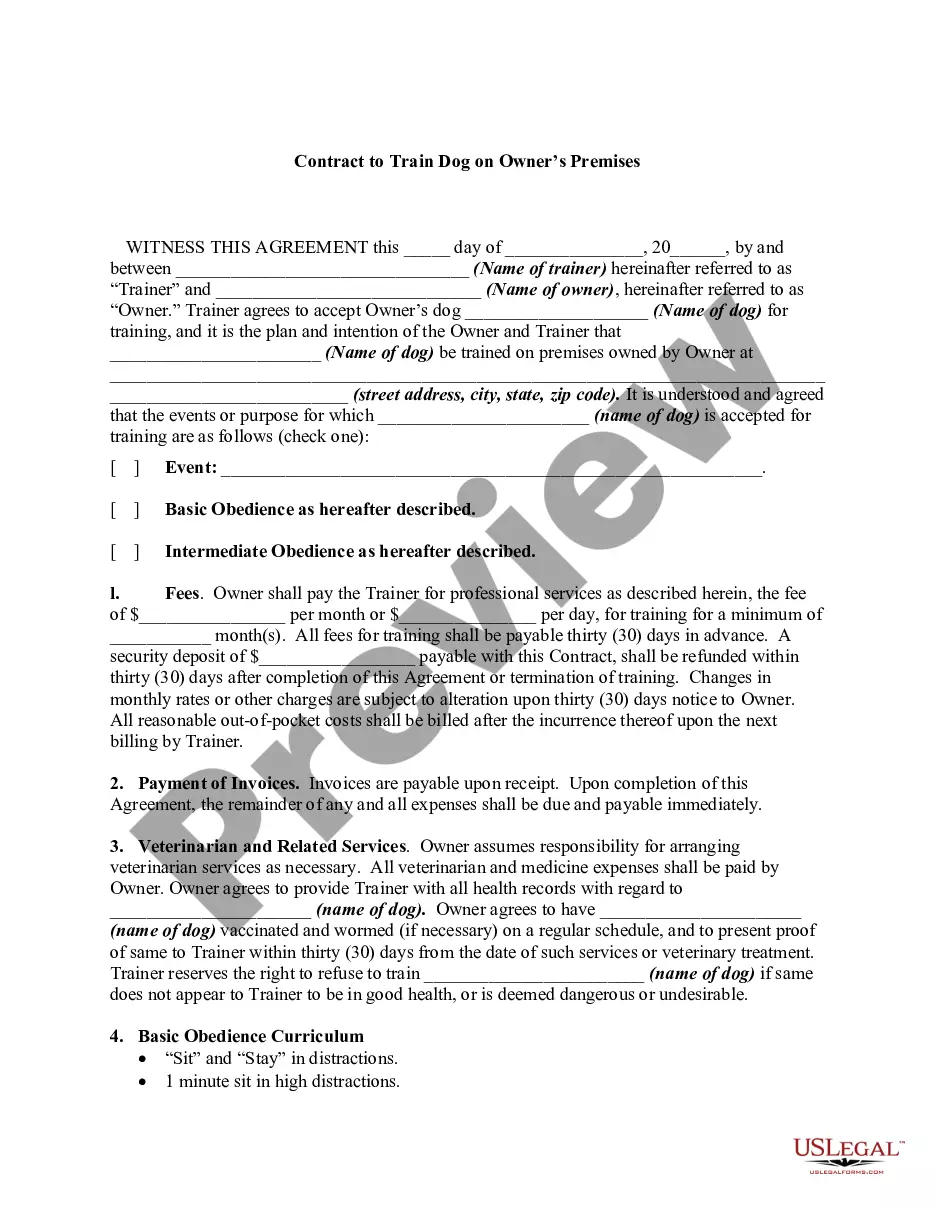
How to fill out Pet Counseling Agreement And Contract To Train Dog On Client's Premises?
- If you're a returning user, log in to your account and navigate to the download section to access your required form template. Ensure your subscription remains valid to avoid any interruptions.
- For first-time users, start by previewing the document in the preview mode and reviewing the description. Confirm that the selected template suits your needs and aligns with your local jurisdiction.
- Should you need a different template, utilize the Search tab to locate another form. Make sure it meets your requirements before continuing.
- Proceed to purchase the document by clicking the Buy Now button, and select your preferred subscription plan. You will need to create an account to unlock access to the form library.
- To finalize your order, enter your payment information, whether through a credit card or PayPal. Complete the transaction to gain full access.
- Finally, download your completed form to your device. You can always revisit your documents via the My Forms section in your profile.
With robust access to over 85,000 legal forms, US Legal Forms ensures users receive precise and reliable documents tailored for a smooth rental experience.
Start securing your rental property today by utilizing the extensive resources of US Legal Forms! Sign up now and take control of your legal agreements.
Form popularity
FAQ
When drafting a letter to your landlord about pets, be respectful and clear. Start by expressing your interest in having a pet, and include a pet agreement for rental property if applicable. Explain your commitment to maintaining the property and addressing any concerns the landlord might have. A well-organized letter can help facilitate a constructive conversation and increase your chances of approval.
Writing a pet agreement involves outlining your responsibilities as a pet owner. Include details such as the type of pet, any required deposits, and maintenance routines. Referencing a standardized pet agreement for rental property can provide a helpful framework. Ensure the agreement is clear, concise, and mutually beneficial to foster a positive relationship with your landlord.
If your landlord refuses to allow pets, consider negotiating a specific pet agreement for rental property. You might propose terms that address their concerns, like additional cleaning services or liability insurance. If they remain firm, it may be time to explore other rental options that are more pet-friendly. Remember, finding a supportive landlord can enhance your living experience and ensure your pet's happiness.
Yes, it is essential to communicate with your landlord about getting a pet. Transparency is crucial for maintaining a good landlord-tenant relationship. A pet agreement for rental property can be a valuable tool in this conversation, as it outlines your responsibilities and the pet's impact on the property. Being upfront helps avoid potential conflicts or lease violations in the future.
To navigate a no pet policy, consider discussing your intentions with your landlord and suggest creating a pet agreement for rental property. Be transparent about your pet and how you plan to manage its behavior and impact on the property. Presenting your case thoughtfully may lead to a compromise, such as allowing pets with added restrictions or fees.
The pet liability clause holds tenants responsible for any damage or injuries caused by their pets. This clause ensures that landlords can seek compensation for any issues that arise due to a tenant's pet. Incorporating this clause into your pet agreement for rental property can provide peace of mind for both landlords and tenants, clarifying responsibilities.
The no pet clause is a provision within a lease that prohibits tenants from having pets on the rental property. This clause protects landlords from potential damage and liability that pets may cause. If you're exploring options to have a pet, consider discussing a pet agreement for rental property with your landlord to find a compromise.
An animal addendum is a supplementary document that modifies the original lease to include specific terms about pet ownership. This addendum often includes details about pet behavior, deposit amounts, and any restrictions on types of animals allowed. Having an animal addendum as part of your pet agreement for rental property helps ensure clarity and sets expectations for responsible pet ownership.
When writing a letter to your landlord regarding a pet, start by addressing them respectfully and stating your intention clearly. Explain your desire to include a pet in your rental unit and reference any pet clause from the lease or suggest creating a pet agreement for rental property if there isn't one. Be sure to include details about your pet, such as its breed and size, and express your willingness to adhere to any necessary regulations.
A pet clause in a pet agreement for rental property specifies the rules regarding pet ownership in the rental unit. For instance, it may outline the types of pets allowed, the number of pets permitted, and any associated fees or deposits. This clause helps protect both landlords and tenants by clearly defining expectations for pet care and responsibility.