Reasons For Refusal Of Service
Description
Get your form ready online
Our built-in tools help you complete, sign, share, and store your documents in one place.
Make edits, fill in missing information, and update formatting in US Legal Forms—just like you would in MS Word.
Download a copy, print it, send it by email, or mail it via USPS—whatever works best for your next step.
Sign and collect signatures with our SignNow integration. Send to multiple recipients, set reminders, and more. Go Premium to unlock E-Sign.
If this form requires notarization, complete it online through a secure video call—no need to meet a notary in person or wait for an appointment.
We protect your documents and personal data by following strict security and privacy standards.

Make edits, fill in missing information, and update formatting in US Legal Forms—just like you would in MS Word.

Download a copy, print it, send it by email, or mail it via USPS—whatever works best for your next step.

Sign and collect signatures with our SignNow integration. Send to multiple recipients, set reminders, and more. Go Premium to unlock E-Sign.

If this form requires notarization, complete it online through a secure video call—no need to meet a notary in person or wait for an appointment.

We protect your documents and personal data by following strict security and privacy standards.
Looking for another form?



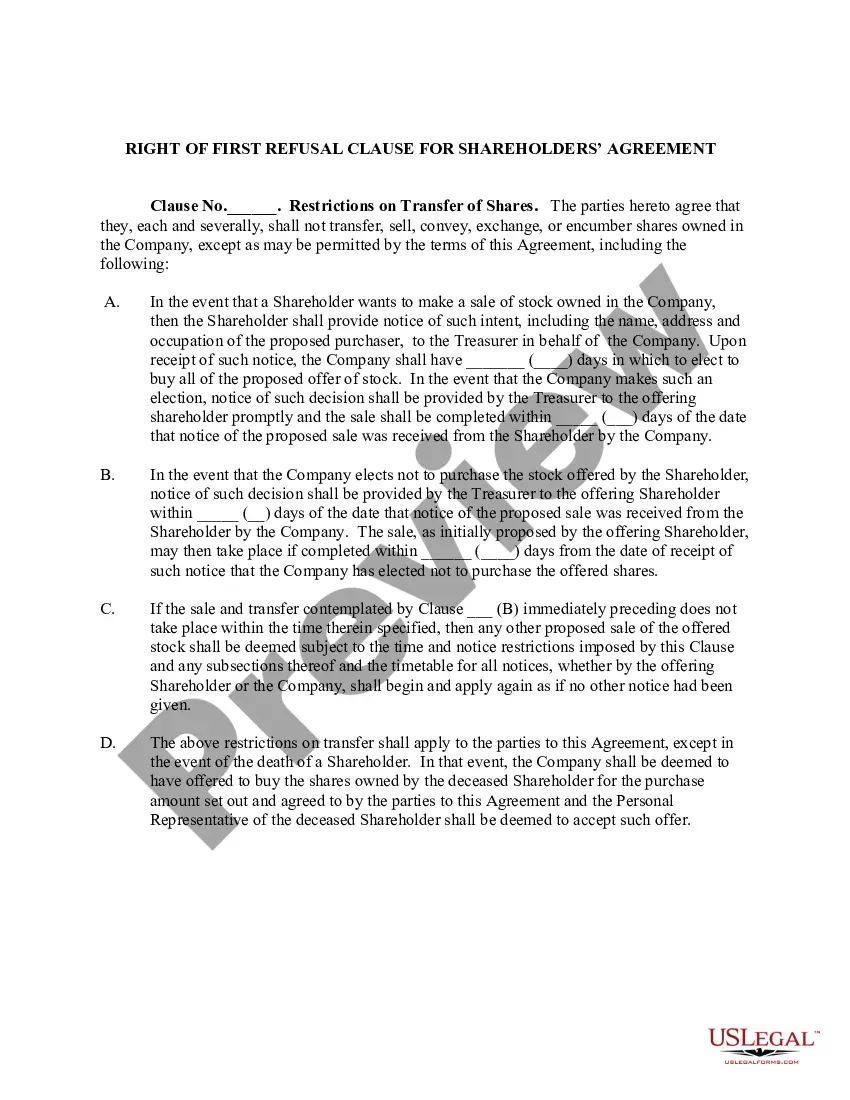
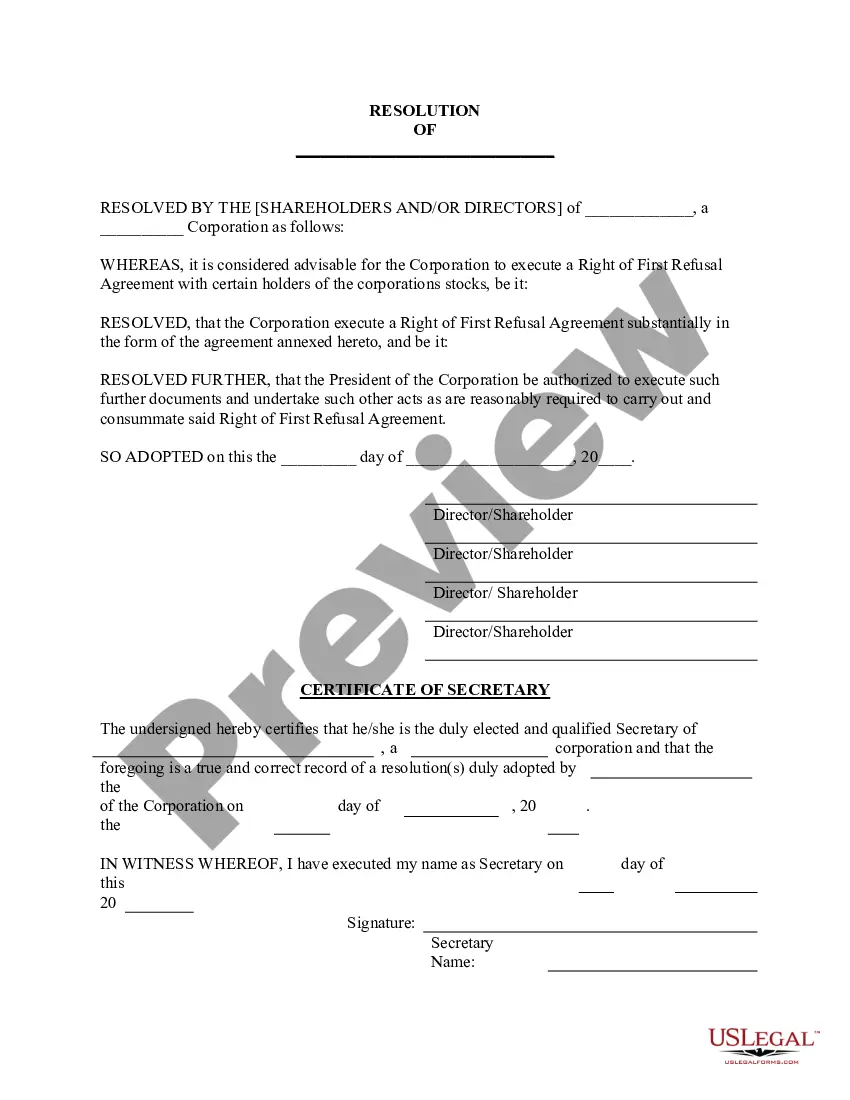
How to fill out Right Of First Refusal Clause For Shareholders' Agreement?
Whether for corporate objectives or personal concerns, everyone must navigate legal issues at some time in their existence.
Filling out legal documents necessitates meticulous care, starting with selecting the correct template.
With an extensive US Legal Forms catalog available, you do not need to waste time searching for the appropriate template online. Utilize the library’s straightforward navigation to find the right document for any occasion.
- Locate the template you require using the search bar or catalog browsing.
- Review the form’s details to confirm it aligns with your circumstances, state, and locality.
- Select the form’s preview to analyze it.
- If it's the incorrect document, return to the search function to locate the Reasons For Refusal Of Service sample you seek.
- Download the template once it satisfies your criteria.
- If you possess a US Legal Forms profile, simply click Log in to access previously stored documents in My documents.
- If you haven't created an account yet, you can acquire the form by clicking Buy now.
- Select the appropriate pricing option.
- Complete the profile registration form.
- Choose your payment method: you can opt for a credit card or PayPal account.
- Select the file format you prefer and download the Reasons For Refusal Of Service.
- Once downloaded, you can fill out the form using editing software or print it and complete it manually.
Form popularity
FAQ
The primary reason for refusing service to an intoxicated guest is to ensure their safety and the safety of others. Intoxicated individuals can pose risks to themselves and create disturbances in the establishment. By understanding the reasons for refusal of service, you can effectively manage these situations and uphold your responsibility as a business owner. Implementing clear guidelines will help you navigate these challenges confidently.
Refusing service to intoxicated customers primarily centers on safety and legal obligations. Most establishments have a responsibility to prevent over-serving, which can lead to dangerous situations. The reasons for refusal of service in these cases include protecting the individual’s well-being and ensuring a safe environment for all patrons. This practice not only safeguards your business but also promotes responsible drinking.
Businesses can refuse service for various reasons, including disruptive behavior, failure to comply with policies, or health and safety concerns. It's important to document these reasons to protect your business from potential legal challenges. Being aware of the reasons for refusal of service helps you maintain a safe and respectful environment for all customers. Always communicate your policies clearly to avoid confusion.
While you have the right to refuse service, it's crucial to understand the legal limitations. You cannot refuse service based on race, gender, religion, or other protected characteristics. Familiarizing yourself with the reasons for refusal of service can help you navigate these situations without running afoul of discrimination laws. Always ensure that your refusal is based on legitimate business needs.
When refusing service, it's important to communicate clearly and respectfully. You might say something like, 'I’m sorry, but we cannot serve you at this time due to our policy on service refusal.' This approach helps maintain professionalism while also upholding your rights as a business owner. Clearly stating your reasons for refusal of service is essential to avoid misunderstandings.
Yes, a business can refuse service without providing a specific reason as long as it does not violate any anti-discrimination laws. The reasons for refusal of service can vary widely and may include factors such as safety concerns or disruptive behavior. However, it is essential for businesses to understand the legal implications of refusing service to avoid potential disputes. Utilizing resources like US Legal Forms can help you navigate the complexities of service refusal.
When refusing to serve alcohol, it’s essential to be direct yet courteous. You might say, 'I’m sorry, but I cannot serve you any more alcohol tonight due to our policy.' This statement clearly communicates your decision while also adhering to responsible serving practices. Understanding the reasons for refusal of service in this context can help ensure compliance with legal regulations, ultimately safeguarding your business.
You should consider refusing service if a customer exhibits disruptive behavior, poses a safety risk, or is unable to comply with your establishment's policies. Additionally, if a customer is intoxicated or has not settled their payment, it is appropriate to refuse them service. Establishing a clear understanding of the reasons for refusal of service can help you make these decisions confidently and consistently. Always communicate your decision to the customer respectfully to maintain a positive atmosphere.
The primary reasons for refusal of service typically include unsafe behavior, violation of policies, intoxication, or lack of payment. Each of these reasons protects both the business and other customers. It’s crucial to understand these reasons, as they help establish clear boundaries in a service environment. Knowing these reasons can also guide you in creating policies that support your business objectives.
When you need to refuse a service, it’s important to maintain a respectful tone. You might say, 'I appreciate your interest, but we are unable to fulfill your request at this time.' This way, you communicate your refusal clearly while still showing appreciation for the customer's engagement. Understanding the reasons for refusal of service can help you frame your response effectively.