Consumer Credit Act For Cars
Description

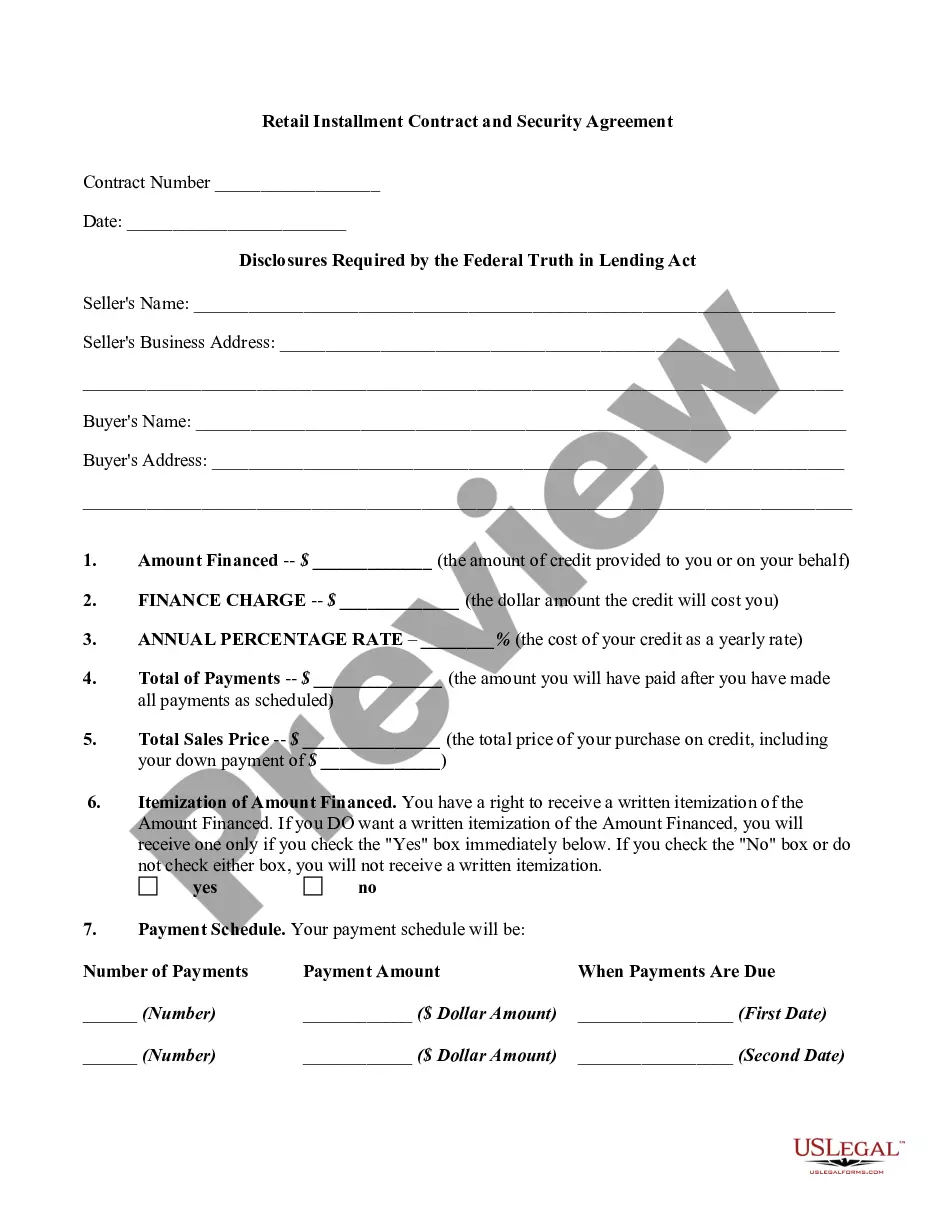
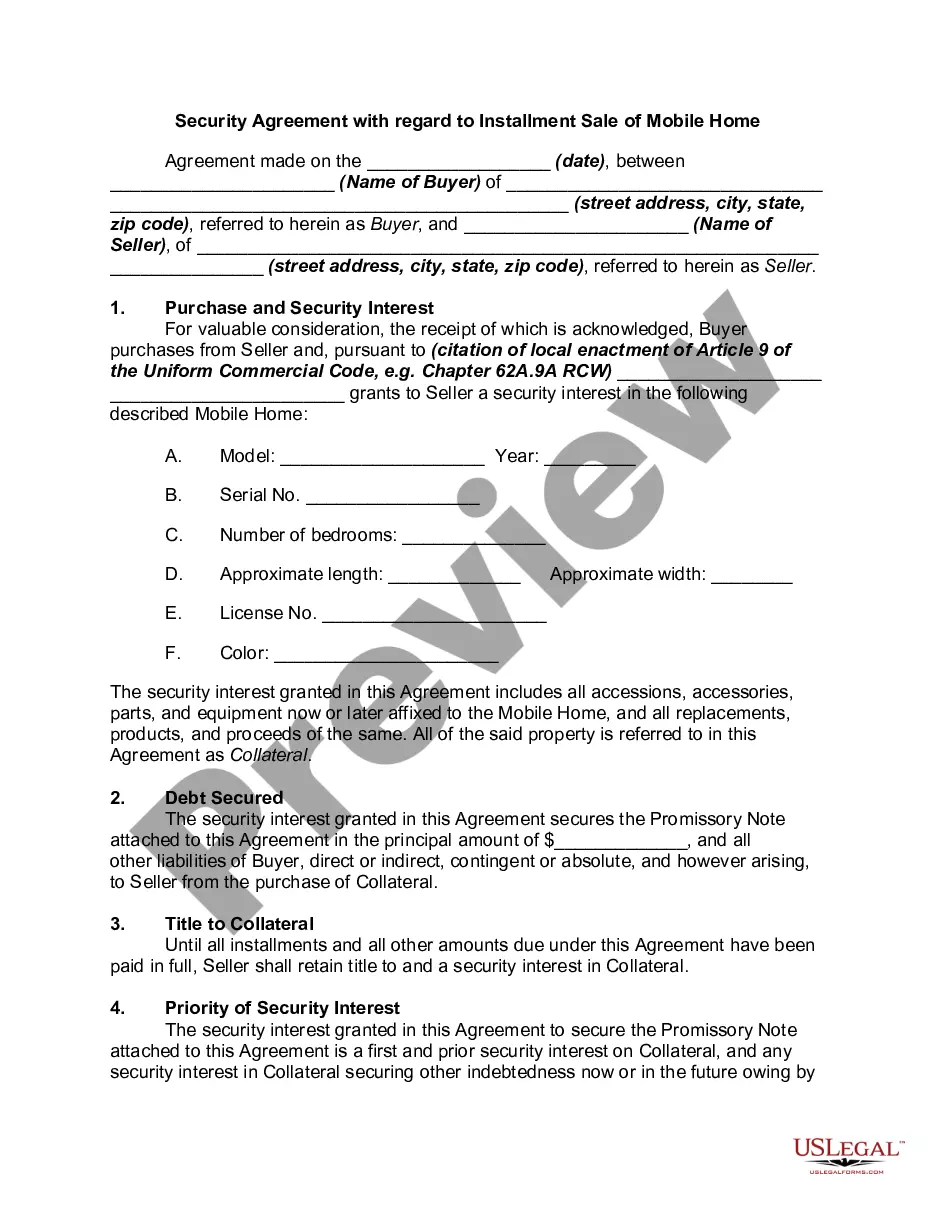
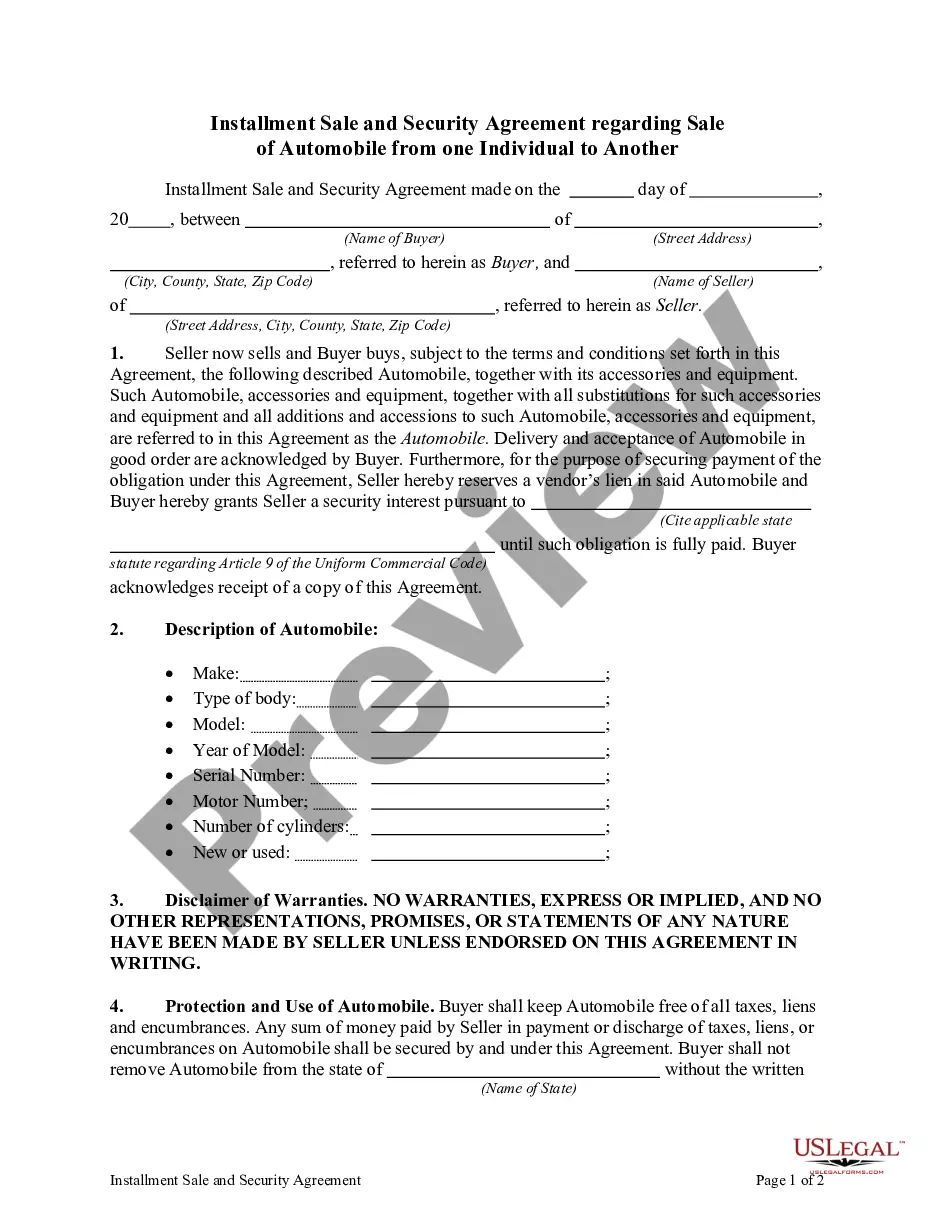
Get your form ready online
Our built-in tools help you complete, sign, share, and store your documents in one place.
Make edits, fill in missing information, and update formatting in US Legal Forms—just like you would in MS Word.
Download a copy, print it, send it by email, or mail it via USPS—whatever works best for your next step.
Sign and collect signatures with our SignNow integration. Send to multiple recipients, set reminders, and more. Go Premium to unlock E-Sign.
If this form requires notarization, complete it online through a secure video call—no need to meet a notary in person or wait for an appointment.
We protect your documents and personal data by following strict security and privacy standards.

Make edits, fill in missing information, and update formatting in US Legal Forms—just like you would in MS Word.

Download a copy, print it, send it by email, or mail it via USPS—whatever works best for your next step.

Sign and collect signatures with our SignNow integration. Send to multiple recipients, set reminders, and more. Go Premium to unlock E-Sign.

If this form requires notarization, complete it online through a secure video call—no need to meet a notary in person or wait for an appointment.

We protect your documents and personal data by following strict security and privacy standards.
Looking for another form?
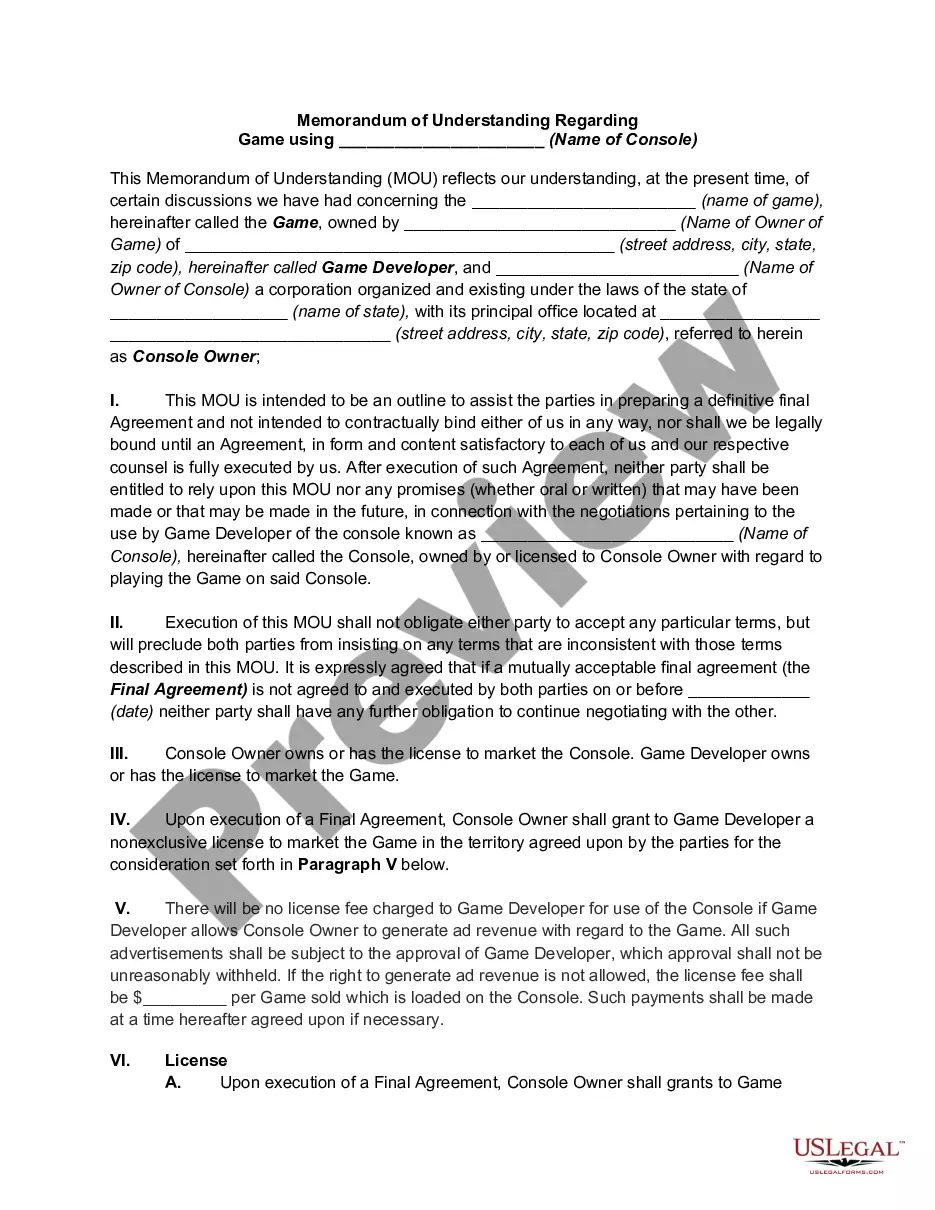
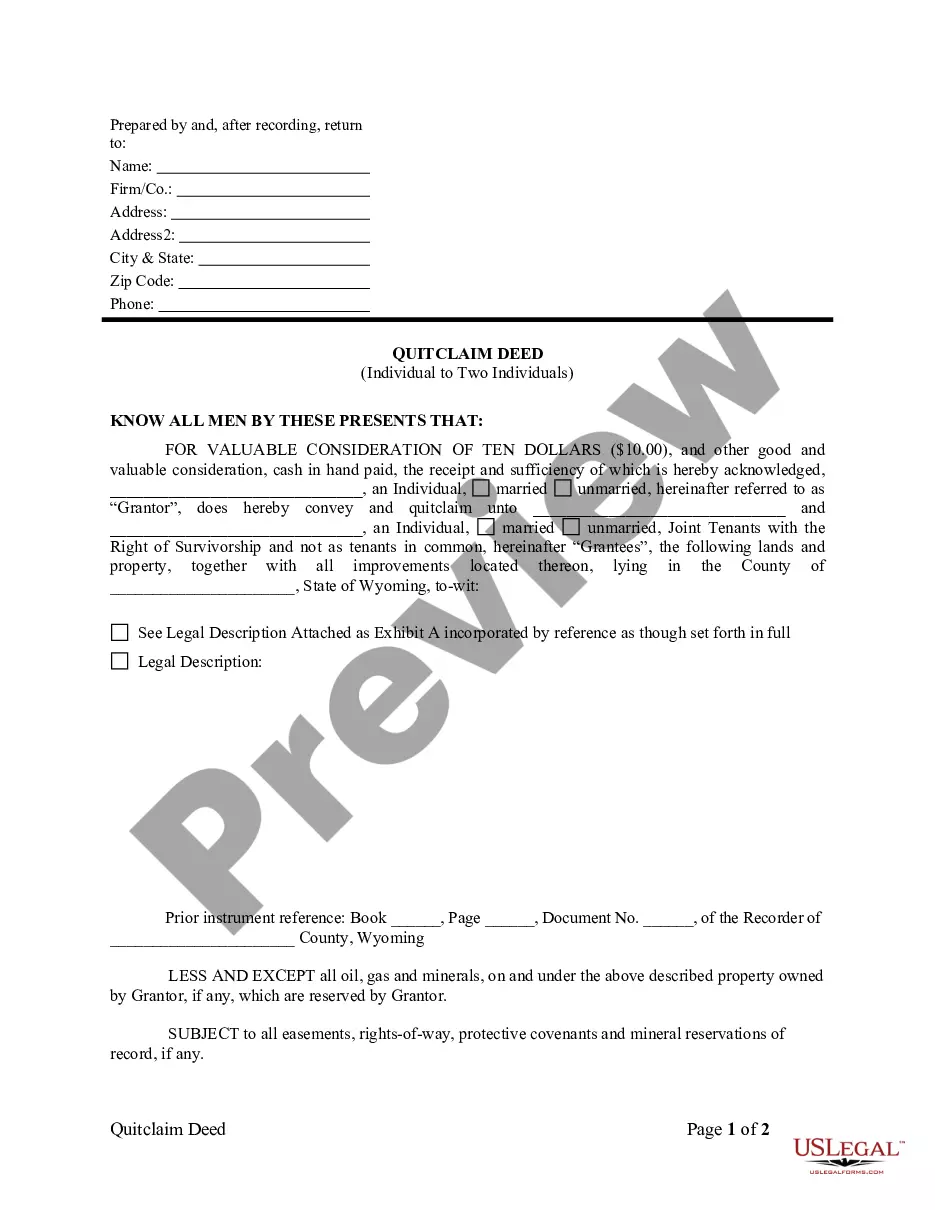



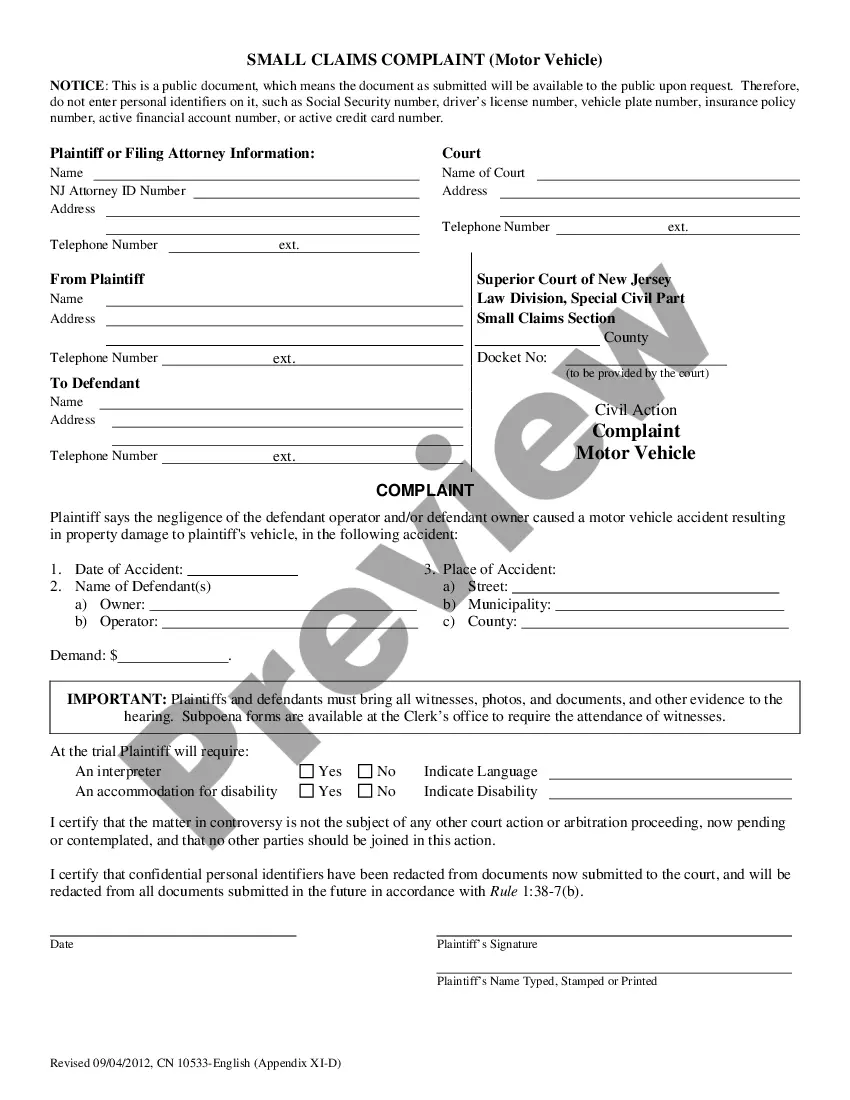
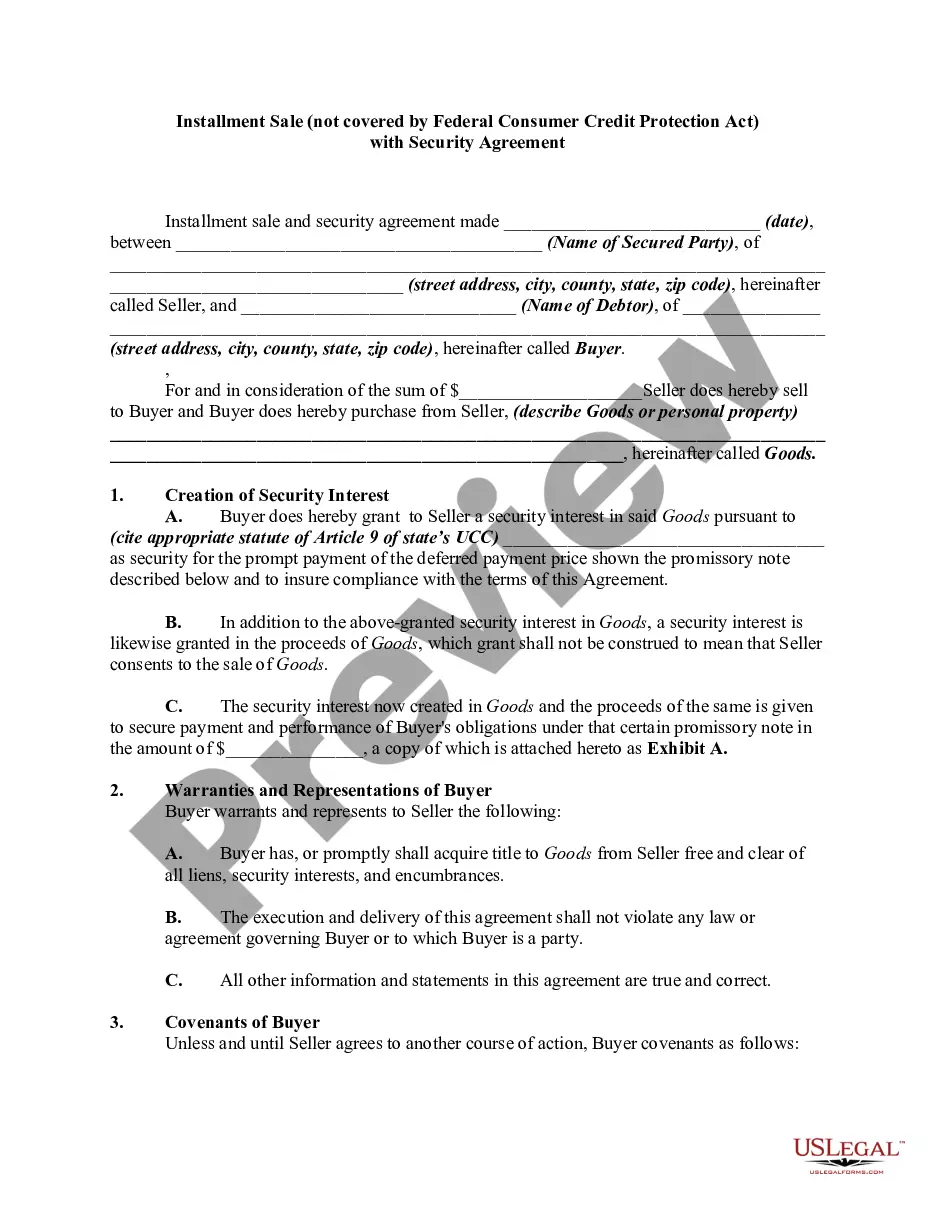
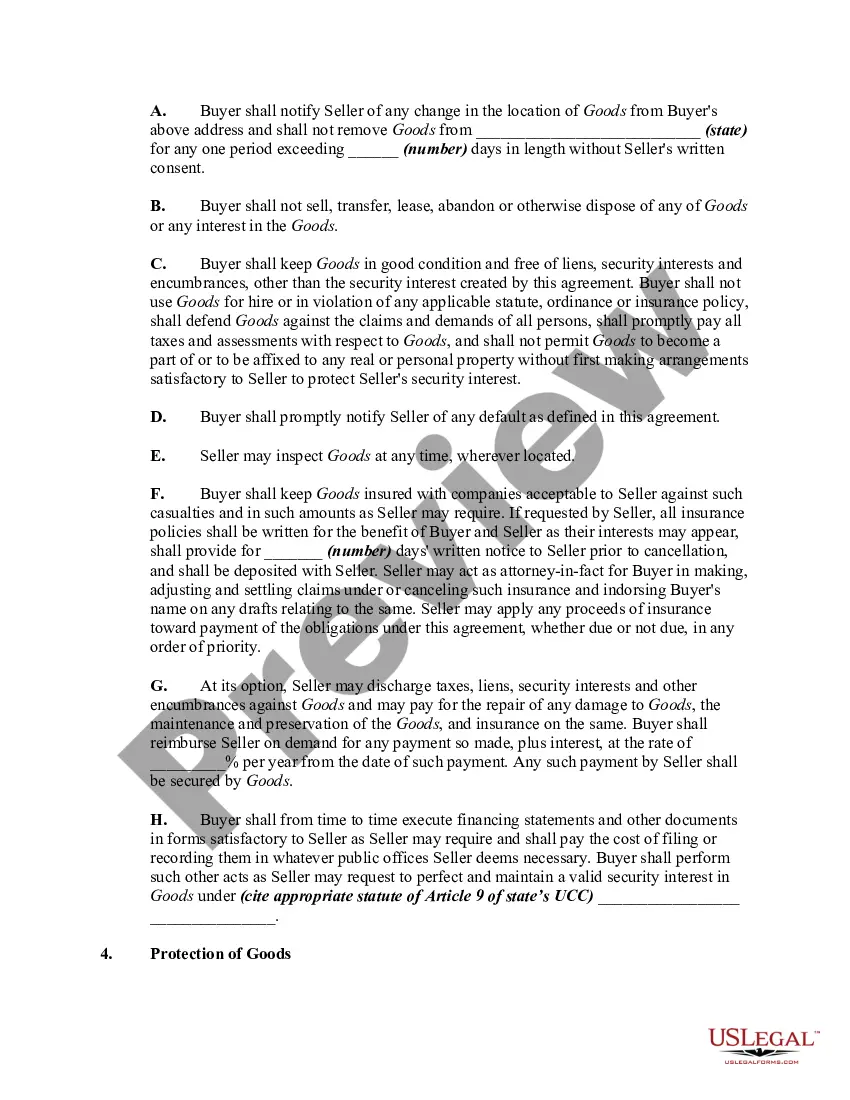
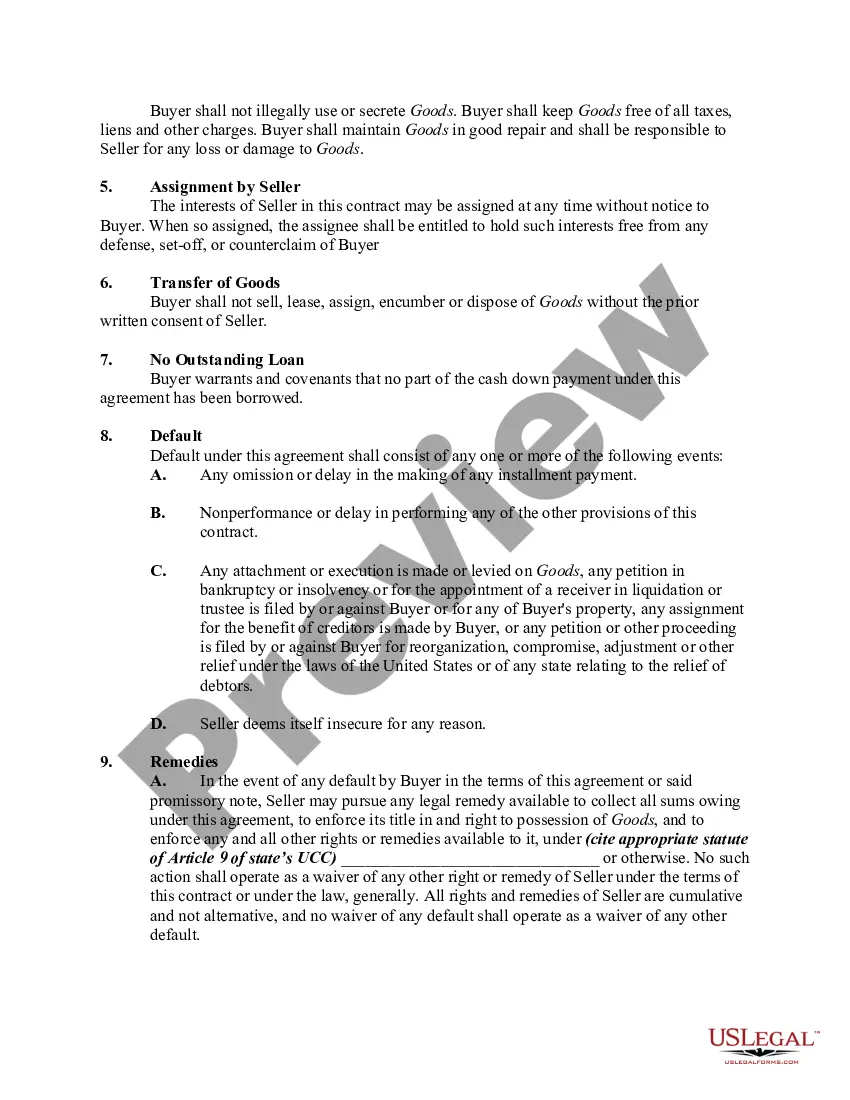
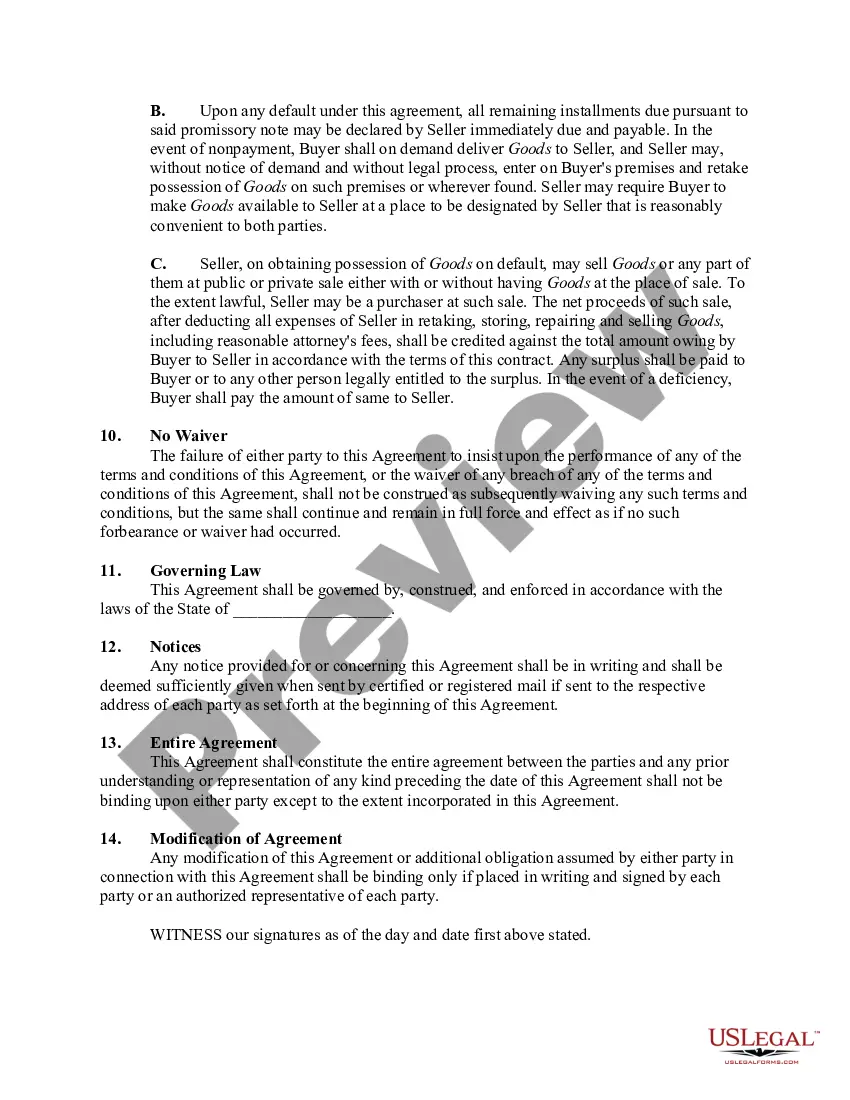
How to fill out Installment Sale Not Covered By Federal Consumer Credit Protection Act With Security Agreement?
Managing legal documents can be overwhelming, even for the most seasoned professionals.
If you're interested in a Consumer Credit Act for Vehicles and lack the time to search for the correct and latest version, the tasks can be challenging.
US Legal Forms caters to all your needs, from personal to corporate forms, all in one convenient location.
Utilize cutting-edge tools to facilitate and manage your Consumer Credit Act for Vehicles.
Here are the steps to follow after locating the required form: Confirm it is the correct document by previewing it and reviewing its details. Check that the form is recognized in your state or county. Click Buy Now when you're ready. Select a monthly subscription option. Choose the format you need, and then download, fill, eSign, print, and submit your documents. Experience the US Legal Forms web library, bolstered by 25 years of expertise and trustworthiness. Simplify your daily document management into a straightforward and user-friendly experience today.
- Access a wealth of articles, guides, and materials pertinent to your situation and requirements.
- Save time and effort searching for the documents you need by taking advantage of US Legal Forms’ superior search and Preview tool to find and download the Consumer Credit Act for Vehicles.
- If you hold a subscription, Log In to the US Legal Forms account, search for the form, and download it.
- Visit the My documents tab to view documents you have previously downloaded and organize your folders as desired.
- If this is your first time using US Legal Forms, sign up for an account to gain unrestricted access to all the platform's features.
- A robust web form repository can significantly benefit anyone looking to handle these situations efficiently.
- US Legal Forms is an industry leader in online legal documents, boasting over 85,000 state-specific legal forms available for your access at any time.
- With US Legal Forms, you can easily navigate a variety of state- or county-specific legal and business documents.
Form popularity
FAQ
Yes, the Consumer Rights Act applies to cars, ensuring consumers receive vehicles that are of satisfactory quality and fit for purpose. If a vehicle does not meet these standards, consumers have the right to seek remedies. Understanding the Consumer Credit Act for cars is crucial, as it complements these rights by addressing credit-related aspects of vehicle purchases.
Deciding whether to let dealerships run your credit depends on your comfort level and financial situation. If you are actively seeking financing through the dealership, a credit check might be necessary. However, it’s wise to understand how this can affect your credit score, particularly in relation to the Consumer Credit Act for cars.
When a dealer inquires about financing, you can express your preferences upfront. Mention if you have pre-approved financing options or if you are exploring other possibilities. Being clear about your financial situation can lead to better offers that align with the Consumer Credit Act for cars and your budget.
When dealers mention the need to run your credit for a quote, you can respond by asking how it will affect your credit score. It's essential to understand why they need this information and whether it is a soft or hard inquiry. Remember, being informed about the Consumer Credit Act for cars can help you navigate these conversations with confidence.
A red flag in a car dealership indicates potential issues with the vehicle or the sales process. For instance, if a dealer pressures you to finalize the deal quickly, it may signal that they are hiding important information. Always take your time to review documents, especially those related to the Consumer Credit Act for cars, and do not hesitate to ask questions.
Filling out a bill of sale for a car is straightforward. Begin by including the seller's and buyer's names, addresses, and contact information. Clearly describe the vehicle, including its make, model, year, and VIN. Finally, both parties should sign and date the document to make it legally binding. For assistance, consider using US Legal Forms, which provides templates tailored for the Consumer Credit Act for cars.
If you have purchased a faulty car, you have several rights under the Consumer Guarantees Act. You can request a repair, replacement, or a refund depending on the severity of the fault. Knowing your rights under the Consumer credit act for cars can help you take appropriate action. If you encounter difficulties, consider using platforms like US Legal Forms for guidance.
The Consumer Rights Act for cars outlines your rights when purchasing a vehicle. It ensures that cars sold must meet certain quality standards and be as described by the seller. If your vehicle is faulty or does not meet these criteria, you have the right to seek remedies. Learning about the Consumer credit act for cars enhances your understanding of these rights.
The Consumer Credit Act applies to anyone involved in consumer credit transactions, including borrowers and lenders. This includes individuals purchasing cars through financing or loans. Understanding your rights and responsibilities under the Consumer credit act for cars can empower you during the buying process. It's essential to know how this legislation protects you.
A credit score of 700 or higher is typically preferred for financing a $30,000 car. Lenders often consider your credit history to determine your eligibility and interest rates. However, even if your score is below this threshold, options may still be available to you. Familiarize yourself with the Consumer credit act for cars to explore your financing possibilities.