Writ Mandate Form With 2 Points
Description
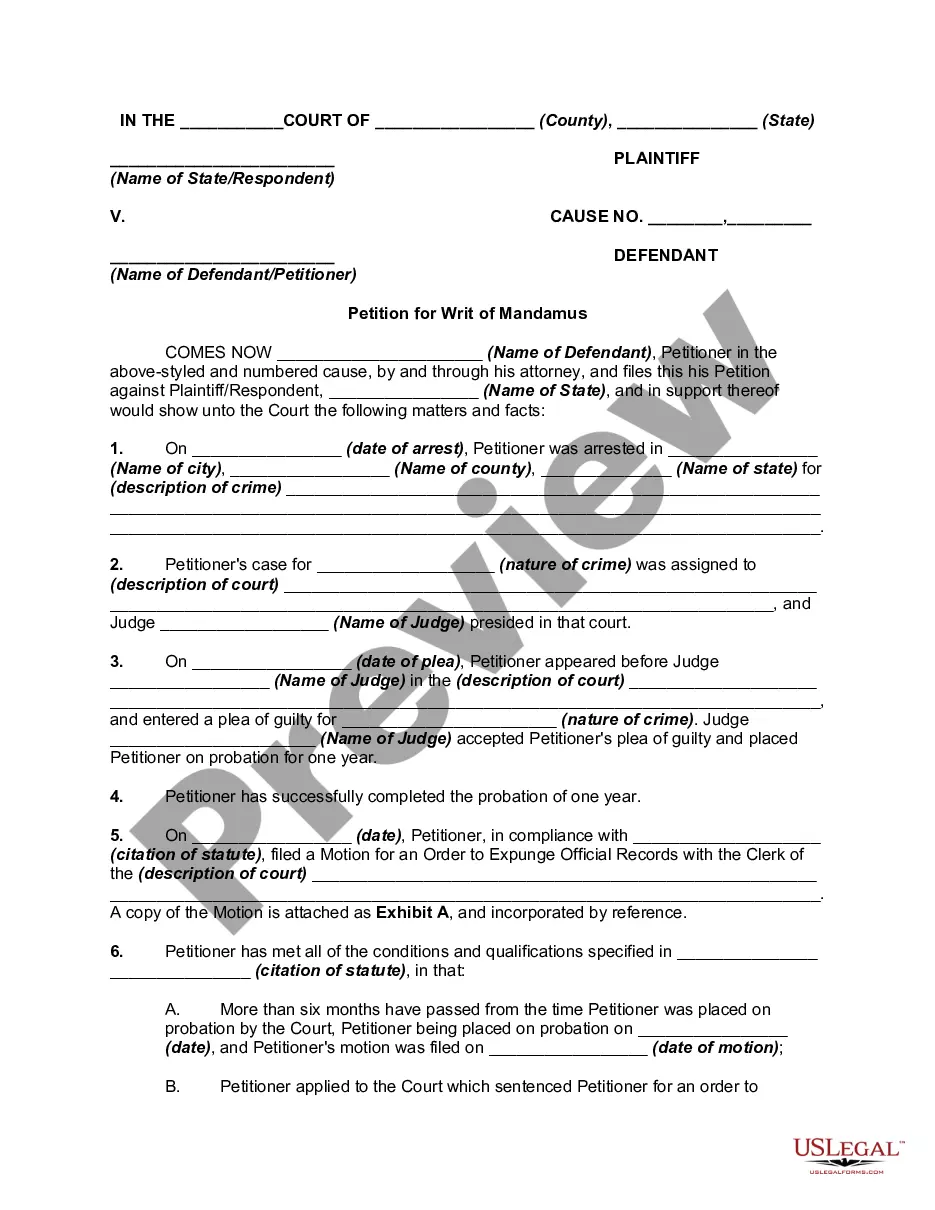
Get your form ready online
Our built-in tools help you complete, sign, share, and store your documents in one place.
Make edits, fill in missing information, and update formatting in US Legal Forms—just like you would in MS Word.
Download a copy, print it, send it by email, or mail it via USPS—whatever works best for your next step.
Sign and collect signatures with our SignNow integration. Send to multiple recipients, set reminders, and more. Go Premium to unlock E-Sign.
If this form requires notarization, complete it online through a secure video call—no need to meet a notary in person or wait for an appointment.
We protect your documents and personal data by following strict security and privacy standards.

Make edits, fill in missing information, and update formatting in US Legal Forms—just like you would in MS Word.

Download a copy, print it, send it by email, or mail it via USPS—whatever works best for your next step.

Sign and collect signatures with our SignNow integration. Send to multiple recipients, set reminders, and more. Go Premium to unlock E-Sign.

If this form requires notarization, complete it online through a secure video call—no need to meet a notary in person or wait for an appointment.

We protect your documents and personal data by following strict security and privacy standards.
Looking for another form?

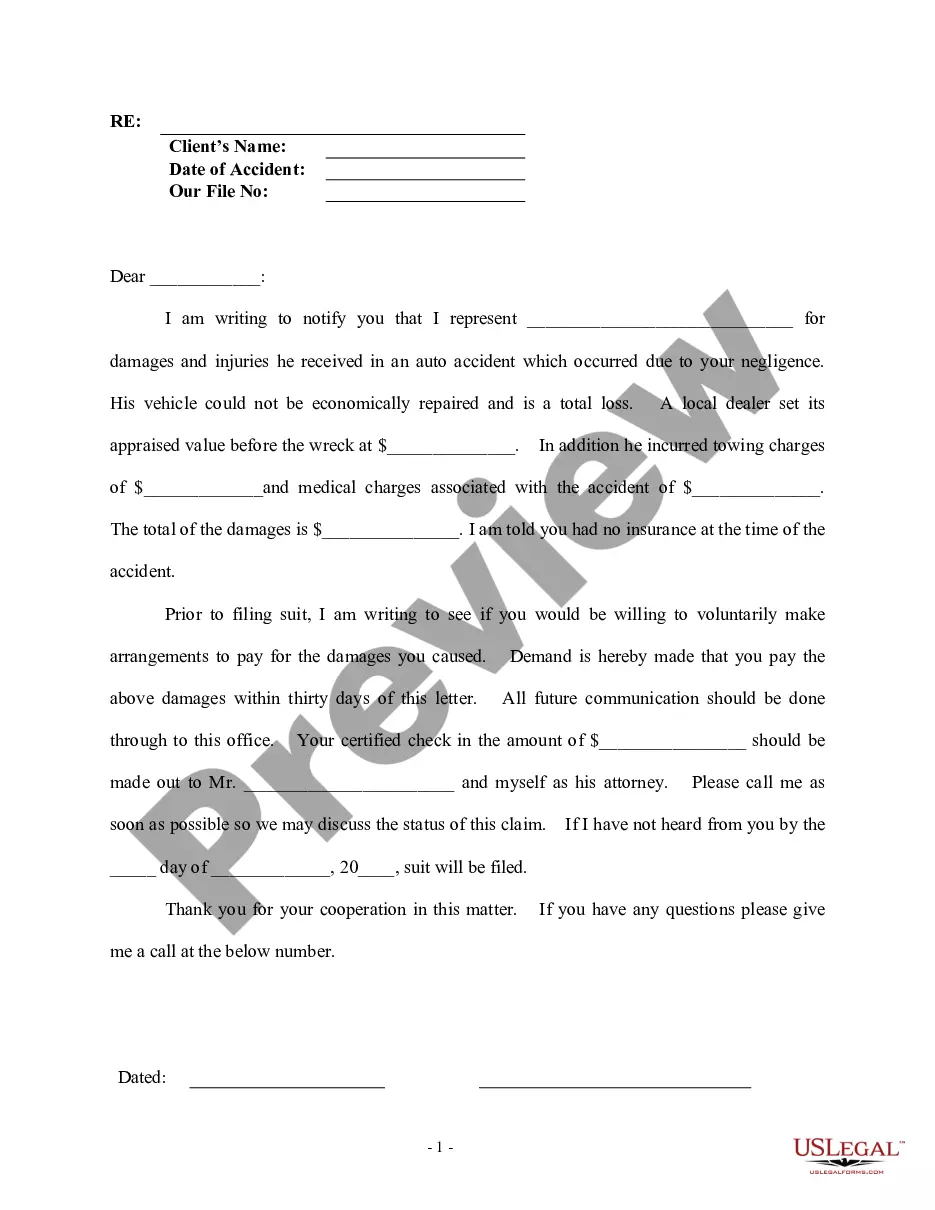
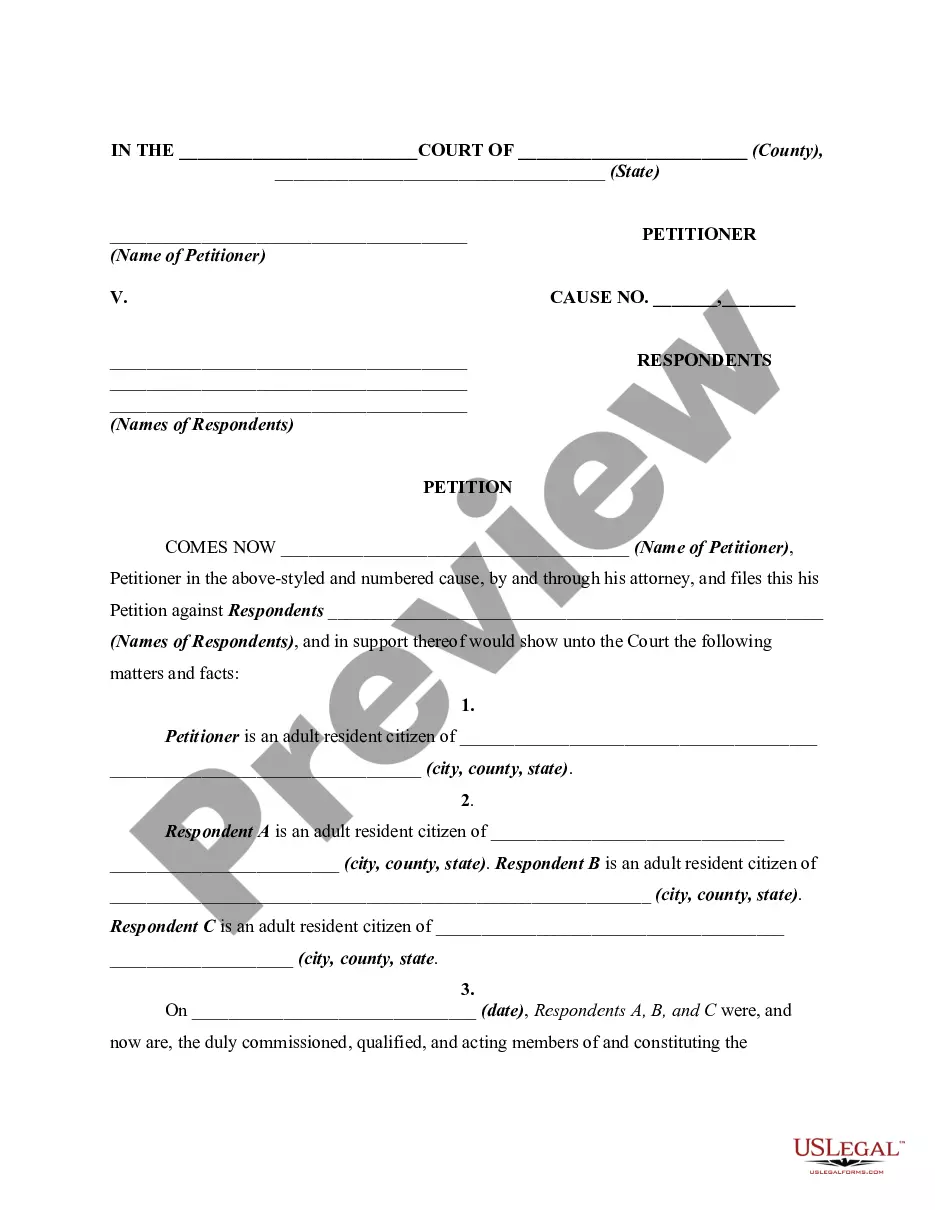
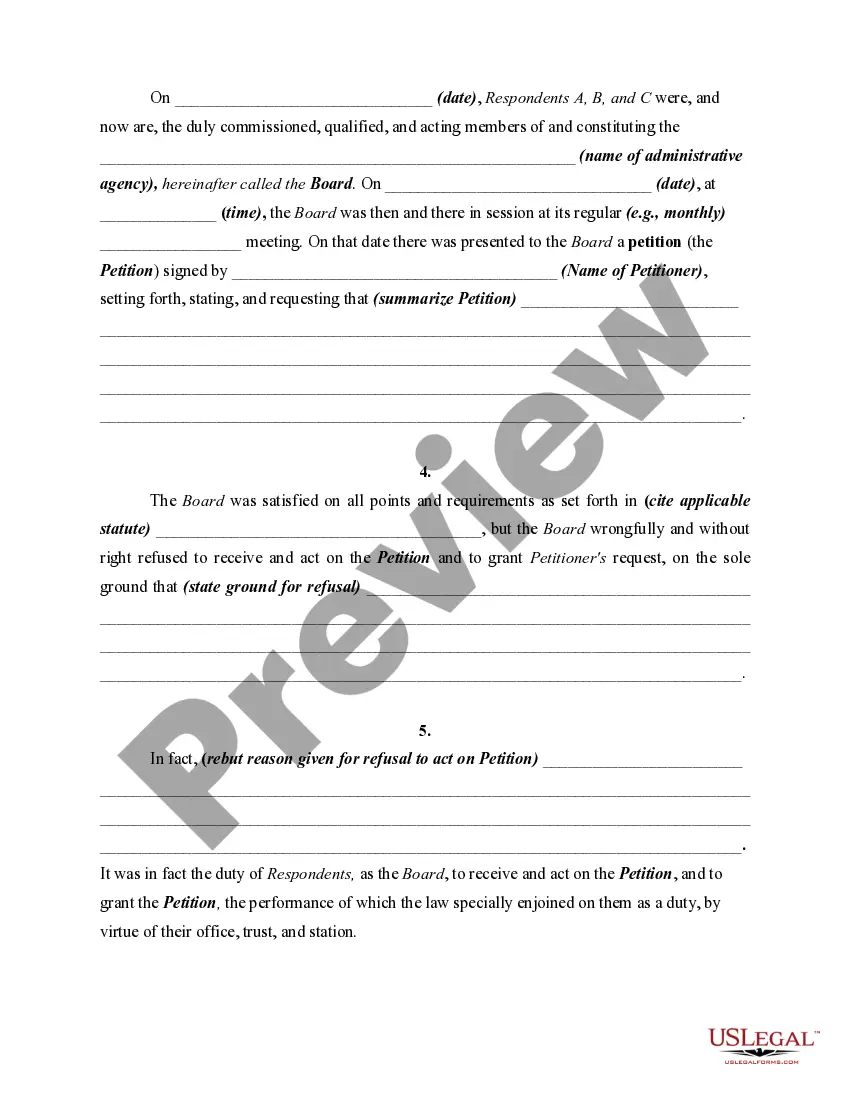
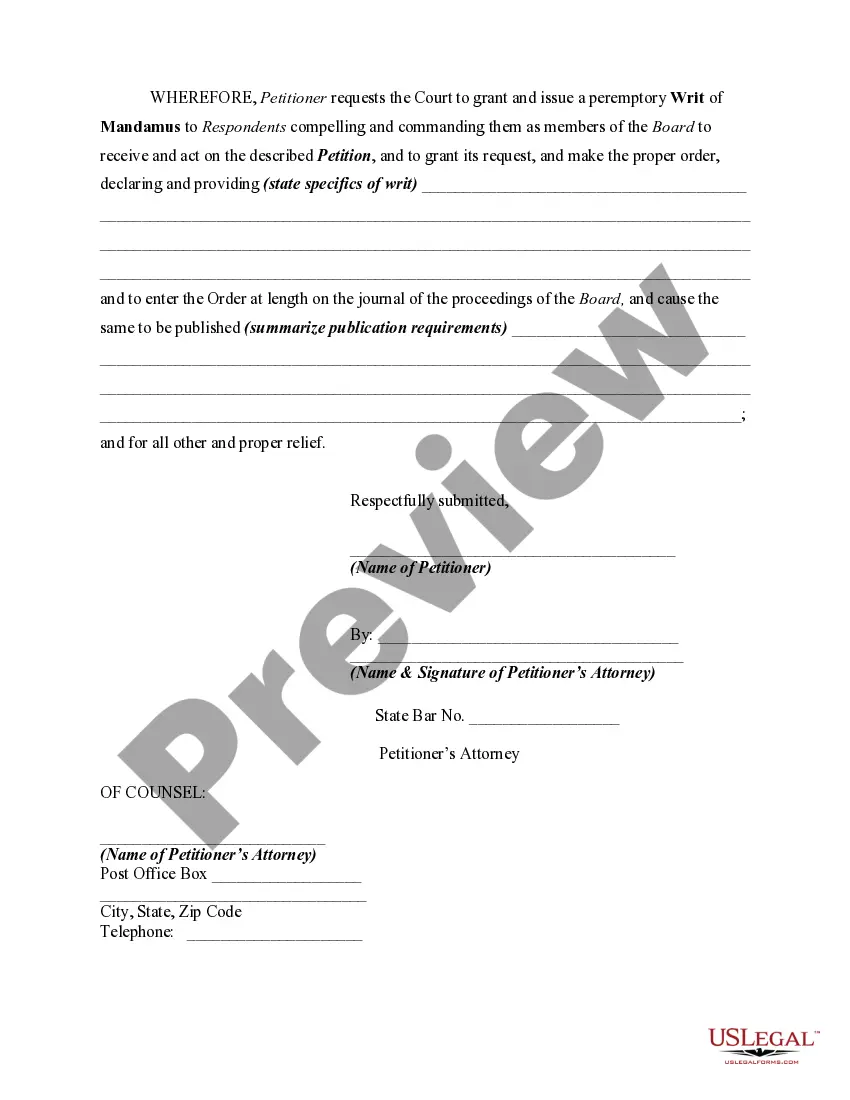
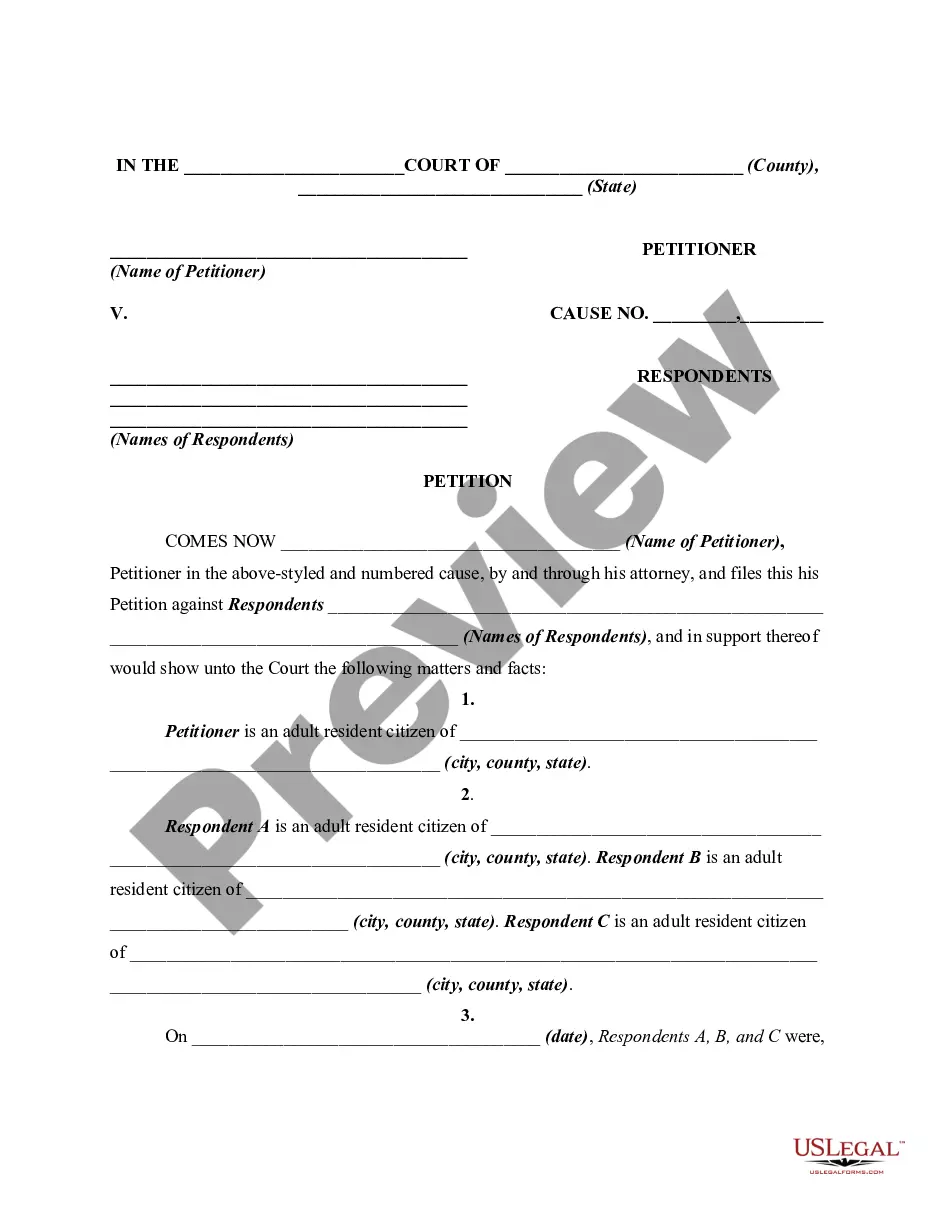
How to fill out Petition Or Application For Writ Of Mandamus Or Mandate For Refusal Of Administrative Agency To Act On Petition?
It's clear that you cannot instantly become a legal expert, nor can you swiftly learn how to prepare a Writ Mandate Form With 2 Points without possessing a specialized skill set.
Drafting legal documents is a labor-intensive process that demands specific education and expertise. So why not let the professionals handle the preparation of the Writ Mandate Form With 2 Points.
With US Legal Forms, one of the largest collections of legal templates, you can find everything from court documents to templates for internal corporate communications.
If you need a different form, start your search again.
Create a free account and select a subscription plan to purchase the template.
- We recognize how vital compliance and adherence to federal and state laws and regulations are.
- Therefore, on our platform, all forms are location-specific and current.
- Here's how you can begin using our platform and acquire the document you need in just minutes.
- Locate the document you require by utilizing the search bar at the top of the page.
- Preview it (if this option is available) and read the accompanying description to assess whether the Writ Mandate Form With 2 Points is what you're looking for.
Form popularity
FAQ
An example of a writ is a writ of habeas corpus, which mandates that a person under arrest be brought before a judge. This legal instrument protects individual freedom and prevents unlawful detention. Similarly, a writ of mandate can be utilized to compel government agencies to act according to the law. Utilizing a writ mandate form can streamline this process, making it easier for you to navigate the legal landscape.
A mandatory writ is a court order that requires a specific action to be taken by a lower court or a government authority. This type of writ is issued when there is no other adequate remedy available, ensuring that the law is enforced. By filing a writ mandate form, you can prompt the necessary action from the relevant authority, which can be crucial in urgent situations. This legal recourse empowers individuals to seek proper resolution.
The four main types of writs include writs of habeas corpus, mandamus, prohibition, and certiorari. Each type serves a different purpose within the legal system. For example, a writ of mandamus compels a party to perform a duty, while a writ of prohibition prevents lower courts from exceeding their jurisdiction. Understanding these distinctions can help you select the appropriate writ mandate form for your legal needs.
A writ of mandate serves to direct a lower court or a government entity to take specific action required by law. It is a powerful legal tool that helps individuals and organizations ensure compliance with legal obligations. By using a writ mandate form, you can effectively challenge inaction or wrongful decisions made by authorities. This process promotes accountability and upholds the rule of law.
A common example of a mandatory writ is a writ of mandate issued by a higher court to compel a lower court or a government agency to perform a duty they are legally obligated to complete. This type of writ ensures that the law is followed and that justice is served. For instance, if a city fails to issue a permit that is required by law, a writ mandate form can be used to compel them to act. Such forms are essential for individuals seeking to enforce their rights effectively.
There are three main types of writs: writs of mandate (sometimes called ?mandamus?), writs of prohibition, and writs of review (sometimes called ?certiorari?).
Hear this out loud PauseA writ is a directive from this court to a trial court, an administrative agency, or a person to do something or to stop doing something. Unlike appeals, which are heard as a matter of right, writ petitions are generally heard as a matter of discretion, and they are governed by equitable principles.
(a) A writ of mandate may be issued by any court to any inferior tribunal, corporation, board, or person, to compel the performance of an act which the law specially enjoins, as a duty resulting from an office, trust, or station, or to compel the admission of a party to the use and enjoyment of a right or office to ...
What is a petition for writ of mandate? A. Mandate (aka ?Mandamus,?) is an "extraordinary" remedy provided by a court. sitting in equity. In a mandate proceeding, the petitioner asks the superior or appellate court to direct an inferior judicial or administrative body to do something.
A peremptory writ of mandate, or mandamus, is a judicial writ (i.e. order) to any governmental body, government official, or lower court requiring that the they perform an act or cease to act where the court finds that an official law, duty or judgment requires them to do so.