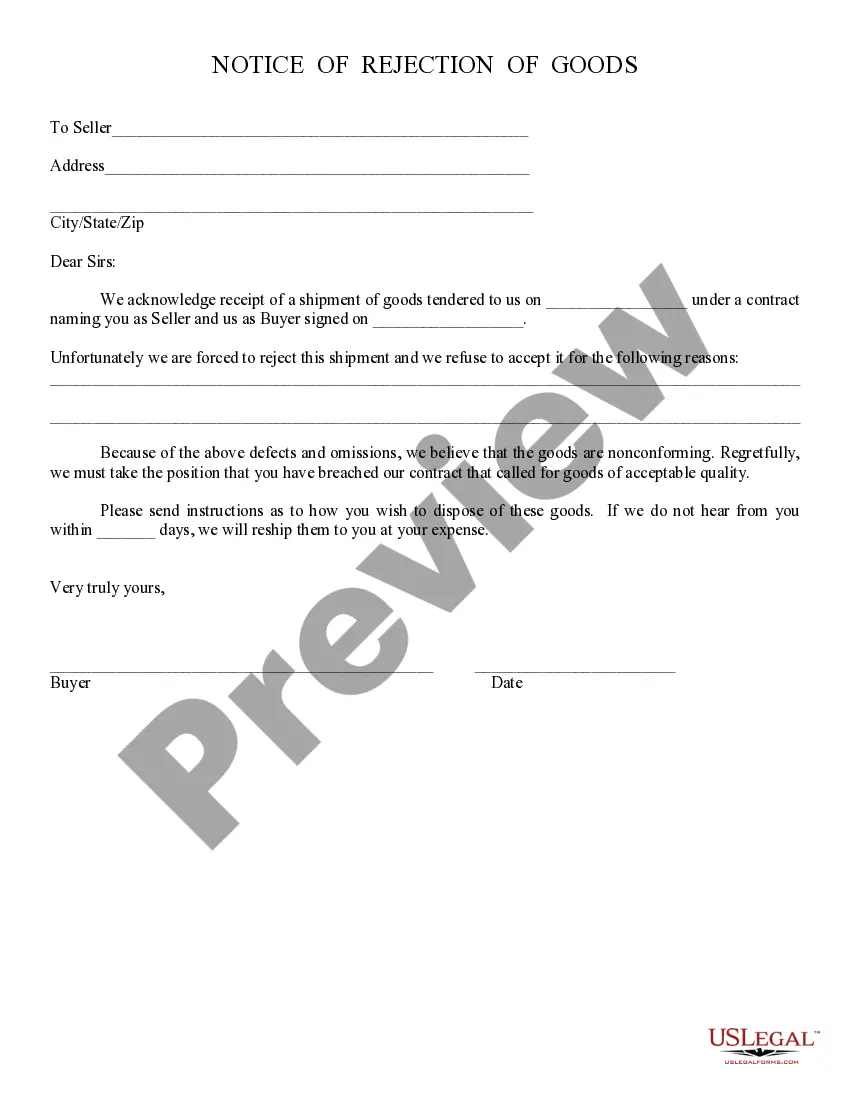
Reject Goods Application For Job
Description
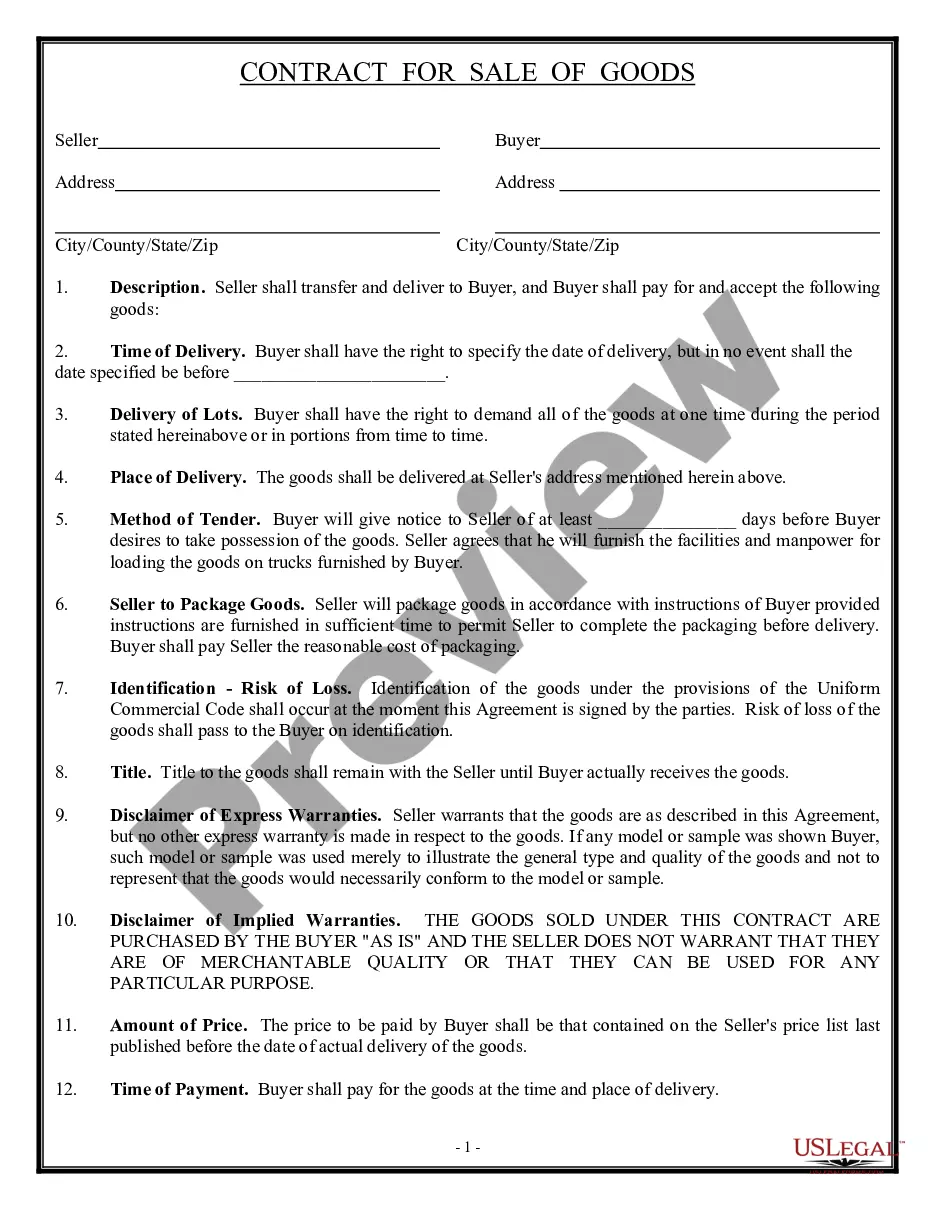
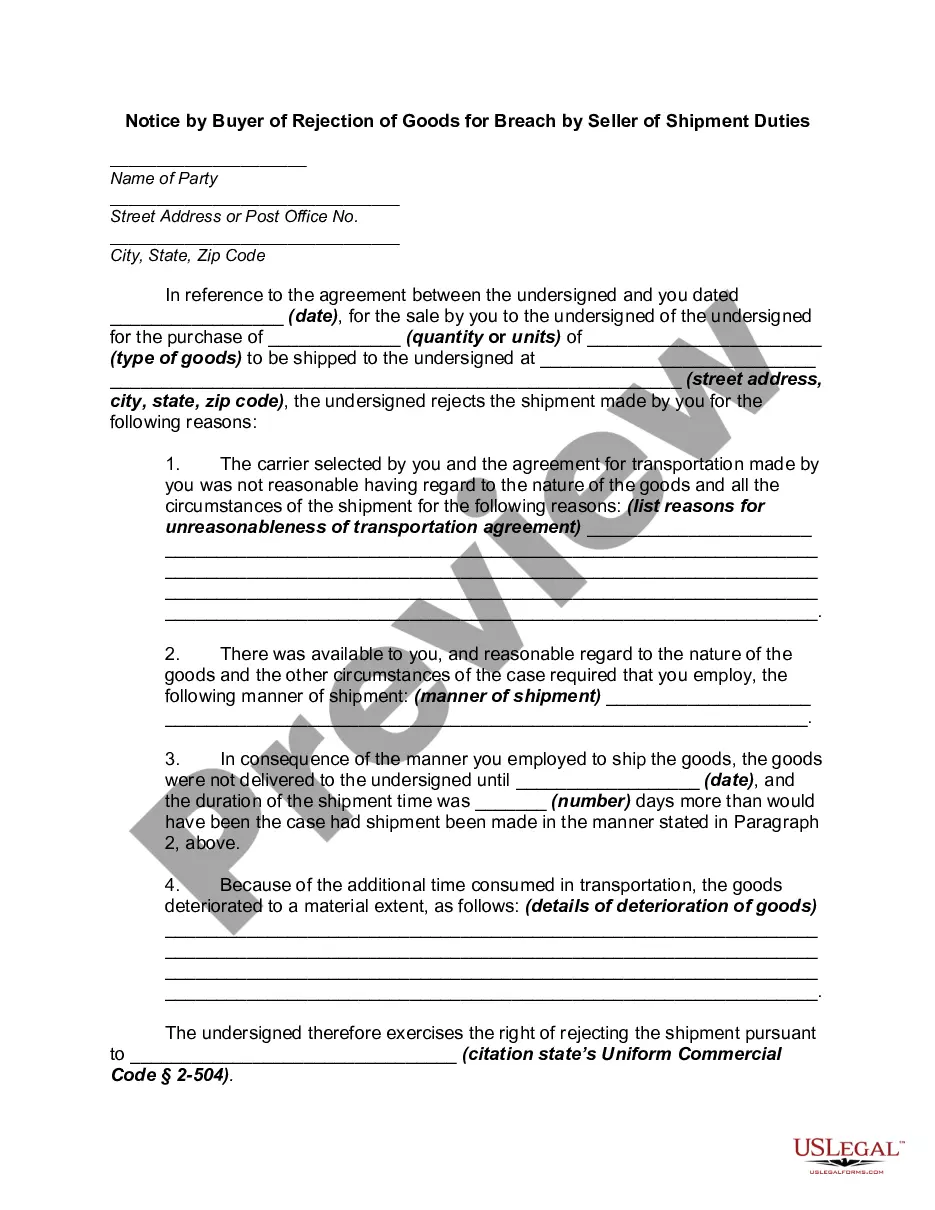
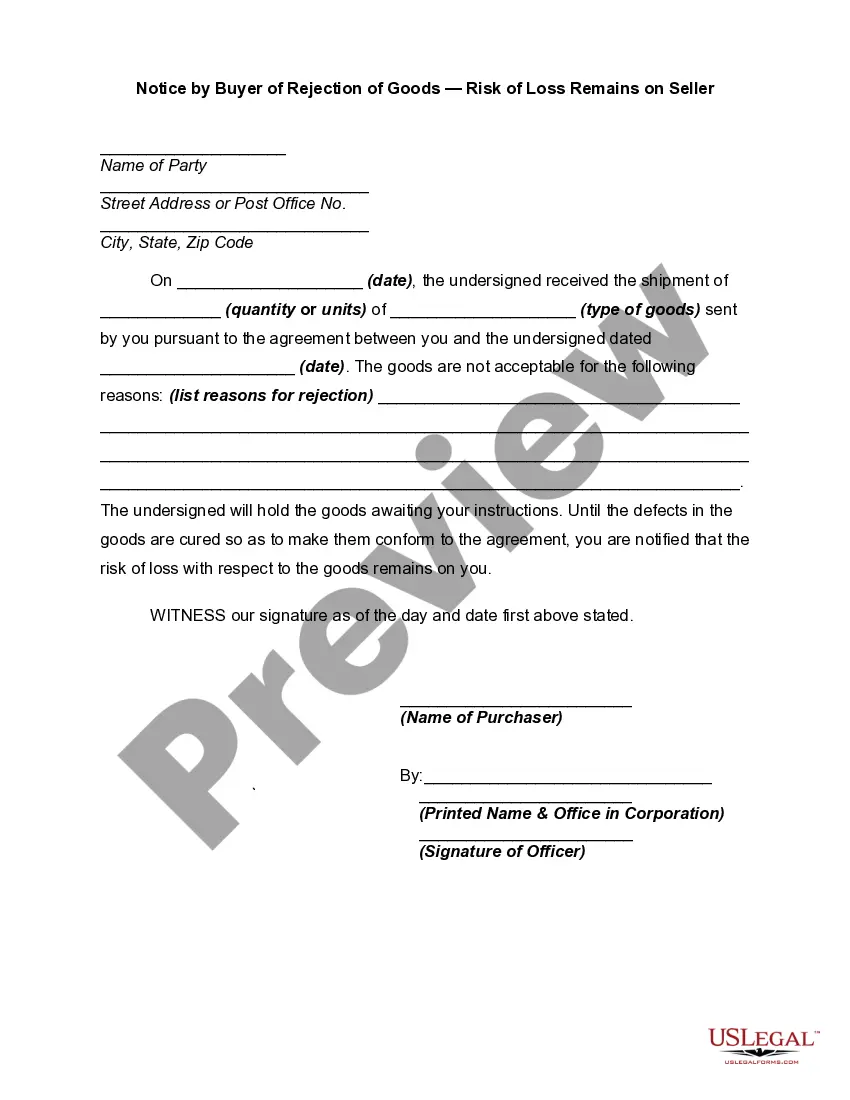
Get your form ready online
Our built-in tools help you complete, sign, share, and store your documents in one place.
Make edits, fill in missing information, and update formatting in US Legal Forms—just like you would in MS Word.
Download a copy, print it, send it by email, or mail it via USPS—whatever works best for your next step.
Sign and collect signatures with our SignNow integration. Send to multiple recipients, set reminders, and more. Go Premium to unlock E-Sign.
If this form requires notarization, complete it online through a secure video call—no need to meet a notary in person or wait for an appointment.
We protect your documents and personal data by following strict security and privacy standards.

Make edits, fill in missing information, and update formatting in US Legal Forms—just like you would in MS Word.

Download a copy, print it, send it by email, or mail it via USPS—whatever works best for your next step.

Sign and collect signatures with our SignNow integration. Send to multiple recipients, set reminders, and more. Go Premium to unlock E-Sign.

If this form requires notarization, complete it online through a secure video call—no need to meet a notary in person or wait for an appointment.

We protect your documents and personal data by following strict security and privacy standards.
Looking for another form?
How to fill out Rejection Of Goods?
Finding a reliable source for the latest and pertinent legal templates is a significant portion of navigating bureaucratic processes.
Selecting the appropriate legal documents requires accuracy and meticulousness, which is why it's crucial to obtain samples of the Reject Goods Application For Job exclusively from reputable providers, such as US Legal Forms.
Eliminate the complications associated with your legal documentation. Explore the vast collection at US Legal Forms to locate legal templates, assess their relevance for your needs, and download them instantly.
- Utilize the library navigation or the search feature to find your template.
- Review the form’s details to ensure it meets the criteria for your state and county.
- Check the form preview, if available, to confirm that it is indeed the document you need.
- Return to the search and find the correct document if the Reject Goods Application For Job does not align with your requirements.
- If you are certain about the form’s applicability, proceed to download it.
- Once you are a registered user, click Log in to verify your identity and access your selected templates in My documents.
- If you haven't created an account yet, click Buy now to purchase the template.
- Choose the pricing option that best fits your needs.
- Proceed to the registration process to complete your acquisition.
- Confirm your purchase by selecting a payment method (credit card or PayPal).
- Choose the file format for downloading the Reject Goods Application For Job.
Form popularity
FAQ
This means that if a holder of a demand note has not made any demand for payment to the maker, and the maker has not made any payment of principal or interest on the note for a continuous period of ten years, then the maker has a statue of limitation defense and a lawsuit to enforce the note brought by the holder may ...
A promissory note is recorded as a liability. Depending on the terms of repayment, the promissory note could be listed on a balance sheet as a: short-term liability if the note is payable in full within 12 months. long-term liability if the full amount of the note is repayable in more than 12 months.
If the borrower does not repay you, your legal recourse could include repossessing any collateral the borrower put up against the note, sending the debt to a collection agency, selling the promissory note (so someone else can try to collect it), or filing a lawsuit against the borrower.
Promissory notes have a statute of limitations. Depending on which U.S. state you live in, a written loan agreement may expire 3?15 years after creation.
Amendments to a promissory note may only be made with consent from the lender and will be considered binding by all parties involved. Amendments can be made for significant changes and should be done in a formal manner to minimize liability and confusion with the contract moving forward.
A promissory note release is given to a borrower after the final payment on a loan to release them of all further liabilities and obligations. The borrower will commonly request this as part of accepting the final payment for the borrowed money and that they have paid back all principal and interest under the note.
Anyone lending money (like home sellers, credit unions, mortgage lenders and banks, for instance) can issue a promissory note. But specific to real estate and the mortgage process, promissory notes serve as an agreement that the borrower will repay their mortgage loan by the maturity date.
If a promissory note is not signed, it will be up to the court to determine the contract's enforceability based on all the facts and documents involved. A contract requires a knowing acceptance of the terms it contains. Acceptance is typically made by the parties signing the contract.