Irrevocable Trust Withdrawals With Grantor As Beneficiary
Description




Get your form ready online
Our built-in tools help you complete, sign, share, and store your documents in one place.
Make edits, fill in missing information, and update formatting in US Legal Forms—just like you would in MS Word.
Download a copy, print it, send it by email, or mail it via USPS—whatever works best for your next step.
Sign and collect signatures with our SignNow integration. Send to multiple recipients, set reminders, and more. Go Premium to unlock E-Sign.
If this form requires notarization, complete it online through a secure video call—no need to meet a notary in person or wait for an appointment.
We protect your documents and personal data by following strict security and privacy standards.

Make edits, fill in missing information, and update formatting in US Legal Forms—just like you would in MS Word.

Download a copy, print it, send it by email, or mail it via USPS—whatever works best for your next step.

Sign and collect signatures with our SignNow integration. Send to multiple recipients, set reminders, and more. Go Premium to unlock E-Sign.

If this form requires notarization, complete it online through a secure video call—no need to meet a notary in person or wait for an appointment.

We protect your documents and personal data by following strict security and privacy standards.
Looking for another form?
How to fill out Irrevocable Trust Agreement For Benefit Of Trustor's Children And Grandchildren?
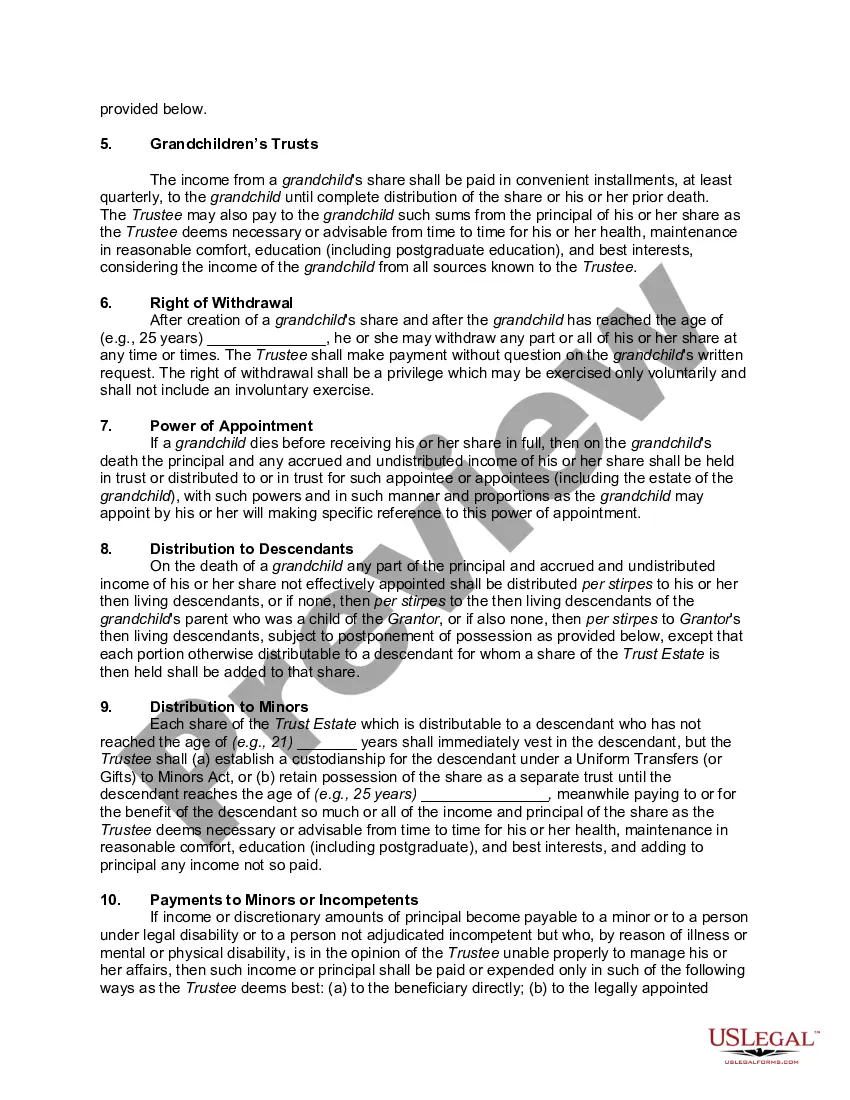
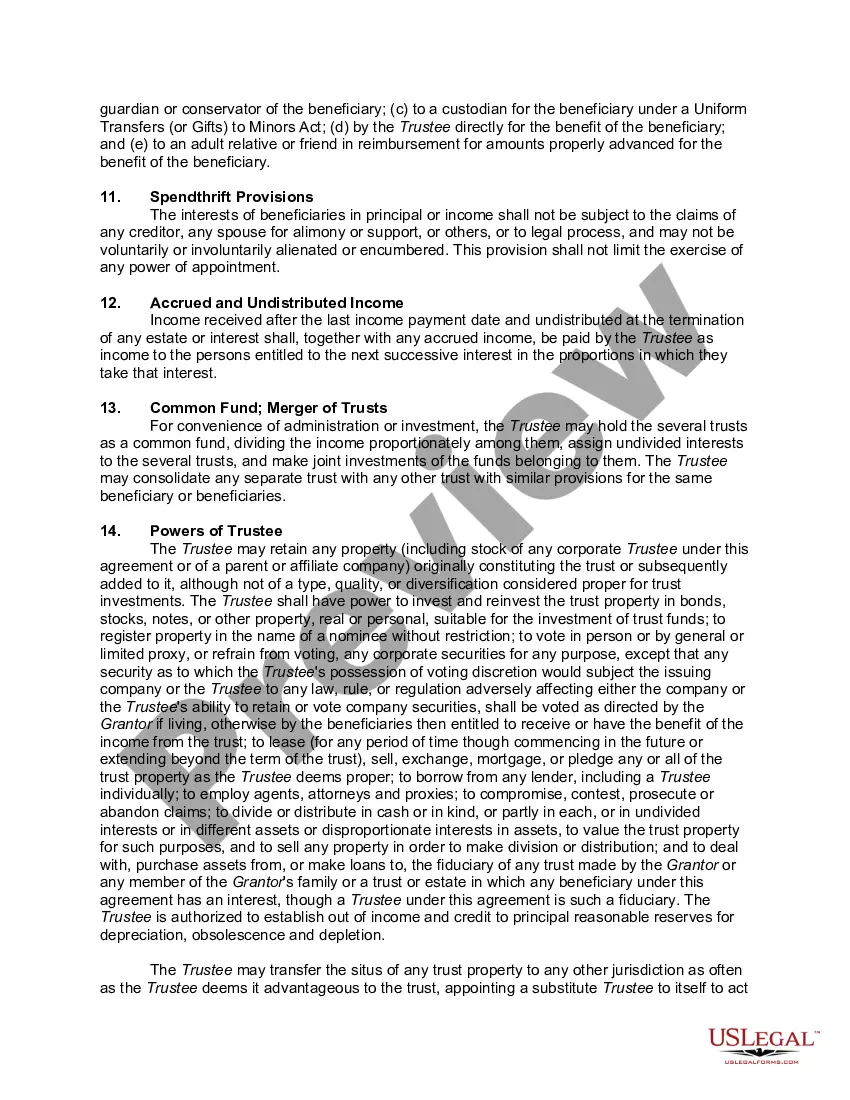
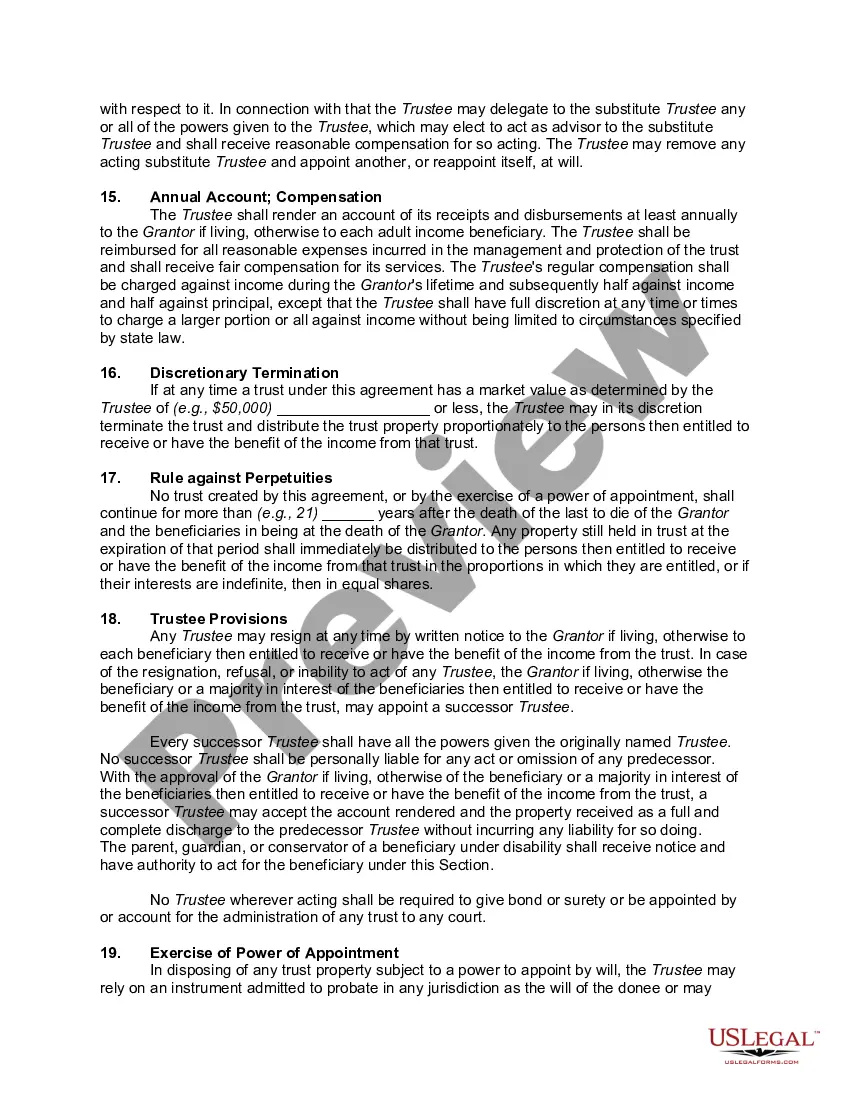
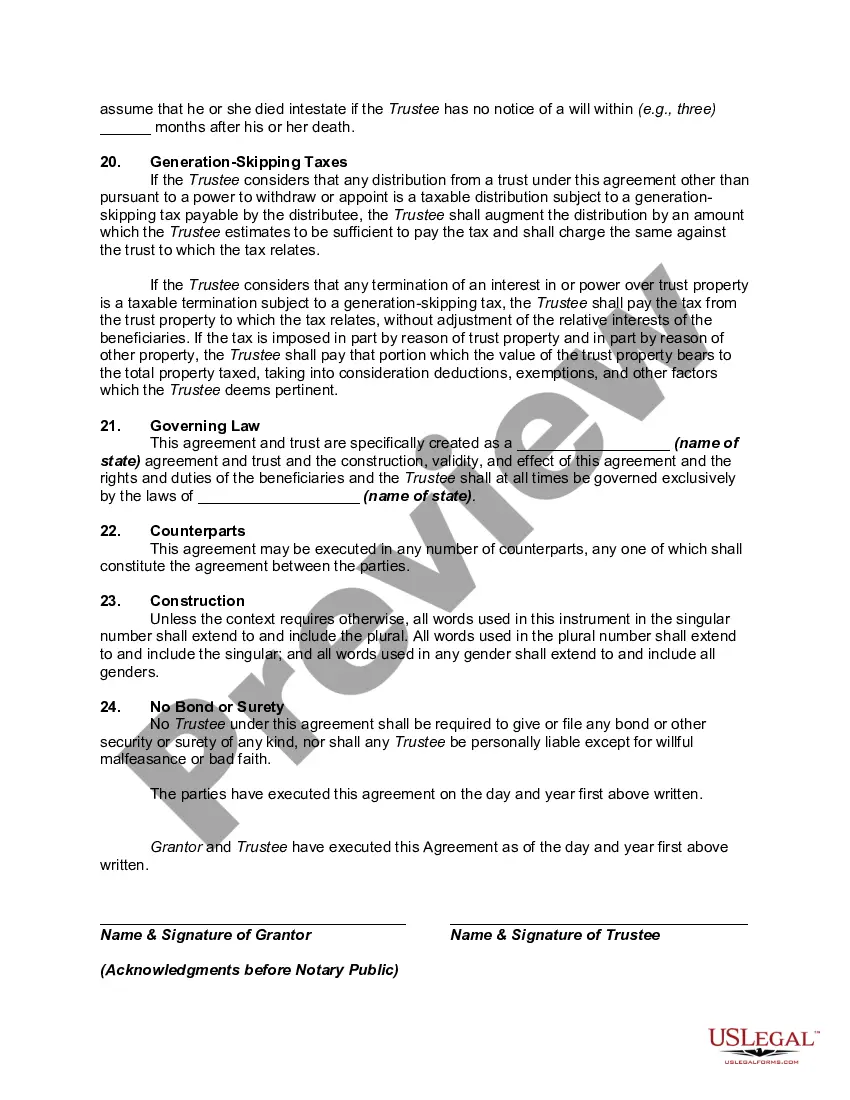
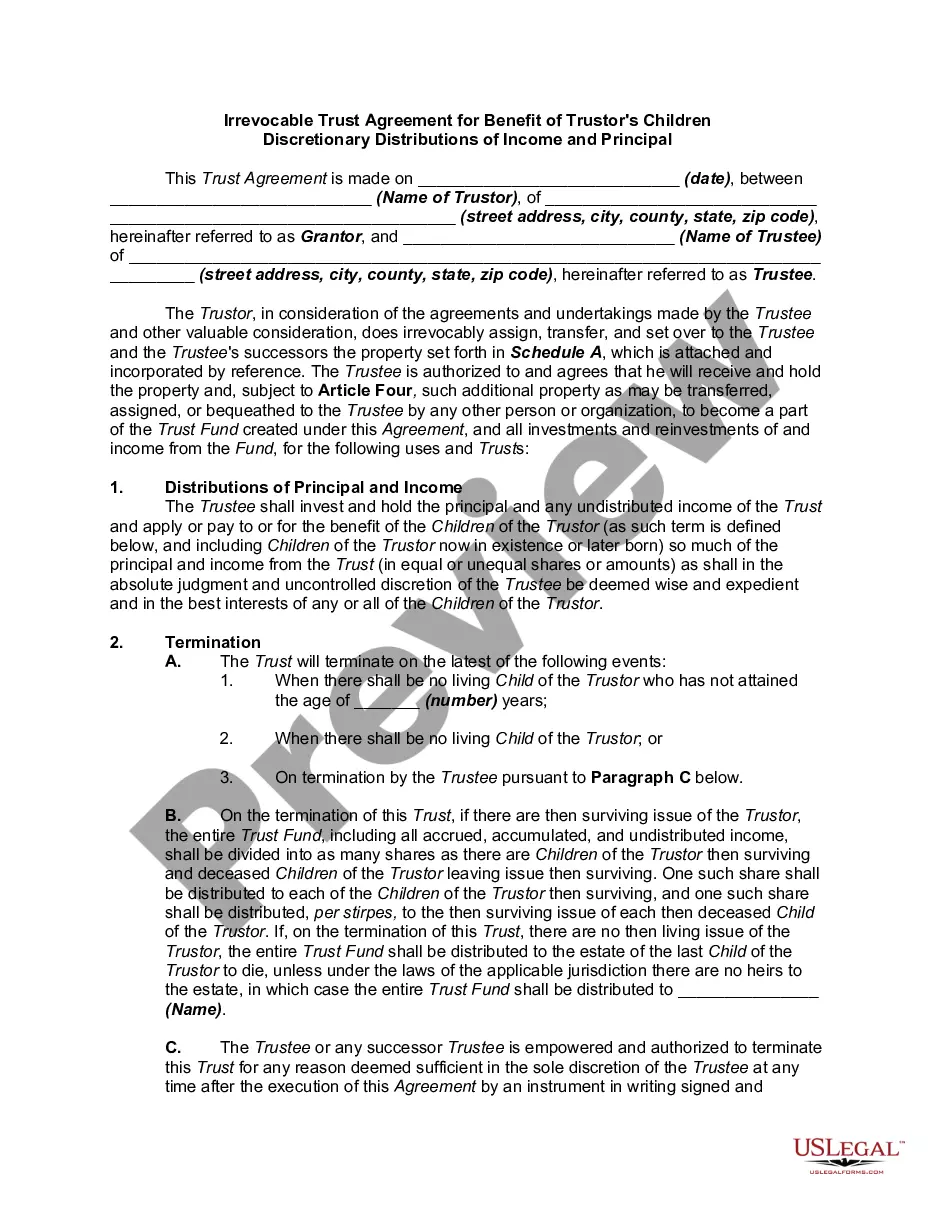
The Unchangeable Trust Withdrawals With Grantor As Beneficiary displayed on this site serves as a reusable official template drafted by expert attorneys according to federal and state laws and regulations.
For over 25 years, US Legal Forms has offered individuals, businesses, and lawyers more than 85,000 validated, state-specific forms for any professional and personal event. It’s the fastest, simplest, and most trustworthy way to acquire the necessary documentation, as the service ensures the utmost level of data security and anti-malware safeguards.
Register with US Legal Forms to have validated legal templates for all of life’s circumstances readily accessible.
- Locate the document you require and review it.
- Browse through the sample you found and preview it or check the form description to ensure it meets your needs. If it does not, use the search bar to find the correct one. Click 'Buy Now' after you have identified the template you want.
- Register and sign in.
- Select the pricing plan that fits your needs and create an account. Use PayPal or a credit card to make an instant payment. If you already have an account, Log In and verify your subscription to proceed.
- Acquire the editable template.
- Select the format you desire for your Unchangeable Trust Withdrawals With Grantor As Beneficiary (PDF, DOCX, RTF) and download the sample onto your device.
- Complete and sign the document.
- Print the template to fill it out by hand. Alternatively, use an online versatile PDF editor to swiftly and accurately complete and sign your form with authenticity.
- Redownload your documents once more.
- Access the same document again whenever needed. Open the 'My documents' tab in your profile to redownload any forms you have purchased previously.
Form popularity
FAQ
In a beneficiary-grantor trust an individual (the grantor) creates a trust for another individual's benefit (the beneficiary). For example, parents create a trust for their child, permitting distributions for the child's health, education, maintenance and support.
Key Takeaways. A grantor is the entity that establishes a trust and legally transfers control of those assets to a trustee, who manages it for one or more beneficiaries. In certain types of trusts, the grantor may also be the beneficiary, the trustee, or both.
Irrevocable Trusts While these types of trusts can carry monetary benefits, they're not flexible and don't allow the trustor to make changes. Generally, a trustee is the only person allowed to withdraw money from an irrevocable trust.
Beneficiaries of a trust typically pay taxes on the distributions they receive from a trust's income rather than the trust paying the tax. However, beneficiaries aren't subject to taxes on distributions from the trust's principal, the original sum of money put into the trust.
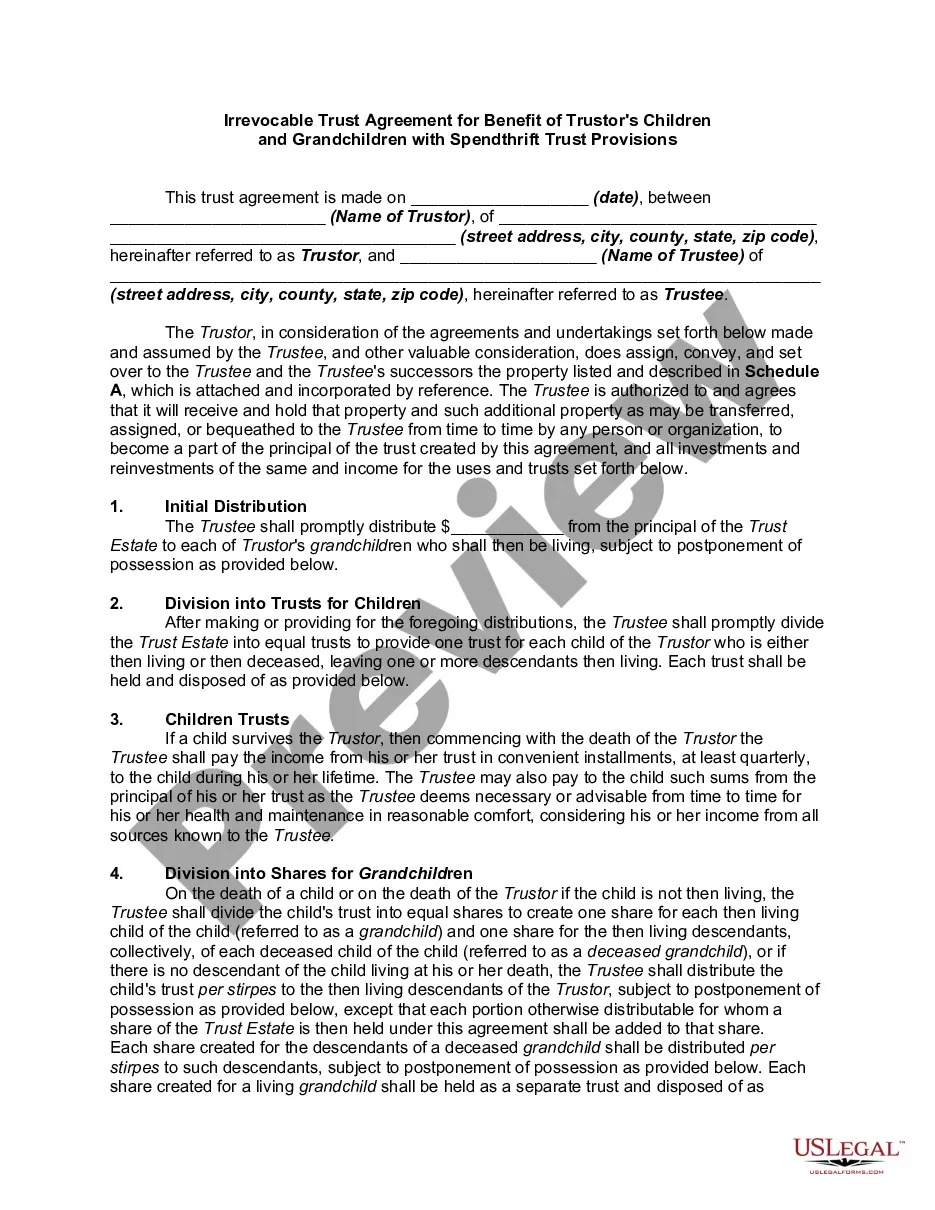
The grantor (as an individual or couple) transfers their assets to an irrevocable trust. However, unlike other irrevocable trusts, the grantor can be the income beneficiary. Their children or spouse would be the residual beneficiaries.