Letter Clean Up Property For Bail
Description
Get your form ready online
Our built-in tools help you complete, sign, share, and store your documents in one place.
Make edits, fill in missing information, and update formatting in US Legal Forms—just like you would in MS Word.
Download a copy, print it, send it by email, or mail it via USPS—whatever works best for your next step.
Sign and collect signatures with our SignNow integration. Send to multiple recipients, set reminders, and more. Go Premium to unlock E-Sign.
If this form requires notarization, complete it online through a secure video call—no need to meet a notary in person or wait for an appointment.
We protect your documents and personal data by following strict security and privacy standards.

Make edits, fill in missing information, and update formatting in US Legal Forms—just like you would in MS Word.

Download a copy, print it, send it by email, or mail it via USPS—whatever works best for your next step.

Sign and collect signatures with our SignNow integration. Send to multiple recipients, set reminders, and more. Go Premium to unlock E-Sign.

If this form requires notarization, complete it online through a secure video call—no need to meet a notary in person or wait for an appointment.

We protect your documents and personal data by following strict security and privacy standards.
Looking for another form?

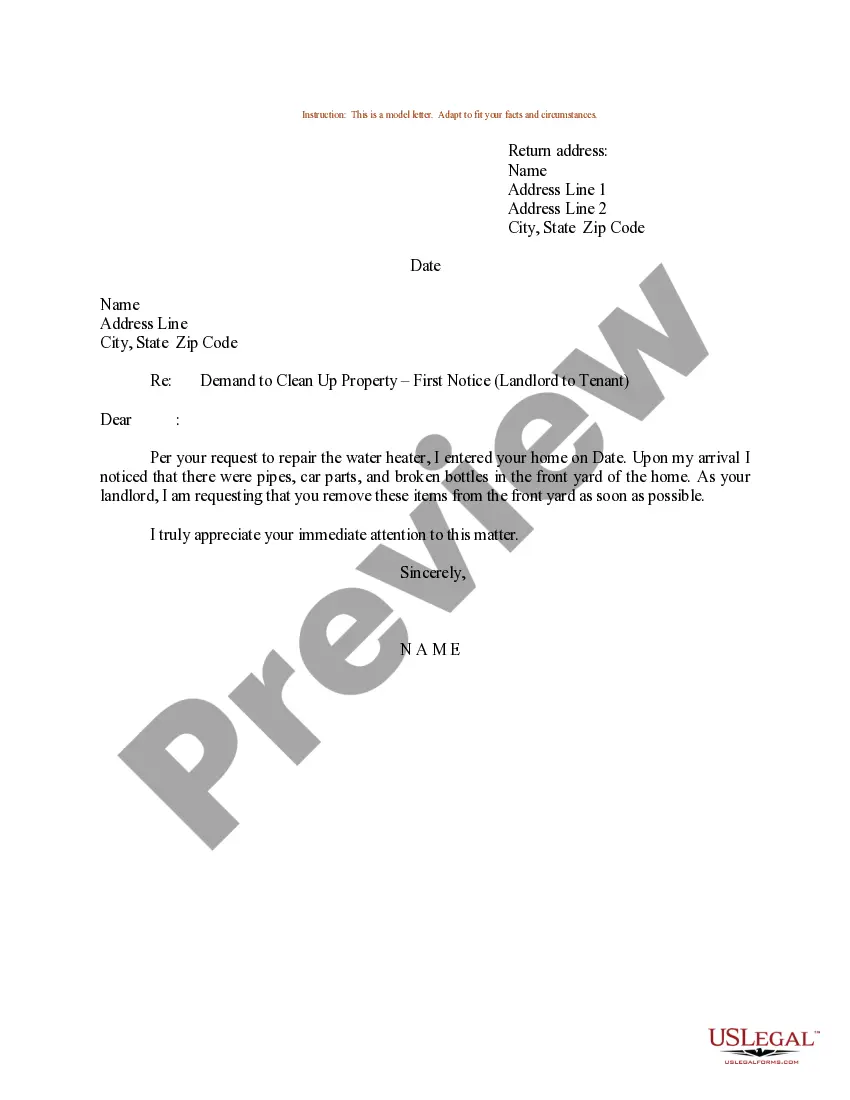
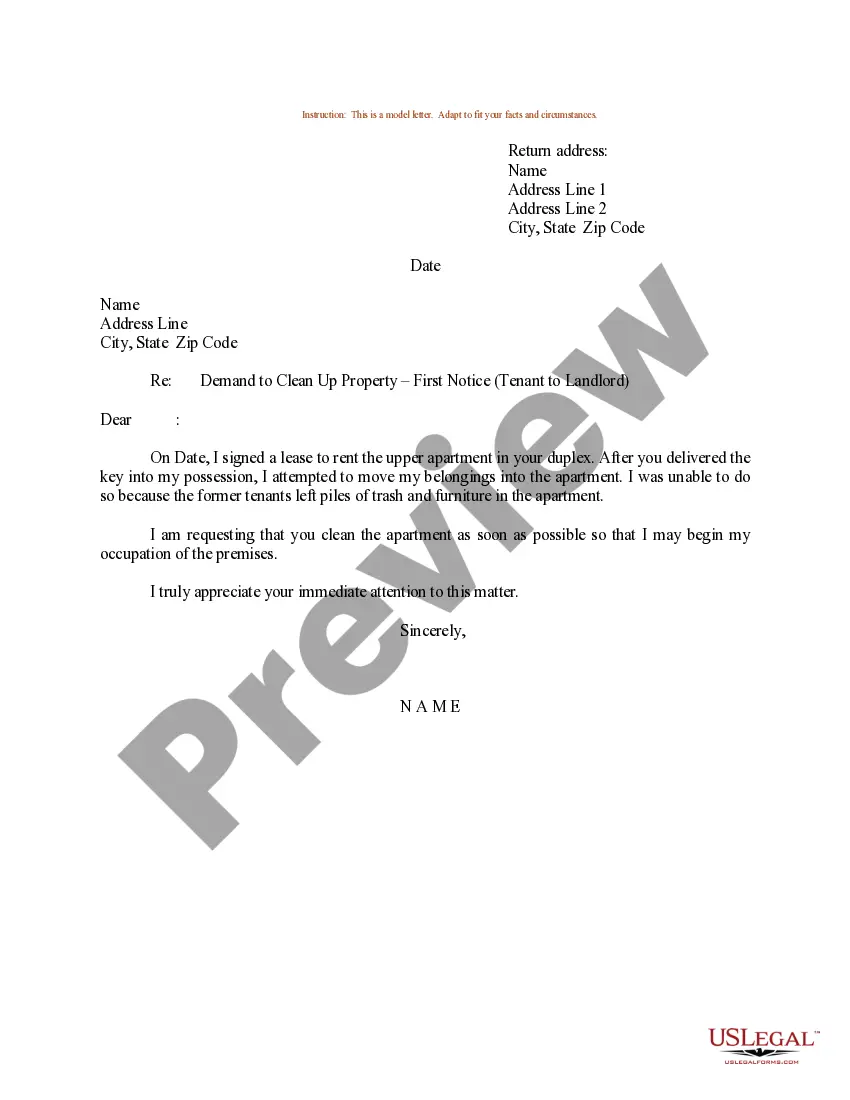
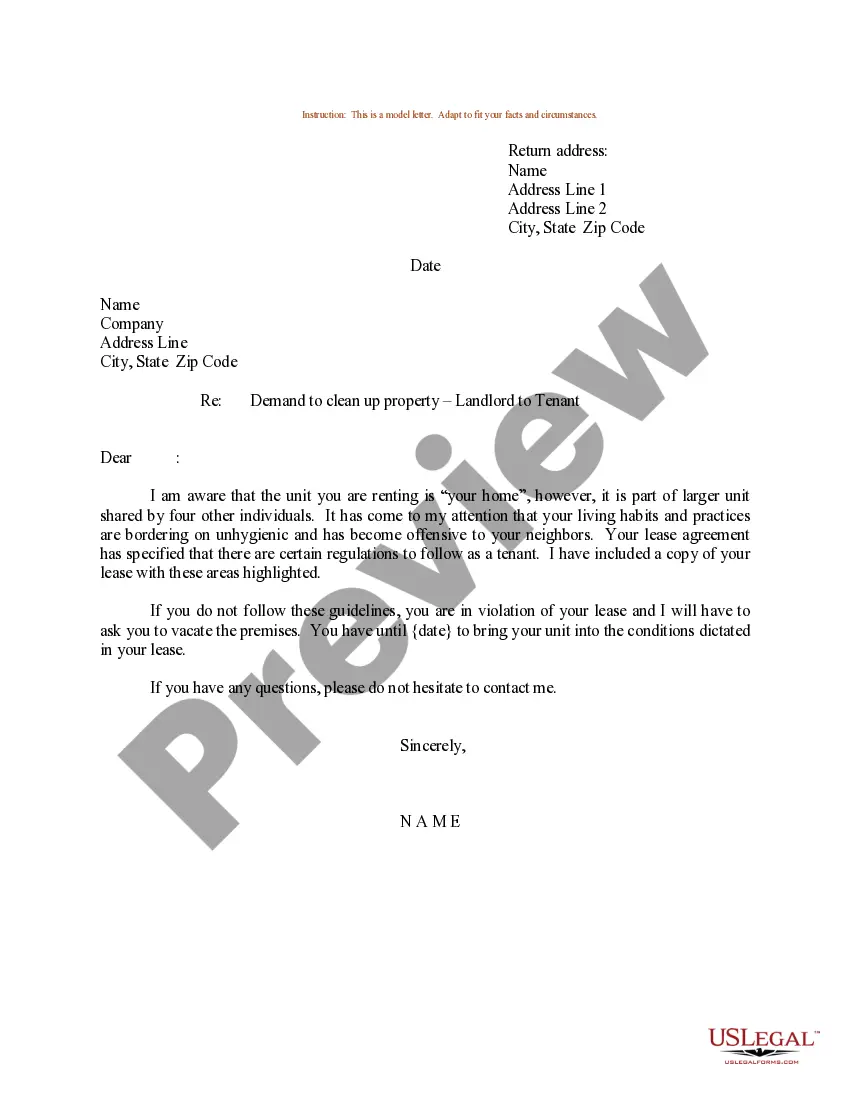
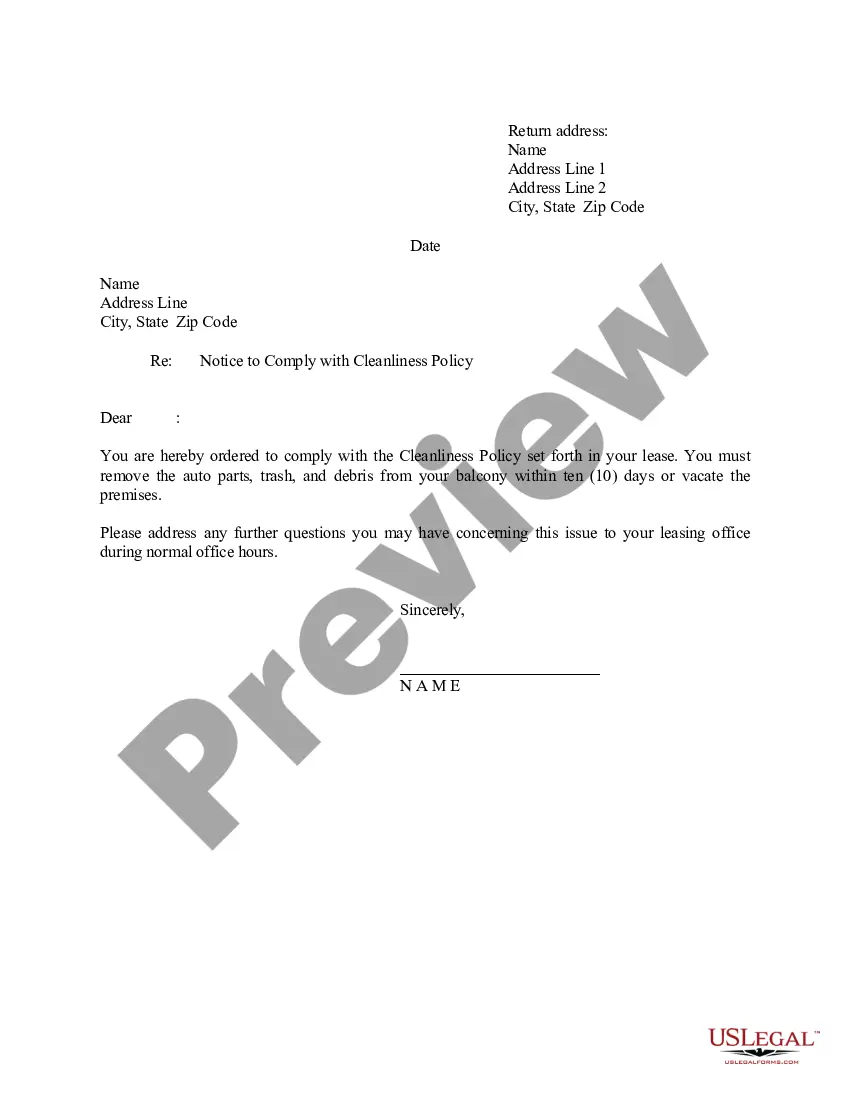
How to fill out Sample Letter Regarding Demand To Clean Up Property - First Notice From Landlord To Tenant?
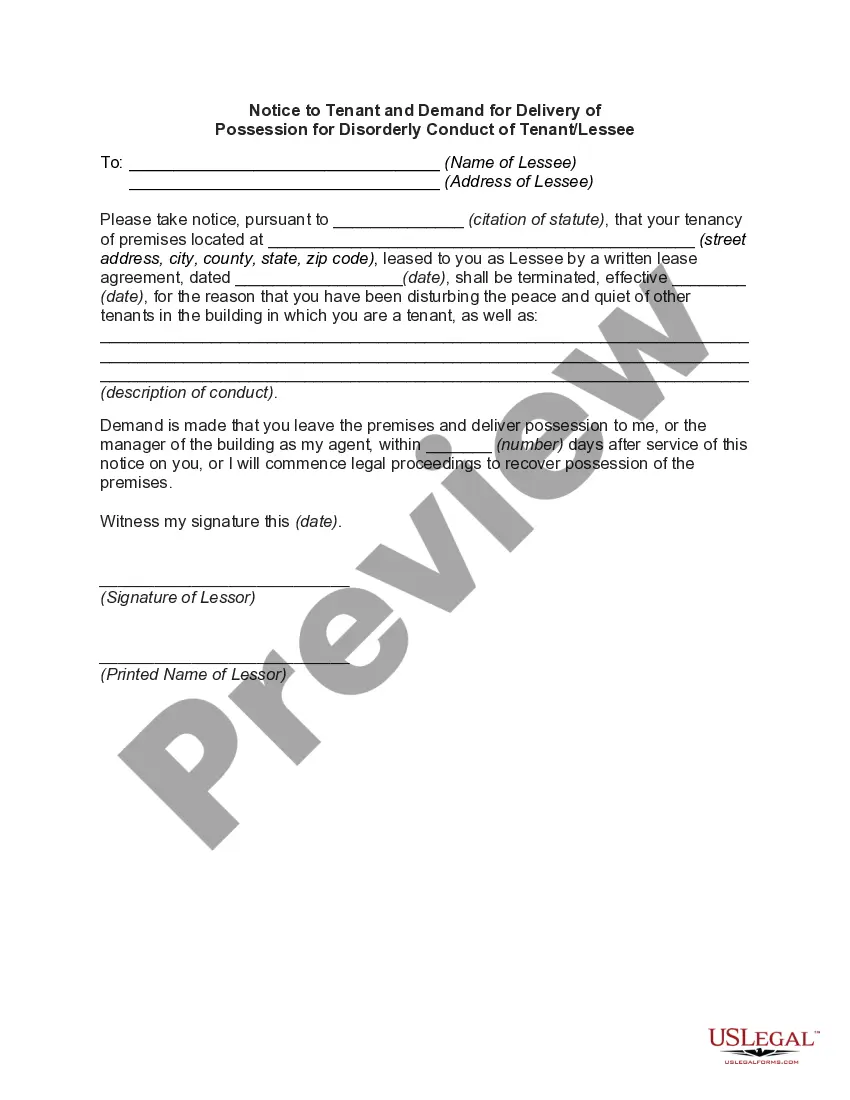
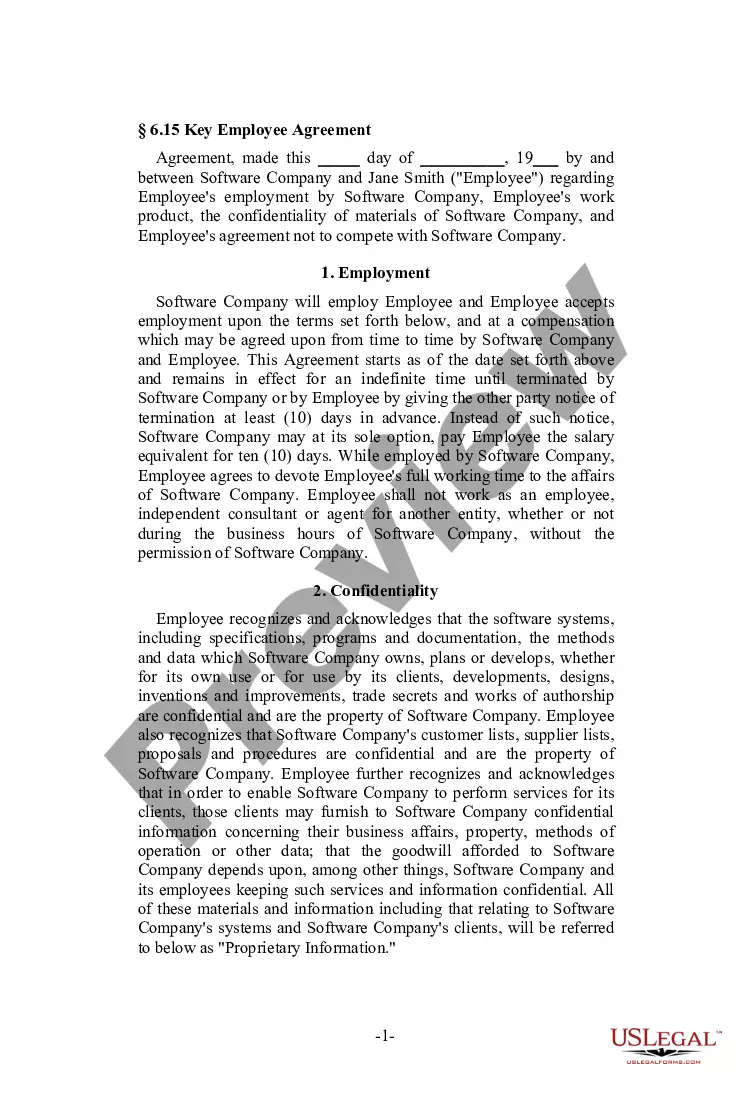
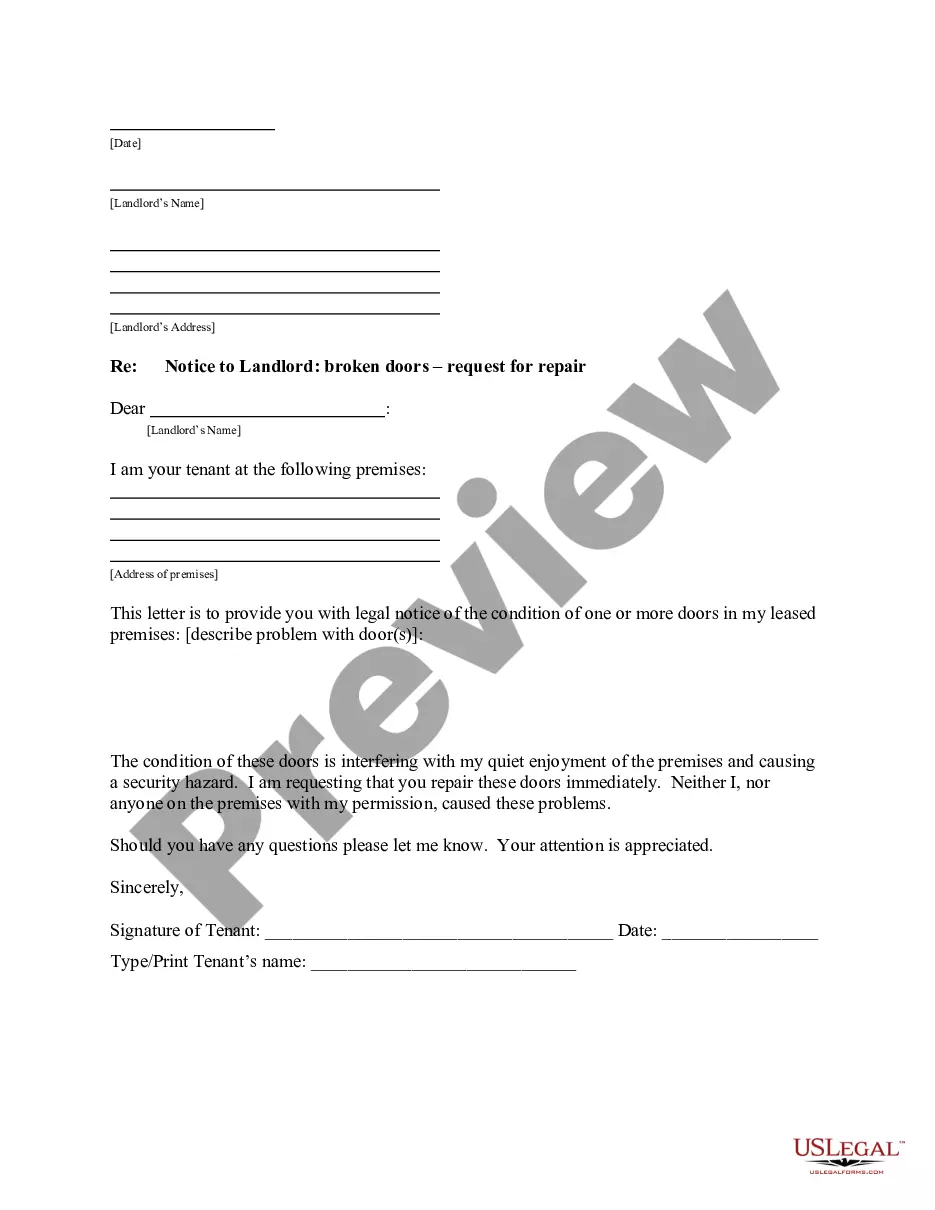
The Letter Clean Up Property For Bail you observe on this page is a reusable official template crafted by experienced attorneys in accordance with federal and local regulations.
For over 25 years, US Legal Forms has supplied individuals, businesses, and legal practitioners with more than 85,000 authenticated, state-specific forms for any corporate and personal situation. It’s the quickest, simplest, and most dependable method to acquire the documentation you require, as the service ensures bank-grade data security and anti-malware safeguards.
Make use of the same document again whenever necessary. Access the My documents tab in your profile to redownload any forms that were previously downloaded.
- Search for the document you require and verify it.
- Browse through the file you searched and view it or review the form description to confirm it meets your requirements. If it doesn’t, use the search function to find the correct one. Click Buy Now once you have discovered the template you need.
- Choose a pricing plan that fits you and set up an account. Utilize PayPal or a credit card for prompt payment. If you already possess an account, Log In and review your subscription to proceed.
- Select the format you want for your Letter Clean Up Property For Bail (PDF, DOCX, RTF) and save the sample on your device.
- Print the template to finish it by hand. Alternatively, use an online multifunctional PDF editor to quickly and accurately complete and sign your form with a legally binding electronic signature.
Form popularity
FAQ
Reasonably clean and tidy means that the property must be in a condition that is acceptable for normal living and use. When considering this for the letter clean up property for bail, it refers to removing clutter, ensuring surfaces are clean, and making sure there are no obvious hazards. A tidy space can help demonstrate responsibility, which may positively influence a bail decision. Utilizing services like US Legal Forms can facilitate the completion of necessary documentation to support your case.
Arkansas Law requires bail bond companies to charge and collect a ten percent premium on all bonds. It also provides there will be a $50.00 minimum on premium for any bond of $500.00 or less. The law also requires certain fees to be collected with every bond posted.
To use real estate as collateral the county courthouse must have the deed of trust on file and that deed must state that the bail bonds agency gets the property if the bail is forfeited. The bail bonds agency will place a lien on the property until the case concludes.
The court does not refund security until all of the conditions of the release agreement are performed, all court appearances are complete, the defendant is discharged from all obligations in the case, and the case is closed.
A defendant posts bail by paying the required amount to the court. The court holds this money until the court hearing. If the defendant fails to attend a court date, they forfeit the money and may be sent back to jail. If a defendant complies with bail, the court returns their money at the end of their matter.
The court will determine the amount that must be paid in order to secure the defendant's release. Defendants can post cash bail on their own, but this option is usually only recommended when the defendant has assets in their name or an extensive family network to help them get out of jail quickly.