Amend Judgment With The Law
Description
Get your form ready online
Our built-in tools help you complete, sign, share, and store your documents in one place.
Make edits, fill in missing information, and update formatting in US Legal Forms—just like you would in MS Word.
Download a copy, print it, send it by email, or mail it via USPS—whatever works best for your next step.
Sign and collect signatures with our SignNow integration. Send to multiple recipients, set reminders, and more. Go Premium to unlock E-Sign.
If this form requires notarization, complete it online through a secure video call—no need to meet a notary in person or wait for an appointment.
We protect your documents and personal data by following strict security and privacy standards.

Make edits, fill in missing information, and update formatting in US Legal Forms—just like you would in MS Word.

Download a copy, print it, send it by email, or mail it via USPS—whatever works best for your next step.

Sign and collect signatures with our SignNow integration. Send to multiple recipients, set reminders, and more. Go Premium to unlock E-Sign.

If this form requires notarization, complete it online through a secure video call—no need to meet a notary in person or wait for an appointment.

We protect your documents and personal data by following strict security and privacy standards.
Looking for another form?
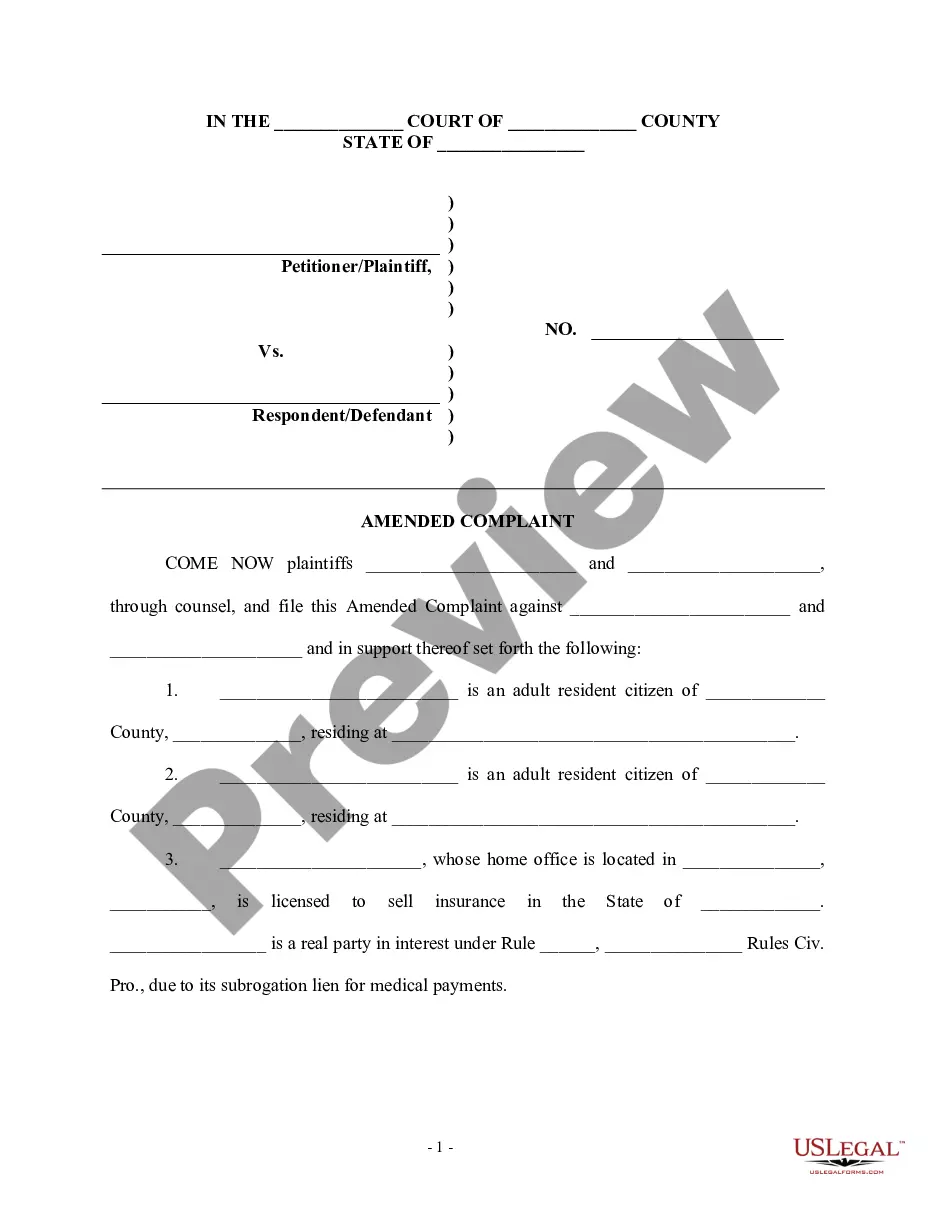
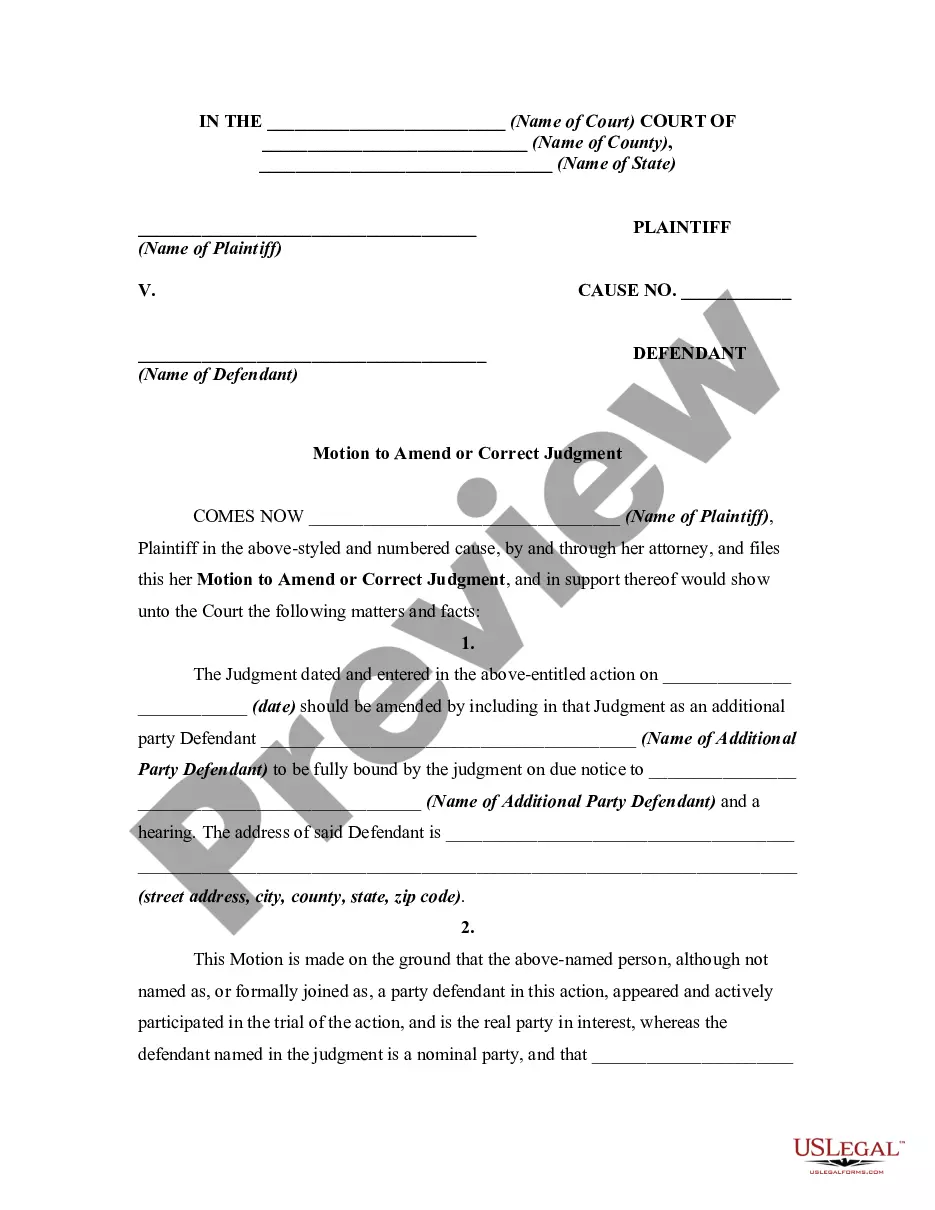
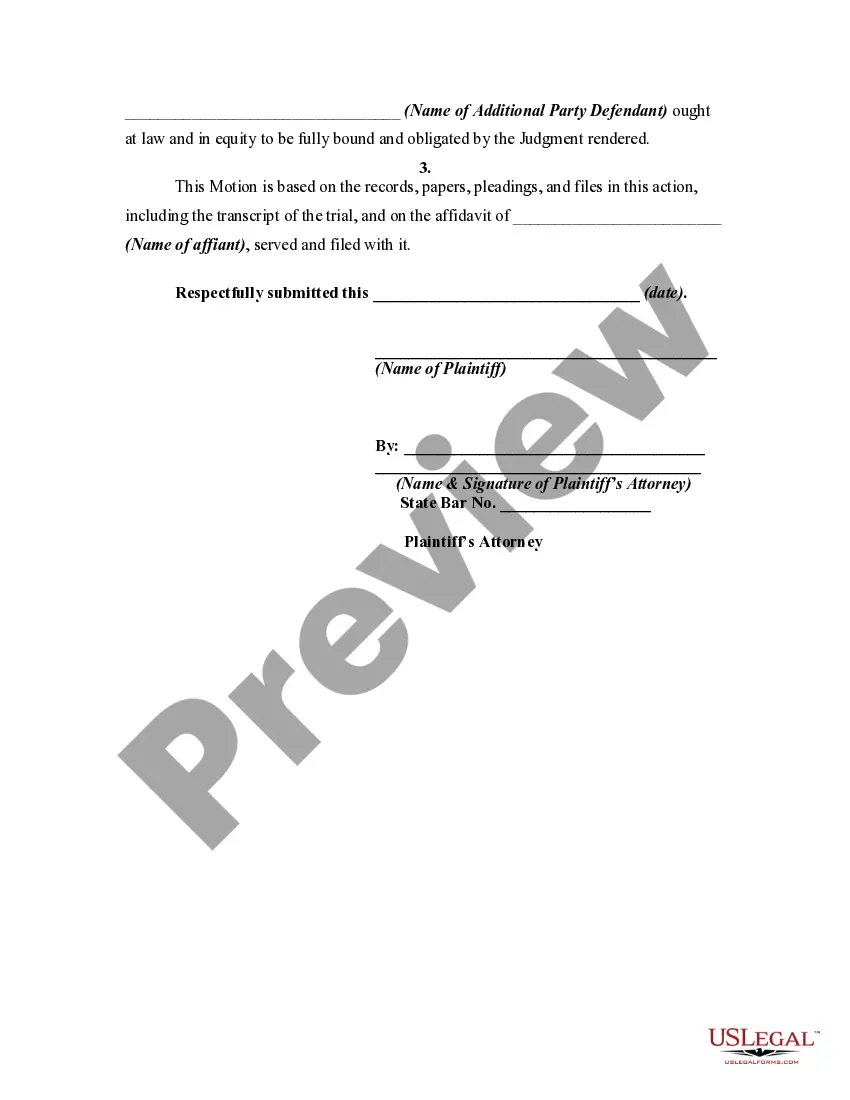
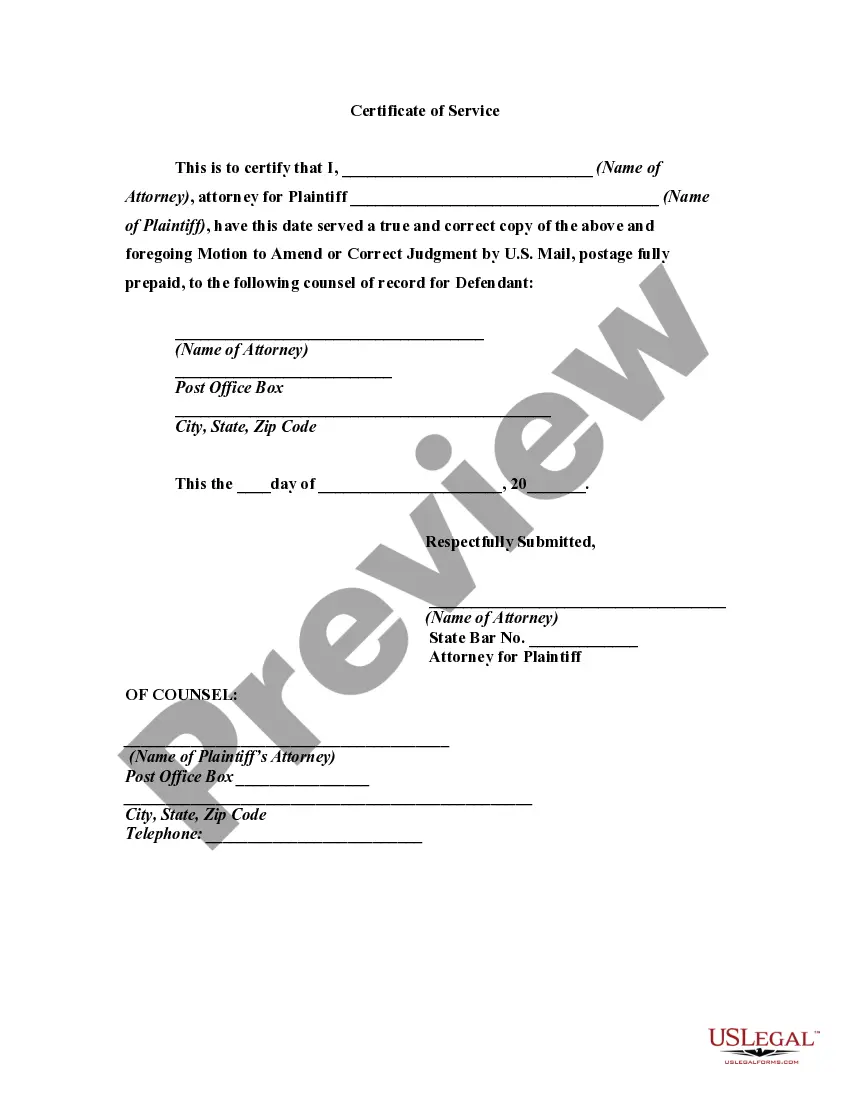
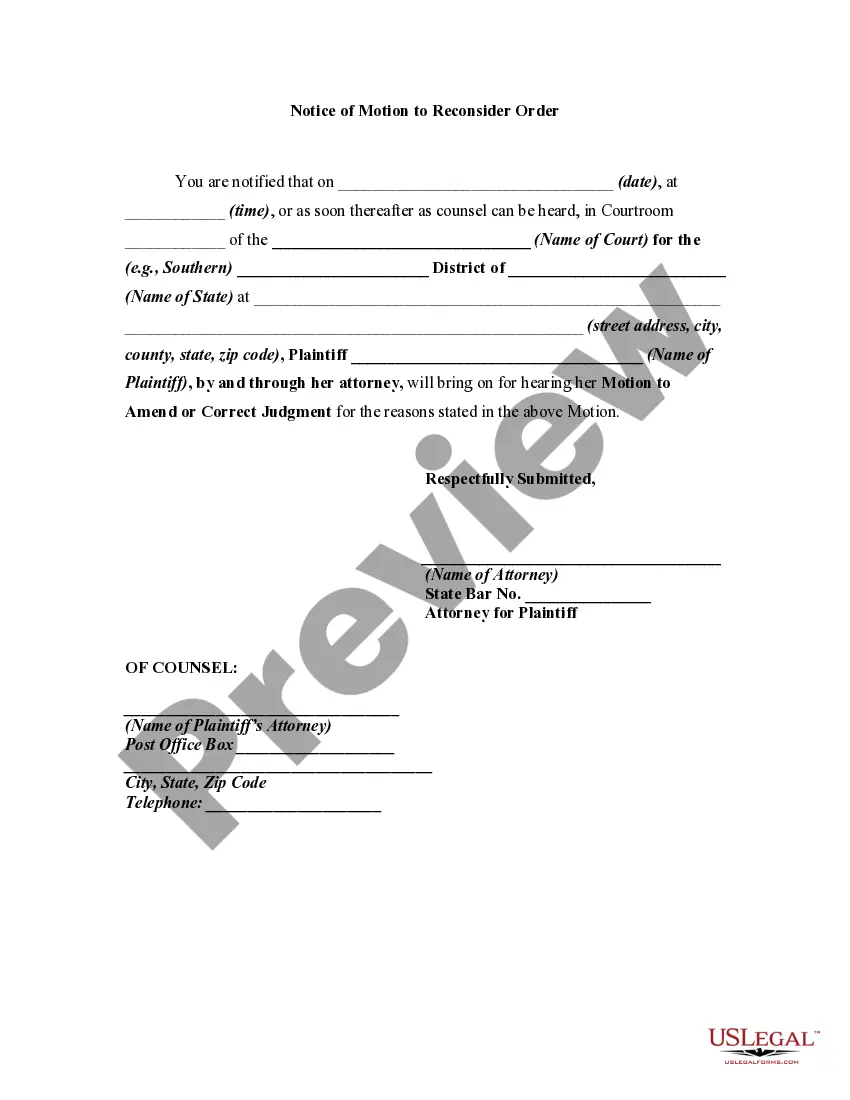
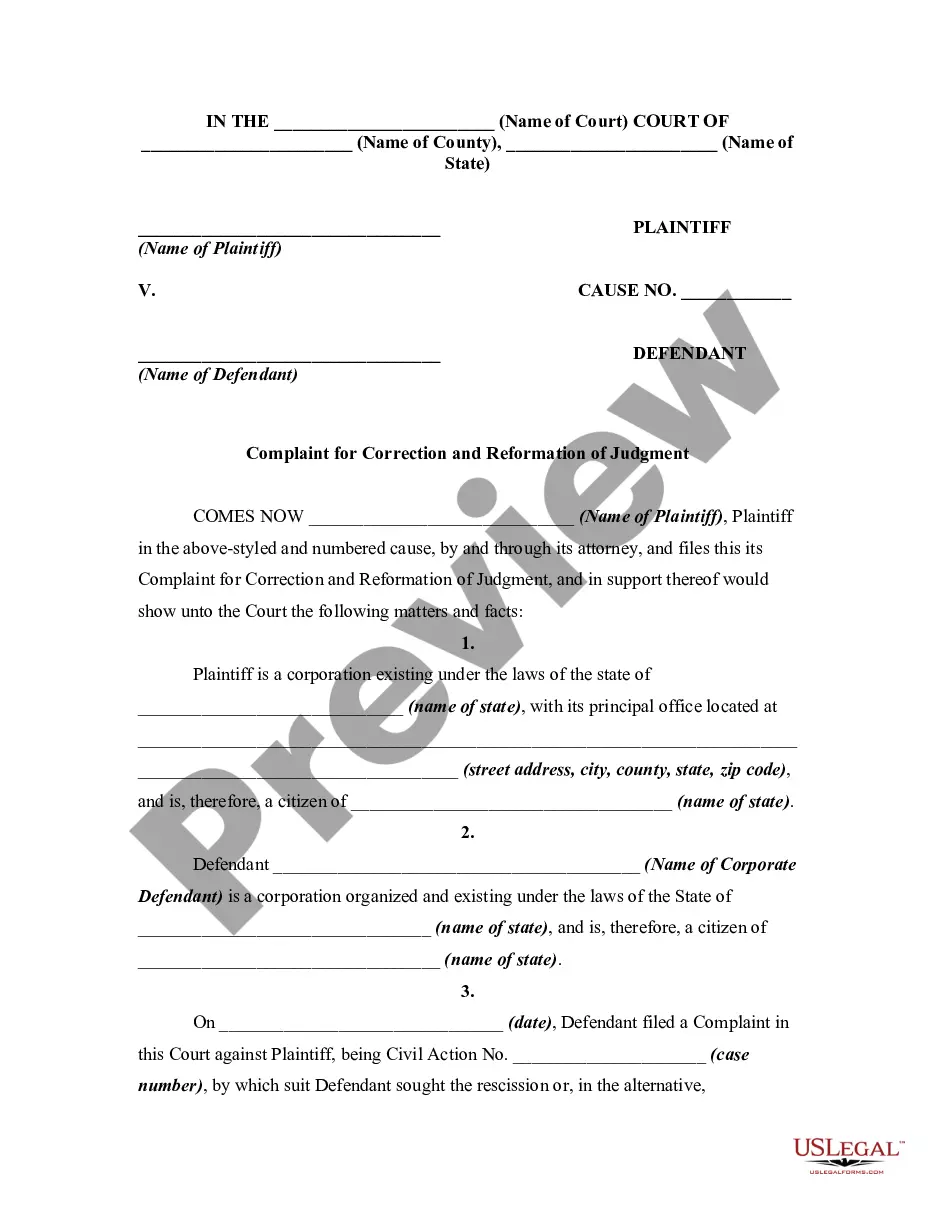
How to fill out Motion To Amend Or Correct Judgment To Include Additional Party Defendant As Real Party In Interest?
- Log into your US Legal Forms account. If you are a returning user, ensure your subscription is valid; otherwise, consider renewing it based on your payment plan.
- Check the form preview and descriptions carefully. Confirm that the selected document fits your specific needs and complies with local jurisdiction requirements.
- Seek alternative templates if needed. If the first document does not meet your needs, utilize the Search tab to find a more suitable option. Move on once you find the right one.
- Purchase the legal document by clicking on the Buy Now button. Select your desired subscription plan, and create an account to access the full range of resources available.
- Complete your transaction by entering your payment information, either via credit card or PayPal.
- Download your form to your device for completion. You can also access it later in the My Forms section of your profile.
In conclusion, using US Legal Forms not only provides you with a vast collection of legal documents but also connects you with premium experts who can assist in creating legally sound submissions. Whether you are familiar with our services or a first-time user, the process is designed to be user-friendly and efficient.
Get started today by visiting US Legal Forms and take control of your legal needs.
Form popularity
FAQ
If a case is amended, it indicates that changes have been made to the original legal filings, including adjustments to claims or defenses. These amendments aim to better reflect the realities of the situation or to fix previous errors. Familiarizing yourself with the steps to amend judgment with the law is essential for maintaining clarity and fairness in your legal proceedings.
To amend a judgment means to modify the court's final decision, either to clarify its terms or to correct any errors. This process ensures that the judgment accurately represents the court's intent and is fair to the parties involved. Knowing how to amend judgment with the law allows you to take appropriate actions when situations change.
The purpose of a motion to amend is to formally request alterations in legal documents to reflect accurate information. This motion helps ensure that all parties are on the same page, thus avoiding potential misunderstandings. Understanding the process of how to amend judgment with the law is vital for achieving a fair resolution.
A motion to amend serves as a request to change, add, or remove content from a legal filing. By submitting this motion, you can clarify your position, enhance your arguments, or rectify mistakes. Learning how to effectively amend judgment with the law helps streamline your case and improves overall legal strategies.
To amend means to make formal changes to a legal document or judgment. This process allows parties to correct errors, update information, or address issues that might affect the outcome of the case. By understanding how to amend judgment with the law, individuals can better navigate the legal landscape and ensure their rights are protected.
Yes, a judge can overturn a judgment, typically through an appellate process or upon finding that the original ruling was flawed. This action often involves a substantive review of the case and its evidence. If you believe that you have grounds to amend judgment with the law, it’s vital to seek legal advice to explore your options effectively.
Yes, a judgment can be amended under specific circumstances, such as to correct clerical errors or to adjust terms based on new evidence. The amendment process requires you to file the appropriate motion in court and follow local rules. By learning how to amend judgment with the law, you can ensure that your case is heard fairly and accurately.
A motion to modify is a legal request to change an existing court order or judgment. This motion can be based on changed circumstances or an error in the original decision. Understanding how to amend judgment with the law empowers you to seek a modification when necessary, ensuring your legal rights are preserved.
You can file a judgment as a matter of law when you believe that no reasonable jury could possibly reach a different conclusion based on the evidence presented. This request is made after the opposing party has rested their case. Knowing how to amend judgment with the law is essential in these situations, as it can influence the final outcome significantly.
A motion to modify, correct, or reform a judgment is a request to the court to change its previous decision. This motion can address issues such as miscalculations or changes in circumstances that affect the outcome. To effectively navigate this process, it helps to consult resources that clarify how to amend judgment with the law, like USLegalForms.