Letter Security Administration Without Will
Description
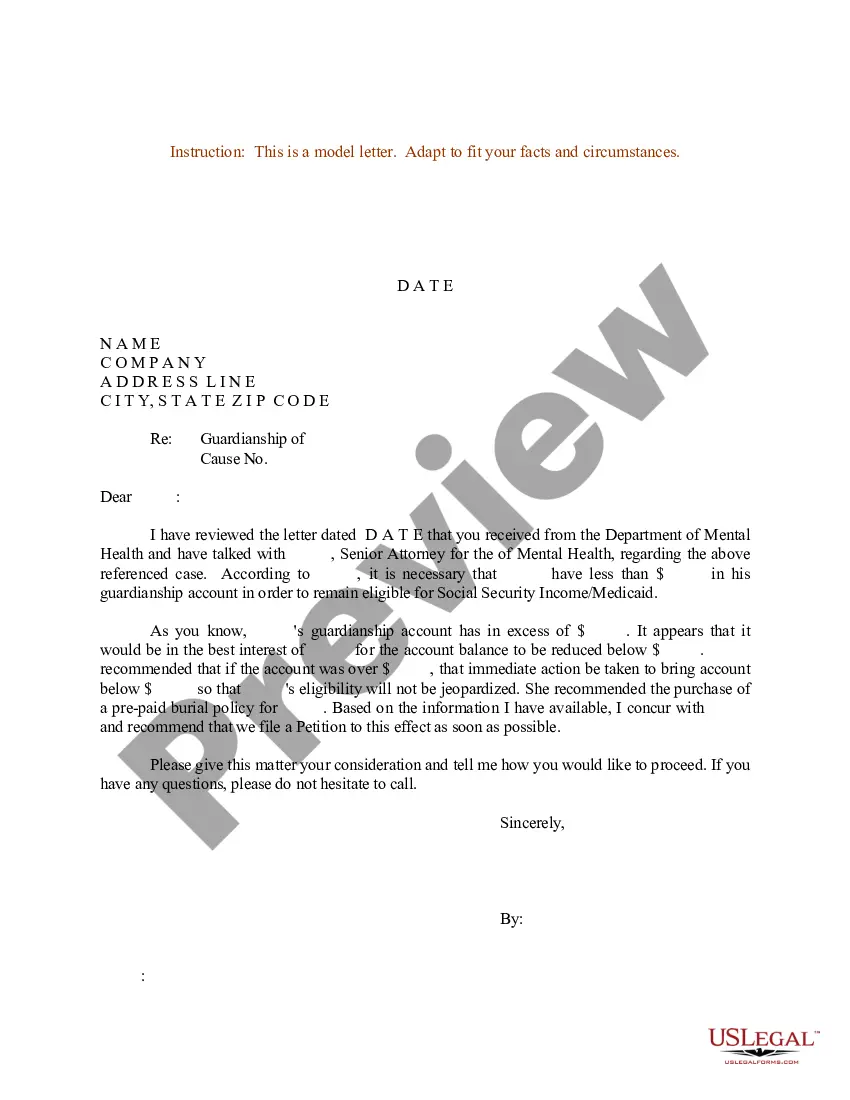
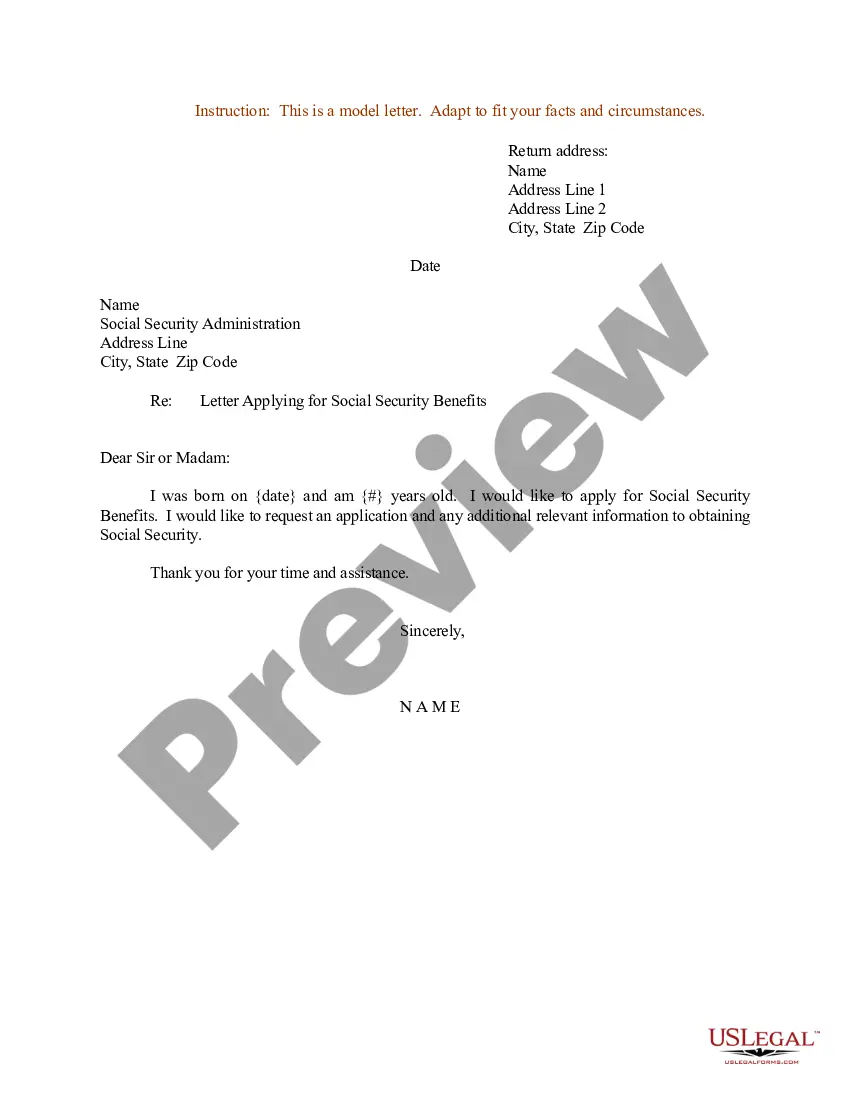
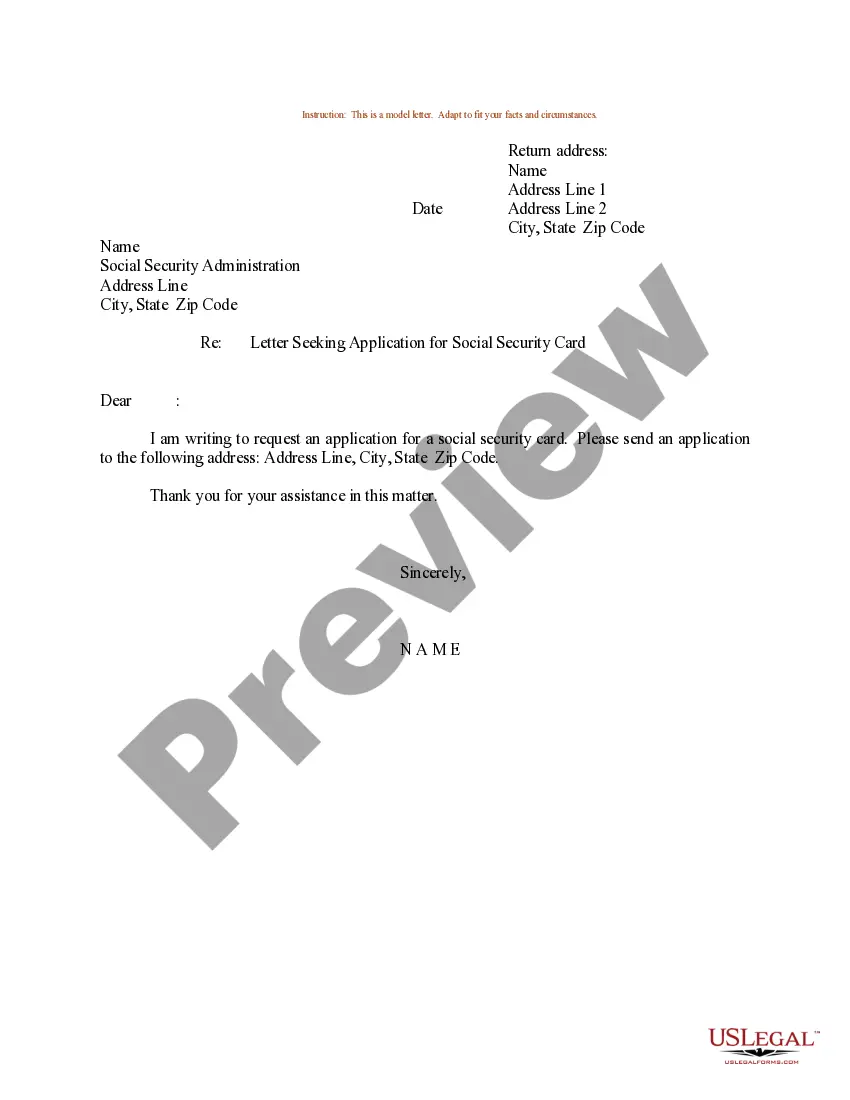
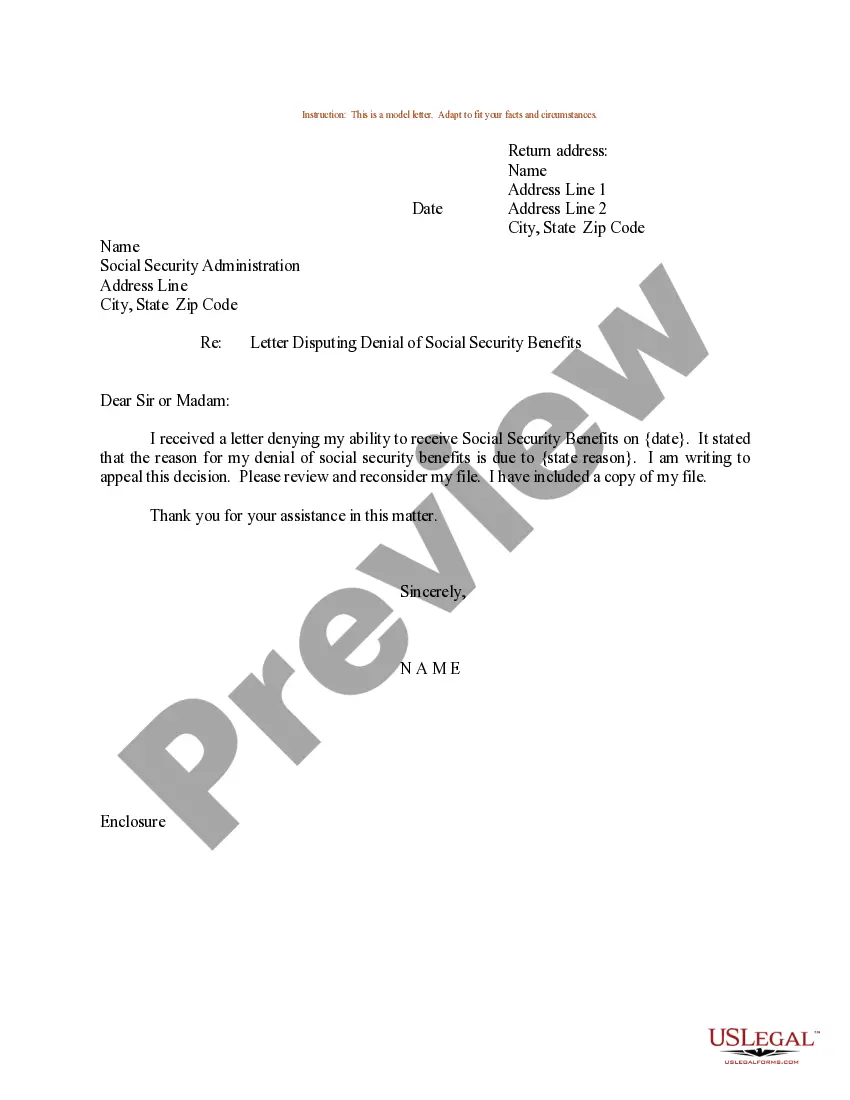
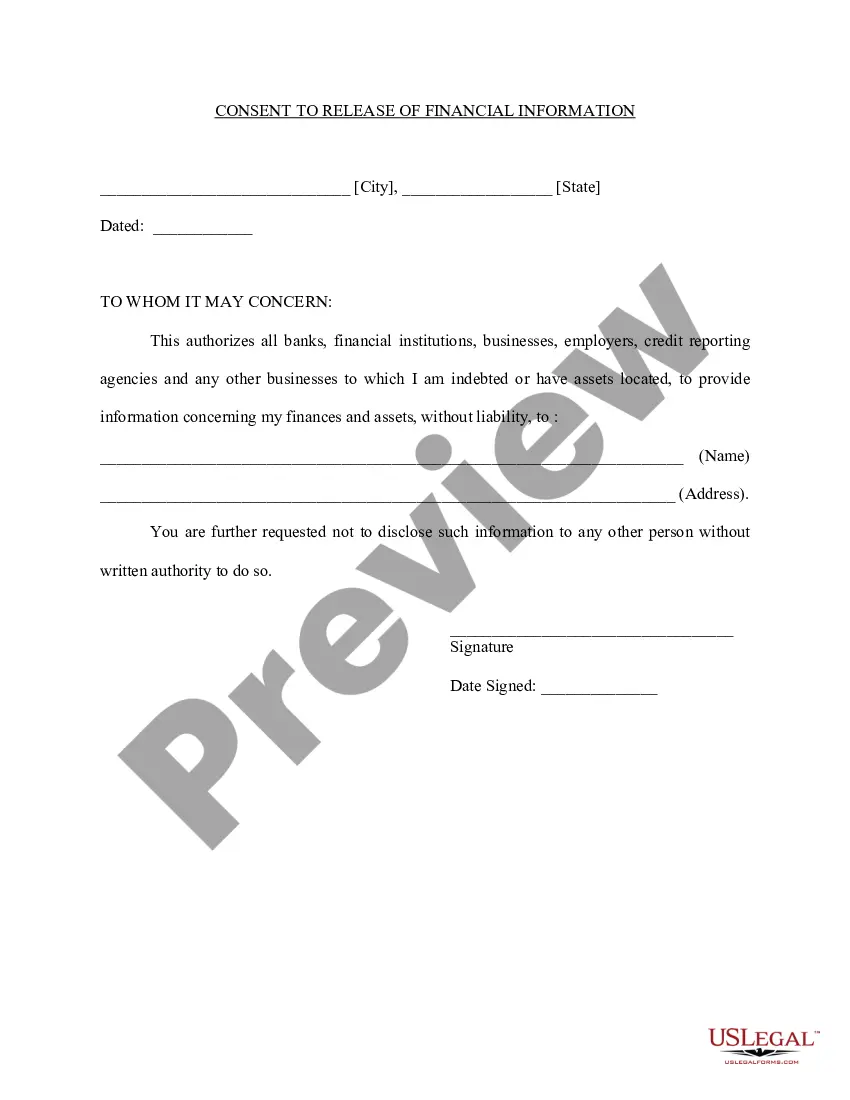
How to fill out Letter Or Statement To Social Security Administration In Order To Establish Claimant's Date Of Eligibility For Benefits?
Legal administration can be perplexing, even for seasoned professionals.
When searching for a Letter Security Administration Without Will and lacking the time to dedicate to finding the suitable and current version, the tasks can become stressful.
Access a valuable resource library of articles, guides, and materials pertinent to your circumstances and requirements.
Save effort and time searching for the documents you require, and use US Legal Forms’ advanced search and Preview feature to locate Letter Security Administration Without Will and obtain it.
Take advantage of the US Legal Forms online library, backed by 25 years of expertise and reliability. Streamline your daily document management into a straightforward and user-friendly experience today.
- If you have a monthly subscription, Log In to your US Legal Forms account, search for the form, and obtain it.
- Check your My documents section to see the documents you've previously downloaded and to manage your files as you see fit.
- If this is your first time using US Legal Forms, create a free account and gain unlimited access to all features of the library.
- Follow these steps after finding the form you need.
- Confirm it is the correct form by previewing it and reviewing its information.
- Ensure the document is valid in your state or county.
- Select Buy Now once you are ready.
- Choose a monthly subscription option.
- Select the format you need, then Download, fill out, eSign, print, and send your documents.
- Access state- or county-specific legal and organizational documents.
- US Legal Forms meets all your needs, from personal to business paperwork, in one place.
- Utilize sophisticated tools to complete and manage your Letter Security Administration Without Will.
Form popularity
FAQ
How to get Letters Testamentary or Letters of Administration: First, file an application for probate. You'll need to file with the court in the county in which the decedent died. Notify interested parties. ... Appear at a hearing. ... Be appointed by a judge. ... Perform the duties as an Executor or Administrator.
Probate Record Search Form - Or - Search Online Effective 01/01/2022(Letters of Administration with Determination of Heirship, Determination of Heirship, Application to Declare Heirship & Application for Guardianships)Local Consolidated Fee$ 223.00State Consolidated Fee$ 137.00Attorney Ad Litem Fee Deposit$ 500.0074 more rows
Procedure ? An Application for Letters of Administration is filed with the court. At the hearing, the court will determine if there is a need for an administration. If so, the Court will appoint an Administrator of the Estate and issue Letters of Administration to the Administrator.
Once the probate court makes its ruling, the probate process can begin. In most cases, letters testamentary will be issued within 30 days of the hearing, unless further hearings are required. Once issued, the executor can present it to any third parties to evidence their authority to act on behalf of the estate.
An interested person may petition for his appointment as administrator of the intestate estate. In the alternative, all heirs may consent for the administrator to handle the estate; this option requires the agreement of all heirs who must signify their approval before the court.