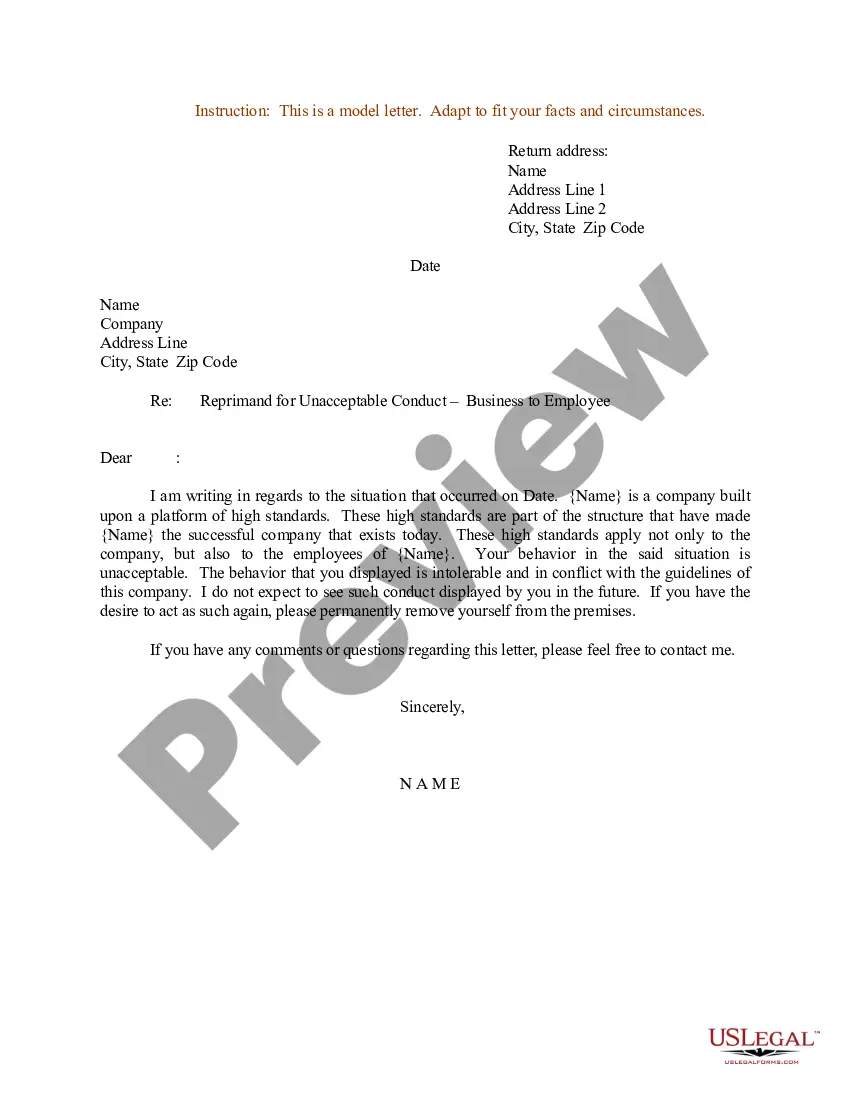
Warning Letter Sample For Alcohol Consumption
Description
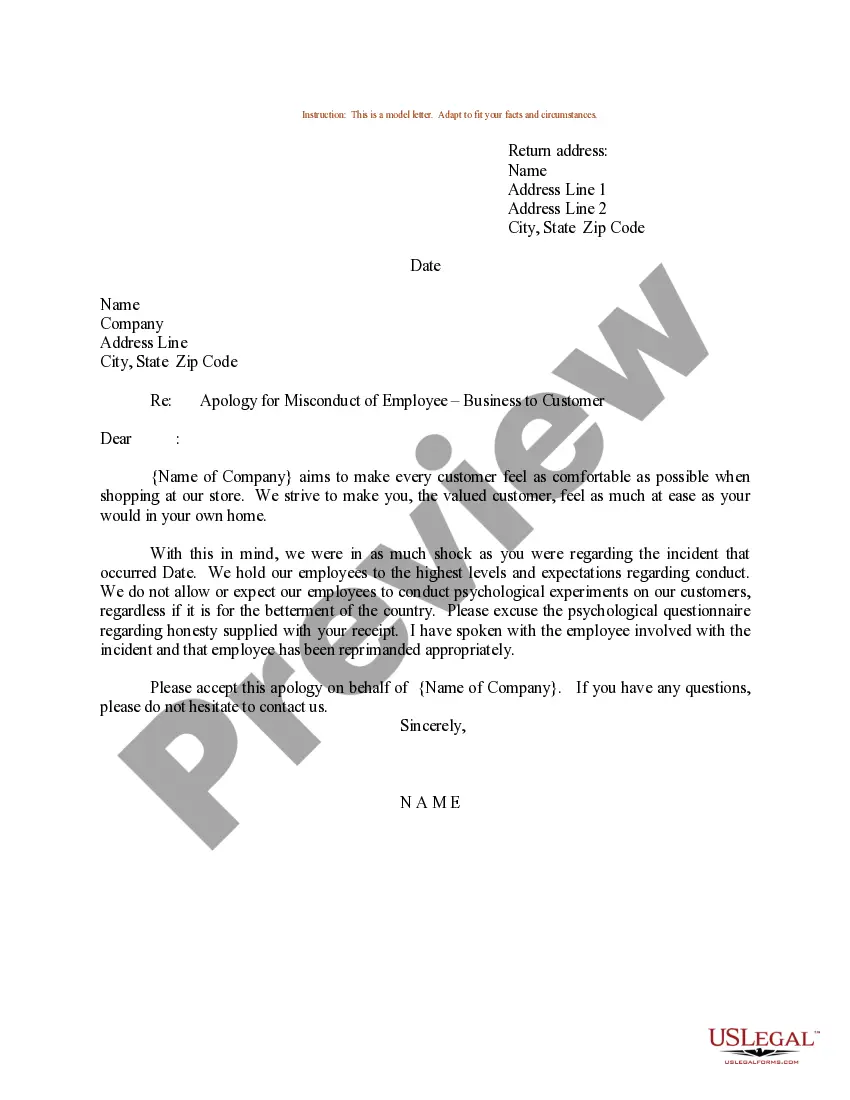






How to fill out Sample Letter For Reprimand For Unacceptable Conduct - Business To Employee?
Whether for business purposes or for individual affairs, everybody has to deal with legal situations at some point in their life. Filling out legal documents requires careful attention, starting with selecting the appropriate form template. For instance, if you choose a wrong edition of a Warning Letter Sample For Alcohol Consumption, it will be rejected once you submit it. It is therefore crucial to have a dependable source of legal documents like US Legal Forms.
If you have to get a Warning Letter Sample For Alcohol Consumption template, stick to these simple steps:
- Get the template you need using the search field or catalog navigation.
- Check out the form’s information to make sure it fits your case, state, and region.
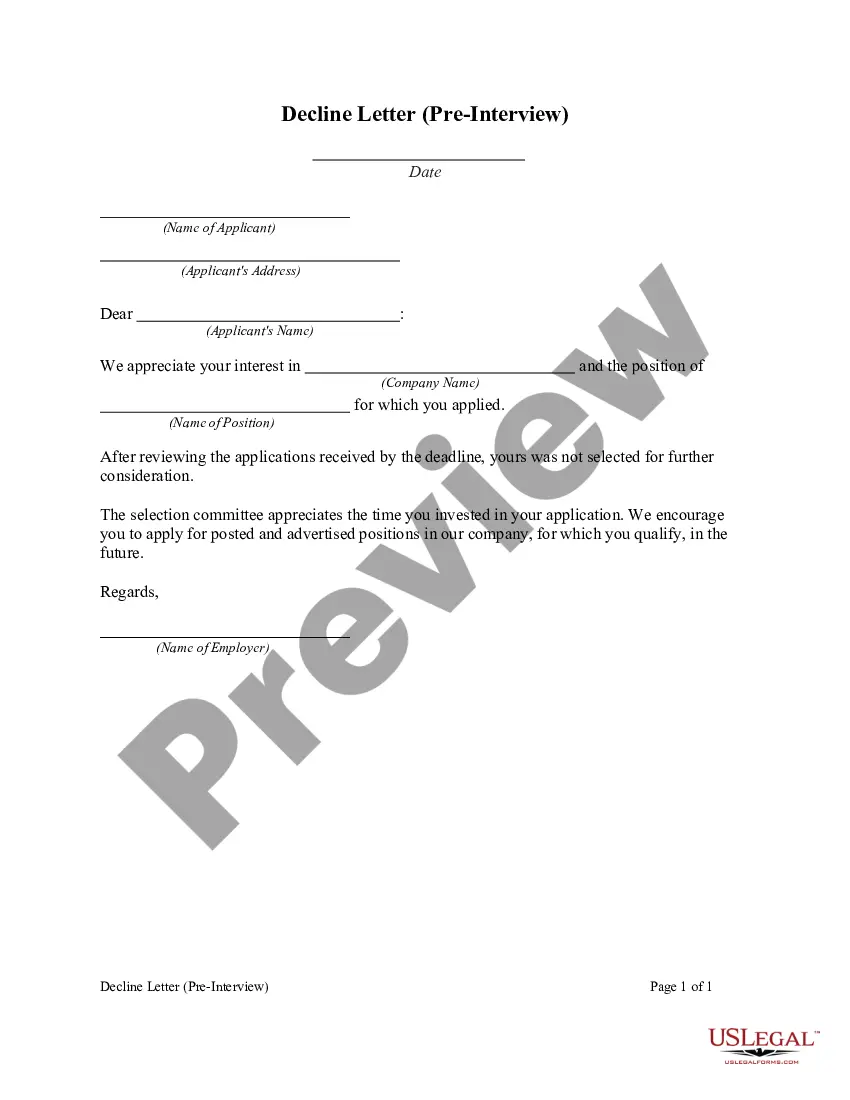
- Click on the form’s preview to examine it.
- If it is the wrong document, get back to the search function to find the Warning Letter Sample For Alcohol Consumption sample you need.
- Get the file if it meets your requirements.
- If you already have a US Legal Forms account, click Log in to gain access to previously saved files in My Forms.
- If you do not have an account yet, you can obtain the form by clicking Buy now.
- Select the appropriate pricing option.
- Complete the account registration form.
- Choose your transaction method: use a bank card or PayPal account.
- Select the document format you want and download the Warning Letter Sample For Alcohol Consumption.
- Once it is downloaded, you can fill out the form with the help of editing applications or print it and complete it manually.
With a large US Legal Forms catalog at hand, you never need to spend time seeking for the right template across the web. Make use of the library’s easy navigation to get the right template for any occasion.
Form popularity
FAQ
What to Include in the Intoxication Warning Letter? Name of the employee to whom the warning is being issued. Department or the division to which the employee belongs. Job Title of the employee. Day and date of issuing the warning letter. Date of the incident for which the letter is issued.
Or you can ask: In the past year, do you sometimes drink alcoholic beverages, like beer, wine, or hard liquor? How much alcohol do you typically drink? How often do you drink alcohol per week?
10 guidelines for writing an employee warning Document verbal warnings first. Track all verbal warnings and disciplinary measures in writing at the time they are given. ... Determine tone. ... Consult with manager. ... Formalities. ... State company policy. ... Describe what happened. ... State expectations. ... Outline consequences.
? It is advisable to discuss the warning letter in a formal setting such as a meeting room, your office or a supervisor's cabin and never in public places such as restaurants or company cafeteria. ? Always create the warning letter on your company's letterhead.
What should you include in an employee warning letter? The incident date(s) The name of the person's supervisor. The name of the person's HR representative. Person's name. Person's job title. A clear account of the verbal warnings given. The conduct they need to change. Consequences if the person's behavior doesn't change.