Abstract Judgment Form Format
Description

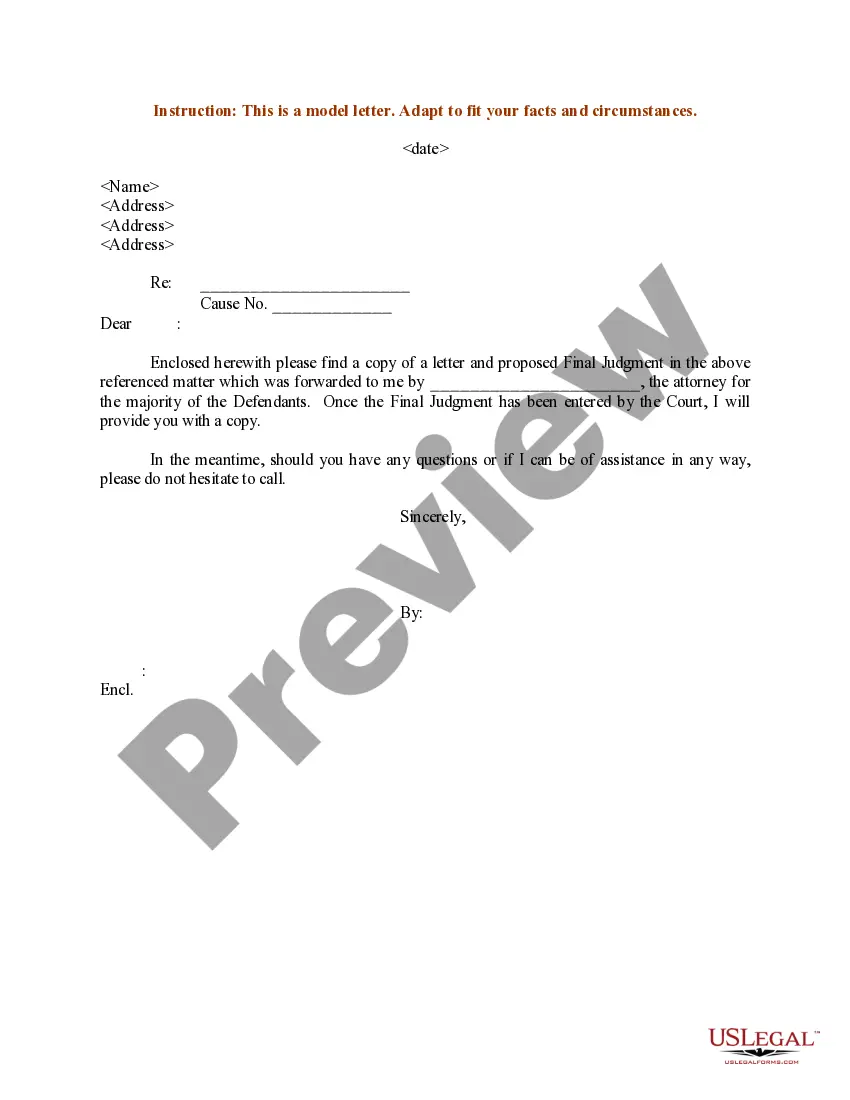
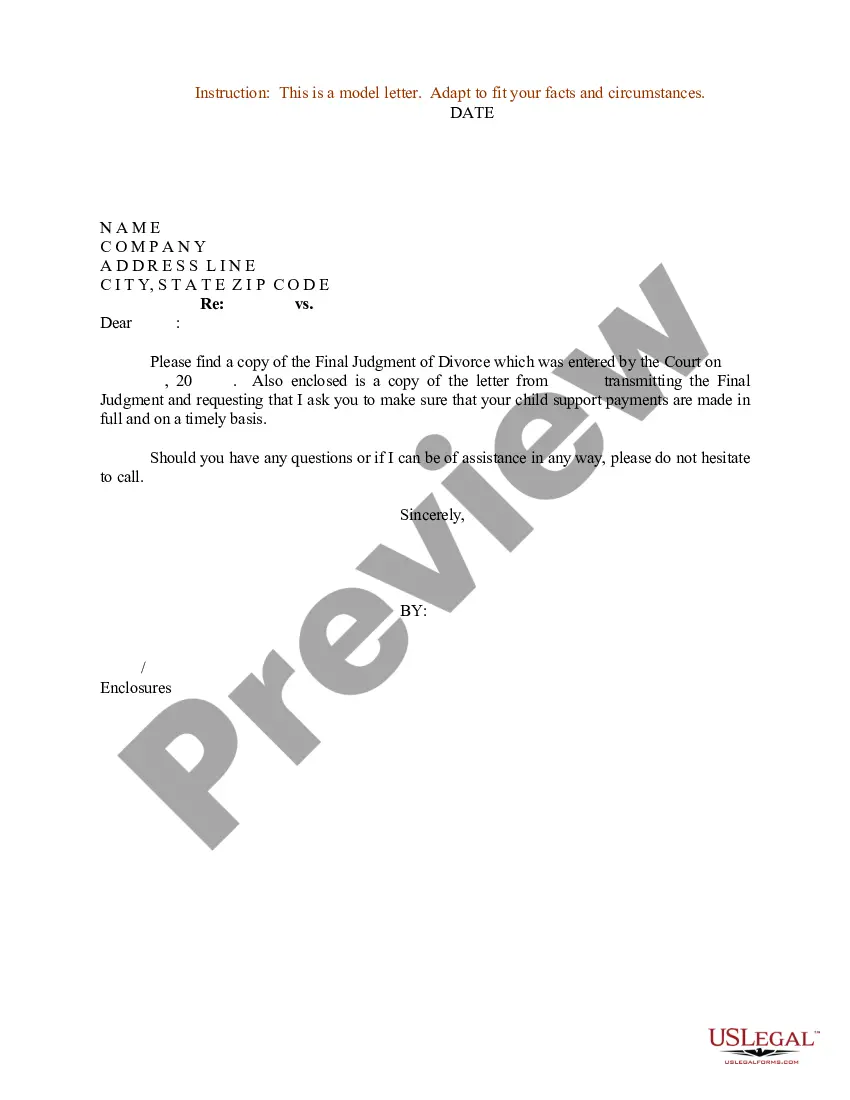

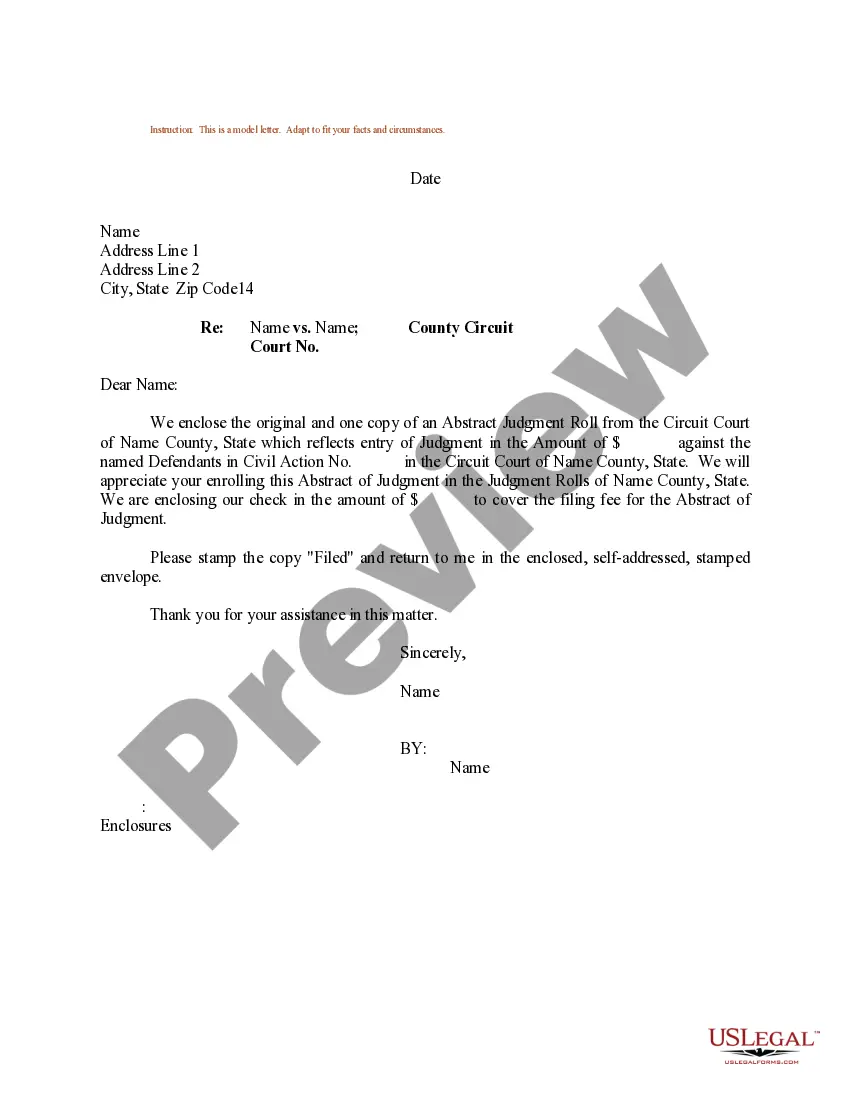
Get your form ready online
Our built-in tools help you complete, sign, share, and store your documents in one place.
Make edits, fill in missing information, and update formatting in US Legal Forms—just like you would in MS Word.
Download a copy, print it, send it by email, or mail it via USPS—whatever works best for your next step.
Sign and collect signatures with our SignNow integration. Send to multiple recipients, set reminders, and more. Go Premium to unlock E-Sign.
If this form requires notarization, complete it online through a secure video call—no need to meet a notary in person or wait for an appointment.
We protect your documents and personal data by following strict security and privacy standards.

Make edits, fill in missing information, and update formatting in US Legal Forms—just like you would in MS Word.

Download a copy, print it, send it by email, or mail it via USPS—whatever works best for your next step.

Sign and collect signatures with our SignNow integration. Send to multiple recipients, set reminders, and more. Go Premium to unlock E-Sign.

If this form requires notarization, complete it online through a secure video call—no need to meet a notary in person or wait for an appointment.

We protect your documents and personal data by following strict security and privacy standards.
Looking for another form?
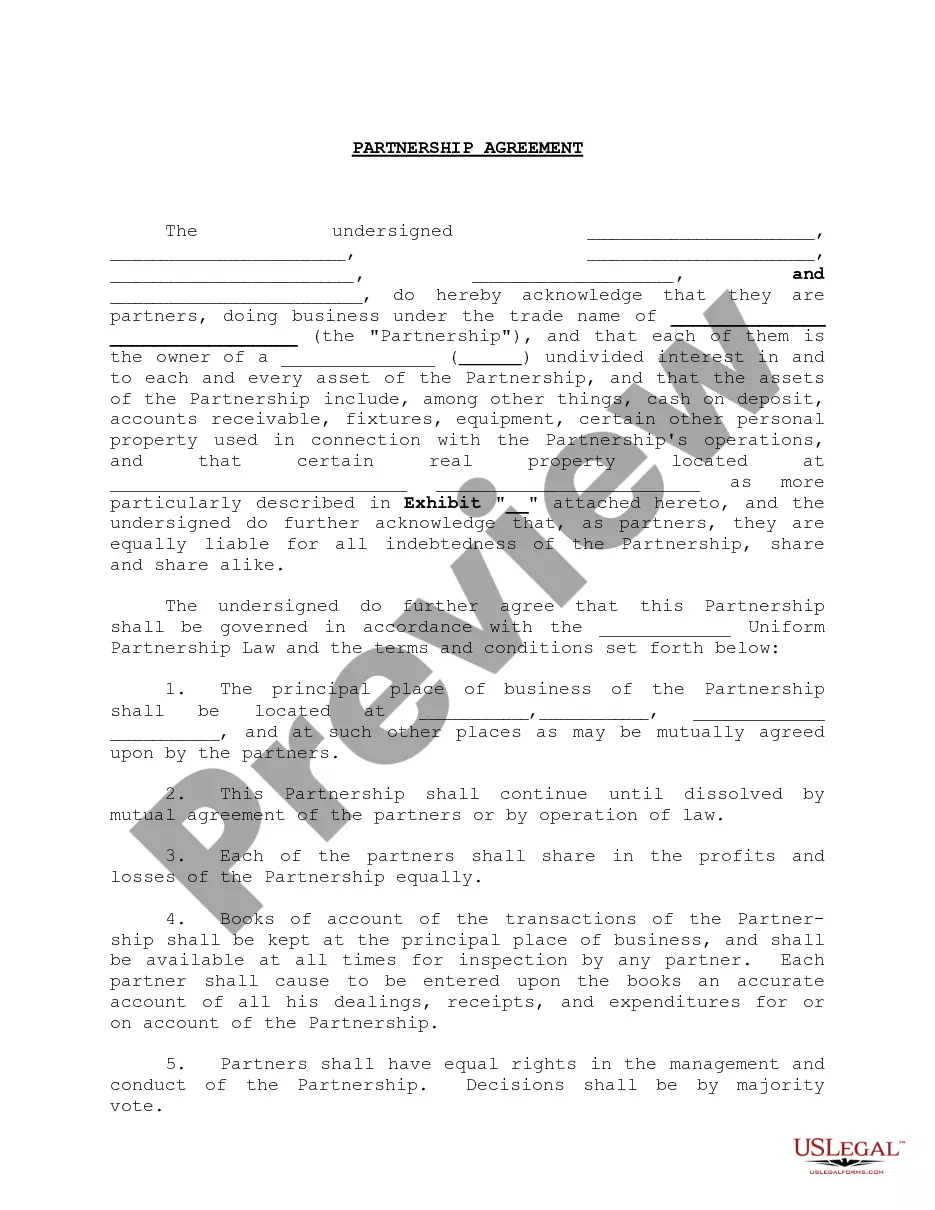
How to fill out Sample Letter For Abstract Of Judgment?
Securing a reliable location to obtain the latest and suitable legal templates is a significant part of navigating bureaucracy.
Identifying the correct legal documents necessitates precision and meticulousness, which is why it is crucial to source Abstract Judgment Form Format exclusively from trustworthy providers, such as US Legal Forms. An incorrect template will squander your time and impede your current situation. With US Legal Forms, you have minimal concerns.
Once you have the form on your device, you can edit it using the editor or print it and complete it manually. Eliminate the stress associated with your legal documents. Explore the extensive US Legal Forms catalog to discover legal templates, verify their applicability to your situation, and download them immediately.
- Use the library navigation or search function to find your template.
- Examine the form’s description to ensure it meets the requirements of your state and county.
- Check the form preview, if available, to confirm it is indeed the form you need.
- Continue the search and find the right template if the Abstract Judgment Form Format does not satisfy your needs.
- Once you are certain about the form’s relevance, download it.
- If you are an authorized user, click Log in to verify and access your chosen templates in My documents.
- If you do not possess an account yet, click Buy now to purchase the form.
- Choose the pricing plan that fits your requirements.
- Proceed to register to complete your transaction.
- Finalize your purchase by selecting a payment method (credit card or PayPal).
- Choose the file format for downloading the Abstract Judgment Form Format.
Form popularity
FAQ
Write the name and last known address of the judgment debtor in the space provided. You may also include any known aliases used by the judgment debtor. Fill in the last 4 digits of the judgment debtor's driver license number and state where it was issued, if you know them.
You must: Complete an Abstract of Judgment (EJ-001) . Have it issued by the clerk and pay the issuance fee by submitting the document to the court location where your case was filed or you may also submit the document by eFile. Give the original issued Abstract to the County Recorder and pay their recording fee.
In California, the Abstract of Judgment is a Judicial Council form that can be downloaded from any court website (Form EJ-001). The form asks for information regarding the debtor's name, last known address, driver's license number, and the amount of money the debtor owes you.
On your Memorandum of Costs After Judgment (MC-012), you must include the exact amount of all allowable costs, the payments credited toward the principal and interest, and the amount of accrued interest. This means you are responsible for calculating these amounts.
Here are four ways to avoid paying a judgment: 1) Use asset protection tools such as an asset protection trust, 2) use legal exemptions, 3) negotiate with the creditor, 4) file for bankruptcy.
