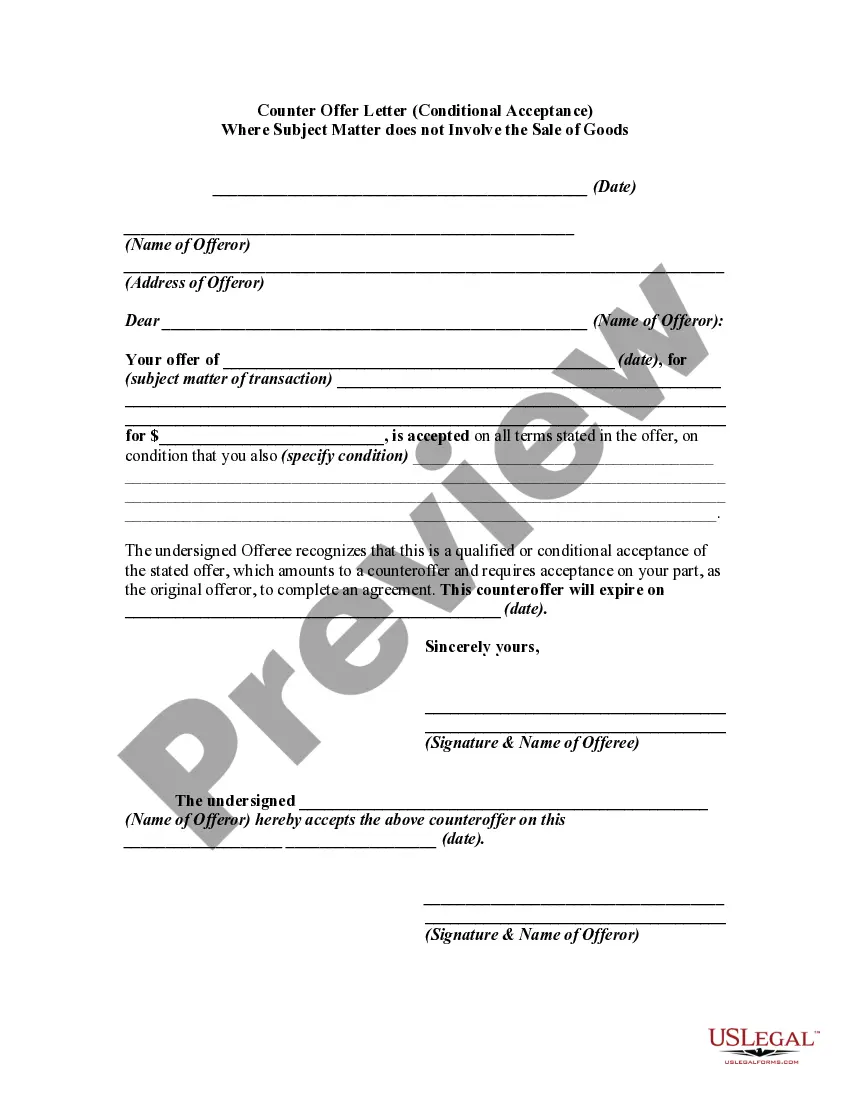
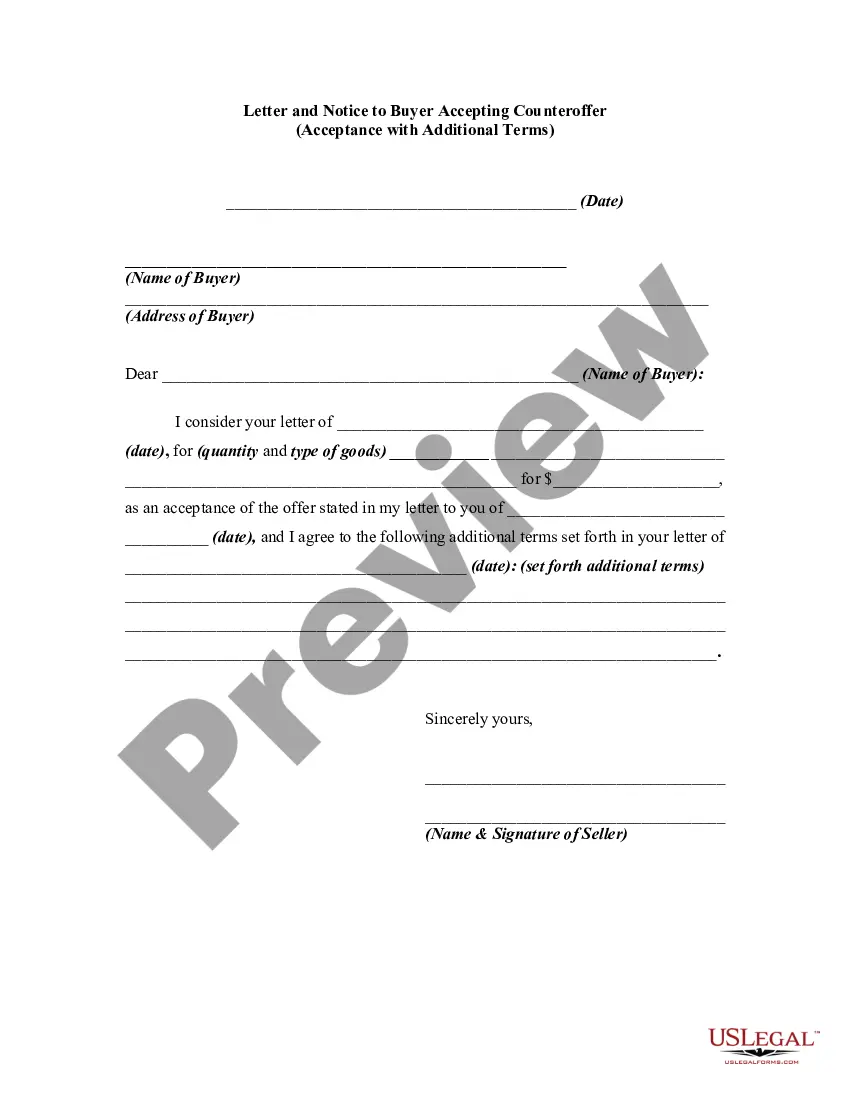
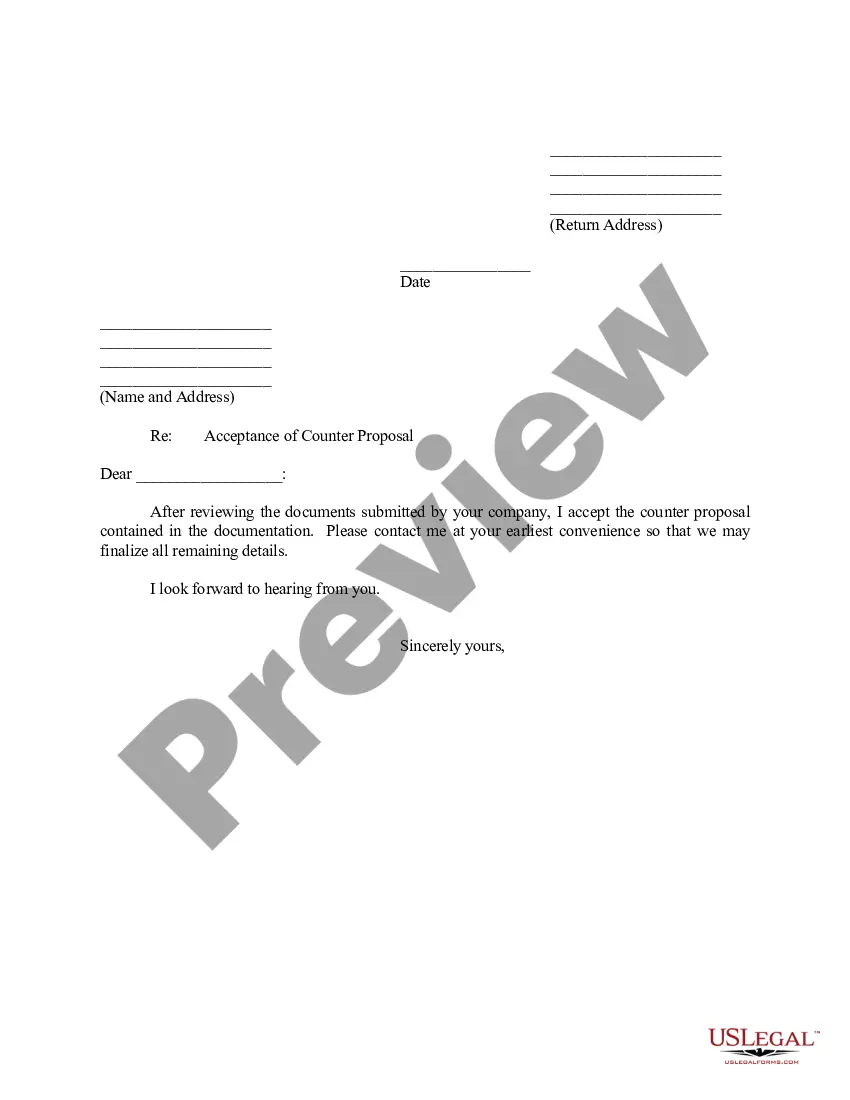
Counter Offer Letter Matter Sample With Insurance Settlement
Description
Get your form ready online
Our built-in tools help you complete, sign, share, and store your documents in one place.
Make edits, fill in missing information, and update formatting in US Legal Forms—just like you would in MS Word.
Download a copy, print it, send it by email, or mail it via USPS—whatever works best for your next step.
Sign and collect signatures with our SignNow integration. Send to multiple recipients, set reminders, and more. Go Premium to unlock E-Sign.
If this form requires notarization, complete it online through a secure video call—no need to meet a notary in person or wait for an appointment.
We protect your documents and personal data by following strict security and privacy standards.

Make edits, fill in missing information, and update formatting in US Legal Forms—just like you would in MS Word.

Download a copy, print it, send it by email, or mail it via USPS—whatever works best for your next step.

Sign and collect signatures with our SignNow integration. Send to multiple recipients, set reminders, and more. Go Premium to unlock E-Sign.

If this form requires notarization, complete it online through a secure video call—no need to meet a notary in person or wait for an appointment.

We protect your documents and personal data by following strict security and privacy standards.
Looking for another form?
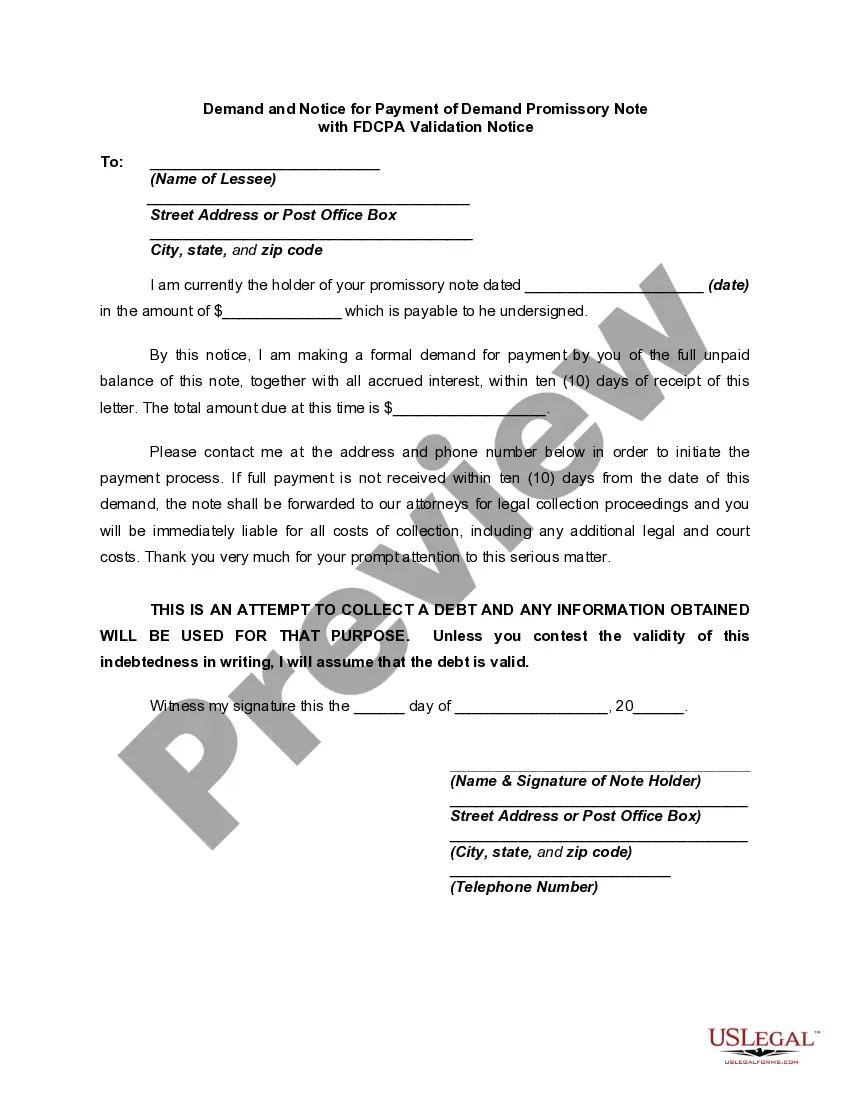



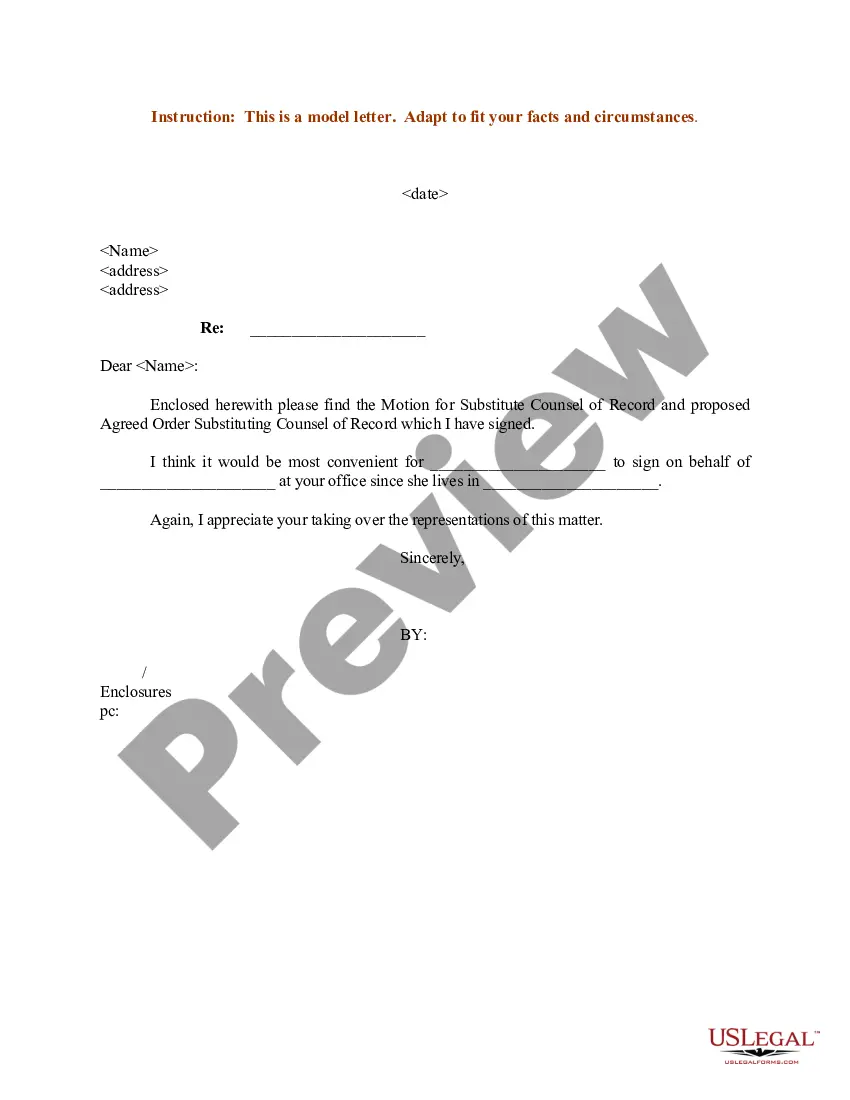




How to fill out Counter Offer Letter - Conditional Acceptance Where Subject Matter Does Not Involve The Sale Of Goods?
Legal documents handling can be exasperating, even for seasoned experts.
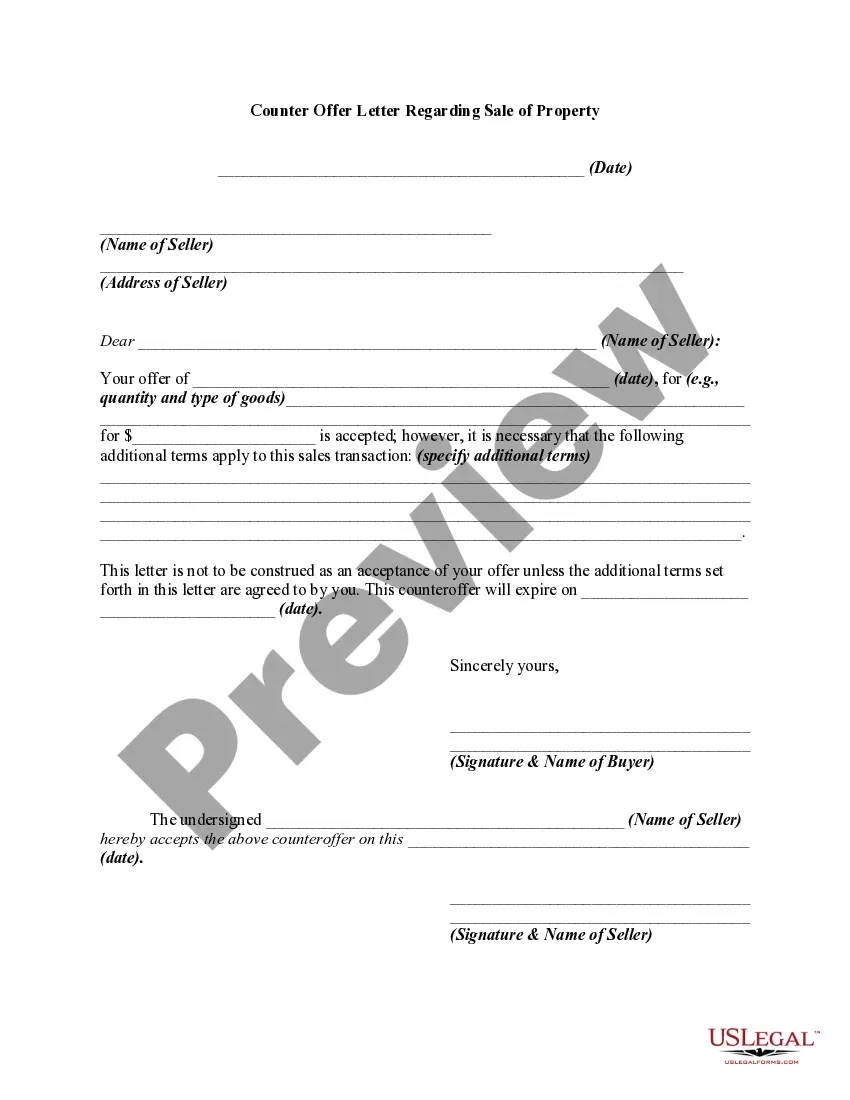
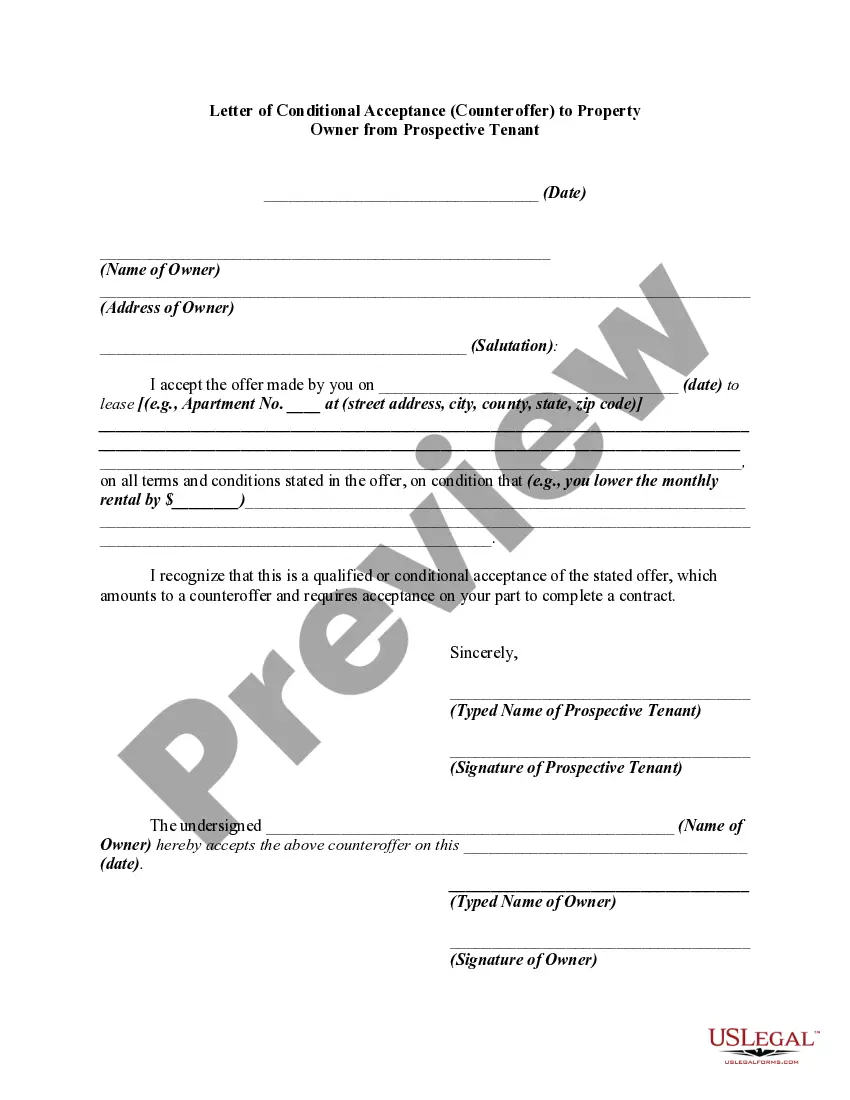
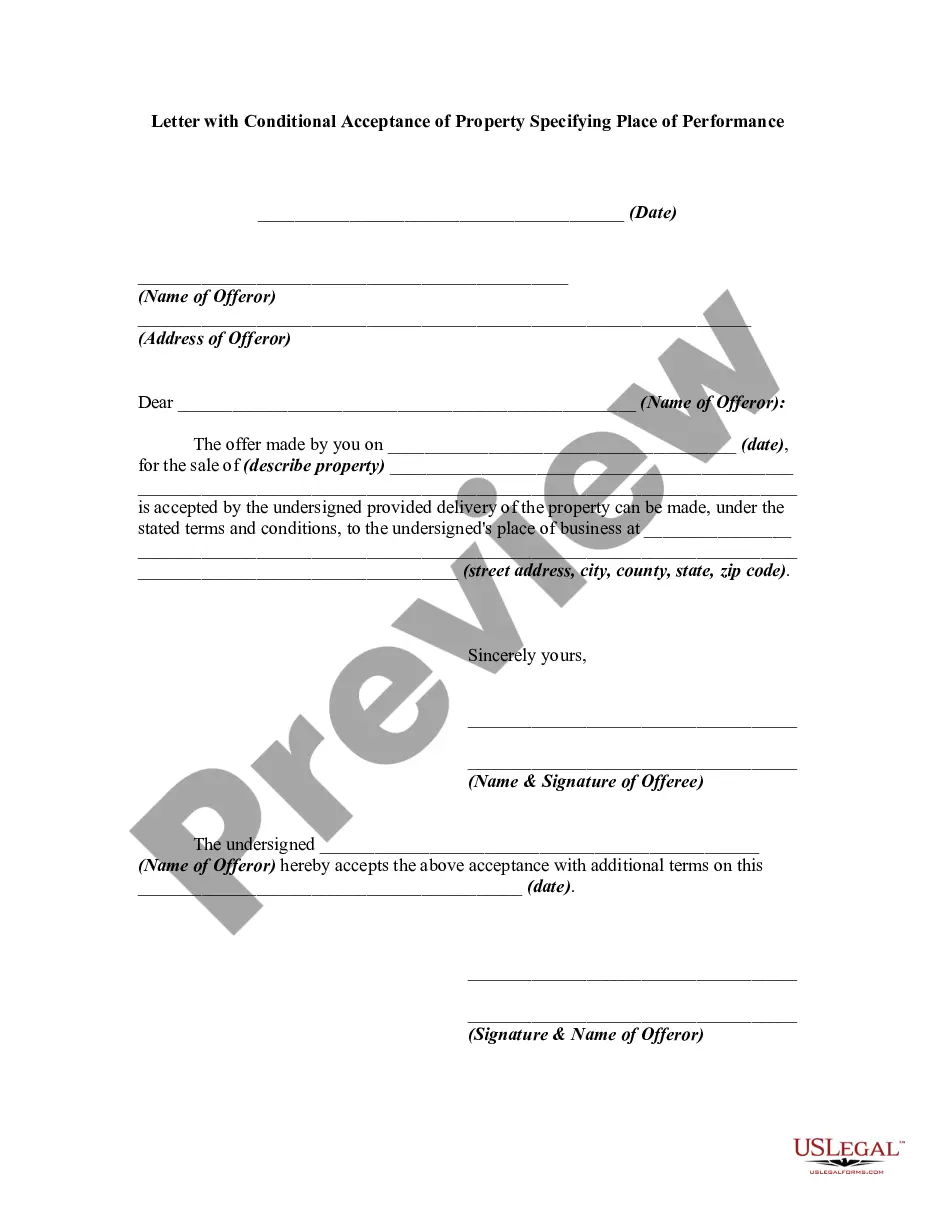
When you are navigating for a Counter Offer Letter Matter Sample With Insurance Settlement and lack the opportunity to dedicate time to seek out the correct and updated version, the processes can be stressful.
Access a repository of articles, guides, manuals, and materials pertinent to your situation and requirements.
Conserve time and effort in locating the forms you need, and utilize US Legal Forms’ advanced search and Preview feature to discover Counter Offer Letter Matter Sample With Insurance Settlement and download it.
Select Buy Now when you are prepared. Choose a subscription plan. Locate the format you desire and Download, complete, sign, print, and send off your document. Take full advantage of the US Legal Forms web catalog, supported by 25 years of knowledge and dependability. Convert your routine document handling into a seamless and user-friendly procedure today.
- If you hold a monthly subscription, Log In to your US Legal Forms account, search for the form, and download it.
- Check the My documents tab to view the documents you previously saved and manage your folders as you see fit.
- If this is your first experience with US Legal Forms, create an account and gain limitless access to all advantages of the library.
- Here are the steps to take after acquiring the form you require.
- Verify it is the correct form by previewing it and reviewing its details.
- Confirm the sample is permitted in your state or county.
- Access state- or county-specific legal and business documents.
- US Legal Forms caters to all requirements you might have, from personal to business papers, all in a single location.
- Employ sophisticated tools to complete and oversee your Counter Offer Letter Matter Sample With Insurance Settlement.
Form popularity
FAQ
If a child doesn't want to live with a parent, it might be a safety issue. If your child is old enough, ask what is happening there that makes him or her not want to go. For small children, ask them to draw a picture of life at Daddy's house. A professional counselor and lawyers might need to be involved.
Ann. § 109.510.) When the child turns 18, the court no longer has the jurisdiction (power) to require custody or visitation with either parent. If the custodial parent withholds or fails to send a child for visitation, the other parent can ask the court to enforce the orders.
Additionally, courts do not want children to be a part of their parents' disputes. In Oregon, there is no minimum age at which a child's input must be considered in custody decisions such as who becomes their primary caretaker.
In order for the court to consider this situation abandonment or desertion, it must continue for an extended period of time. The absence must also be permanent and without the consent of the other spouse. A number of elements must play into the situation to constitute abandonment.
When Can My Child Refuse Visitation? There is no specific age at which a child can decide to refuse to visit with a parent or change custody arrangements without the court's approval.
In both Washington and Oregon, a child can only choose which parent they'd like to live with when they turn 18 or are otherwise emancipated. Minor children are not considered capable of making such decisions for themselves and are not permitted to ?choose? living with one parent over another.
A deputy sheriff in the county where the other party can be located will serve the papers for a fee. The Court may waive or defer (postpone) this fee if the service will be done in Oregon. You can also pay a ?process server,? who is someone who works for a private company that delivers papers as a business.
The only set age where someone can choose where they live is 18. In custody cases, children always get to express where they want to live, but the court does not have to rule with the child's wishes. Instead, they look at a variety of factors to see what is in the child's best interest.