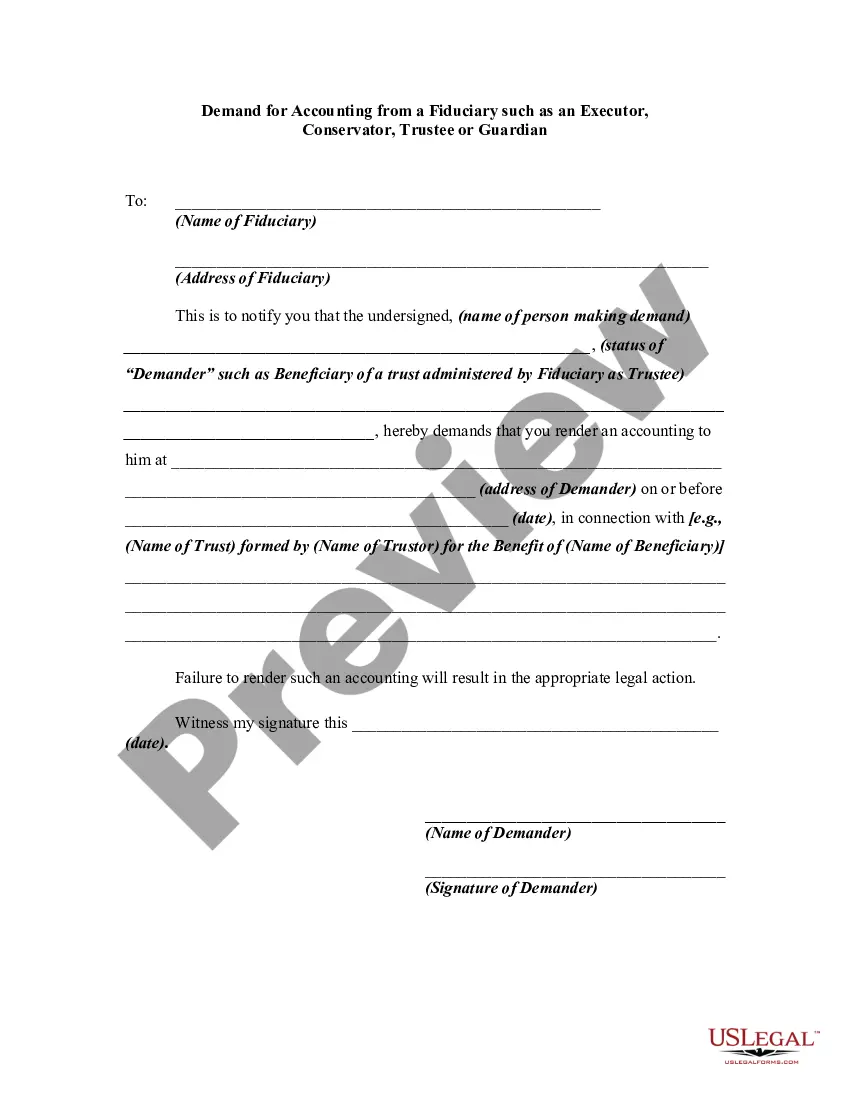
Accounting For Legal Practice
Description
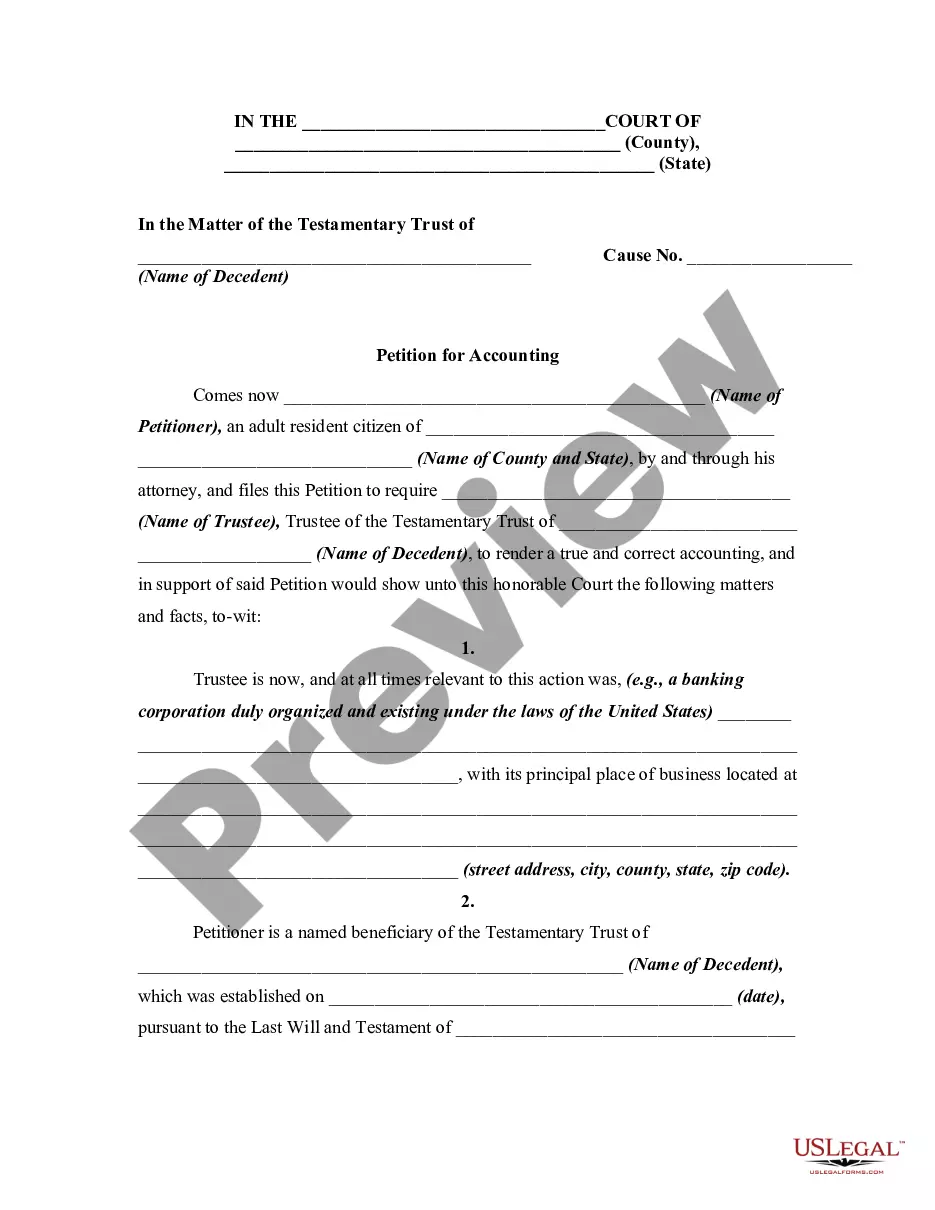


How to fill out Demand For Accounting From A Fiduciary Such As An Executor, Conservator, Trustee Or Legal Guardian?
Securing a reliable location to obtain the latest and suitable legal templates constitutes a significant part of managing bureaucracy.
Finding the correct legal documents necessitates accuracy and meticulousness, which highlights the importance of obtaining Accounting For Legal Practice samples exclusively from trustworthy sources, such as US Legal Forms.
Once the form is on your device, you can either edit it using the editor or print it out to complete it by hand. Eliminate the complications associated with your legal documentation. Browse the vast US Legal Forms library where you can discover legal templates, verify their suitability for your situation, and download them instantly.
- Utilize the catalog navigation or search bar to locate your template.
- Review the form’s details to confirm it meets the criteria of your state and locality.
- Preview the form, if possible, to ensure it is the template you seek.
- If the Accounting For Legal Practice does not meet your requirements, continue searching for the appropriate template.
- Once you are certain of the form’s applicability, download it.
- If you are a registered user, click Log in to verify and access your selected templates in My documents.
- If you do not have an account yet, click Buy now to purchase the template.
- Select the pricing option that aligns with your preferences.
- Complete the registration process to confirm your purchase.
- Conclude your purchase by choosing a payment method (credit card or PayPal).
- Select the document format for downloading Accounting For Legal Practice.
Form popularity
FAQ
Typically, a law firm chart of accounts includes five core categories (assets, liabilities, owner's equity, revenue, and expenses). You should also include interest on Lawyer Trust Account (IOLTA) or trust accounts and trust liability accounts.
Both professions require specialized study and offer specialized degrees, but a career in accounting has fewer rigid educational requirements than a career in law. Becoming a lawyer requires you to pass a state-sanctioned bar exam, which gives you the license to practice legally.
Knowledge of basic accounting concepts enables law firms to evaluate a practice from a business management perspective and gauge general performance to identify areas of improvement.
A professional legal accountant's role generally focuses on collecting, interpreting, and using financial data to help a firm stay compliant and grow. They're also typically experienced with accounting for law firms. Core tasks include: Financial data management?including preparing financial statements.
Law firm accounting can be difficult. Not only are there the usual aspects of corporate accounting, such as payroll, office purchases, profit and loss statements, and balance sheets, but there are also issue costs and income allocation to consider.