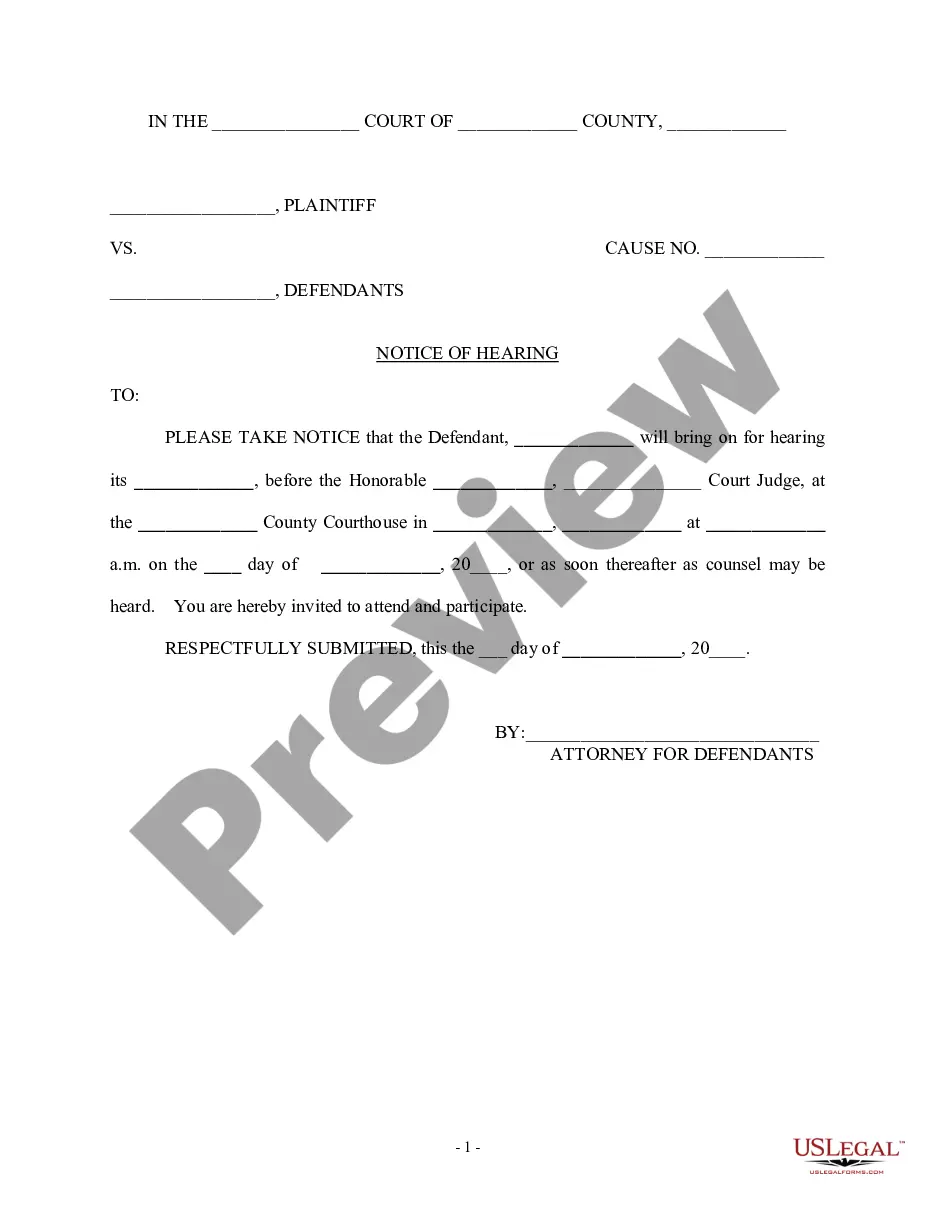
Hearing Notice In Court
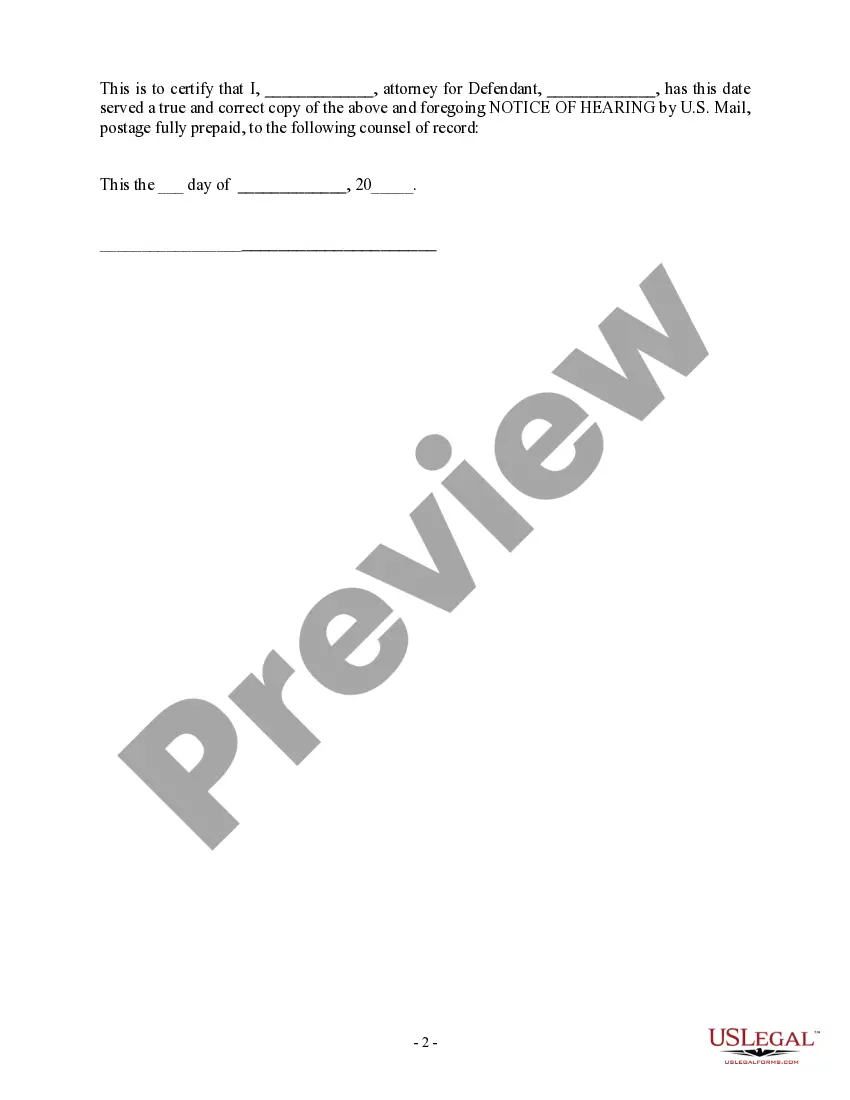
Description
Get your form ready online
Our built-in tools help you complete, sign, share, and store your documents in one place.
Make edits, fill in missing information, and update formatting in US Legal Forms—just like you would in MS Word.
Download a copy, print it, send it by email, or mail it via USPS—whatever works best for your next step.
Sign and collect signatures with our SignNow integration. Send to multiple recipients, set reminders, and more. Go Premium to unlock E-Sign.
If this form requires notarization, complete it online through a secure video call—no need to meet a notary in person or wait for an appointment.
We protect your documents and personal data by following strict security and privacy standards.

Make edits, fill in missing information, and update formatting in US Legal Forms—just like you would in MS Word.

Download a copy, print it, send it by email, or mail it via USPS—whatever works best for your next step.

Sign and collect signatures with our SignNow integration. Send to multiple recipients, set reminders, and more. Go Premium to unlock E-Sign.

If this form requires notarization, complete it online through a secure video call—no need to meet a notary in person or wait for an appointment.

We protect your documents and personal data by following strict security and privacy standards.
Looking for another form?





How to fill out Notice Of Hearing?
Managing legal documents can be daunting, even for the most proficient professionals.
When you're looking for a Hearing Notice In Court and don’t have the opportunity to dedicate time to find the right and updated edition, the experience can be frustrating.
With US Legal Forms, you can.
Access legal and business forms that are tailored to your state or county.
Check your My documents section to review the documents you previously downloaded and manage your folders as you prefer.
- US Legal Forms accommodates any needs you may have, from personal to business documents, all in one location.
- Utilize comprehensive tools to complete and manage your Hearing Notice In Court.
- Access a database of articles, guides, and materials pertinent to your situation and requirements.
- Save time and effort searching for the documents you need, and use US Legal Forms' advanced search and Review feature to find and download Hearing Notice In Court.
- If you have a monthly subscription, Log In to your US Legal Forms account, search for the form, and download it.
- A robust online form repository could be a pivotal factor for anyone who desires to navigate these circumstances efficiently.
- US Legal Forms is a frontrunner in online legal forms, offering over 85,000 state-specific legal documents available to you at any time.
Form popularity
FAQ
This is a document telling you what you have been charged with and the details of your first appearance in court.
Complete a Form 14 (Notice of Motion) and a Form 14A (Affidavit). In Form 14, you will list the orders that you are requesting at the motion. In Form 14A, you will include your evidence and explain why you want the court to make the orders you are asking for in your motion.
For motions on notice, you must serve your documents on the other party. To do this, you must follow Rule 14(11) of the Family Law Rules. The moving party must serve Form 14 and Form 14A on all the other parties not later than six (6) days before the motion.
To be or not to be spoken to Court. Why do parties wind up at To Be Spoken To (TBST) Court? For the most part trial scheduling. Sometimes a lack of cooperation that requires an attendance.
You must: serve a copy of all your responding forms on the other party, using regular or special service. complete and swear or affirm Form 6B: Affidavit of Service in front of a commissioner for taking affidavits. file your original responding forms and completed Affidavit of Service (Form 6B) with the court.