Legal Rights
Description
Get your form ready online
Our built-in tools help you complete, sign, share, and store your documents in one place.
Make edits, fill in missing information, and update formatting in US Legal Forms—just like you would in MS Word.
Download a copy, print it, send it by email, or mail it via USPS—whatever works best for your next step.
Sign and collect signatures with our SignNow integration. Send to multiple recipients, set reminders, and more. Go Premium to unlock E-Sign.
If this form requires notarization, complete it online through a secure video call—no need to meet a notary in person or wait for an appointment.
We protect your documents and personal data by following strict security and privacy standards.

Make edits, fill in missing information, and update formatting in US Legal Forms—just like you would in MS Word.

Download a copy, print it, send it by email, or mail it via USPS—whatever works best for your next step.

Sign and collect signatures with our SignNow integration. Send to multiple recipients, set reminders, and more. Go Premium to unlock E-Sign.

If this form requires notarization, complete it online through a secure video call—no need to meet a notary in person or wait for an appointment.

We protect your documents and personal data by following strict security and privacy standards.
Looking for another form?










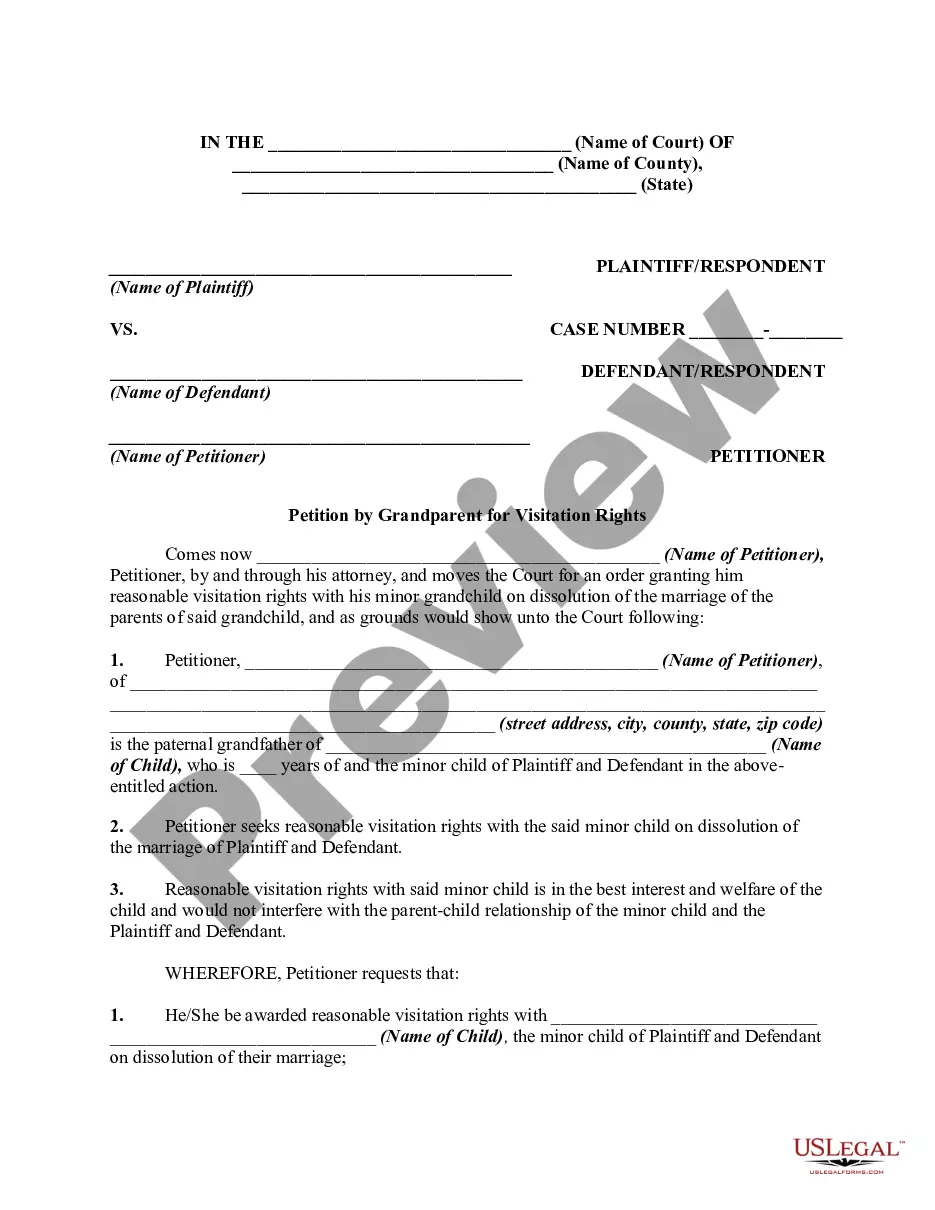
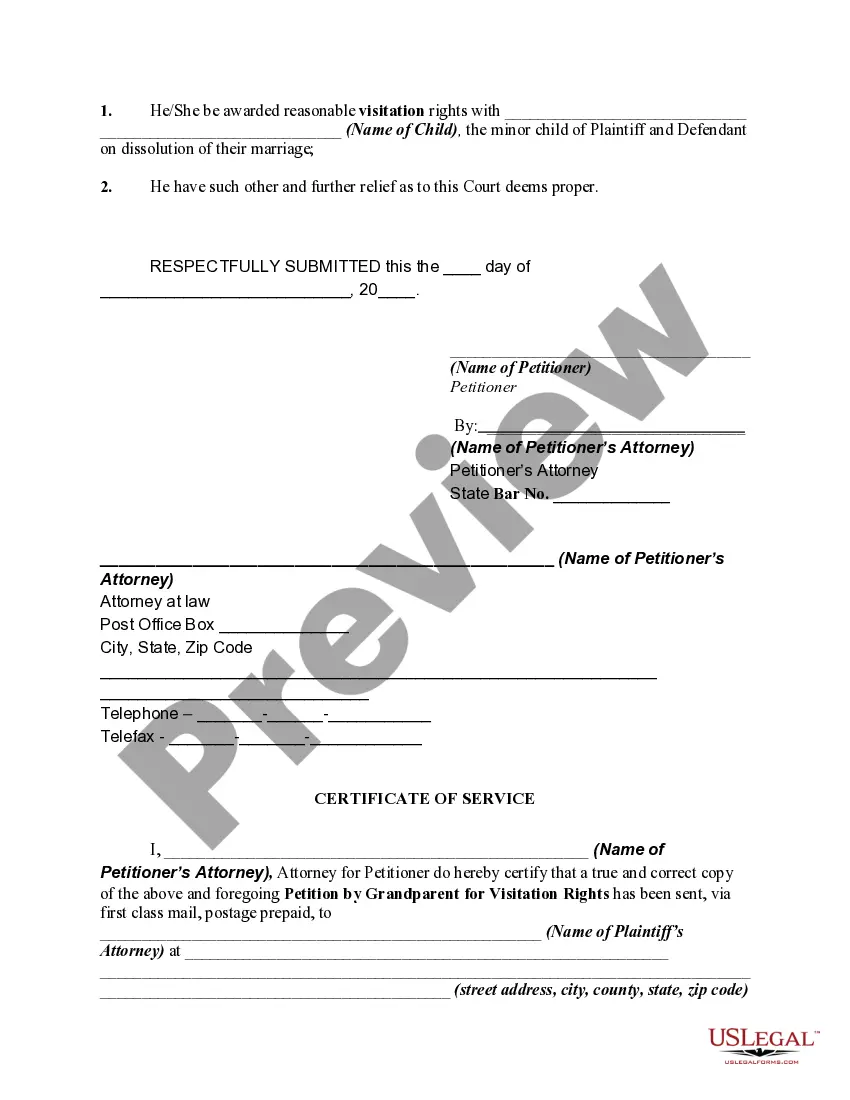
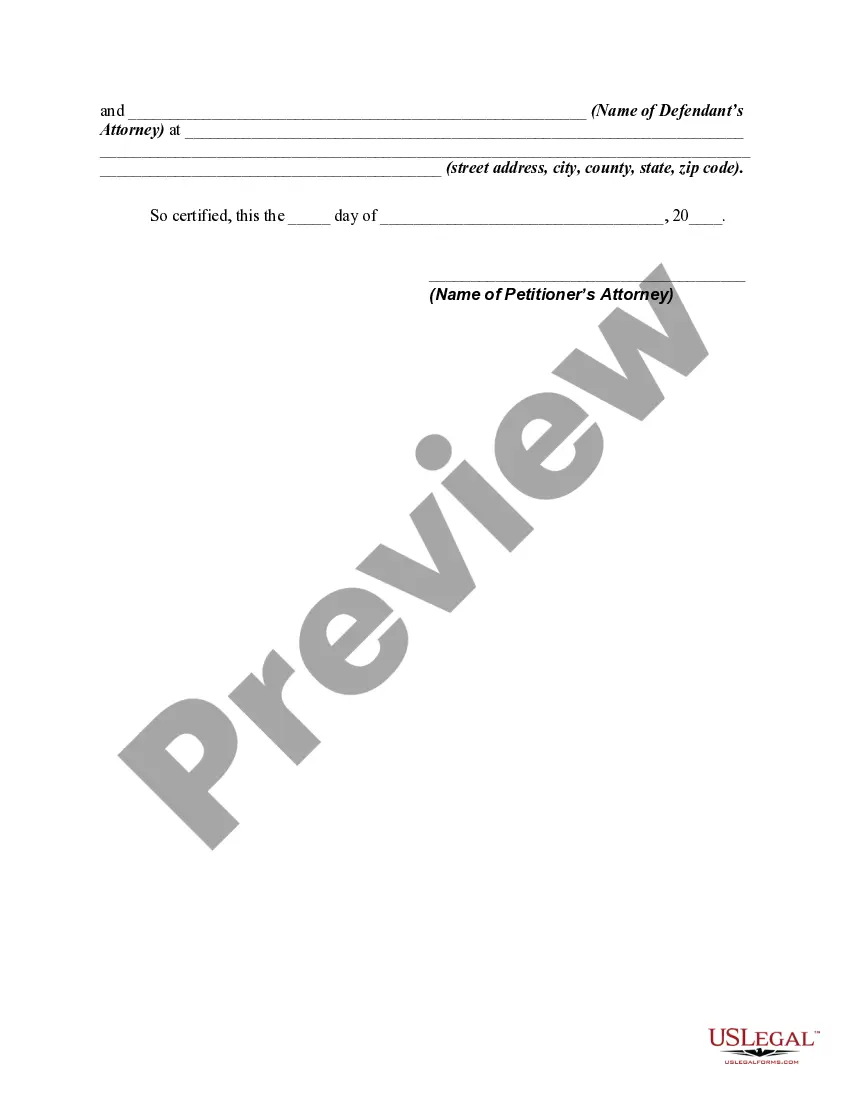
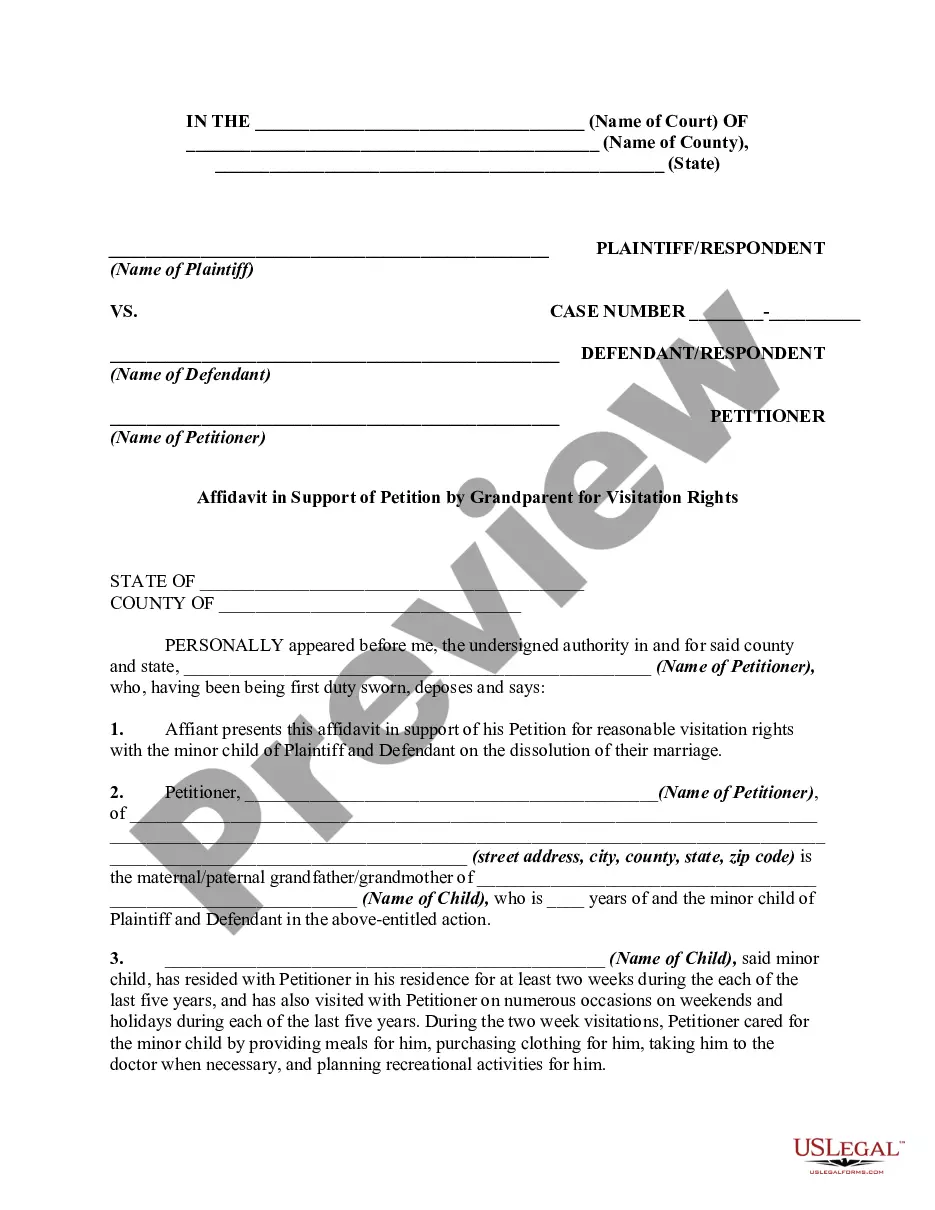
How to fill out Petition By Grandparent For Visitation Rights With Minor Grandchild On Dissolution Of The Marriage Of The Parents Of Minor Child?
- If you're a returning user, log in to access your account and download the required form template. Ensure your subscription is active. If not, renew it according to your selected plan.
- For first-time users, start by checking the Preview mode and form description to ensure it fits your needs and complies with your local jurisdiction.
- If the form doesn't meet your requirements, utilize the Search tab above to locate a more suitable template.
- To purchase the document, click on the Buy Now button and select your preferred subscription plan. You'll need to create an account to access the full library.
- Proceed to payment by entering your credit card details or using your PayPal account for the subscription.
- Finally, download your form and save it on your device. You can access it anytime through the My Forms section in your profile.
In conclusion, US Legal Forms is designed to empower you in managing your legal rights efficiently. With an extensive library and premium support, you're ensured precise and legally sound documents at your fingertips.
Don't hesitate to explore the platform for your legal documentation needs today!
Form popularity
FAQ
Before going to court, prepare by gathering all necessary documents related to your case, including contracts, financial statements, and witness information. Familiarize yourself with court procedures and the specific arguments you want to present. Being well-prepared supports your legal rights and enhances your chances of a favorable outcome.
Judges in Connecticut consider multiple factors when deciding child custody, including the child's best interests and each parent's capacity to provide a stable home. They may examine the emotional ties between the child and each parent, the parents' ability to meet the child's needs, and any history of domestic violence. Understanding these factors can help you navigate legal rights regarding custody effectively.
To make a document legal in court, it must be properly formatted and signed by the relevant parties, when required. Ensure that the document meets state-specific requirements, which may include notarization or filing with the court. By following the correct procedures, you uphold your legal rights and make your document valid in the eyes of the law.
Preparing legal documents for court requires attention to detail and adherence to specific formats. Begin by gathering all relevant information and ensure that your documents are accurate and complete. Using a reliable platform like UsLegalForms can simplify the process, providing you with templates that protect your legal rights while ensuring compliance with court standards.
To organize legal documents for court, start by categorizing your materials based on the case type. Prioritize documents such as pleadings, evidence, and exhibits. Consider using labeled folders or binders to keep everything accessible. Clear organization not only helps you present your case effectively but also safeguards your legal rights.
A legal right is defined by its recognition and enforcement within a legal system, typically established through legislation or court decisions. Defined legal rights are supported by obligations that individuals and institutions must uphold. Their enforcement ensures fairness and equality within the society. Understanding what constitutes legal rights enables individuals to better navigate their interactions within the legal framework.
Citizens receive their rights primarily through foundational documents like the Constitution, legislative processes, and judicial interpretations. Engaging in grassroots movements, voting, and advocacy also help secure and expand legal rights. Education about these rights fosters a more just society where individuals can champion their causes effectively. Utilizing platforms like U.S. Legal Forms can assist citizens in understanding and asserting their legal rights.
Rights are obtained through a combination of legal frameworks and international treaties that acknowledge human dignity. Societal norms and advocacy work also play significant roles in the establishment and protection of legal rights. Engaging in civic activities and spreading awareness further strengthens the recognition of these rights. Understanding how to assert and protect your legal rights is vital for personal empowerment.
When you cannot afford a lawyer, you may rely on legal aid services or pro bono representation for assistance. These resources provide access to legal rights and services without the financial burden. Organizations focused on legal aid often help the underserved navigate their legal challenges. By utilizing these available resources, you can better understand your legal rights.
U.S. citizens receive their rights primarily from the Constitution and its amendments, as well as from federal and state laws. These legal rights protect individual freedoms and establish fundamental principles of living within a democratic society. Understanding where these rights come from enhances citizens’ ability to advocate for themselves and others. Familiarizing yourself with your legal rights is essential for becoming an informed citizen.