Grandparent Parents Child With Disabilities
Description
Get your form ready online
Our built-in tools help you complete, sign, share, and store your documents in one place.
Make edits, fill in missing information, and update formatting in US Legal Forms—just like you would in MS Word.
Download a copy, print it, send it by email, or mail it via USPS—whatever works best for your next step.
Sign and collect signatures with our SignNow integration. Send to multiple recipients, set reminders, and more. Go Premium to unlock E-Sign.
If this form requires notarization, complete it online through a secure video call—no need to meet a notary in person or wait for an appointment.
We protect your documents and personal data by following strict security and privacy standards.

Make edits, fill in missing information, and update formatting in US Legal Forms—just like you would in MS Word.

Download a copy, print it, send it by email, or mail it via USPS—whatever works best for your next step.

Sign and collect signatures with our SignNow integration. Send to multiple recipients, set reminders, and more. Go Premium to unlock E-Sign.

If this form requires notarization, complete it online through a secure video call—no need to meet a notary in person or wait for an appointment.

We protect your documents and personal data by following strict security and privacy standards.
Looking for another form?

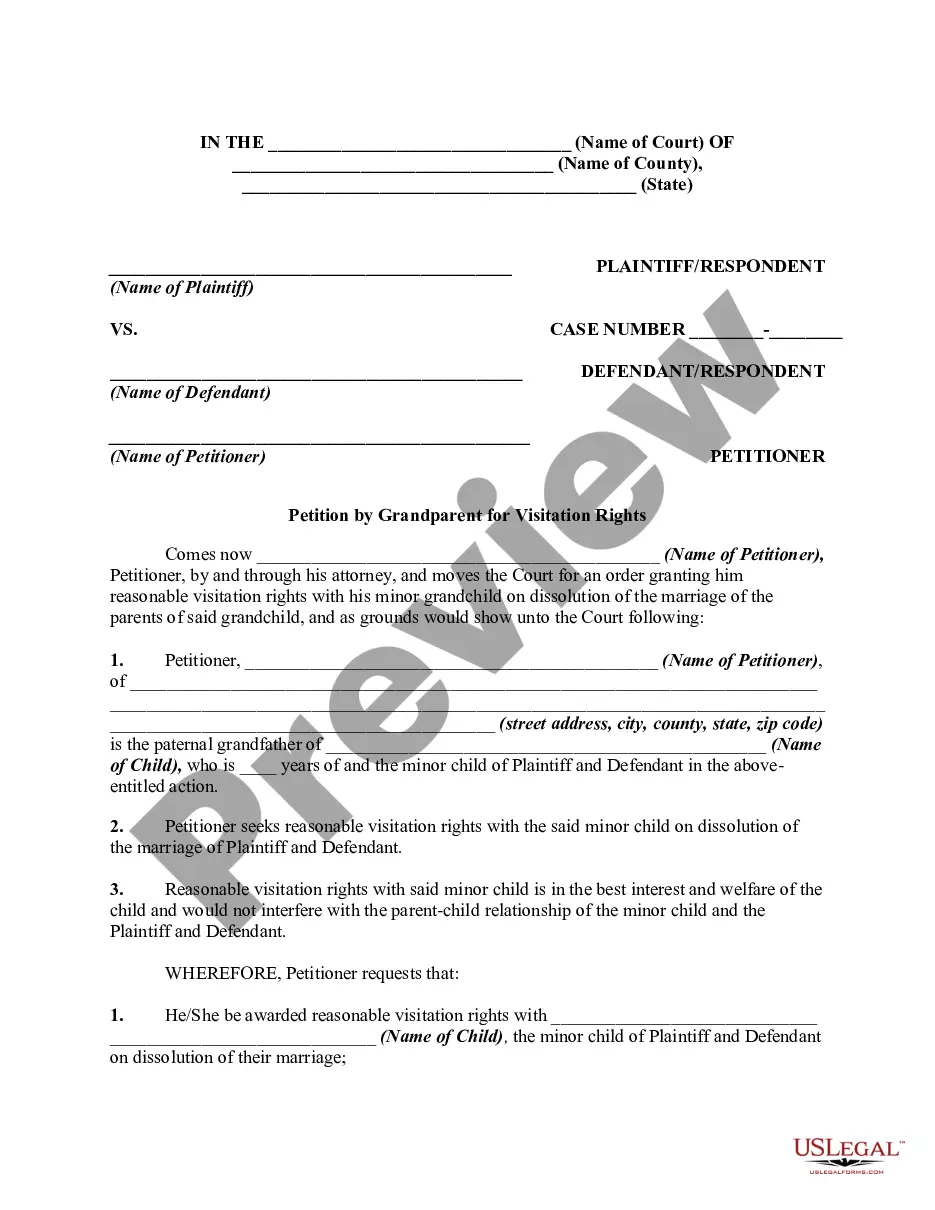
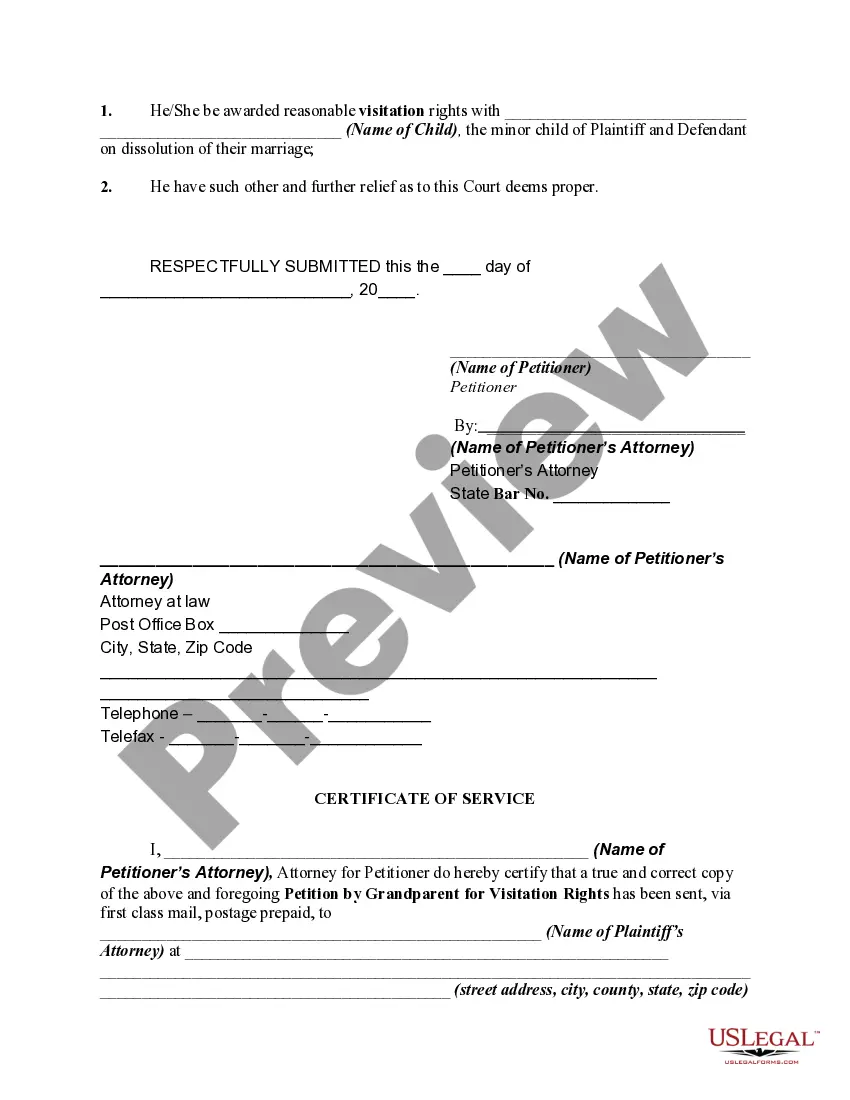
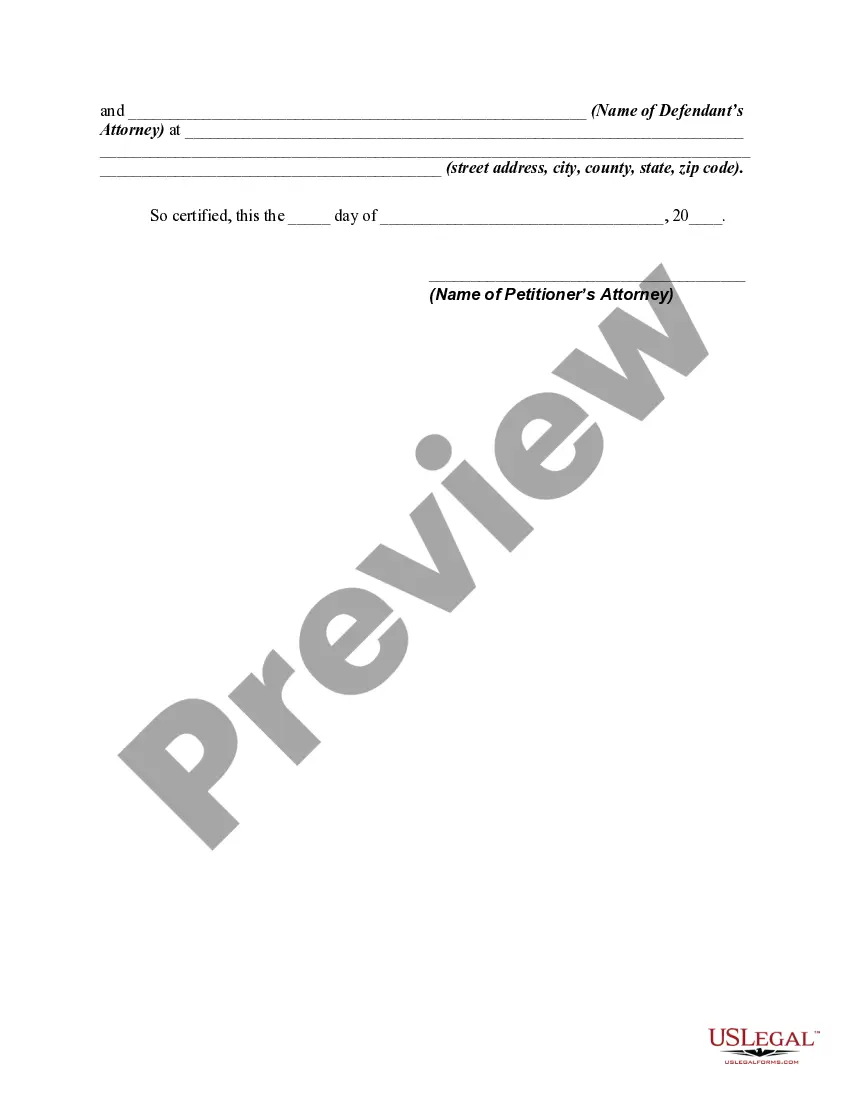
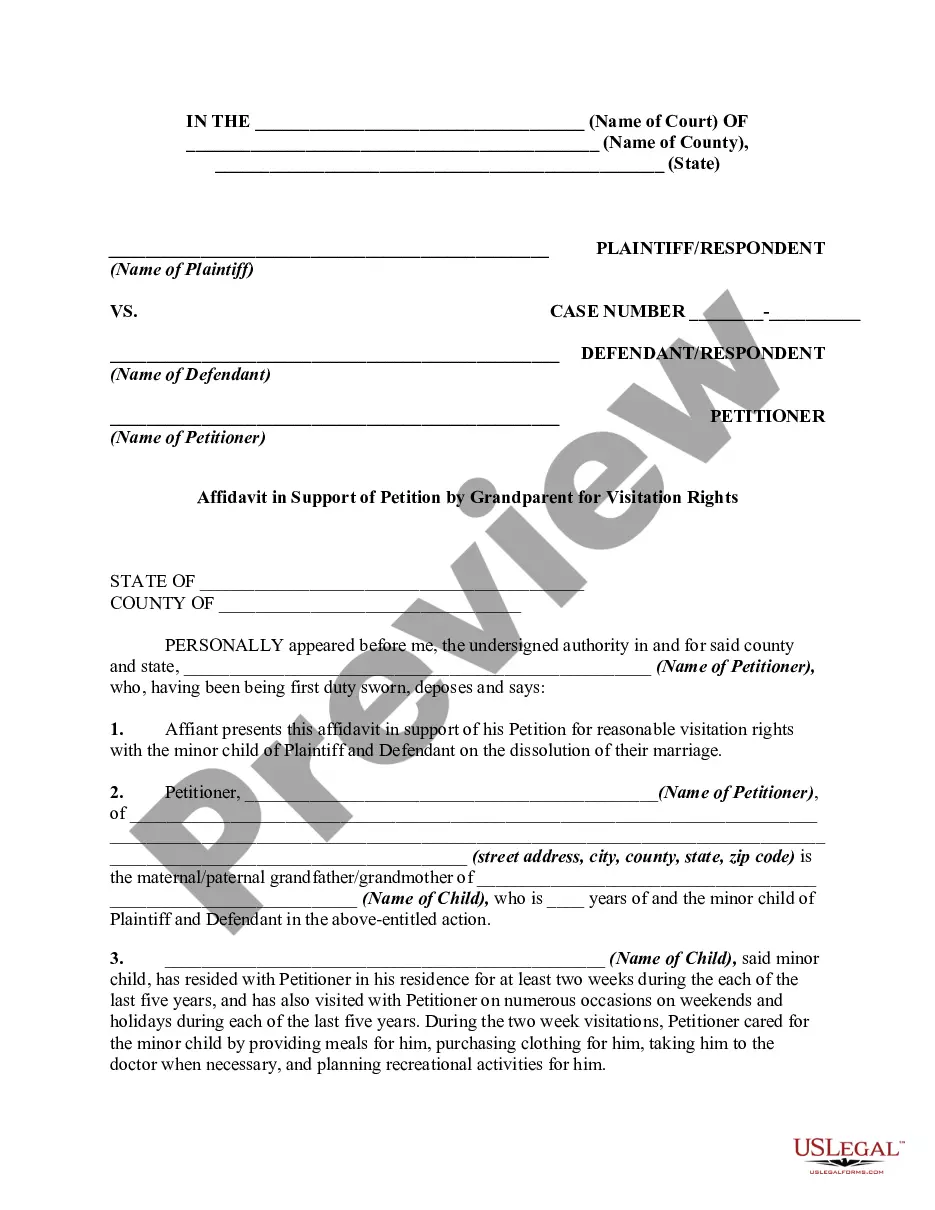
How to fill out Petition By Grandparent For Visitation Rights With Minor Grandchild On Dissolution Of The Marriage Of The Parents Of Minor Child?
Managing legal paperwork can be perplexing, even for seasoned professionals.
If you're searching for resources on Grandparent Parents Child With Disabilities and lack the time to find the right and current version, the processes can be quite stressful.
With US Legal Forms, you can.
Access legal and business documents tailored to your state or county specific needs. US Legal Forms addresses every requirement you may encounter, from personal to commercial paperwork, all in one location.
If this is your first experience with US Legal Forms, create a free account to gain unlimited access to the full benefits of the library. Here's what to do after obtaining the form you need.
- Utilize cutting-edge tools to complete and manage your Grandparent Parents Child With Disabilities.
- Tap into a valuable resource center of articles, guides, and manuals pertinent to your circumstances and needs.
- Conserve time and energy in sourcing the documents you require, and leverage US Legal Forms’ sophisticated search and Preview feature to find your Grandparent Parents Child With Disabilities form.
- If you hold a subscription, Log In to your US Legal Forms account, search for the form, and obtain it.
- Check the My documents tab to review the documents you've previously saved and organize your folders as desired.
- A comprehensive online form library can be transformative for anyone aiming to navigate these issues efficiently.
- US Legal Forms is a frontrunner in digital legal documentation, offering more than 85,000 state-specific forms available at your convenience.
Form popularity
FAQ
To start a support action, go to your go to your local Domestic Relations Office (DRO). The DRO may ask you for details about your income and assets. Have the following information on hand: Checking and savings account information.
What is a wife entitled to in a divorce in PA? The wife is not automatically entitled to anything that is not her direct property or assets in a divorce in PA. Alimony payments may be required based on the wife's situation and any division of property will also be determined based on other factors.
Theoretically, spousal support can last indefinitely. It terminates when a couple reconciles, or it can convert into alimony pendente lite when a divorce complaint is filed. It would also terminate upon cohabitation by the recipient spouse, or death of either party.
Under Pennsylvania law (§4321(1)), spouses are required to support each other based on their ?respective abilities to provide support?. Stated more clearly, a person who is financially dependent on their spouse can obtain pre-divorce spousal support if their income is lower than their spouse's income.
The formula used in the state of Pennsylvania states that the receiving spouse must receive 40 percent of the difference between the spouses' net incomes on a monthly basis. If the couple has children, the formula is altered to 30 percent of the net income difference.
The online request for support services can be used for new Complaints for Child Support, Spousal Support and/or Alimony Pendente Lite (APL), Petitions for Modification, Petitions for Recovery of Overpayment and Withdrawals of Complaint.
The factors that Pennsylvania judges must consider when determining whether alimony is necessary and in determining the nature, amount, duration, and manner of payment of alimony include the: earnings and earning capacities of the spouses. ages and physical, mental, and emotional conditions of the spouses.
For you to legally file for a mutual consent divorce, you need to sign an affidavit showing that both of you agree to the divorce. There are several other legal documents you and your spouse need to sign in front of a notary before you may legalize your divorce.