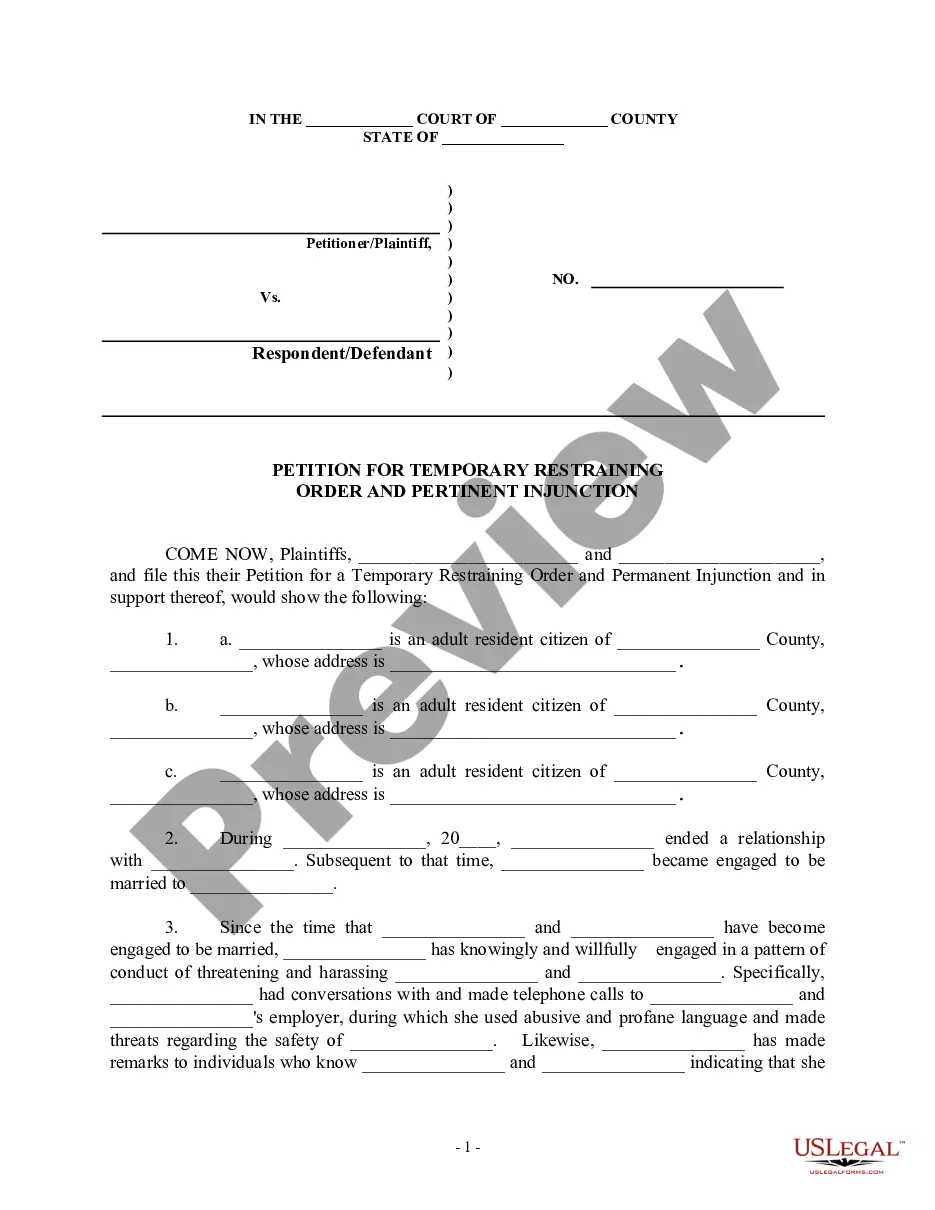
Restraining Protective Order With California
Description



Get your form ready online
Our built-in tools help you complete, sign, share, and store your documents in one place.
Make edits, fill in missing information, and update formatting in US Legal Forms—just like you would in MS Word.
Download a copy, print it, send it by email, or mail it via USPS—whatever works best for your next step.
Sign and collect signatures with our SignNow integration. Send to multiple recipients, set reminders, and more. Go Premium to unlock E-Sign.
If this form requires notarization, complete it online through a secure video call—no need to meet a notary in person or wait for an appointment.
We protect your documents and personal data by following strict security and privacy standards.

Make edits, fill in missing information, and update formatting in US Legal Forms—just like you would in MS Word.

Download a copy, print it, send it by email, or mail it via USPS—whatever works best for your next step.

Sign and collect signatures with our SignNow integration. Send to multiple recipients, set reminders, and more. Go Premium to unlock E-Sign.

If this form requires notarization, complete it online through a secure video call—no need to meet a notary in person or wait for an appointment.

We protect your documents and personal data by following strict security and privacy standards.
Looking for another form?



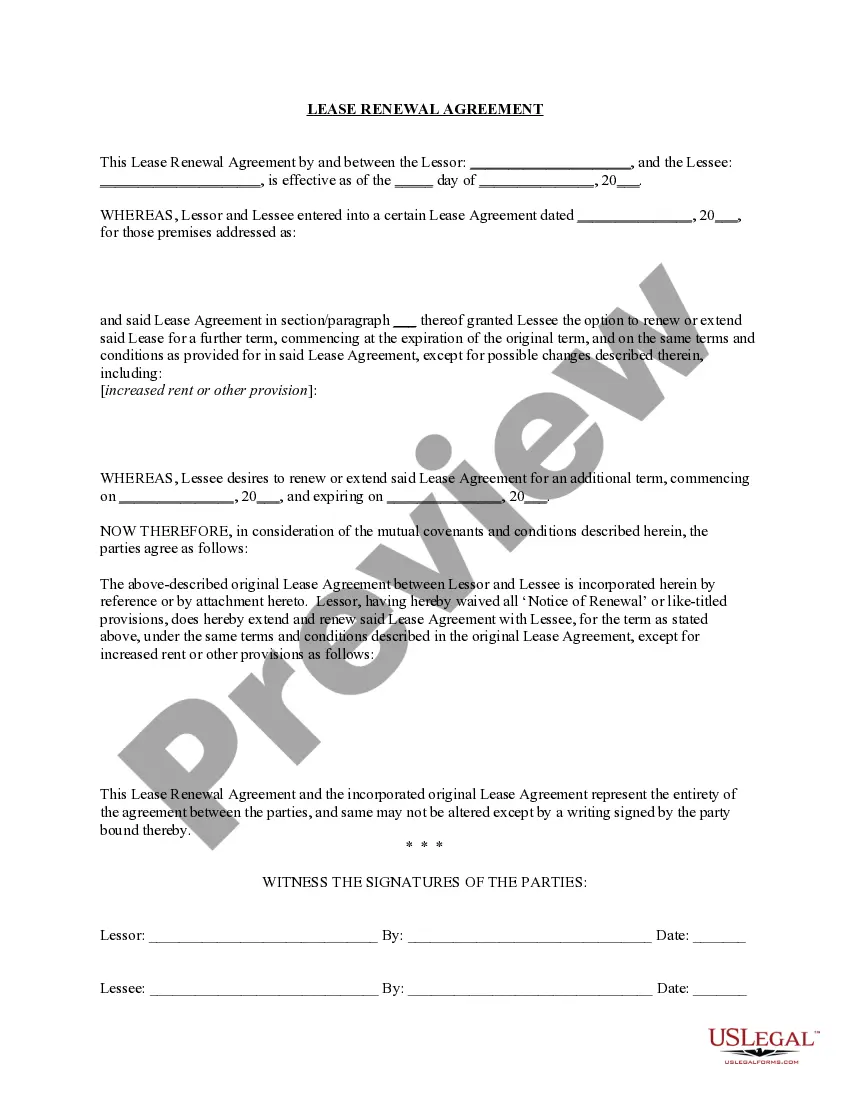

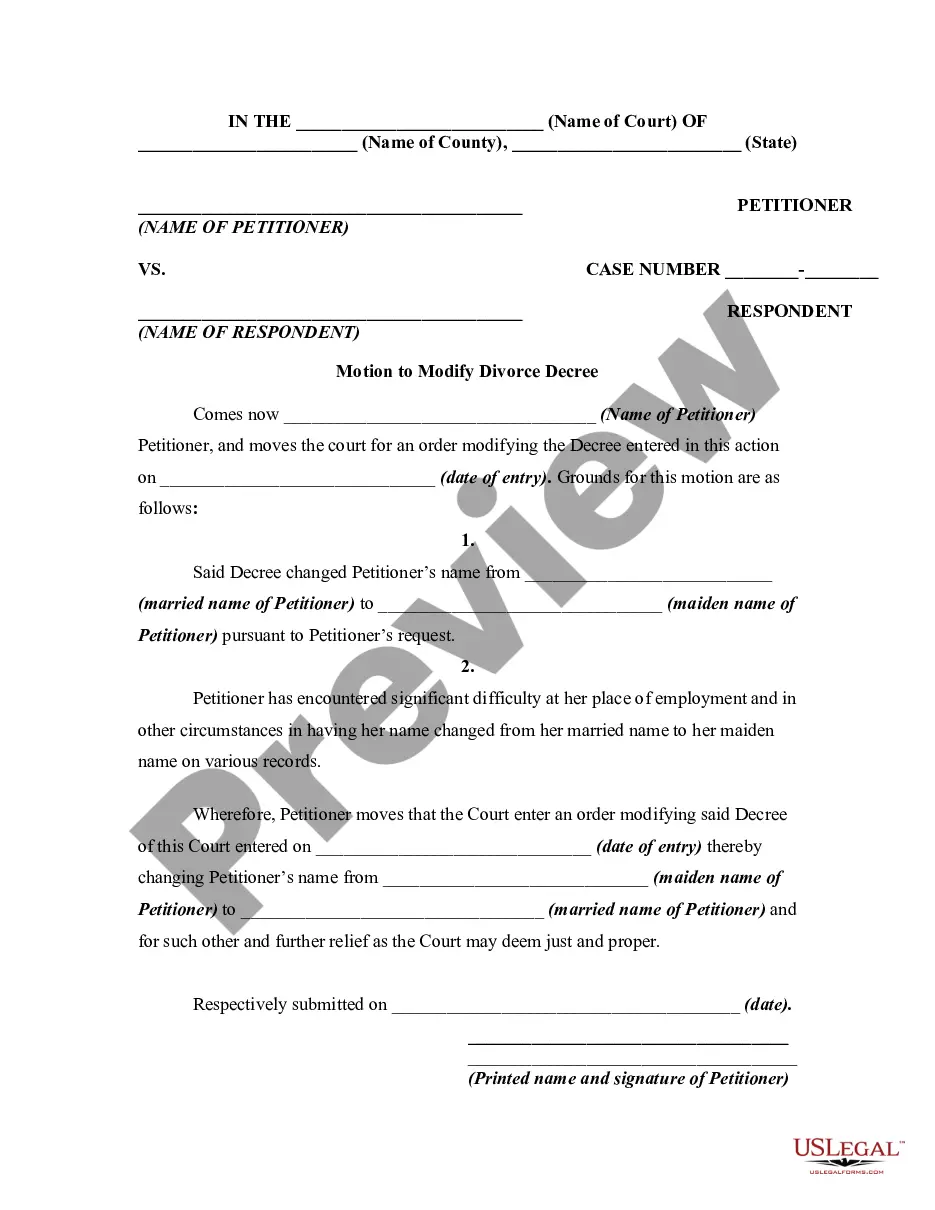
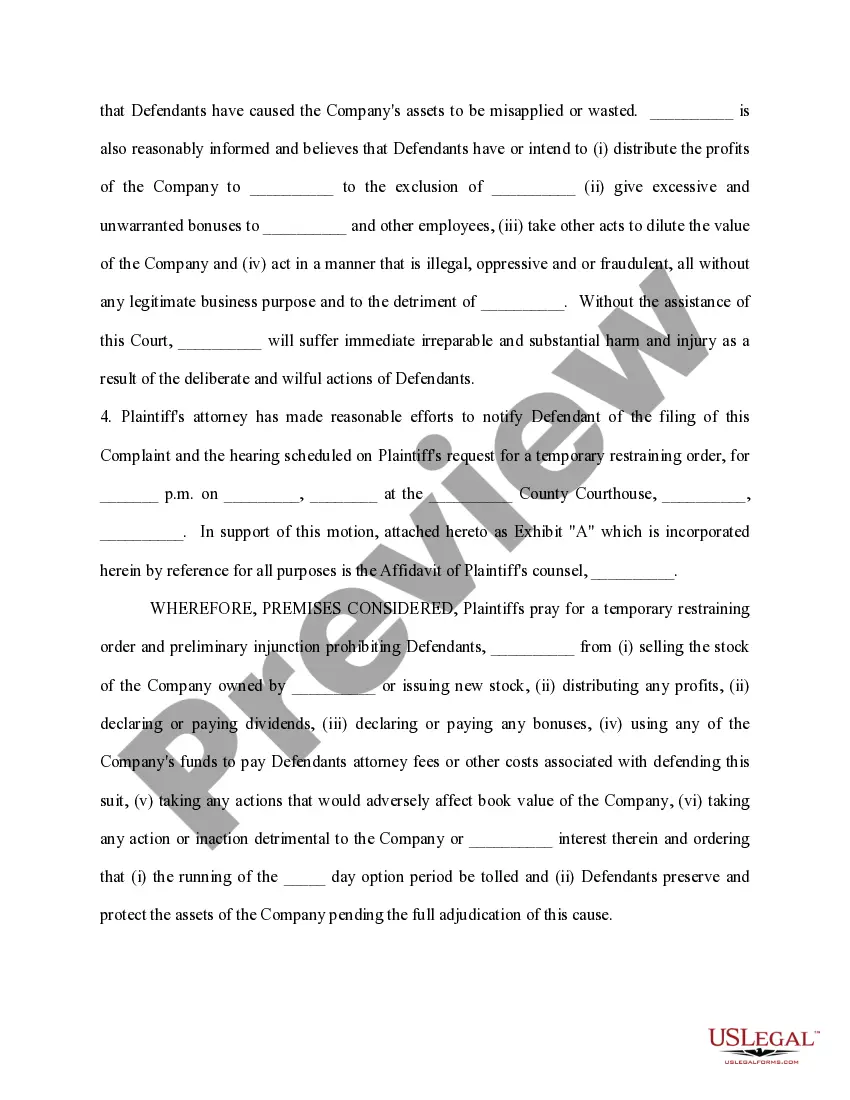
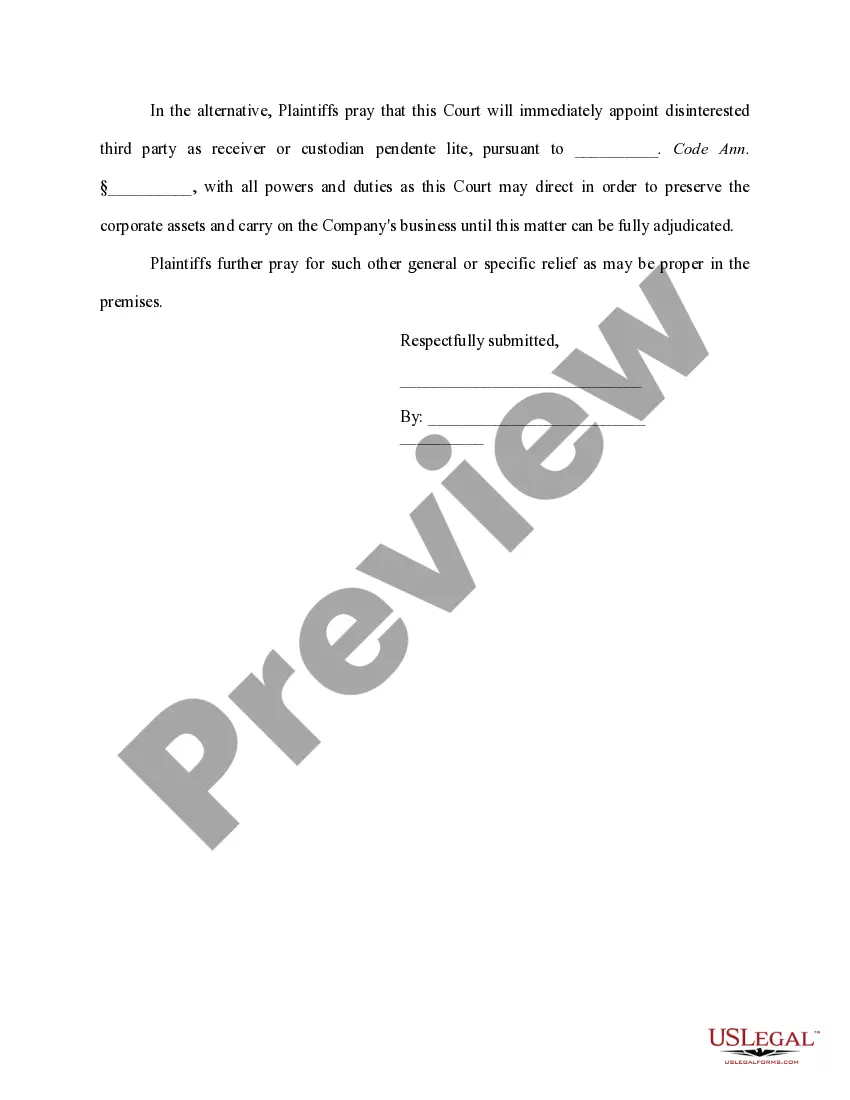
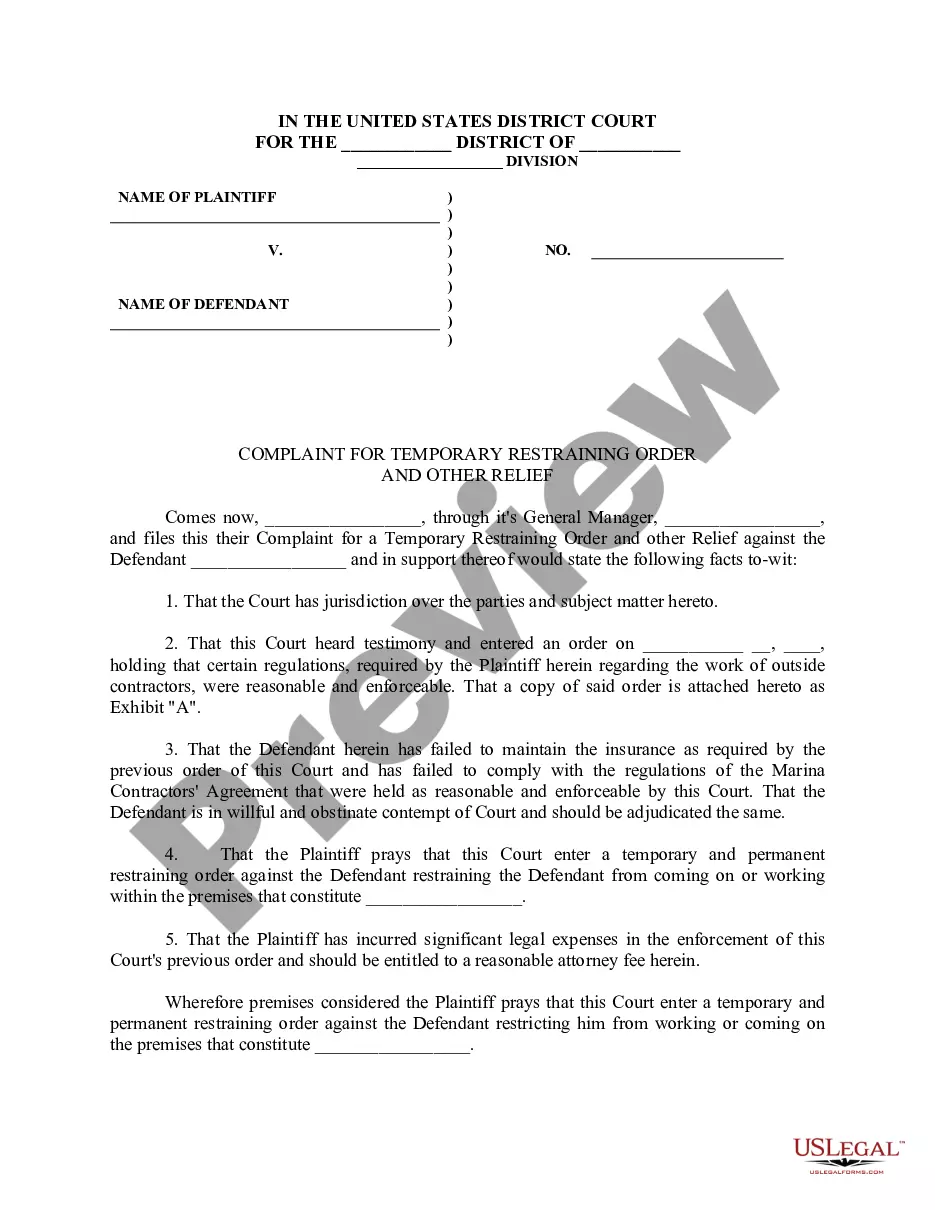
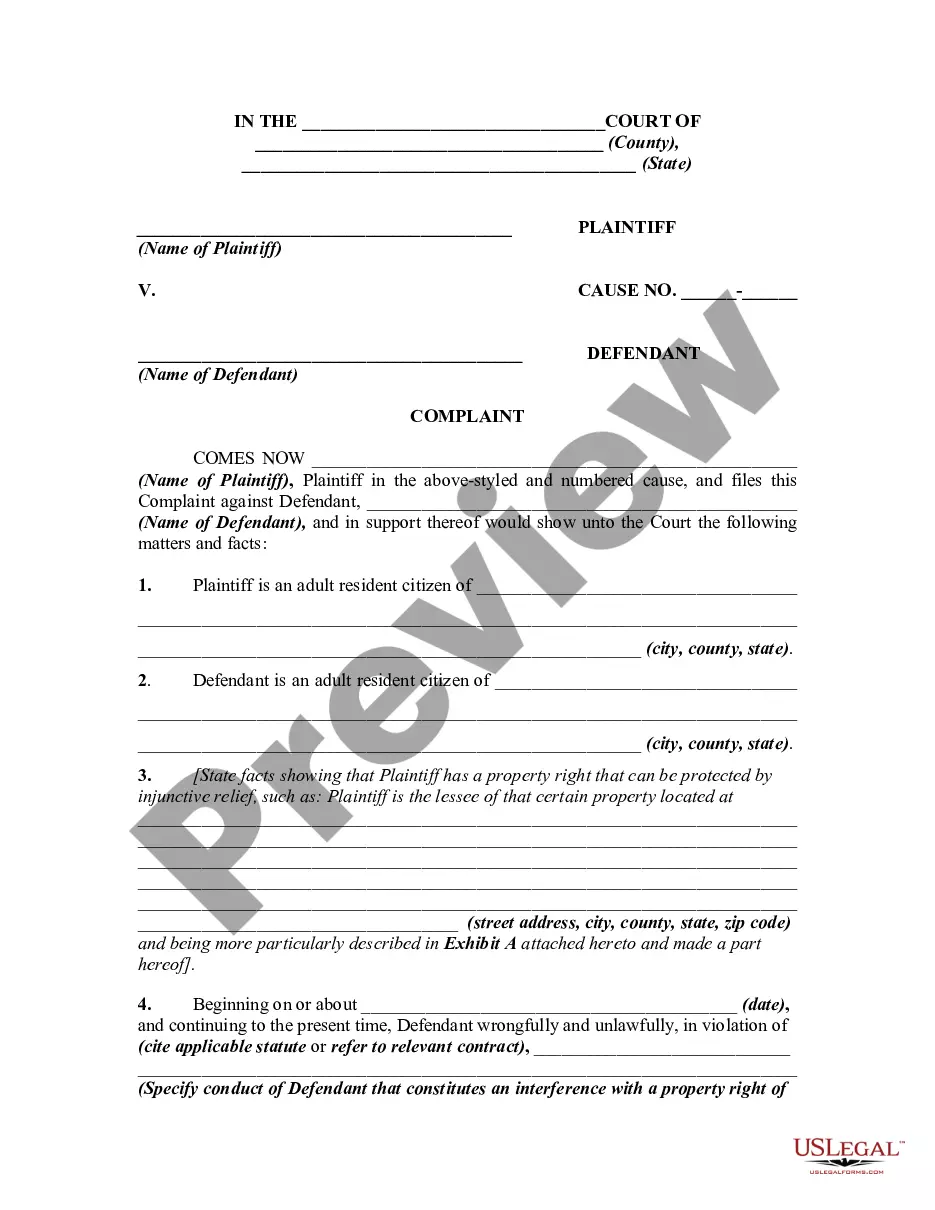
How to fill out Complaint For Temporary Restraining Order, Preliminary Injunction And Permanent Injunction?
Creating legal documents from the ground up can frequently feel daunting. Some situations may require extensive research and significant financial investment.
If you’re seeking a simpler and more cost-effective approach to preparing the Restraining Protective Order With California or any other paperwork without unnecessary complications, US Legal Forms is easily accessible.
Our online database of over 85,000 current legal documents encompasses nearly every aspect of your financial, legal, and personal matters. With just a few clicks, you can swiftly obtain state- and county-specific forms carefully assembled for you by our legal experts.
Utilize our website whenever you need a dependable service through which you can effortlessly locate and download the Restraining Protective Order With California. If you are already familiar with our site and have established an account, simply Log In to your account, find the form, and download it now or retrieve it later in the My documents section.
US Legal Forms has a strong reputation and over 25 years of expertise. Join us today and transform document preparation into a straightforward and efficient process!
- Don’t have an account? No worries. Setting it up and browsing the catalog takes barely any time.
- However, before proceeding directly to download the Restraining Protective Order With California, consider these suggestions.
- Examine the form preview and descriptions to ensure you have the correct document.
- Verify that the form you select aligns with the laws and regulations of your state and county.
- Choose the most appropriate subscription option to acquire the Restraining Protective Order With California.
- Download the document. Then complete, verify, and print it out.
Form popularity
FAQ
To file a restraining protective order in California, you need to provide clear evidence of harassment, threats, or domestic violence. This may include photographs, text messages, emails, and witness statements that support your claims. Collecting this proof is crucial, as it strengthens your case and helps the court understand your situation. If you're unsure how to gather this evidence, US Legal Forms offers resources and templates to assist you in preparing your documents effectively.
In California, the terms 'protective order' and 'restraining order' are often used interchangeably, yet they may refer to different contexts. A protective order generally involves broader circumstances, including family law matters, while a restraining order specifically addresses issues like domestic violence or harassment. Understanding these differences is crucial when seeking a restraining protective order with California, ensuring individuals receive the right legal support for their needs.
Yes, in California, a restraining order must typically be personally served to the restrained person. This process ensures that the individual is aware of the order and its implications. Utilizing reliable services, such as USLegalForms, can simplify the delivery process of a restraining protective order with California, ensuring it is done correctly.
A Temporary Restraining Order (TRO) and a Temporary Protective Order (TPO) are both types of protective orders in California, but they serve different purposes. A TRO is typically issued quickly to provide immediate protection until a hearing can be scheduled, while a TPO is a longer-term order established after a court hearing. Understanding these distinctions can help individuals choose the right kind of restraining protective order with California that fits their situation.
In California, a protective order qualifies as a legal remedy designed to prevent harassment, violence, or abuse. It generally applies when someone feels threatened by another person and seeks legal protection. To obtain a restraining protective order with California, the petitioner must demonstrate credible threats or harm, providing evidence that supports their request.
Many individuals misunderstand the requirements for a restraining protective order in California, leading to incomplete applications. Failing to provide adequate proof or not attending the court hearing can result in missed opportunities. It’s also crucial to understand the legal standards that must be met, which can differ based on the type of order you are seeking.
To establish harassment in a restraining protective order with California, you need to provide evidence such as documented incidents or communications that demonstrate repeated unwanted actions. This can include text messages, recorded calls, or witness testimonies that support your claims. Consistency and clarity in your evidence can significantly impact the judge's decision.
To increase your chances of securing a restraining protective order with California, prepare thoroughly. Gather documentation, including texts, emails, and witness statements, that showcase a pattern of harassment or threats. Seeking legal advice can also provide valuable insights, ensuring you present a strong case that addresses all the specific requirements.
A restraining protective order in California may not be granted if the judge finds insufficient evidence of abuse or harassment. It's essential to present clear, compelling proof that your safety is at risk. Additionally, the judge may consider whether the allegations are credible. If the situation lacks urgency or merit, the order may be denied.
In California, the burden of proof for a restraining protective order requires the petitioner to demonstrate a reasonable belief of imminent harm. This means you must show evidence of past incidents or credible threats that justify your need for protection. The standard largely revolves around the preponderance of the evidence, meaning it's more likely than not that you face harm. Using resources like USLegalForms can help you gather the necessary documentation and understand the process.