Warranty Deed Vs Quit Claim For Conveyance
Description
Get your form ready online
Our built-in tools help you complete, sign, share, and store your documents in one place.
Make edits, fill in missing information, and update formatting in US Legal Forms—just like you would in MS Word.
Download a copy, print it, send it by email, or mail it via USPS—whatever works best for your next step.
Sign and collect signatures with our SignNow integration. Send to multiple recipients, set reminders, and more. Go Premium to unlock E-Sign.
If this form requires notarization, complete it online through a secure video call—no need to meet a notary in person or wait for an appointment.
We protect your documents and personal data by following strict security and privacy standards.

Make edits, fill in missing information, and update formatting in US Legal Forms—just like you would in MS Word.

Download a copy, print it, send it by email, or mail it via USPS—whatever works best for your next step.

Sign and collect signatures with our SignNow integration. Send to multiple recipients, set reminders, and more. Go Premium to unlock E-Sign.

If this form requires notarization, complete it online through a secure video call—no need to meet a notary in person or wait for an appointment.

We protect your documents and personal data by following strict security and privacy standards.
Looking for another form?
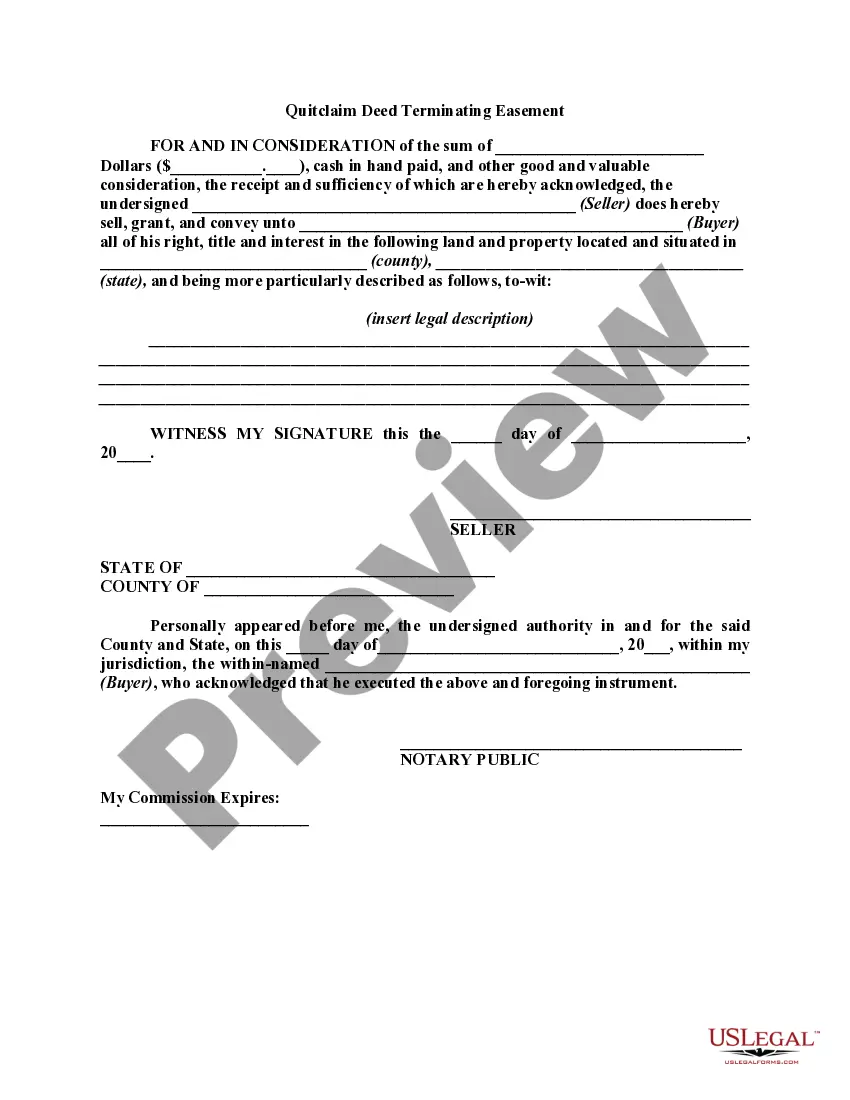
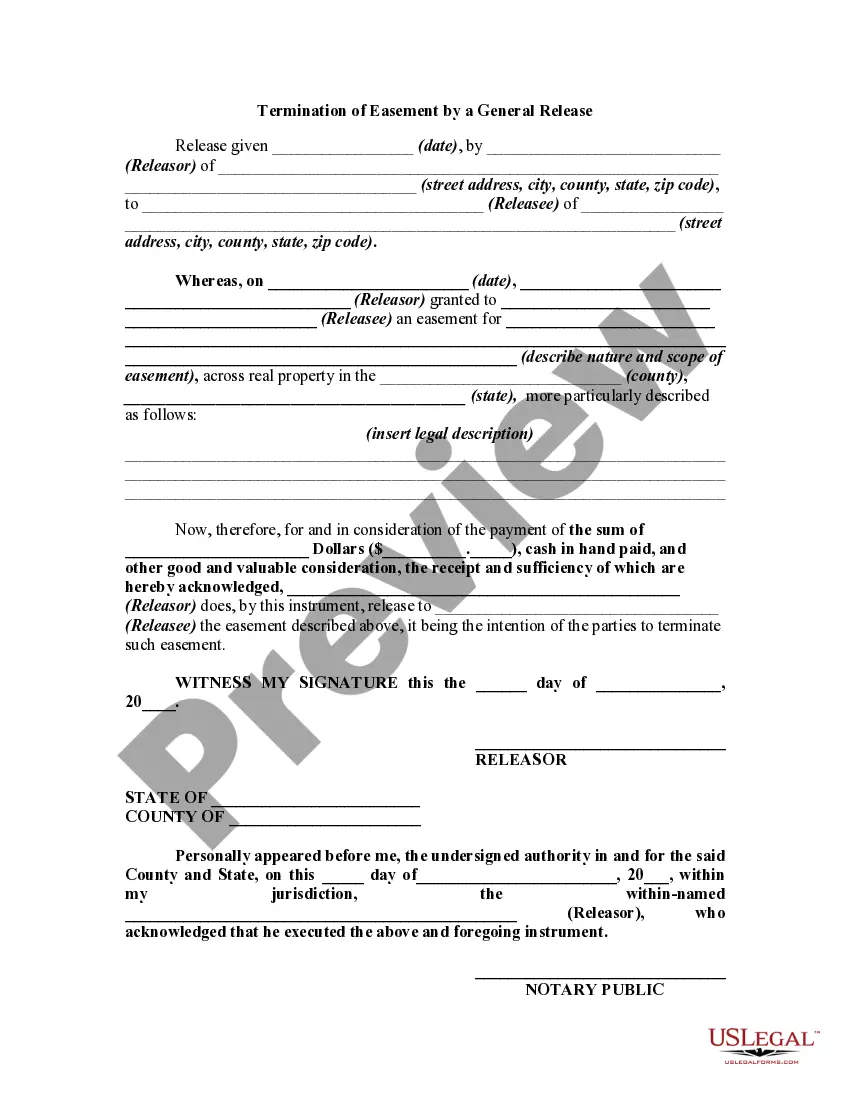
How to fill out Quitclaim Deed Termination Or Terminating Easement?
Creating legal documents from the ground up can occasionally be daunting.
Certain scenarios may entail extensive research and significant financial expenditure.
If you’re looking for a more straightforward and economical method of preparing Warranty Deed Vs Quit Claim For Conveyance or any other documents without excessive complications, US Legal Forms is readily available to you.
Our online repository of over 85,000 current legal documents encompasses nearly every aspect of your financial, legal, and personal matters.
Before you proceed to download the Warranty Deed Vs Quit Claim For Conveyance, keep these suggestions in mind: Review the document preview and descriptions to ensure you've located the document you need. Confirm that the template you select meets your state and county's standards. Choose the appropriate subscription plan to acquire the Warranty Deed Vs Quit Claim For Conveyance. Download the file, then complete it, sign it, and print it out. US Legal Forms has a solid reputation and over 25 years of experience. Join us today and simplify your document processing!
- With just a few clicks, you can swiftly access state- and county-specific templates carefully crafted by our legal professionals.
- Utilize our service whenever you seek a dependable and trustworthy platform where you can quickly locate and download the Warranty Deed Vs Quit Claim For Conveyance.
- If you're familiar with our site and have previously established an account, simply Log In, select the template, and download it immediately, or re-download it whenever you wish in the My documents section.
- New to our service? No problem. It only takes a few minutes to create your account and explore our library.
Form popularity
FAQ
A conveyance deed typically refers to any document used to transfer property ownership, while a warranty deed specifically guarantees that the seller holds clear title to the property. Therefore, not all conveyance deeds are warranty deeds. Understanding the distinctions between a warranty deed vs quit claim for conveyance can help you make informed decisions about property transactions. For tailored support, consider using USLegalForms, where you can find resources to navigate these legal documents efficiently.
Typically, individuals looking to transfer property ownership quickly and without hassle benefit the most from a quitclaim deed. This type of deed is commonly used among family members or friends, as it does not guarantee that the title is clear of issues. If you want to avoid the complexities often associated with a warranty deed, considering the quitclaim option may be advantageous. Always weigh the pros and cons of Warranty deed vs quit claim for conveyance to make an informed decision.
Filling out a warranty deed form involves several key steps. First, you need to identify the parties involved, including the grantor and grantee. Next, clearly describe the property being conveyed, including its legal description. Lastly, sign the document in the presence of a notary public. Understanding the differences in Warranty deed vs quit claim for conveyance can help ensure you choose the right form for your needs.
Yes, a quitclaim deed is also a form of conveyance used to transfer interest in property. However, it does so without providing any guarantees regarding the title. This means the grantor might not own the property outright or might have existing claims against it. When you consider the differences in warranty deed vs quit claim for conveyance, it's crucial to understand the implications of each type of deed.
Yes, a warranty deed is a type of conveyance deed used to transfer property ownership. It guarantees that the seller holds a clear title to the property and has the right to transfer it. This assurance makes warranty deeds a preferred choice for buyers who want to avoid future disputes. When exploring the warranty deed vs quit claim for conveyance, recognize the importance of title security in your purchasing decisions.
While a warranty deed offers strong protections for buyers, it also has some disadvantages. The process may involve more paperwork and could require additional time and resources to ensure the title is clear. Moreover, if issues arise after the sale, the grantor may be held responsible for any title defects. Understanding these factors in the context of warranty deed vs quit claim for conveyance helps you prepare for potential challenges.
A quitclaim deed does not supersede a warranty deed in terms of legal standing. Instead, the two serve different purposes in the context of property transfers. While a quitclaim deed transfers whatever interest the grantor has in the property without warranties, a warranty deed provides guarantees about the title's validity. Understanding the differences in warranty deed vs quit claim for conveyance is essential for making informed decisions.