Adverse Possetion
Description
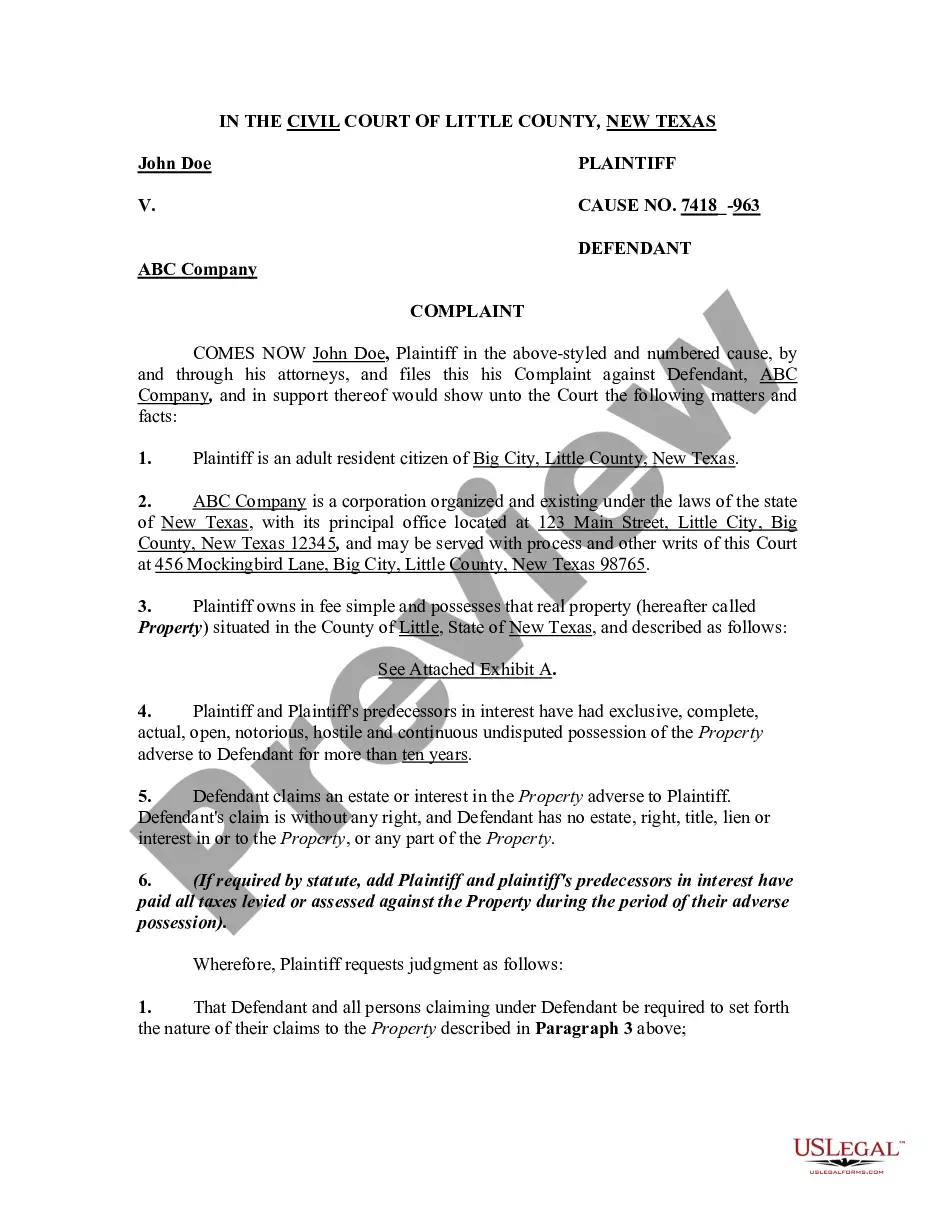
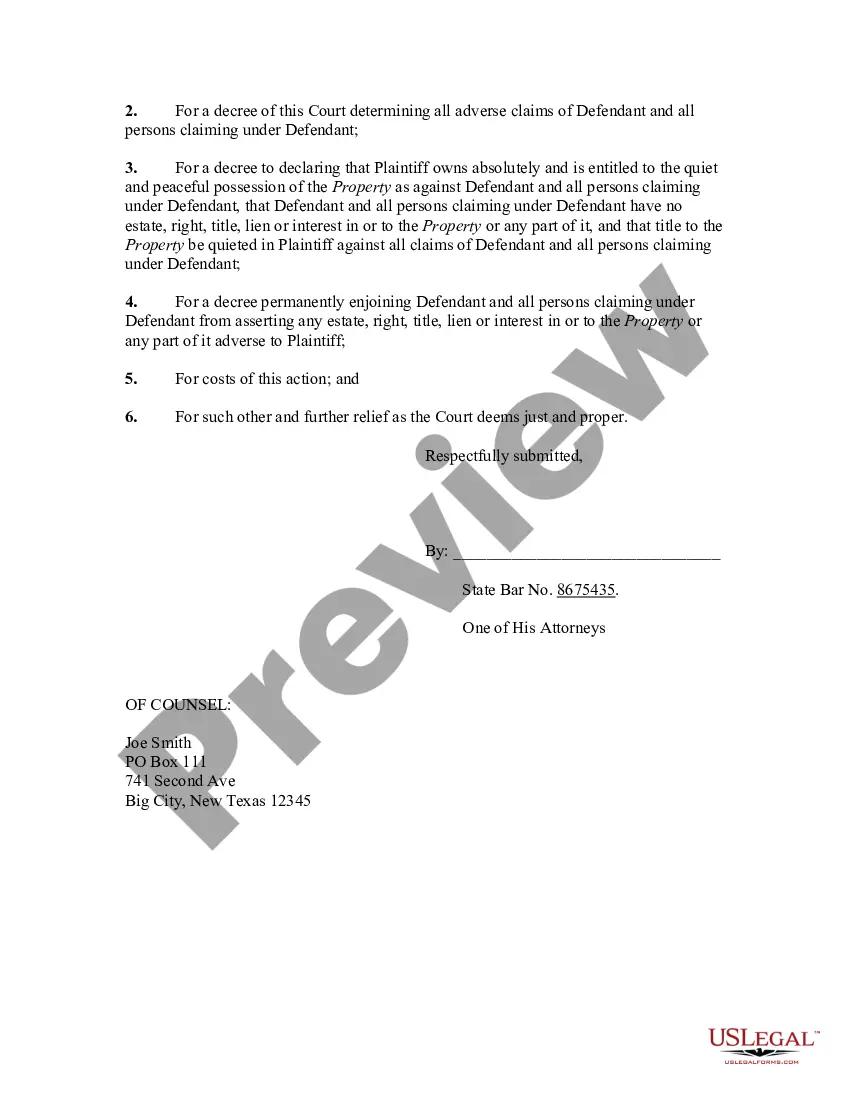
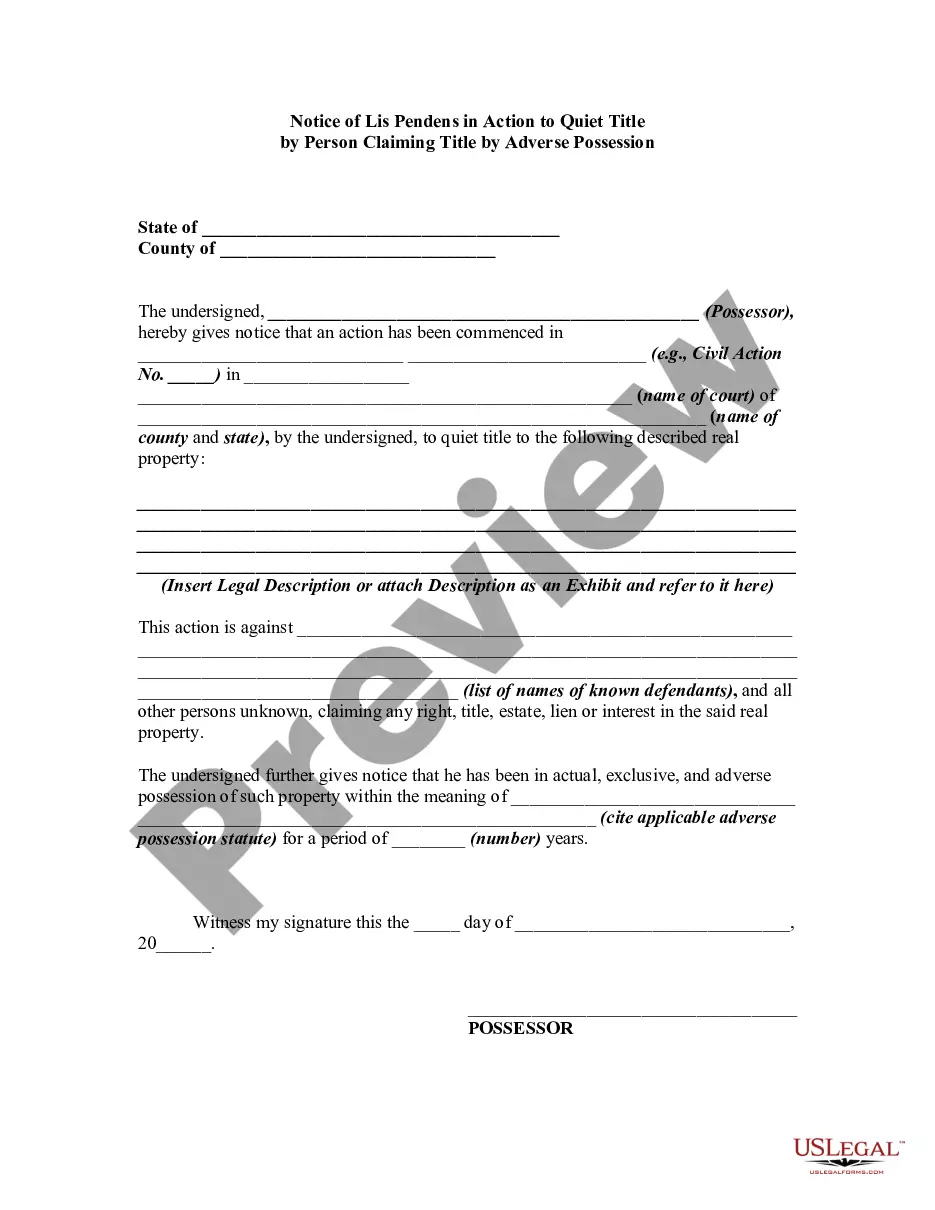
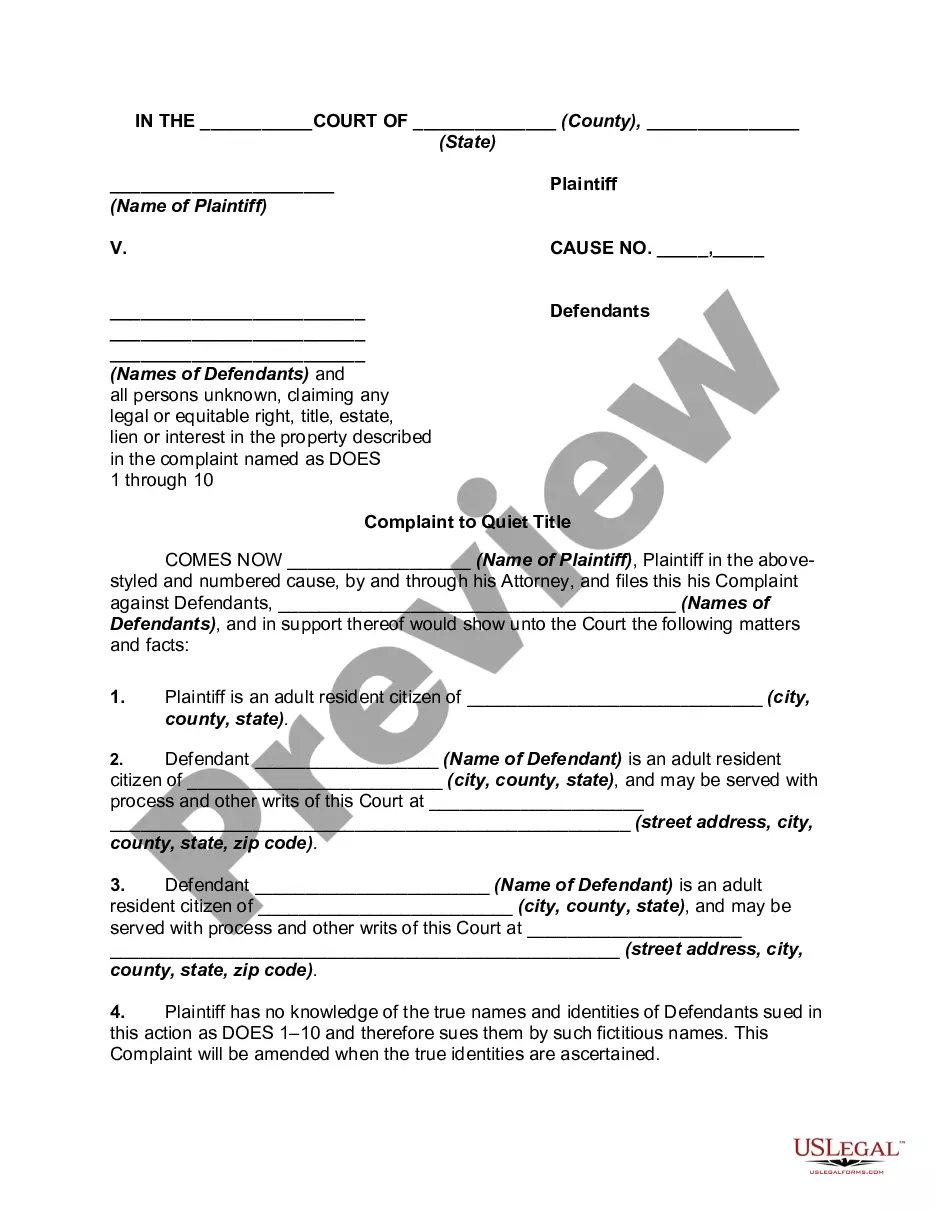

How to fill out Complaint To Quiet Title By Person Claiming Adverse Possession - Squatters Rights?
- Log into your US Legal Forms account if you're an existing user. Ensure your subscription is active; renew if needed.
- For first-time users, begin by evaluating the preview mode and the description of the adverse possession form. Confirm it meets your requirements.
- If needed, use the search feature to find alternative templates that better suit your situation.
- Select the appropriate document by clicking the 'Buy Now' button. Choose the subscription plan that fits your needs and register for an account.
- Proceed to purchase by entering your payment details via credit card or PayPal.
- Once your transaction is confirmed, download the form to your device and find it in the 'My Forms' section of your profile for future use.
By utilizing US Legal Forms, you benefit from an extensive collection of over 85,000 legal documents. This platform not only provides a robust selection for a competitive price but also offers access to professional guidance for form completion.
Accessing the forms you need has never been easier. Start managing your legal documents efficiently today with US Legal Forms!
Form popularity
FAQ
Mowing your neighbor's land does not automatically grant them a claim through adverse possession. For a neighbor to claim ownership, their occupation of the land must be visible, continuous, and without your consent for a specified period. Simply maintaining the property does not fulfill the legal criteria for adverse possession. If you have concerns about your property boundaries or rights, our platform can help you navigate these complexities.
In California, several elements must be present for a claim of adverse possession. The possessor must occupy the land openly and continuously, without permission from the true owner. Additionally, the occupation must be hostile and exclusive for a statutory period of five years. If you believe you might qualify for adverse possession, consider consulting legal resources or our platform for guidance tailored to your situation.
Adverse possession occurs when a person occupies land they do not legally own, under conditions that meet specific legal requirements. For instance, if someone builds a fence around a vacant parcel and maintains it for a certain number of years, that individual may claim legal ownership through adverse possession. This process illustrates how land ownership can shift over time based on usage and possession. Understanding this concept is crucial if you are exploring potential land rights.
In Illinois, the statutory period for adverse possession is 20 years. During this time, the possessor must continuously occupy the property and demonstrate exclusive use without the owner's consent. If these conditions are met for the full duration, legal ownership may be obtained. Understanding the nuances of this process is essential, and UsLegalForms offers tools and templates to assist you in your claim.
Yes, adverse possession can transfer ownership of the property to a new owner. When a person successfully claims adverse possession, they can gain legal title to the property and then sell or transfer that title. This means that the new owner inherits the rights of the adverse possessor. Utilizing resources like UsLegalForms can help you navigate the legal processes involved in transferring adverse possession claims.
Mowing your lawn does not automatically give a neighbor a claim through adverse possession in Minnesota. For a claim to succeed, the neighbor must demonstrate continuous and exclusive use of your property for at least 15 years without your permission. Therefore, occasional mowing, without more substantial evidence of possession, likely will not establish a claim. If you face such a situation, legal advice from services like US Legal Forms can be beneficial.
To defeat an adverse possession claim, the original owner can provide evidence that the use of the property was not exclusive or continuous. Documented actions showing intervention or permission can also serve as strong defenses. Another effective strategy is to challenge the duration of the claimed possession. Consulting with a legal expert can help you navigate these defenses effectively, and resources like US Legal Forms offer helpful guidance.
To qualify for adverse possession in Minnesota, you must demonstrate that your use of the property was open, hostile, continuous, and exclusive for at least 15 years. The possession must be without permission from the actual owner and visible to the public. Additionally, you should keep detailed records of your use and improvements made on the property. Seeking guidance from US Legal Forms can provide insights into this process.
An example of an adverse possession claim might involve a homeowner who has maintained a garden on a portion of land that technically belongs to a neighbor for more than 15 years. If the homeowner has consistently used the land openly and without objection, they may be able to file a claim for ownership. Such claims usually need substantial evidence to prove the length and nature of possession. Legal resources, including those from US Legal Forms, can assist in presenting a solid case.
In Minnesota, the duration required for adverse possession is typically 15 years. This period requires continuous and exclusive possession of the land. Importantly, the possession must be visible and without permission from the original owner. Understanding this timeline is crucial when considering an adverse possession claim.