Adverse Possession Cases In Kenya
Description
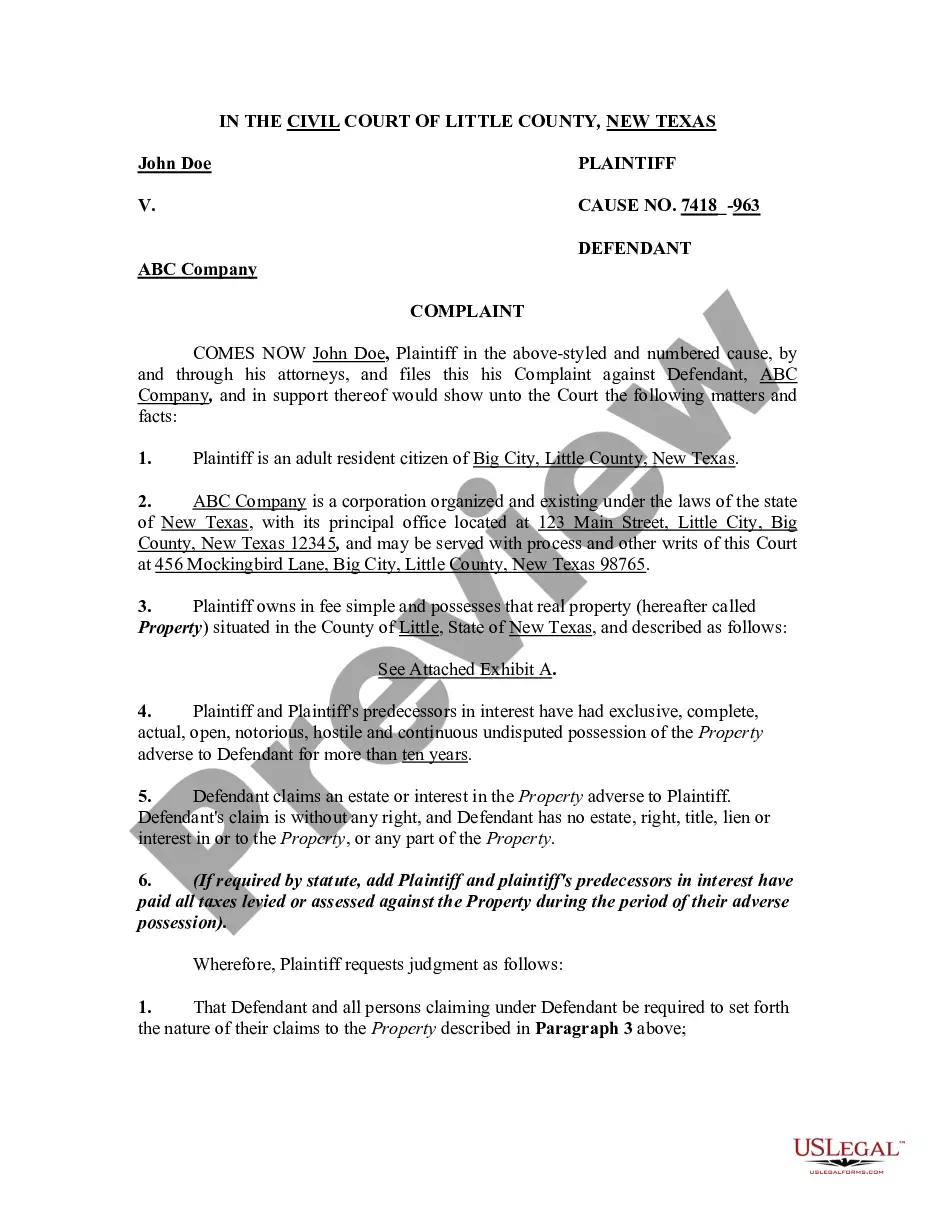
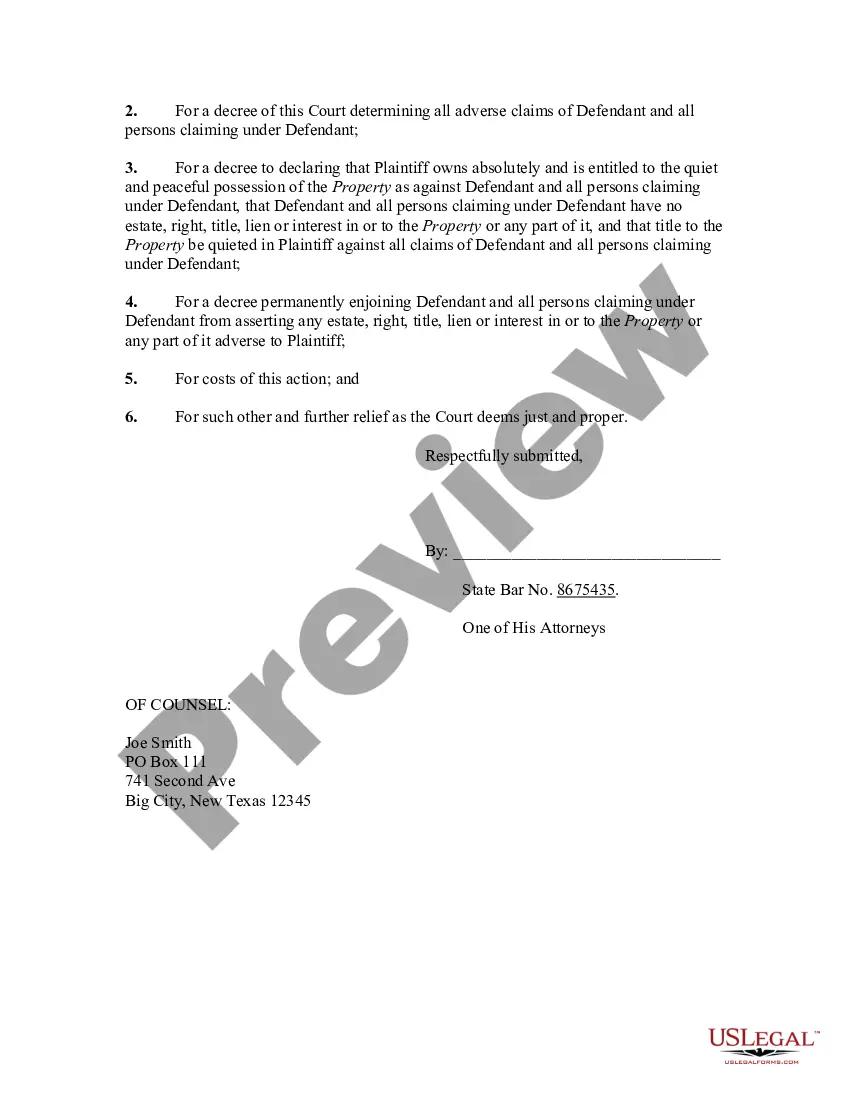
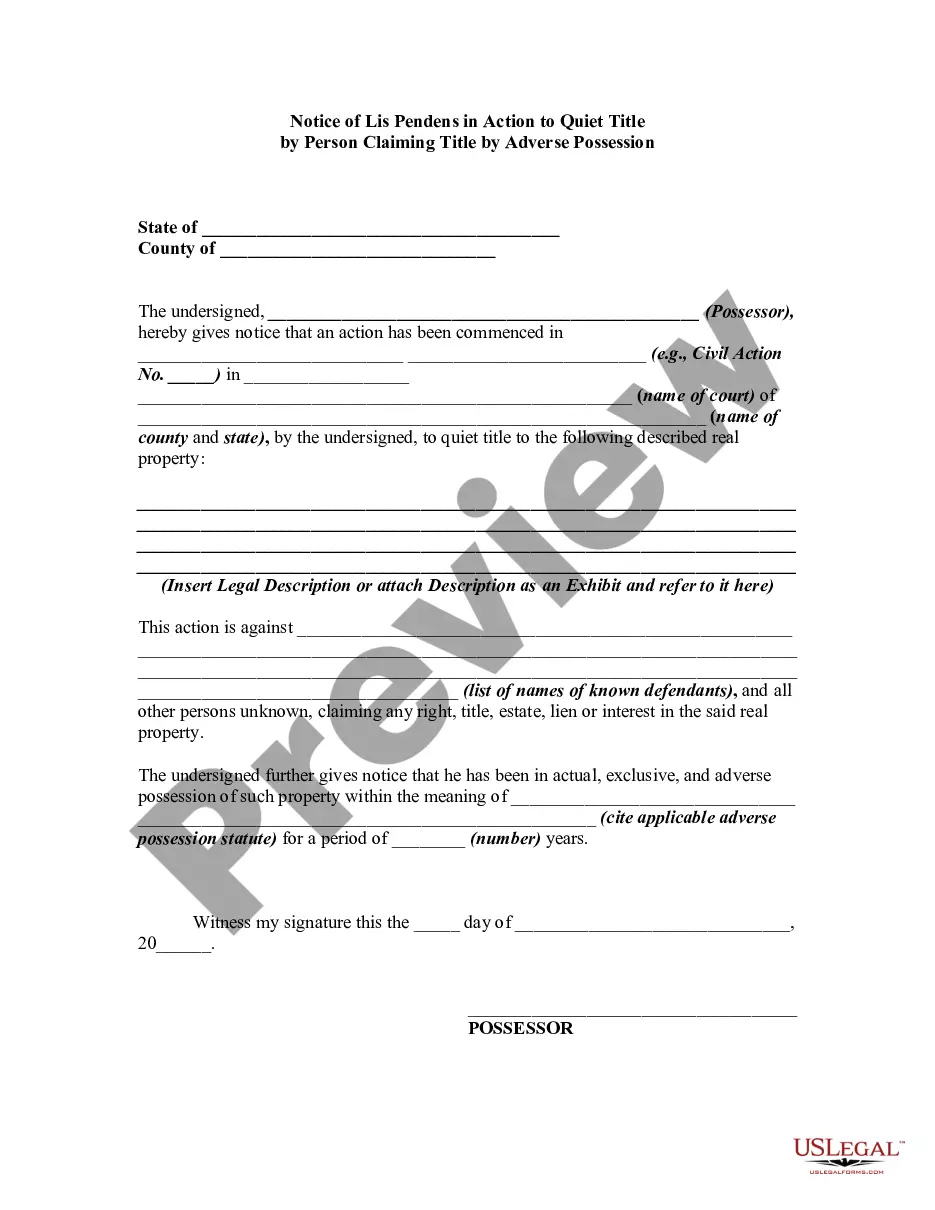
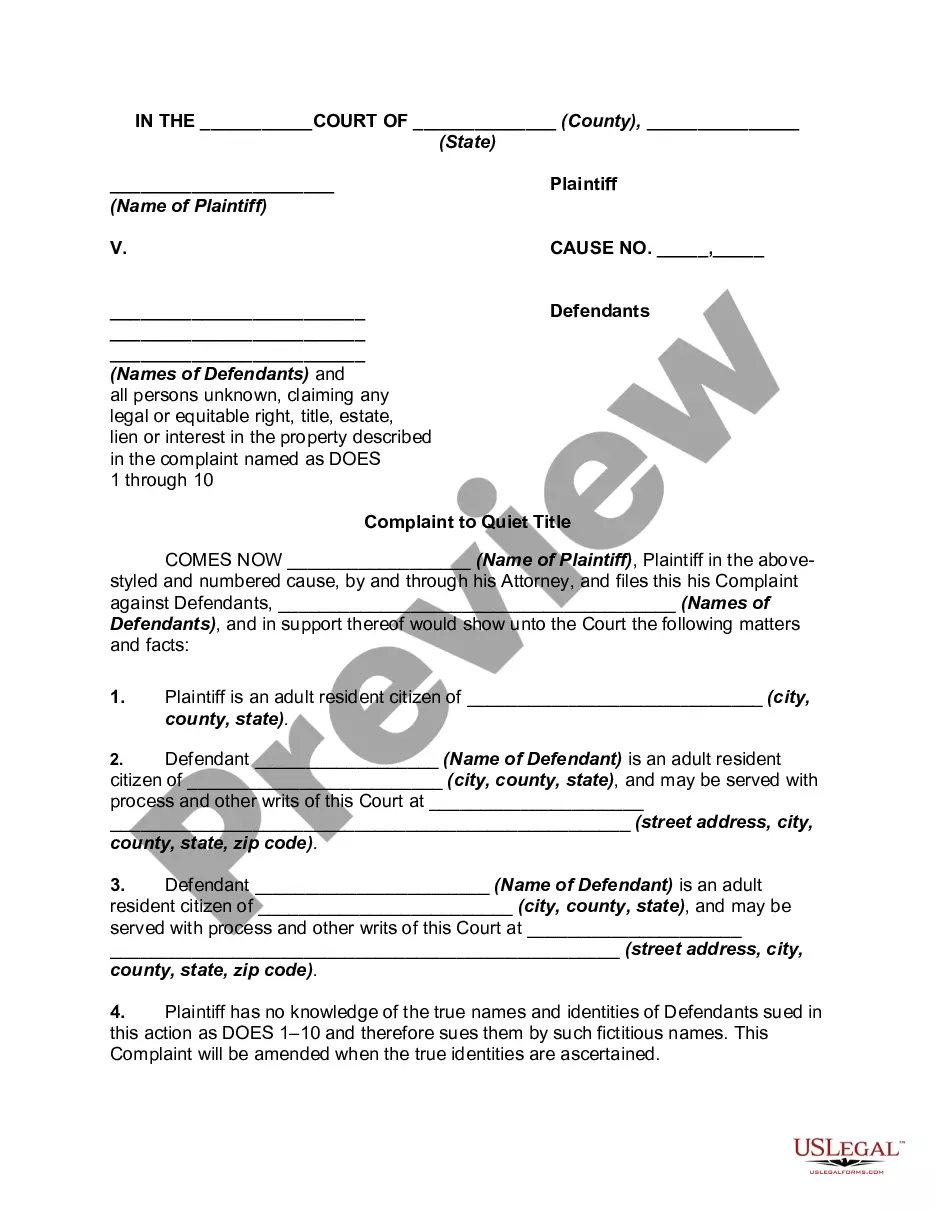
How to fill out Complaint To Quiet Title By Person Claiming Adverse Possession - Squatters Rights?
Regardless of whether it's for professional reasons or personal issues, everyone must confront legal matters at some point in their lives.
Completing legal documents requires careful consideration, starting with selecting the appropriate form template.
With an extensive US Legal Forms collection available, you will never need to waste time searching for the correct template online. Utilize the library’s straightforward navigation to find the suitable template for any circumstance.
- Locate the template you require using the search bar or catalog navigation.
- Review the form’s details to ensure it aligns with your case, region, and county.
- Click on the form’s preview to inspect it.
- If it turns out to be the wrong form, return to the search feature to find the necessary Adverse Possession Cases In Kenya sample.
- Obtain the template if it fulfills your needs.
- If you possess a US Legal Forms account, simply click Log in to access previously saved templates in My documents.
- If you haven't created an account yet, you can download the form by clicking Buy now.
- Choose the appropriate pricing option.
- Complete the registration form for your profile.
- Select your payment method: either a credit card or PayPal account.
- Pick the file format you desire and download the Adverse Possession Cases In Kenya.
- Once saved, you can either fill out the form using editing software or print it and complete it manually.
Form popularity
FAQ
Filing an adverse possession claim in Kenya involves several steps. First, gather evidence to support your claim, such as documents proving your continuous occupation. Next, you will need to file a suit in the appropriate court, outlining your case and the grounds for your claim. It is often beneficial to consult with legal professionals who can guide you through the process, and platforms like US Legal Forms can provide valuable resources and templates to help you navigate your claim effectively.
To establish adverse possession cases in Kenya, five essential elements must be proven. First, the possession must be actual, meaning you physically occupy the property. Second, it should be exclusive, indicating that you alone control the property. Third, the possession must be open and notorious, so others are aware of your presence. Fourth, it must be continuous for a specific period, typically 12 years in Kenya. Lastly, the possession should be hostile, meaning it is without the consent of the original owner.
To prevent land from being sold in Kenya, ensure that your ownership rights are documented and legally recognized. You should register your land with the relevant authorities and keep all necessary paperwork up to date. If you suspect a potential sale, act quickly by seeking legal advice to challenge any unauthorized transactions. The US Legal Forms platform can provide the necessary legal documents and guidance to help you safeguard your land effectively.
To effectively fight against adverse possession cases in Kenya, you must gather evidence that proves your ownership of the land. This includes documents like title deeds, tax receipts, and any other legal papers that support your claim. Additionally, you should consider consulting a legal expert who specializes in land disputes. By taking these steps, you can strengthen your case and protect your property rights.
To support your adverse possession claim, you need to provide substantial proof of your possession of the property. This may include utility bills, tax receipts, photographs, and testimonies from neighbors or other witnesses. Collecting and organizing this evidence will prove essential in navigating adverse possession cases in Kenya and enhancing your chances of a favorable outcome.
The five key requirements for adverse possession in Kenya include actual possession, open and notorious use, exclusive possession, continuous possession for at least 12 years, and possession that is hostile to the interests of the original owner. Each of these elements plays a critical role in establishing a successful claim. Familiarizing yourself with these requirements can guide you through adverse possession cases in Kenya effectively.
To prevent adverse possession of your land, you can take legal action to assert your ownership rights. This may include formally notifying the individual claiming possession and seeking an injunction from a court to prevent further encroachment. Staying proactive and involved with your property can help you address potential adverse possession cases in Kenya before they escalate.
In Kenya, the law typically requires a continuous period of at least 12 years of possession for a successful adverse possession claim. This period must reflect exclusive possession of the property without consent from the original owner. Therefore, keeping detailed records during this time can be crucial for success in adverse possession cases in Kenya.
To initiate an adverse possession claim in Kenya, you must demonstrate continuous and uninterrupted possession of the property for a specific period. Additionally, the possession must be open, notorious, and without the permission of the original owner. Gathering evidence such as documents, photographs, and witness statements can significantly strengthen your case in adverse possession cases in Kenya.