Adverse Possession By State For Fence
Description
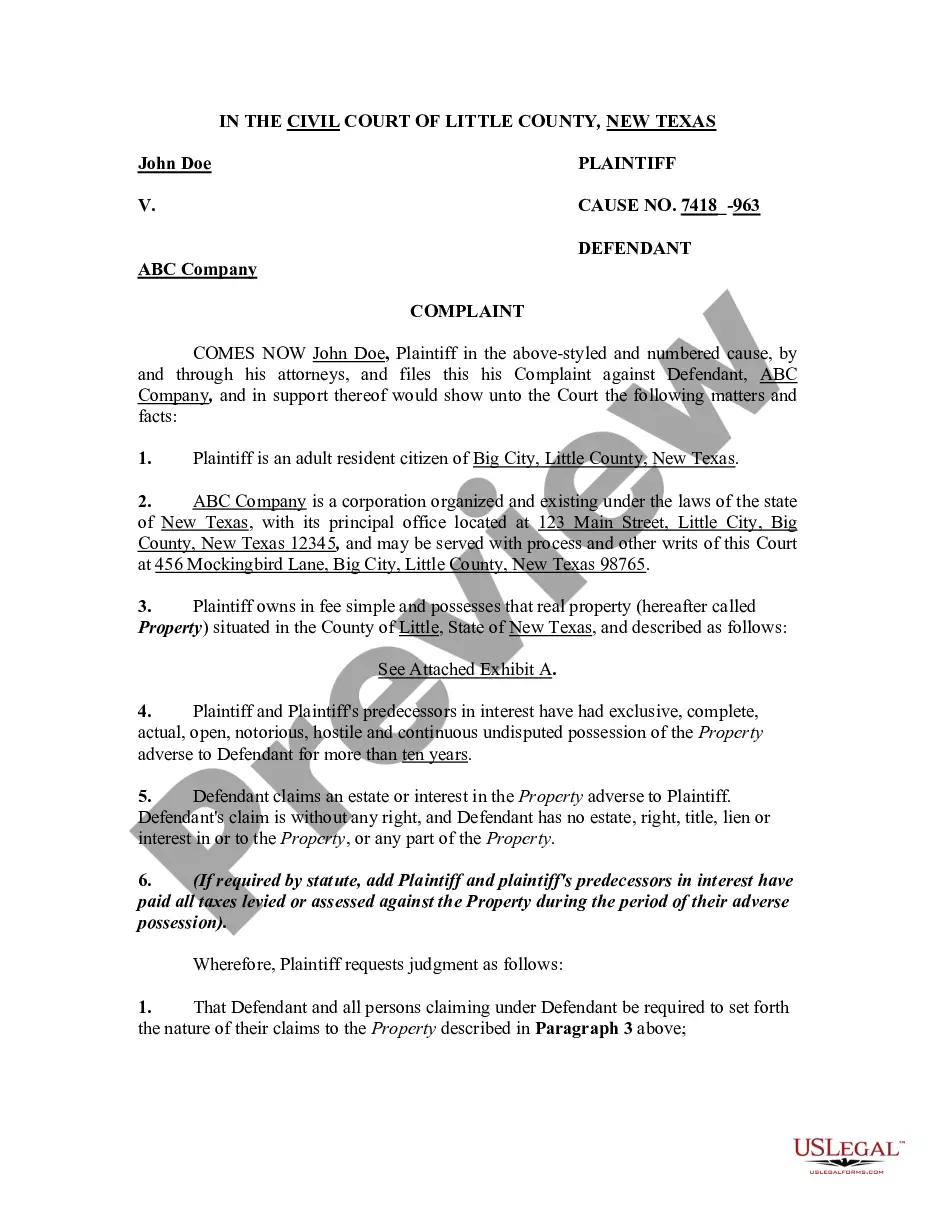
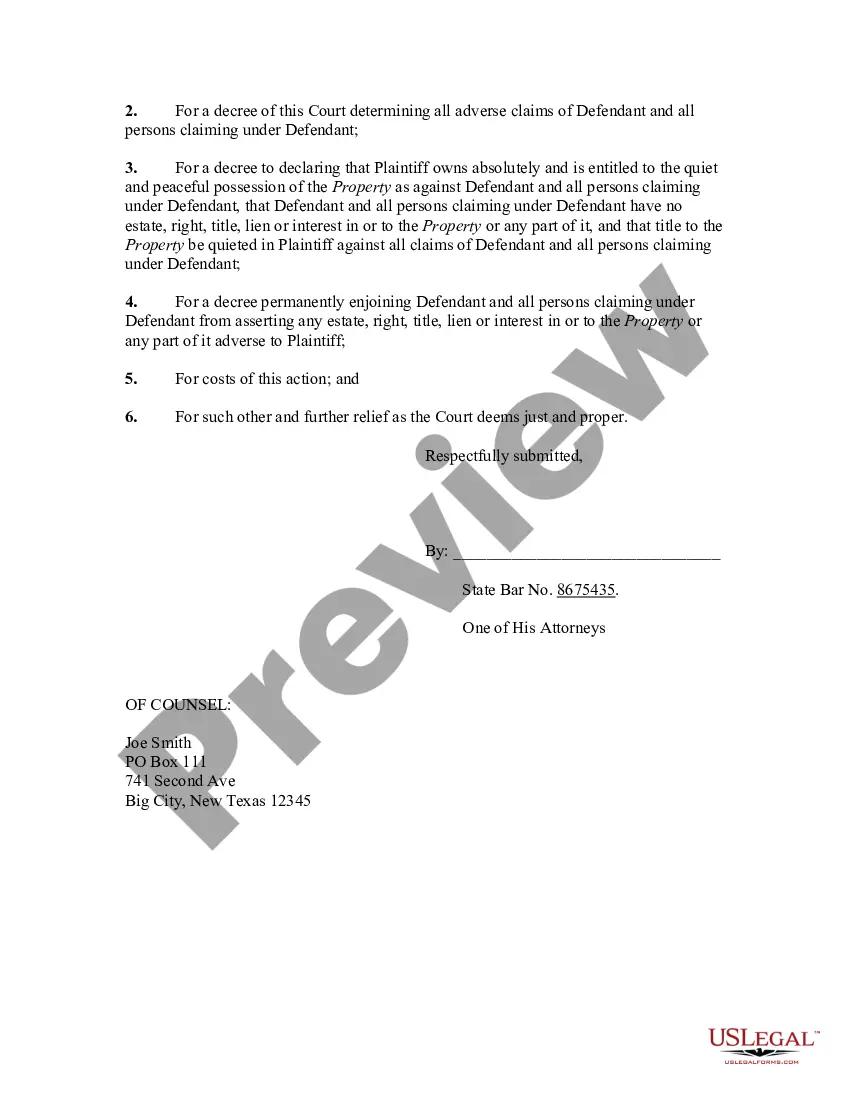
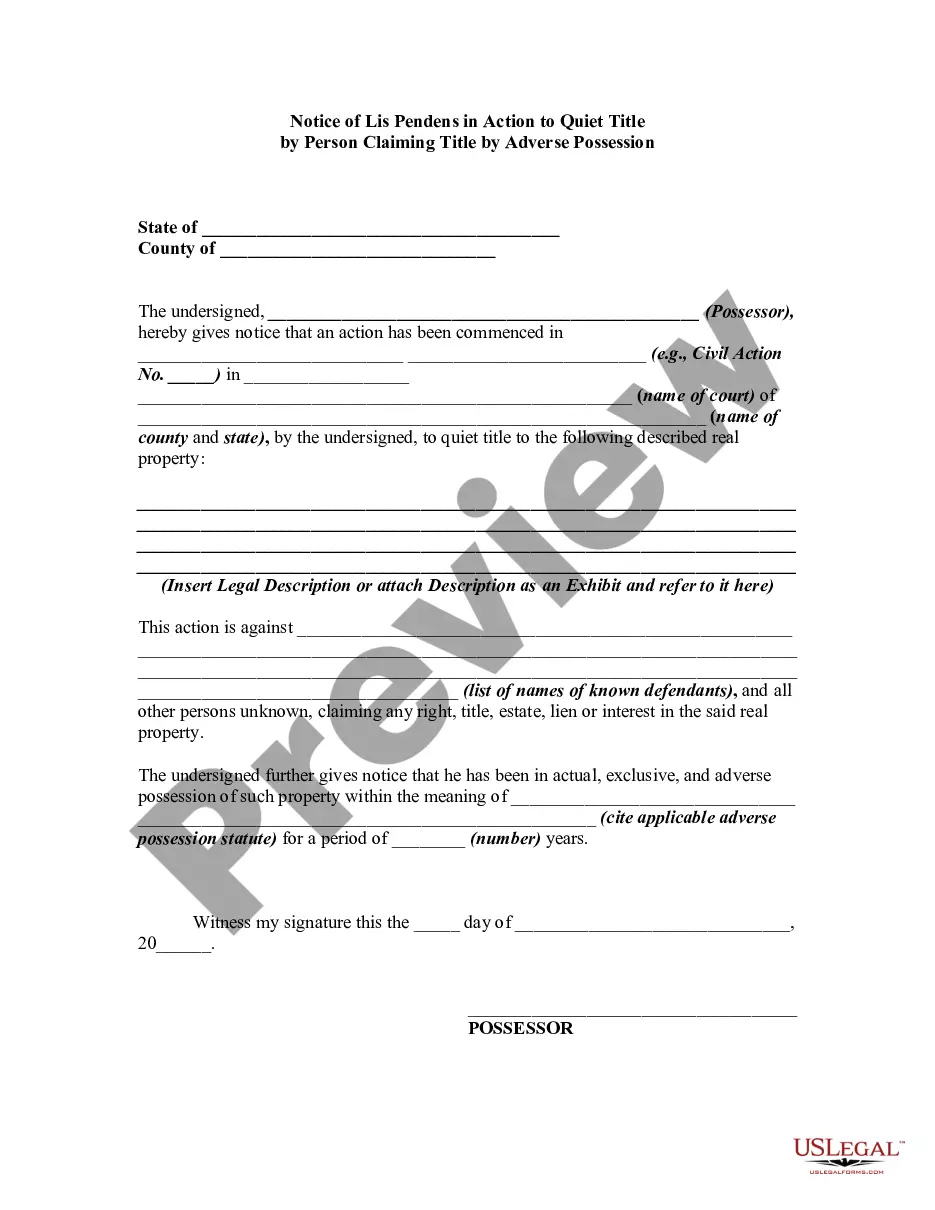
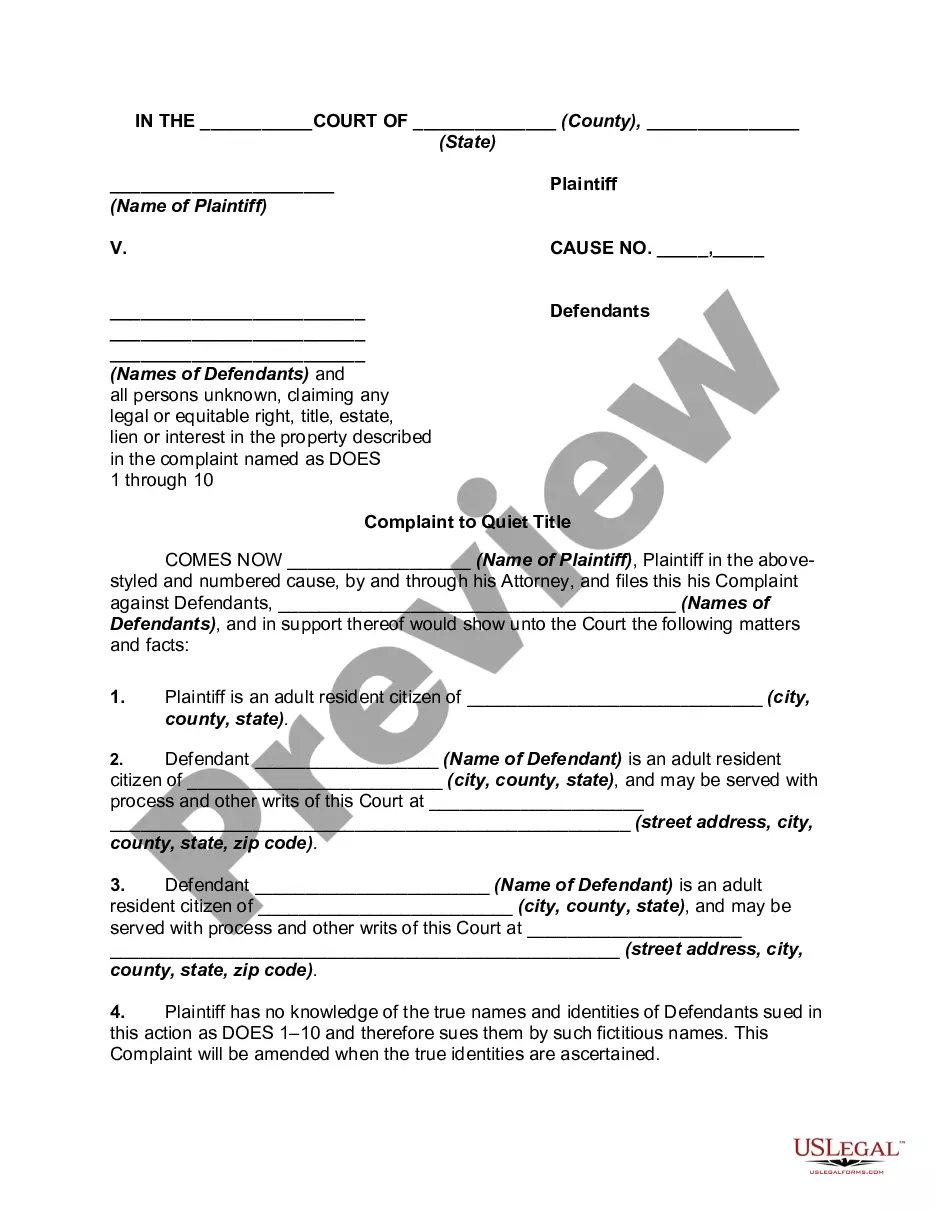
How to fill out Complaint To Quiet Title By Person Claiming Adverse Possession - Squatters Rights?
The Adverse Possession By State For Fence visible on this webpage is a versatile formal template created by expert attorneys in accordance with federal and state regulations.
For over 25 years, US Legal Forms has been assisting individuals, businesses, and legal practitioners with more than 85,000 authenticated, state-specific documents for various business and personal needs. It’s the fastest, simplest, and most reliable method to acquire the necessary paperwork, as the service ensures bank-level data security and malware protection.
Select the format you desire for your Adverse Possession By State For Fence (PDF, DOCX, RTF) and store the sample on your device.
- Search for the document you require and review it.
- Browse through the retrieved file and preview it or read the form description to confirm it meets your requirements. If not, utilize the search feature to locate the appropriate one. Click Buy Now once you find the template you need.
- Register and Log In.
- Choose the pricing option that fits you best and create an account. Make an immediate payment using PayPal or a credit card. If you already have an account, Log In and check your subscription to continue.
- Acquire the editable template.
Form popularity
FAQ
Highlights: Most negative information generally stays on credit reports for 7 years. Bankruptcy stays on your Equifax credit report for 7 to 10 years, depending on the bankruptcy type. Closed accounts paid as agreed stay on your Equifax credit report for up to 10 years.
Most negative items should automatically fall off your credit reports seven years from the date of your first missed payment, at which point your credit scores may start rising. But if you are otherwise using credit responsibly, your score may rebound to its starting point within three months to six years.
Send a dispute The FCRA allows consumers to dispute credit report errors and fraud. So, if you check your credit report and discover a collection account that shouldn't be there, you can send a dispute to Equifax, TransUnion, or Experian and ask them to remove it.
You can ask the creditor ? either the original creditor or a debt collector ? for what's called a ?goodwill deletion.? Write the collector a letter explaining your circumstances and why you would like the debt removed, such as if you're about to apply for a mortgage.
A 609 Dispute Letter is often billed as a credit repair secret or legal loophole that forces the credit reporting agencies to remove certain negative information from your credit reports. And if you're willing, you can spend big bucks on templates for these magical dispute letters.
Statutes of limitations for each state (in number of years) StateWritten contractsOpen-ended accounts (including credit cards)Nebraska54Nevada64New Hampshire33New Jersey6647 more rows ? 23-Nov-2022
How can you remove collections from a credit report? Step 1: Ask for proof. There needs to be evidence that the debt is genuinely yours to pay for it to stay on your credit report. ... Step 2: Look for and report inaccuracies. ... Step 3: Ask for a pay-for-delete agreement. ... Step 4: Write a goodwill letter to your creditor.
If you write a letter, instead of using the tear-off form, the debt dispute letter should include your personal identifying information; verification of the amount of debt owed; the name of the creditor for the debt; and a request the debt not be reported to credit reporting agencies until the matter is resolved or ...