Discovery In Criminal Case Without Facebook
Description
Get your form ready online
Our built-in tools help you complete, sign, share, and store your documents in one place.
Make edits, fill in missing information, and update formatting in US Legal Forms—just like you would in MS Word.
Download a copy, print it, send it by email, or mail it via USPS—whatever works best for your next step.
Sign and collect signatures with our SignNow integration. Send to multiple recipients, set reminders, and more. Go Premium to unlock E-Sign.
If this form requires notarization, complete it online through a secure video call—no need to meet a notary in person or wait for an appointment.
We protect your documents and personal data by following strict security and privacy standards.

Make edits, fill in missing information, and update formatting in US Legal Forms—just like you would in MS Word.

Download a copy, print it, send it by email, or mail it via USPS—whatever works best for your next step.

Sign and collect signatures with our SignNow integration. Send to multiple recipients, set reminders, and more. Go Premium to unlock E-Sign.

If this form requires notarization, complete it online through a secure video call—no need to meet a notary in person or wait for an appointment.

We protect your documents and personal data by following strict security and privacy standards.
Looking for another form?


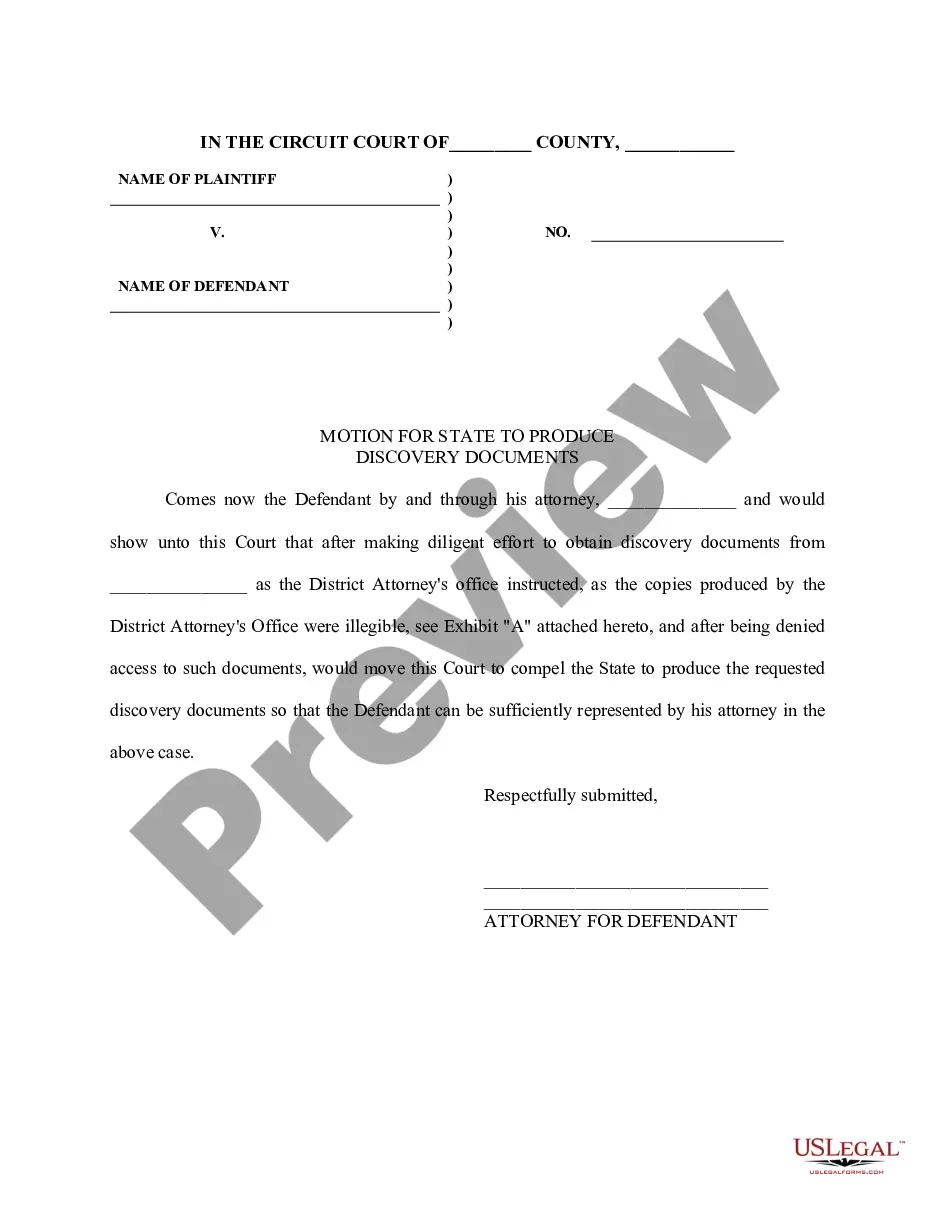
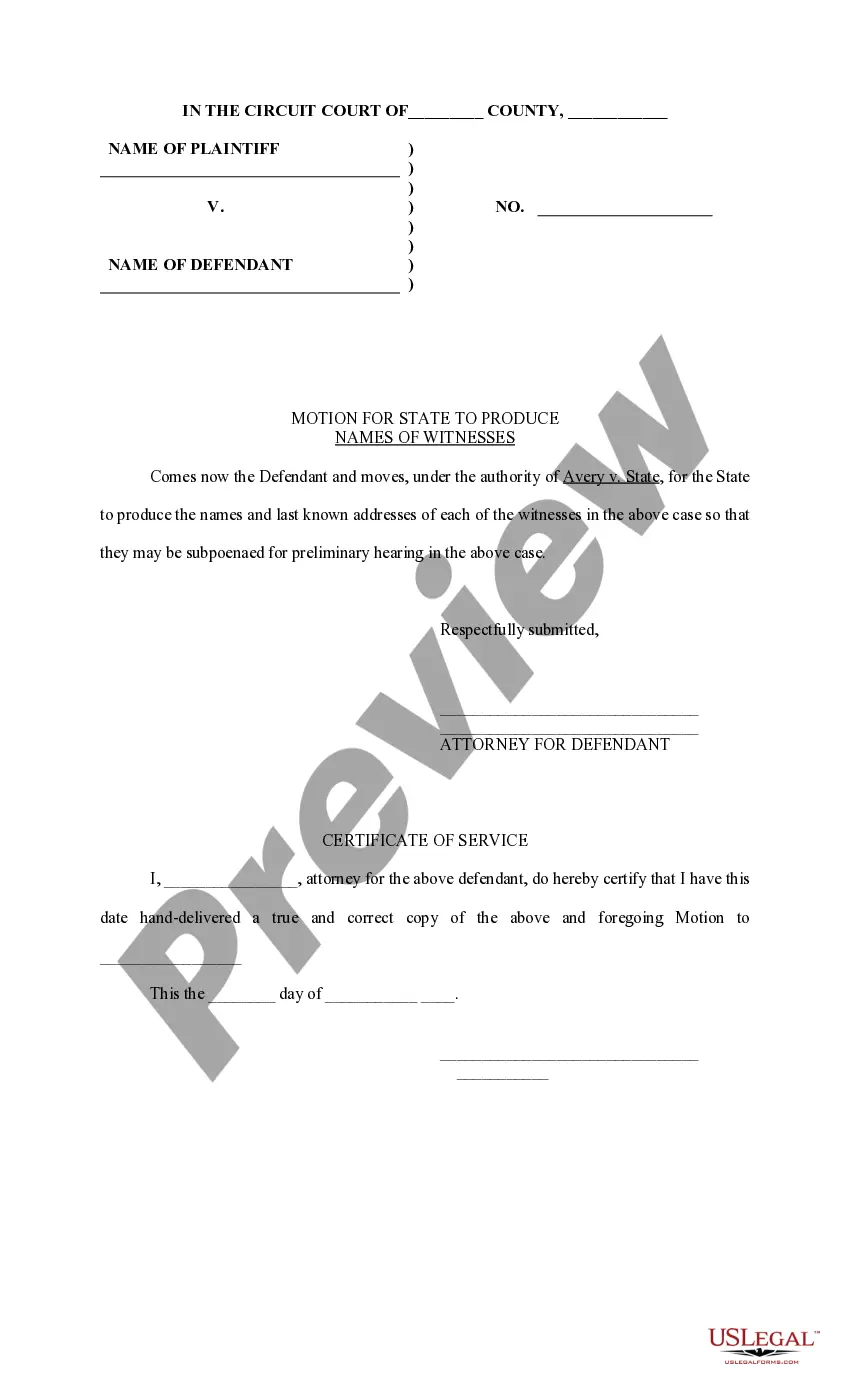
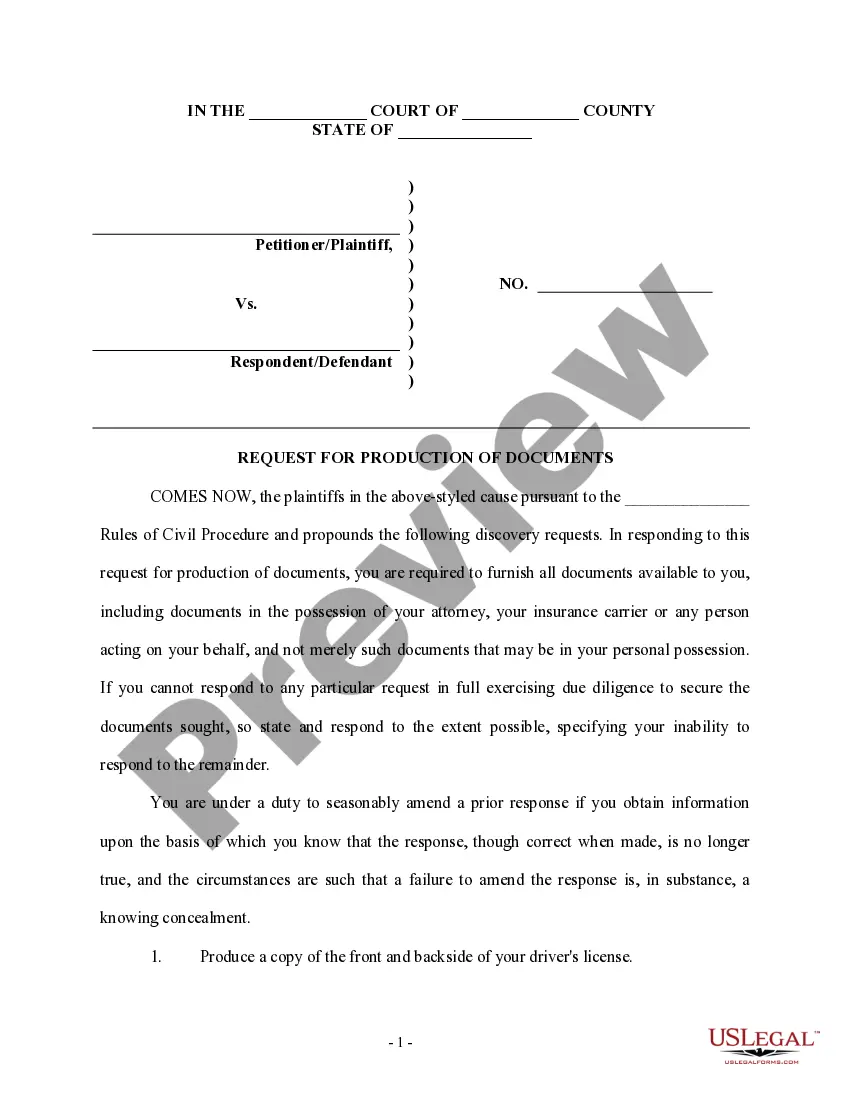
How to fill out Motion For State To Produce Discovery Document?
Creating legal documents from the ground up can occasionally feel a bit daunting.
Some situations may necessitate extensive research and significant expenses.
If you’re seeking a simpler and more economical method for preparing Discovery In Criminal Case Without Facebook or any other paperwork without the hassle of unnecessary obstacles, US Legal Forms is always available to assist.
Our online database of over 85,000 current legal forms covers nearly every element of your financial, legal, and personal affairs.
Verify the document preview and descriptions to confirm that you are selecting the correct form.
- With a few clicks, you can swiftly obtain state- and county-specific templates meticulously prepared by our legal experts.
- Utilize our platform whenever you require trustworthy and dependable services to easily find and download the Discovery In Criminal Case Without Facebook.
- If you're familiar with our services and have previously established an account, simply Log In to your account, find the template, and download it or re-download it any time from the My documents section.
- Not registered yet? No worries. It only takes a few minutes to create an account and browse the catalog.
- But before you proceed to download Discovery In Criminal Case Without Facebook, keep these pointers in mind.
Form popularity
FAQ
The discovery process typically begins with the filing of a request for evidence, followed by the exchange of documents between parties. Next, depositions may occur, allowing witnesses to provide sworn statements. Lastly, both sides analyze the gathered information to strategize for trial. Utilizing resources like USLegalForms can help guide you through each step of this important process.
Defendants in a criminal case benefit most from discovery, as it allows them to understand the evidence against them and prepare a robust defense. This process promotes transparency, ensuring that both parties have access to the same information. Ultimately, effective discovery in a criminal case without Facebook can level the playing field and improve the chances of a fair trial.
The hardest cases to win in court typically involve complex legal issues, significant evidence against the defendant, or cases with high emotional stakes. For instance, cases involving serious charges, such as homicide or sexual offenses, can be particularly challenging. In these situations, effective use of discovery in a criminal case without Facebook can be crucial in uncovering evidence that may help your defense.
Submitting a request for discovery in a criminal case without Facebook involves drafting a formal request that includes the details of your case and the evidence you wish to obtain. You can file this request with the court where your case is pending, and ensure that all involved parties receive a copy. Utilizing platforms like USLegalForms can help streamline this process by providing templates and guidance.
To make a discovery request in a criminal case without Facebook, you should first prepare a written motion outlining the specific evidence you seek. Then, file this motion with the court and serve it to the opposing party. It's important to be clear and concise about what you want, as this can influence the court's decision.
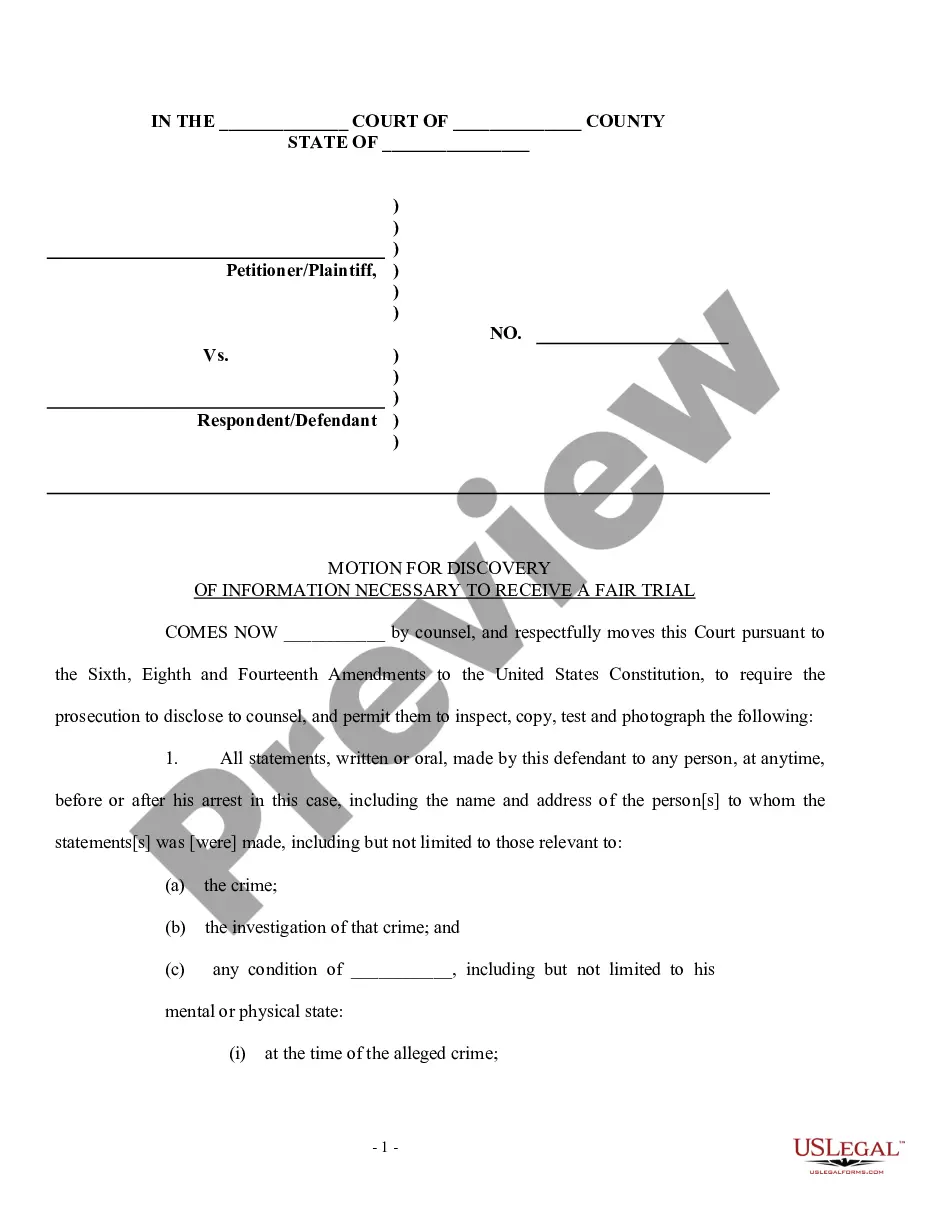
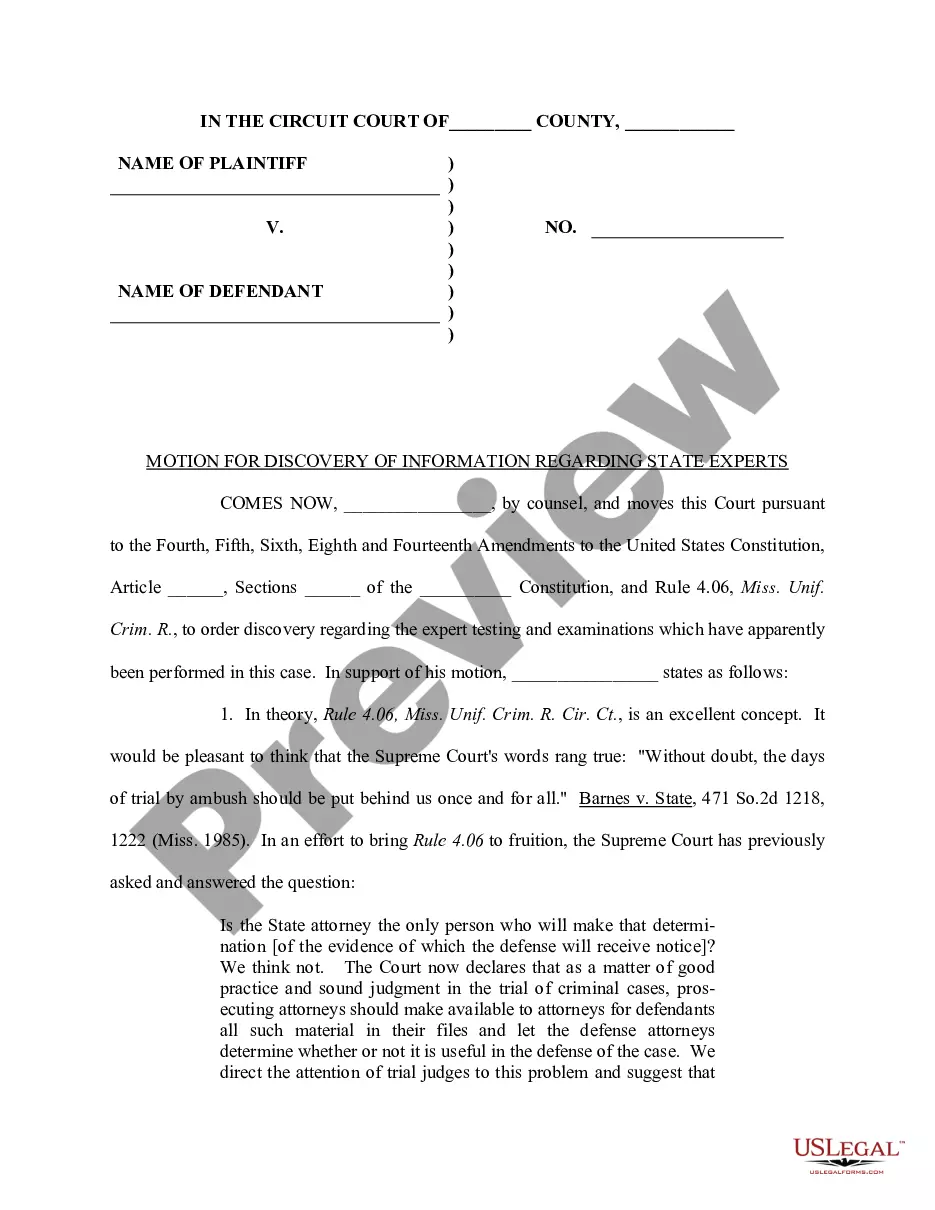
The discovery process in a criminal case refers to the pre-trial phase where both the defense and prosecution exchange evidence. This includes documents, witness statements, and other relevant materials. Understanding this process is crucial for building a strong defense strategy. If you want to learn more about how to navigate the discovery in a criminal case without Facebook, consider using resources like US Legal Forms to access necessary legal documentation.
Discovery reports help you identify categories that are highly-correlated to a defined audience, media, sites, or conversion (floodlight activities) events.
The duration of the discovery process in a criminal case can vary significantly depending on various factors, including the complexity of the case, the number of parties involved, and local court rules. Discovery typically takes several months, but it can extend to a year or more in complex cases.
Discovery is the formal process by which the parties to a case in court exchange information about the case. This includes information about the witnesses and evidence to be presented at trial. Its purpose is to make the parties aware of the evidence which may be presented at trial.
Evidence from social media platforms that could be admissible includes posts that the user made, shared, or liked. It could be an analysis of the friend list of that user. It could be photos or videos or a breakdown of what groups they are a member of on the platform.