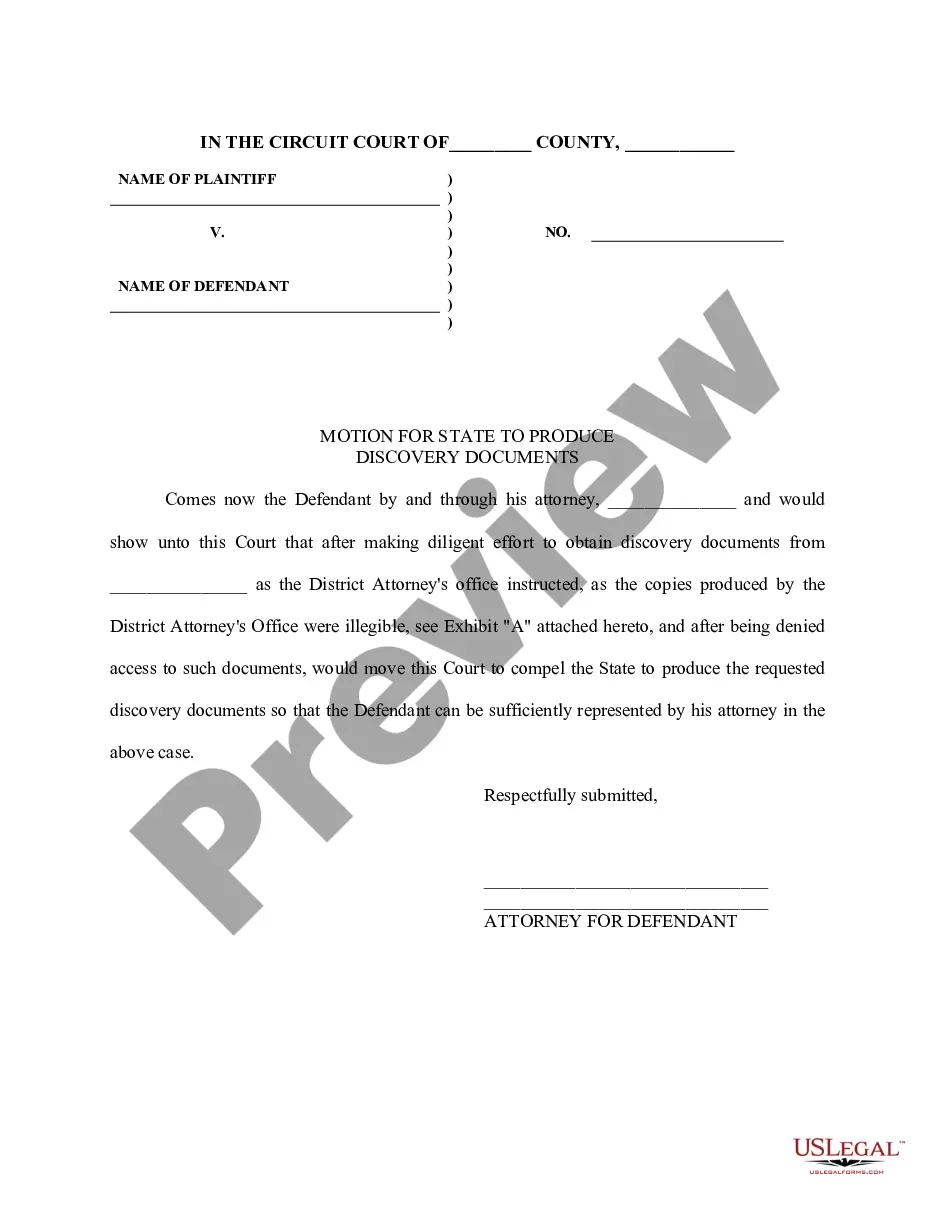
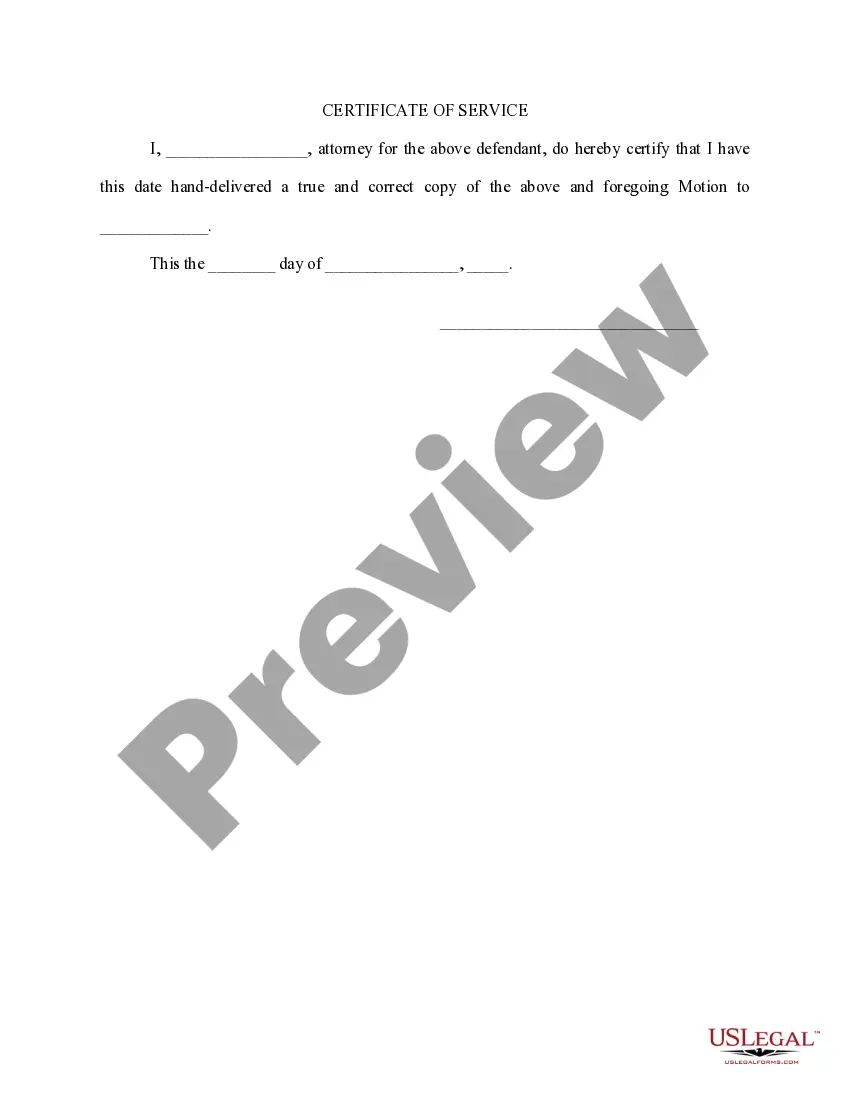
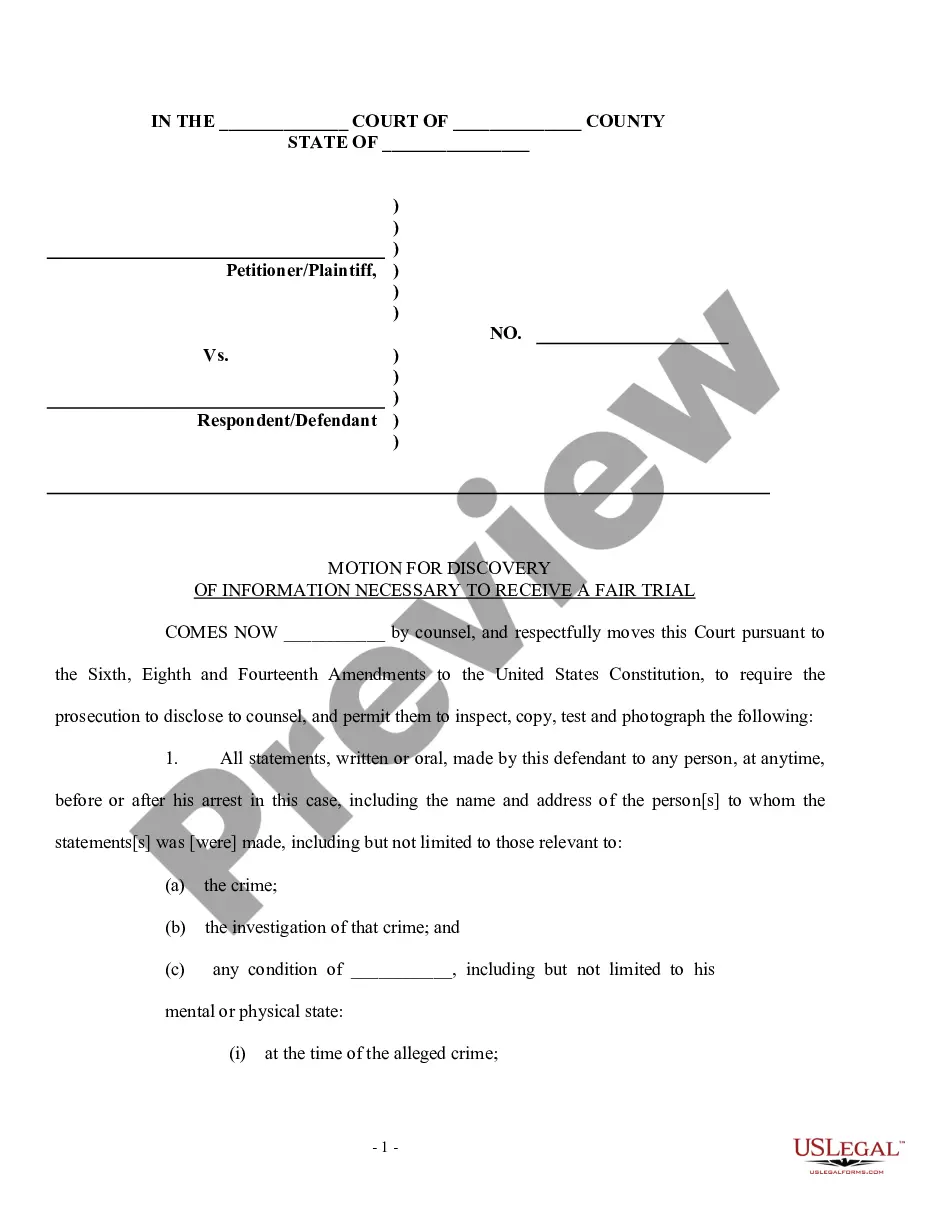
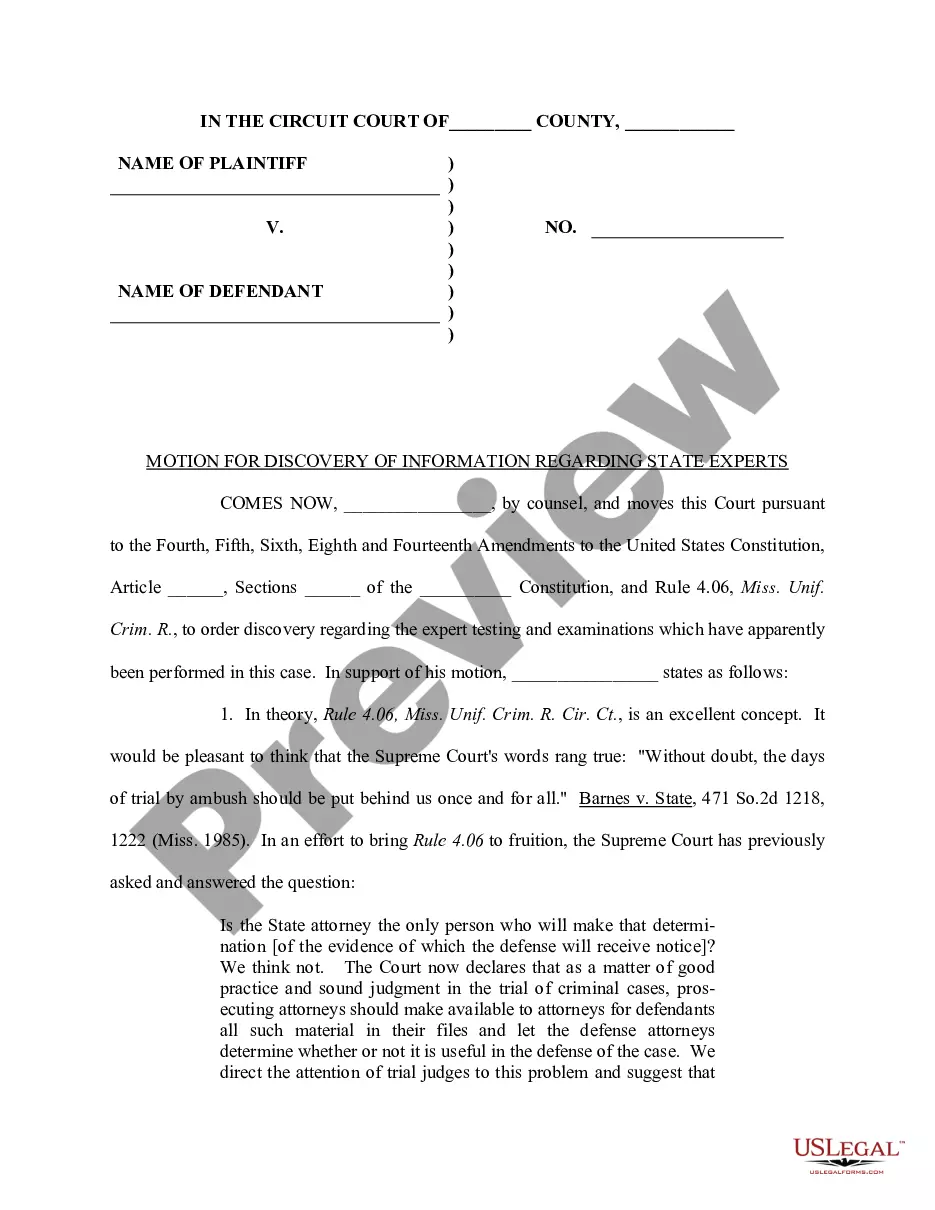
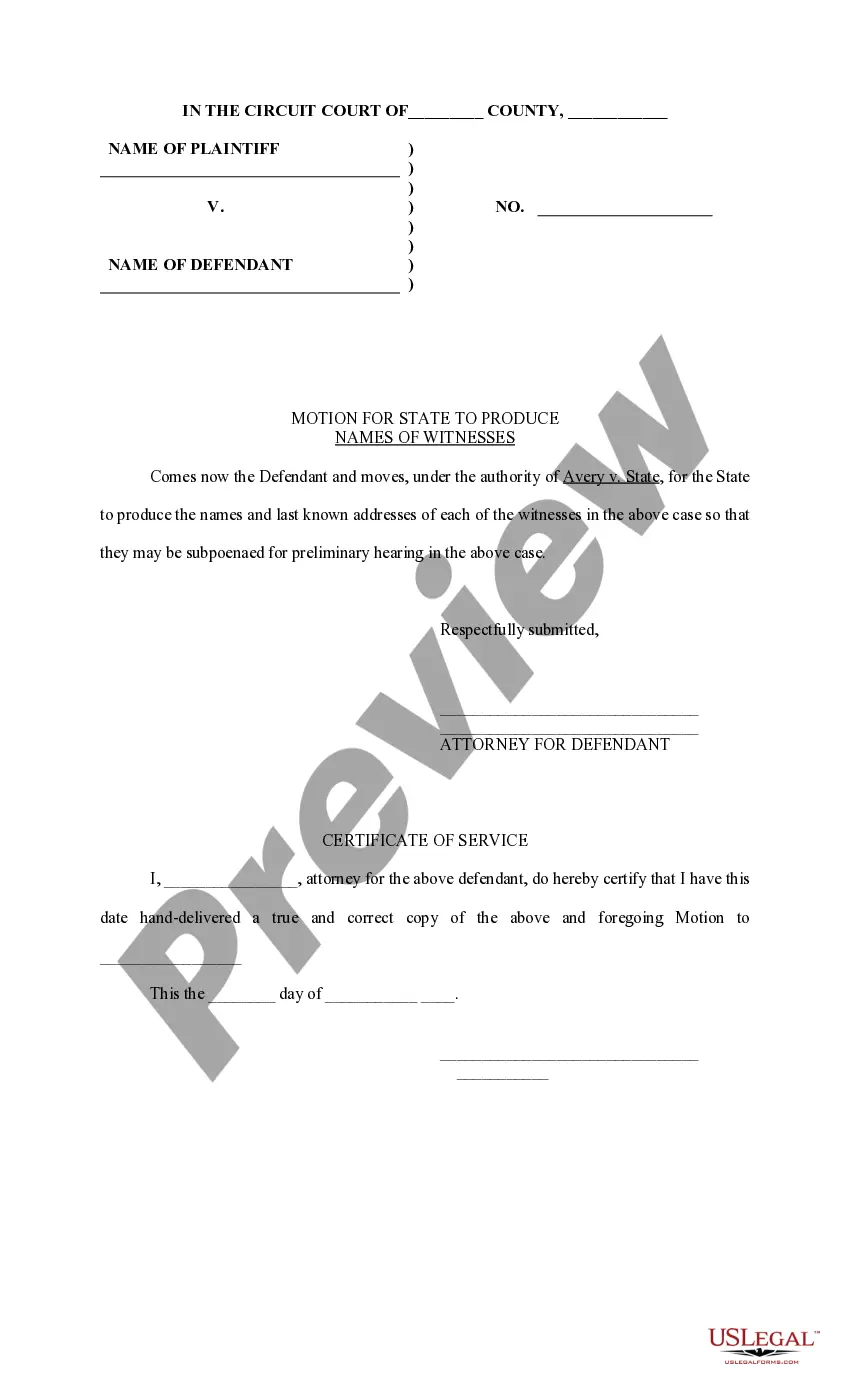
Criminal Motion For Discovery For Discovery
Description
Get your form ready online
Our built-in tools help you complete, sign, share, and store your documents in one place.
Make edits, fill in missing information, and update formatting in US Legal Forms—just like you would in MS Word.
Download a copy, print it, send it by email, or mail it via USPS—whatever works best for your next step.
Sign and collect signatures with our SignNow integration. Send to multiple recipients, set reminders, and more. Go Premium to unlock E-Sign.
If this form requires notarization, complete it online through a secure video call—no need to meet a notary in person or wait for an appointment.
We protect your documents and personal data by following strict security and privacy standards.

Make edits, fill in missing information, and update formatting in US Legal Forms—just like you would in MS Word.

Download a copy, print it, send it by email, or mail it via USPS—whatever works best for your next step.

Sign and collect signatures with our SignNow integration. Send to multiple recipients, set reminders, and more. Go Premium to unlock E-Sign.

If this form requires notarization, complete it online through a secure video call—no need to meet a notary in person or wait for an appointment.

We protect your documents and personal data by following strict security and privacy standards.
Looking for another form?








How to fill out Motion For State To Produce Discovery Document?
Legal administration can be perplexing, even for experienced professionals.
When you are seeking a Criminal Motion For Discovery and do not have the opportunity to search for the correct and current version, the procedures can be challenging.
US Legal Forms addresses any needs you might have, from personal to business documentation, all in one place.
Utilize advanced tools to complete and manage your Criminal Motion For Discovery.
Here are the steps to follow after obtaining the form you need: Ensure it is the correct form by previewing and reading its description, confirm that the sample is authorized in your state or county, click Buy Now when you are ready, choose a monthly subscription plan, select the format you need, and Download, fill out, sign, print, and send your documents. Take advantage of the US Legal Forms online library, backed by 25 years of expertise and reliability. Transform your daily document management into a seamless and user-friendly experience today.
- Access a valuable resource library of articles, guides, and manuals pertinent to your situation and needs.
- Save time and effort looking for the documents you require, and utilize US Legal Forms’ advanced search and Review feature to find and obtain your Criminal Motion For Discovery.
- If you possess a monthly subscription, Log In to your US Legal Forms account, locate the form, and acquire it.
- Check your My documents tab to review the documents you've previously downloaded and manage your files as desired.
- If this is your initial experience with US Legal Forms, create an account and gain unlimited access to all platform benefits.
- A comprehensive online form repository could be transformative for anyone looking to handle these matters efficiently.
- US Legal Forms stands as a leader in the realm of online legal documents, boasting over 85,000 state-specific legal forms available at your convenience.
- With US Legal Forms, you can access legal and business forms tailored to your state or county requirements.
Form popularity
FAQ
If the witness faces imminent prosecution but has a chance at an immunity agreement or plea deal, making a proffer could be the best option. This discussion should allow the defense counsel to share views on any potential motions to attack the indictment or any other perceived flaws in the government's case.
The plaintiff must respond by the deadline. There are different ways to make sure you get each kind of discovery if the plaintiff does not give it to you by the deadline. If the plaintiff does not respond to the court order, then you can file a Motion to Dismiss and you may win your case. Send a final request.
A Motion to Compel is a formal request to the Court to require a party or a non-party in a lawsuit to comply with a discovery request such as a request for production, request for admission, interrogatory, or subpoena.
In both civil and criminal cases, discovery involves investigating the evidence that the other side plans to present. It can prevent any surprises at trial, narrow the issues that are disputed, and often help the two sides reach a resolution out of court rather than going through a full trial.
Courts enforce their orders by imposing sanctions on a party who fails to comply. Sanctions can be monetary, such as requiring one party to pay the other parties attorneys' fees and/or imposing a monetary fine, or they can hamper a party's ability to put on their case.