Family Trust In Spanish
Description

Get your form ready online
Our built-in tools help you complete, sign, share, and store your documents in one place.
Make edits, fill in missing information, and update formatting in US Legal Forms—just like you would in MS Word.
Download a copy, print it, send it by email, or mail it via USPS—whatever works best for your next step.
Sign and collect signatures with our SignNow integration. Send to multiple recipients, set reminders, and more. Go Premium to unlock E-Sign.
If this form requires notarization, complete it online through a secure video call—no need to meet a notary in person or wait for an appointment.
We protect your documents and personal data by following strict security and privacy standards.

Make edits, fill in missing information, and update formatting in US Legal Forms—just like you would in MS Word.

Download a copy, print it, send it by email, or mail it via USPS—whatever works best for your next step.

Sign and collect signatures with our SignNow integration. Send to multiple recipients, set reminders, and more. Go Premium to unlock E-Sign.

If this form requires notarization, complete it online through a secure video call—no need to meet a notary in person or wait for an appointment.

We protect your documents and personal data by following strict security and privacy standards.
Looking for another form?



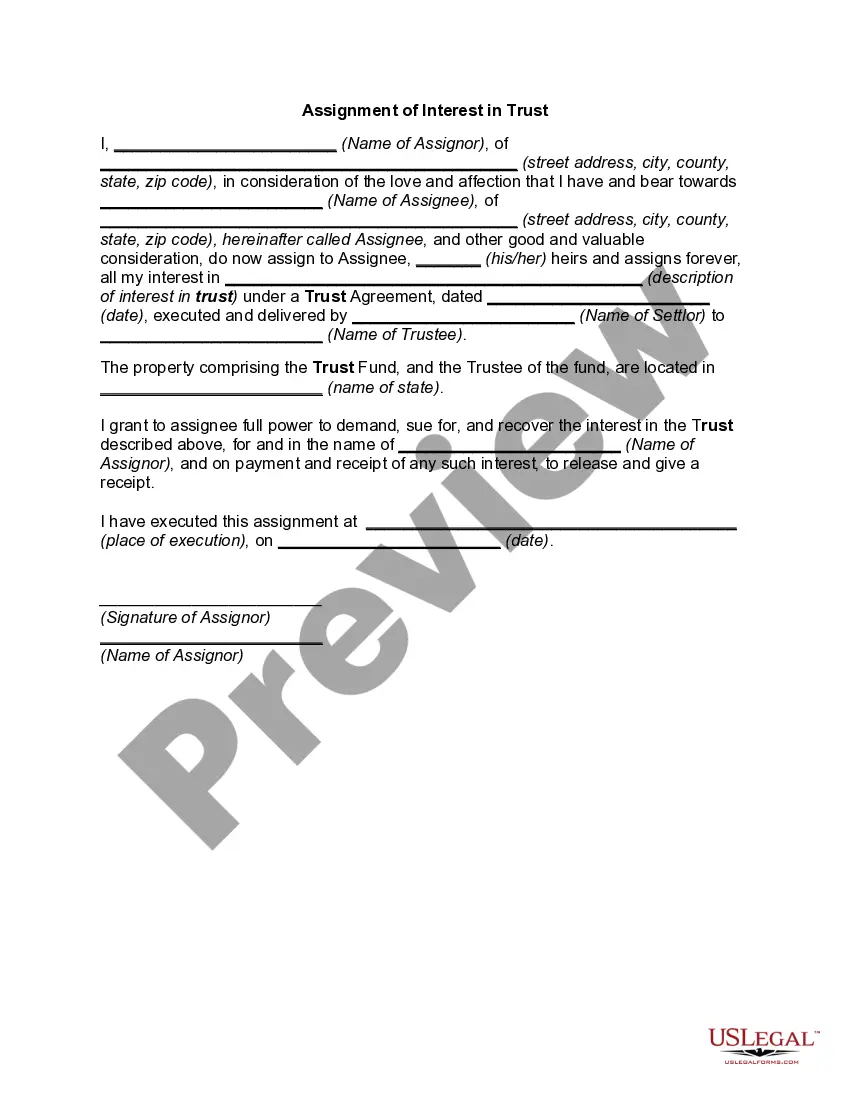

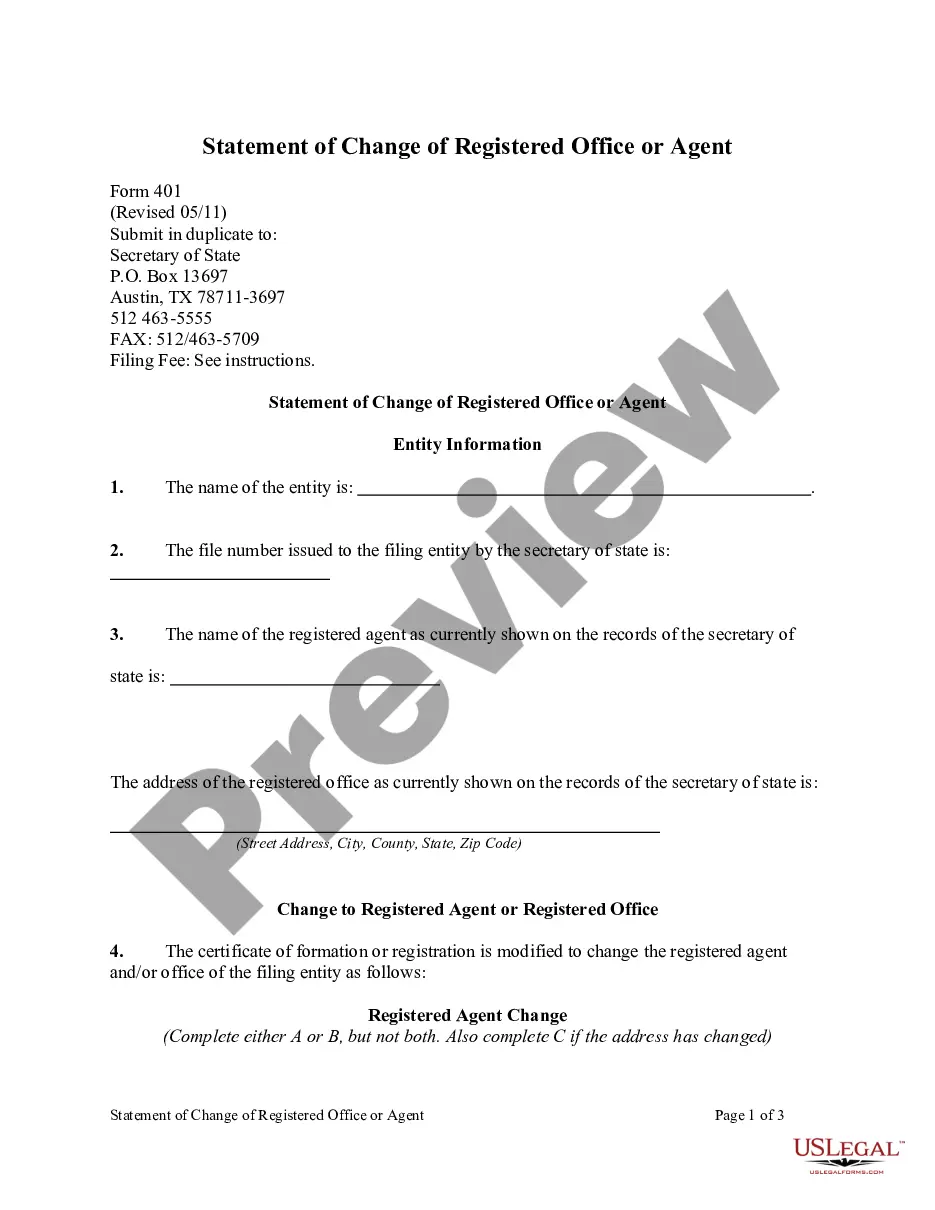
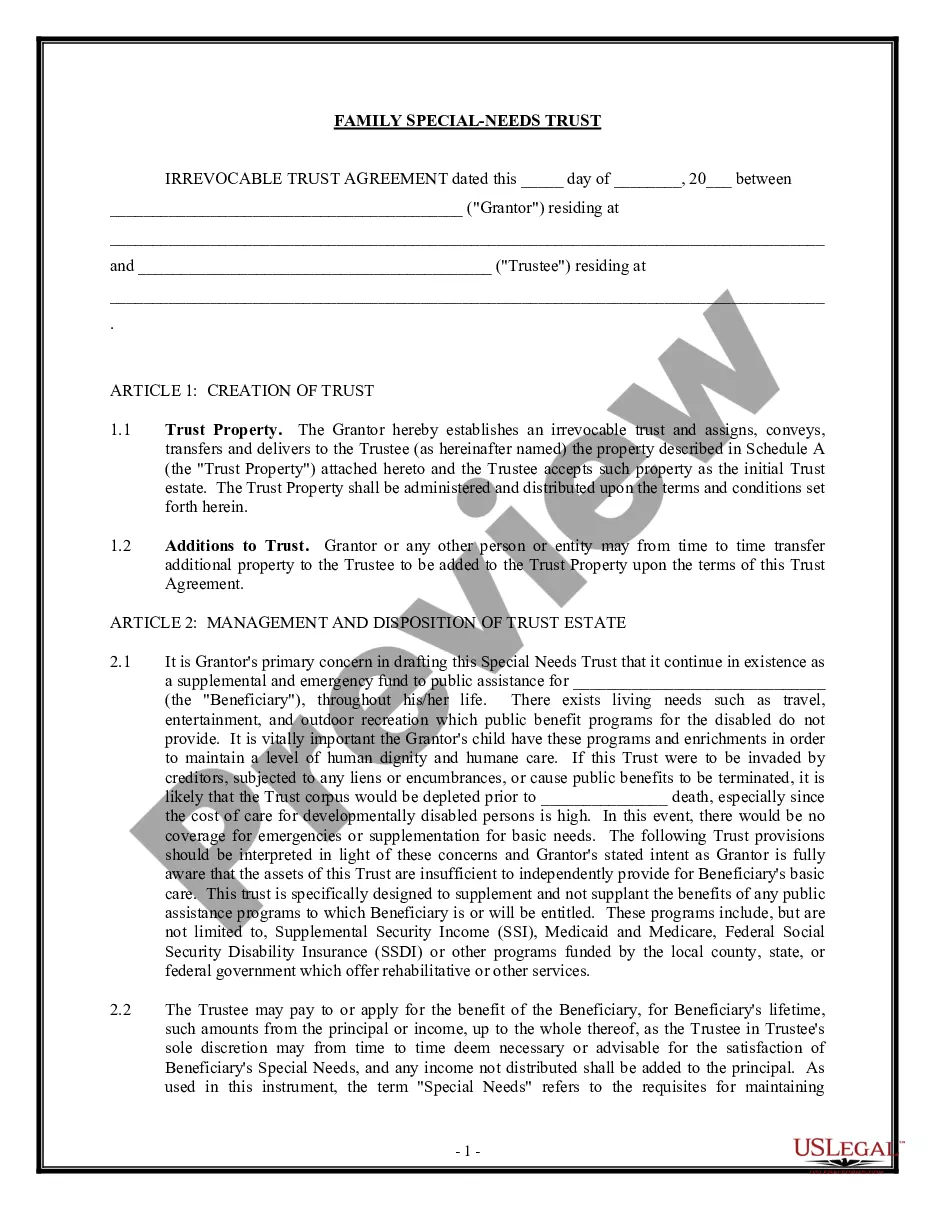
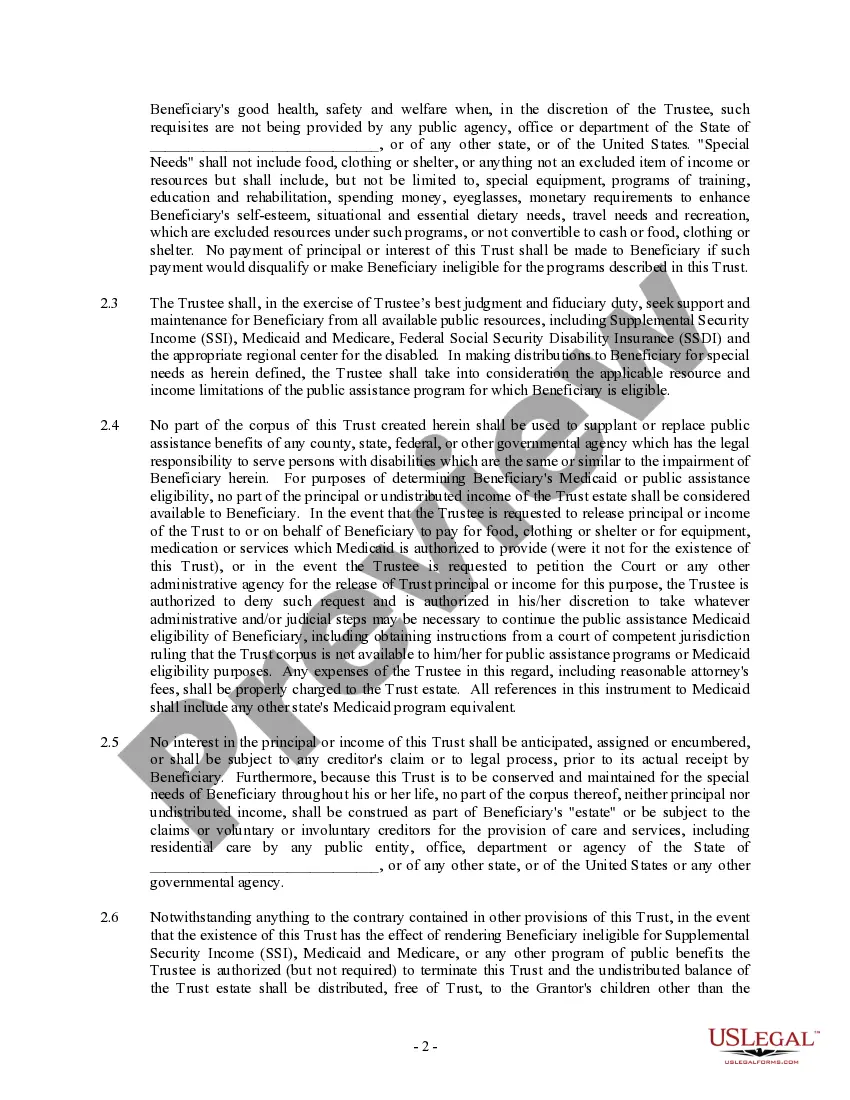
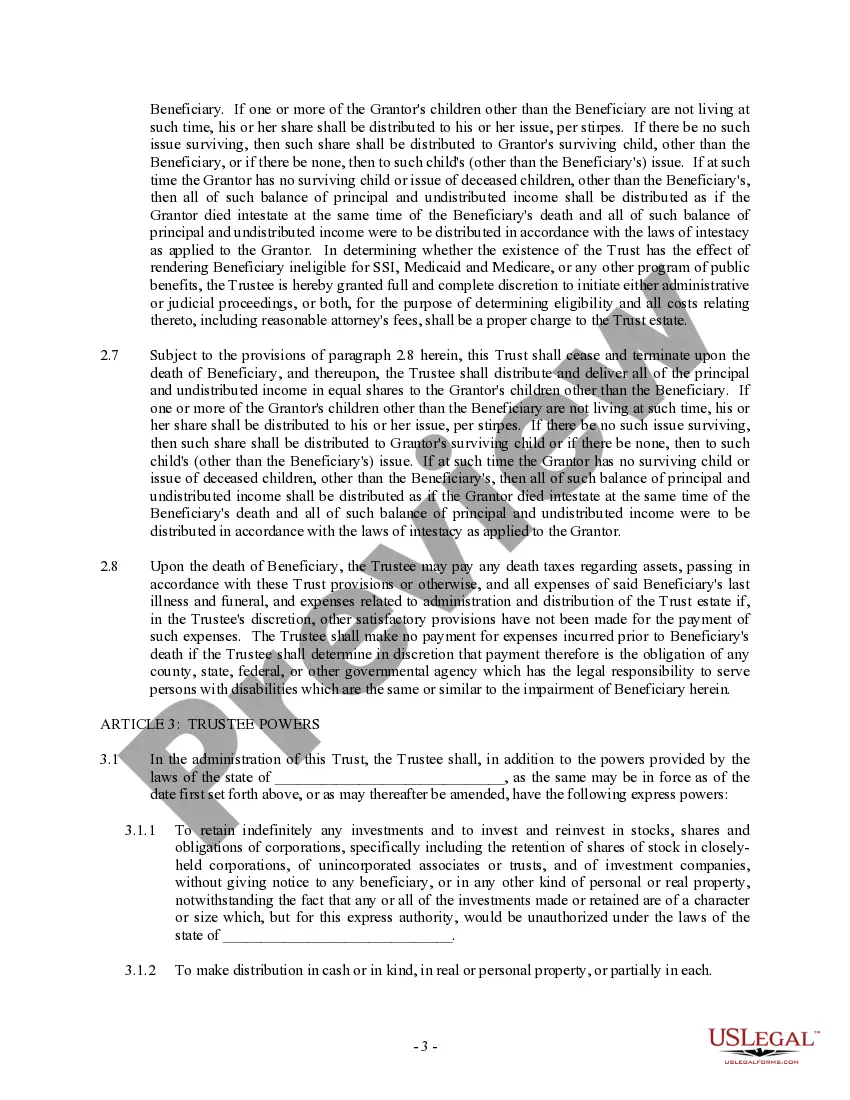
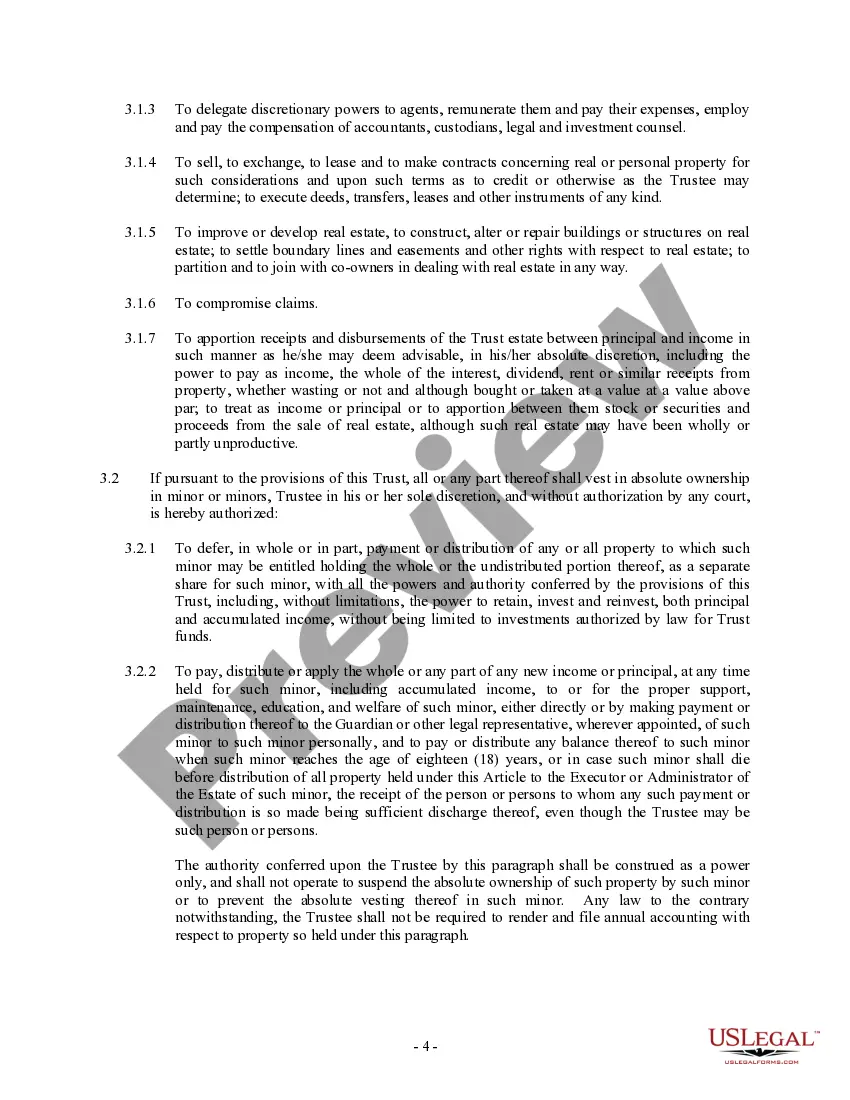
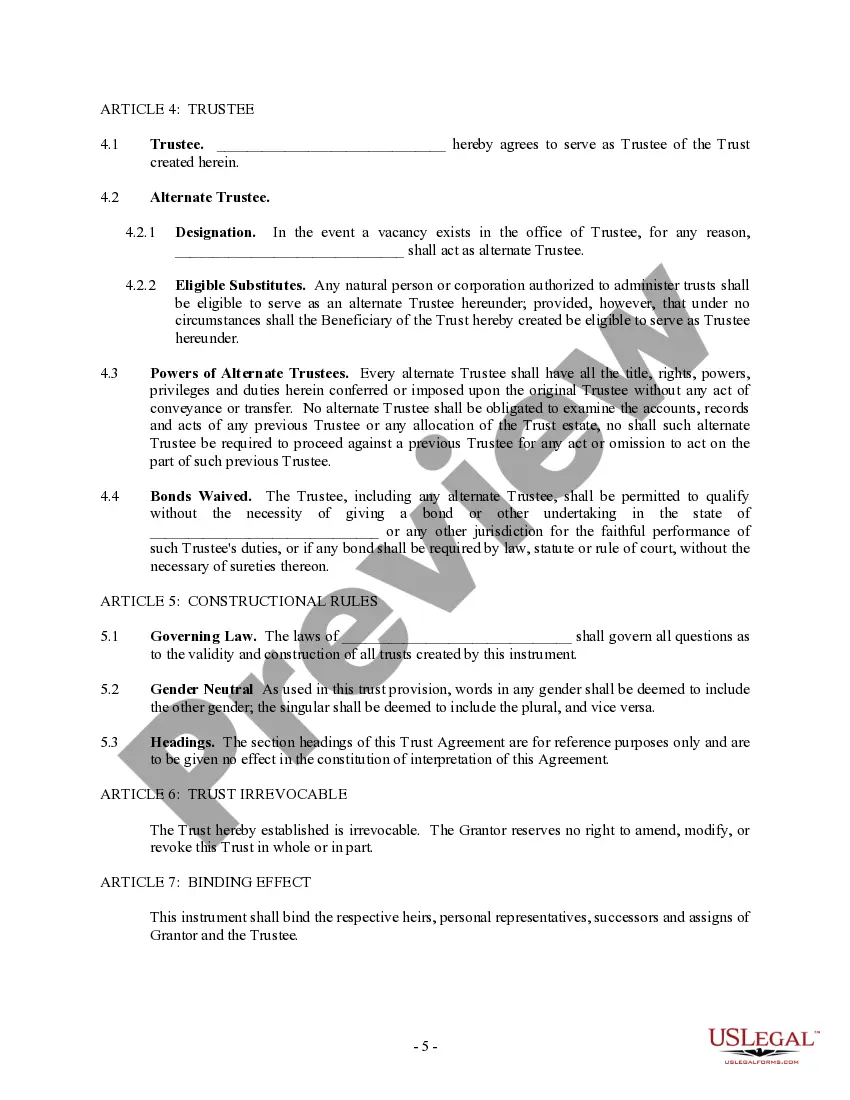
How to fill out Trust Agreement - Family Special Needs?
Regardless of whether for commercial reasons or personal issues, everyone must confront legal matters at some point in their lives.
Filling out legal paperwork demands meticulous care, starting from selecting the correct form specimen. For instance, if you choose an incorrect variant of a Family Trust In Spanish, it will be rejected upon submission.
With an extensive catalog from US Legal Forms available, you won’t waste time searching for the right template across the web. Make use of the library’s easy navigation to find the appropriate template for any situation.
- Obtain the template you require by utilizing the search bar or browsing the catalog.
- Review the form’s description to confirm it aligns with your circumstances, state, and area.
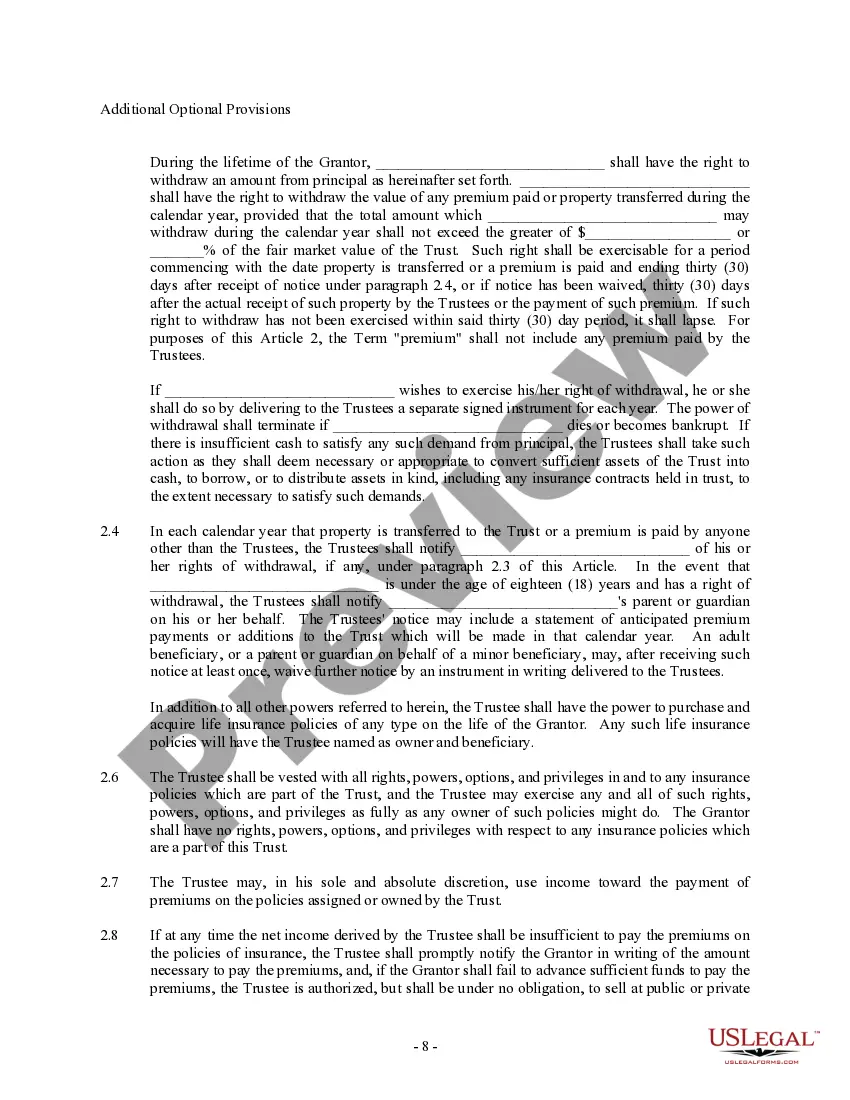
- Click on the form’s preview to examine it.
- If it is the wrong document, return to the search function to locate the Family Trust In Spanish template you need.
- Download the template once it meets your specifications.
- If you already possess a US Legal Forms account, simply click Log in to access previously saved documents in My documents.
- If you have not registered yet, you can download the form by selecting Buy now.
- Select the appropriate pricing option.
- Complete the account creation form.
- Choose your payment method: a bank card or PayPal account can be used.
- Select the file format you prefer and download the Family Trust In Spanish.
- Once downloaded, you can fill out the form using editing software or print it out and complete it by hand.
Form popularity
FAQ
To establish a Spanish trust, you start by drafting a declaration of trust, specifying the terms and designating the parties involved. This document should comply with Spanish law and be signed by all relevant parties. Consulting a professional experienced in family trust in Spanish can help navigate this process smoothly.
Spain does not automatically recognize US trusts due to differing legal systems. However, certain provisions may allow for the acceptance of US trusts under specific conditions. It's advisable to seek legal guidance to ensure your family trust in Spanish operates effectively within both jurisdictions.
A trust document becomes legally binding when it clearly outlines the terms, includes the necessary signatures, and complies with state laws. Key components include the identification of the trustor, trustee, and beneficiaries, along with a detailed list of assets. Additionally, ensuring it meets requirements for a family trust in Spanish enhances its functionality and acceptance.
A family trust name typically reflects the family's identity, often incorporating the family surname. For instance, 'The Smith Family Trust' or 'Gonzalez Family Legacy Trust' are common examples. Choosing a meaningful name can enhance the trust's significance, especially if you intend to highlight its purpose in your family trust in Spanish.
Yes, Spanish trusts operate under a different legal framework compared to the US. While Spain recognizes certain aspects of trust law, specific regulations govern their use. Therefore, it's crucial to consult with a legal expert familiar with the Spanish system when establishing your family trust in Spanish.
To structure a family trust, you begin by defining its purpose and goals. Next, you choose a trustee, who will manage the trust, and appoint beneficiaries, who will benefit from the trust's assets. Finally, you must create a trust document, specifying all terms clearly, ensuring it aligns with the family trust in Spanish if applicable.
A living trust is established during a person's lifetime and can be altered or revoked, while a family trust often specifies beneficiaries within a family context. Both serve the purpose of managing assets, but a family trust focuses specifically on familial relations and inheritance. Understanding these differences is crucial when setting up a family trust in Spanish, as it allows you to choose the best option for your family's needs.
A family trust is a legal arrangement where assets are held by a trustee for the benefit of family members. This type of trust is commonly used to manage and protect family wealth, providing a way to control how assets are distributed after death. If you're considering a family trust in Spanish, it ensures that your family's financial legacy is preserved according to your wishes.
The word for trust in Spanish is 'fideicomiso.' Understanding this term is essential for those looking to navigate family financial planning in a Spanish-speaking context. If you are exploring a family trust in Spanish, knowing the correct terminology will help you communicate effectively and make informed decisions.
Yes, trusts may receive a Form 1099 if they earn income that requires reporting. This form provides information on the income earned, which trusts must report on their tax returns. If you manage a family trust in Spanish, be sure to track all income accurately, and consider leveraging Uslegalforms for insights and tools to manage your trust obligations effectively.