Sole Proprietorship For Trading
Description
Get your form ready online
Our built-in tools help you complete, sign, share, and store your documents in one place.
Make edits, fill in missing information, and update formatting in US Legal Forms—just like you would in MS Word.
Download a copy, print it, send it by email, or mail it via USPS—whatever works best for your next step.
Sign and collect signatures with our SignNow integration. Send to multiple recipients, set reminders, and more. Go Premium to unlock E-Sign.
If this form requires notarization, complete it online through a secure video call—no need to meet a notary in person or wait for an appointment.
We protect your documents and personal data by following strict security and privacy standards.

Make edits, fill in missing information, and update formatting in US Legal Forms—just like you would in MS Word.

Download a copy, print it, send it by email, or mail it via USPS—whatever works best for your next step.

Sign and collect signatures with our SignNow integration. Send to multiple recipients, set reminders, and more. Go Premium to unlock E-Sign.

If this form requires notarization, complete it online through a secure video call—no need to meet a notary in person or wait for an appointment.

We protect your documents and personal data by following strict security and privacy standards.
Looking for another form?





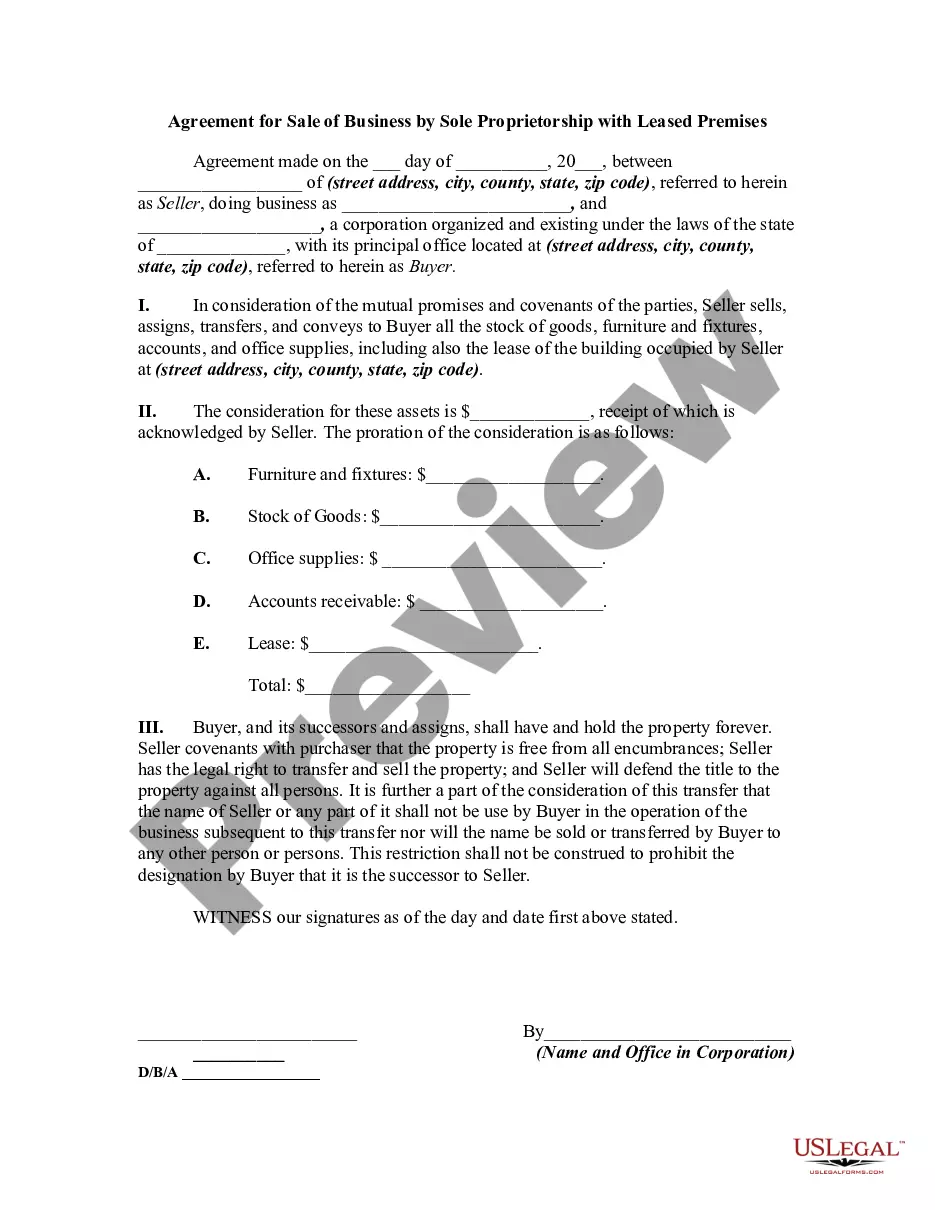
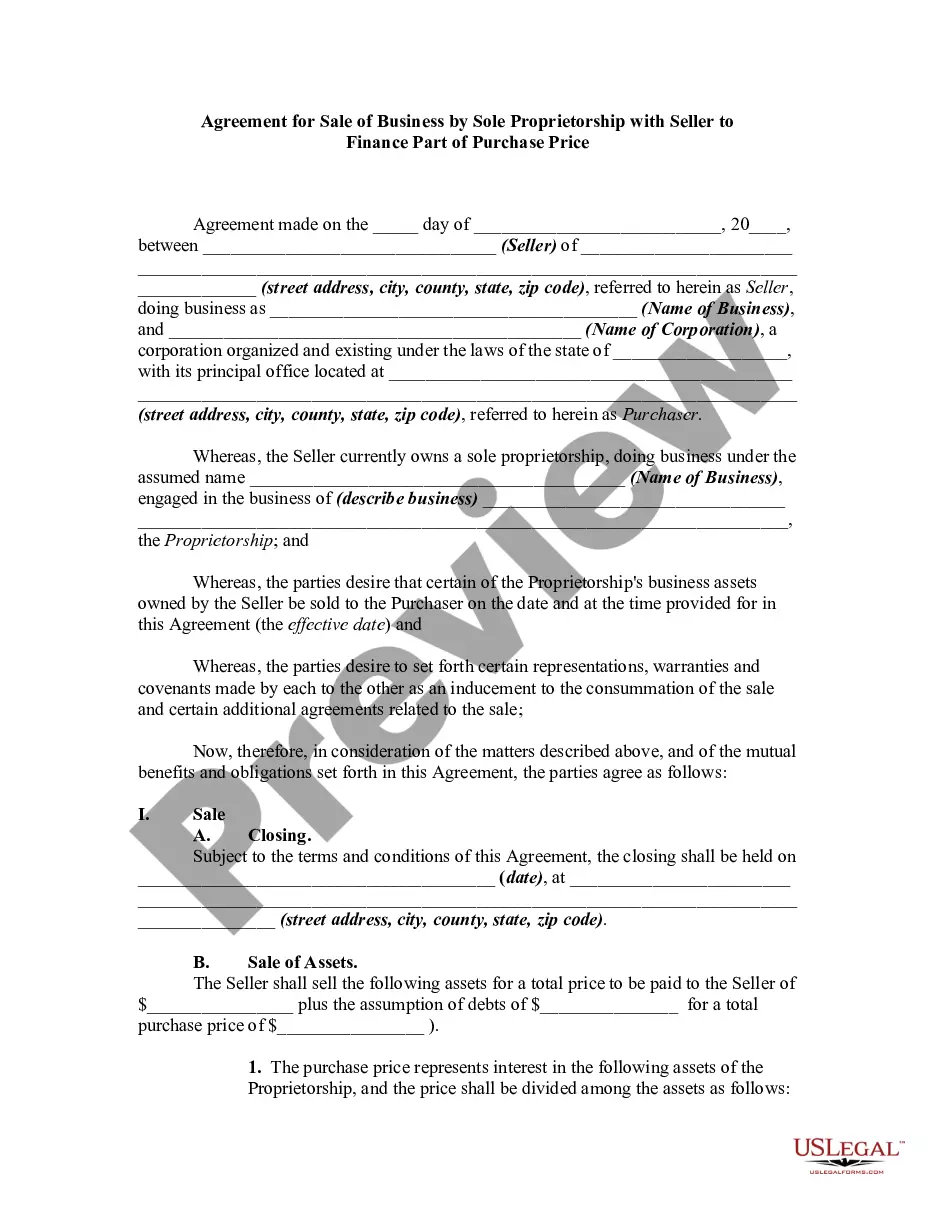
How to fill out Agreement For Sale Of Business By Sole Proprietorship With Leased Premises?
- Log in to your US Legal Forms account if you're a returning user. Ensure your subscription is active before proceeding to download the necessary form template.
- If you're a first-time user, begin by exploring the Preview mode to understand the form's details. Confirm that it fits your local jurisdiction's requirements.
- Should you need a different template, utilize the Search tab to find a more suitable option that aligns with your trading needs.
- Once you find the appropriate document, select the Buy Now button to choose your desired subscription plan. Creating an account will give you access to the comprehensive library.
- Complete your purchase by entering your payment information, either through credit card or PayPal, to finalize your subscription.
- After payment, download the form and save it on your device. You'll also have access to it anytime through the My Forms section of your profile.
With US Legal Forms, individuals and attorneys can execute legal documents efficiently using a library that offers over 85,000 fillable and editable legal forms, surpassing competitors in variety and cost-effectiveness.
Take charge of your sole proprietorship today by visiting US Legal Forms and streamline your legal processes. Don't wait—start your journey to successful trading now!
Form popularity
FAQ
A sole proprietorship for trading has several disadvantages to consider. First, personal liability means you are responsible for all business debts. Second, raising funds can be challenging since you can't sell stock or seek investors easily. Third, the business relies heavily on the owner's expertise, which can limit scalability. Fourth, continuity may be an issue, as the business may cease if the owner can no longer operate. Lastly, tax implications can be unfavorable during higher income periods.
Trading can be conducted as a sole proprietorship, allowing individuals to operate independently and retain all profits. This structure suits those who desire full control over their activities without the complexities of establishing a corporation. However, it's essential to understand the risks, including personal liability for any debts incurred. Many traders utilize the sole proprietorship for trading due to its straightforward approach.
The best business structure for trading often depends on your goals and resources. While a sole proprietorship for trading offers simplicity and direct control, forming an LLC or corporation can provide liability protection and tax benefits. Assess your situation carefully to determine which structure aligns with your trading ambitions. Consulting resources like US Legal Forms can guide you in making the right choice.
A sole proprietorship cannot be publicly traded. This business structure is owned and managed by one individual, which limits its ability to issue stock to the public. If you seek to trade shares, consider transitioning to a corporation or another structure. Choosing a more complex business model can facilitate public trading opportunities.
Yes, as a sole trader, you can obtain a trade account. This account enables you to buy and sell assets for your trading activities under your sole proprietorship for trading. Many brokerage firms welcome sole traders, and obtaining a trade account can facilitate your investment processes. If you need assistance with setup or documentation, platforms like uslegalforms can provide helpful resources.
Certainly, day trading can function effectively as a sole proprietorship for trading. This setup allows you to manage your trading activities without the complexities of formal business structures. Furthermore, operating as a sole proprietor simplifies tax reporting since profits and losses are reported on your personal tax return. Just ensure you stay informed about regulations specific to day trading.
Yes, as a sole trader operating under a sole proprietorship for trading, you can choose a trading name. This name can help enhance your brand identity and market your services more effectively. However, it’s essential to ensure that your chosen name is not already in use or trademarked by another business. Registering your trading name properly can also provide an additional layer of protection.
The primary difference between a sole proprietorship and an S Corp revolves around structure and taxation. A sole proprietorship for trading is the simplest form of business setup, where you own and operate your business without the need for formal incorporation. In contrast, an S Corp is a separate legal entity that offers limited liability protection and allows for potential tax benefits. Understanding these differences can help you choose the best option for your trading activities.
You can absolutely trade as a sole proprietor, and this structure offers you many advantages. As a sole proprietor for trading, you retain full control over your business decisions and profits. This model also simplifies tax reporting and helps you avoid the complexities often associated with partnership or corporate structures. If you're unsure about the setup, platforms like U.S. Legal Forms can provide valuable resources and assistance.
Setting yourself up as a sole proprietorship for trading is straightforward. Begin by selecting your business name and ensuring it complies with state laws. Next, register your name if required, and obtain any necessary licenses or permits. Managing your finances is essential; consider using U.S. Legal Forms to guide you through the process and ensure legal compliance.