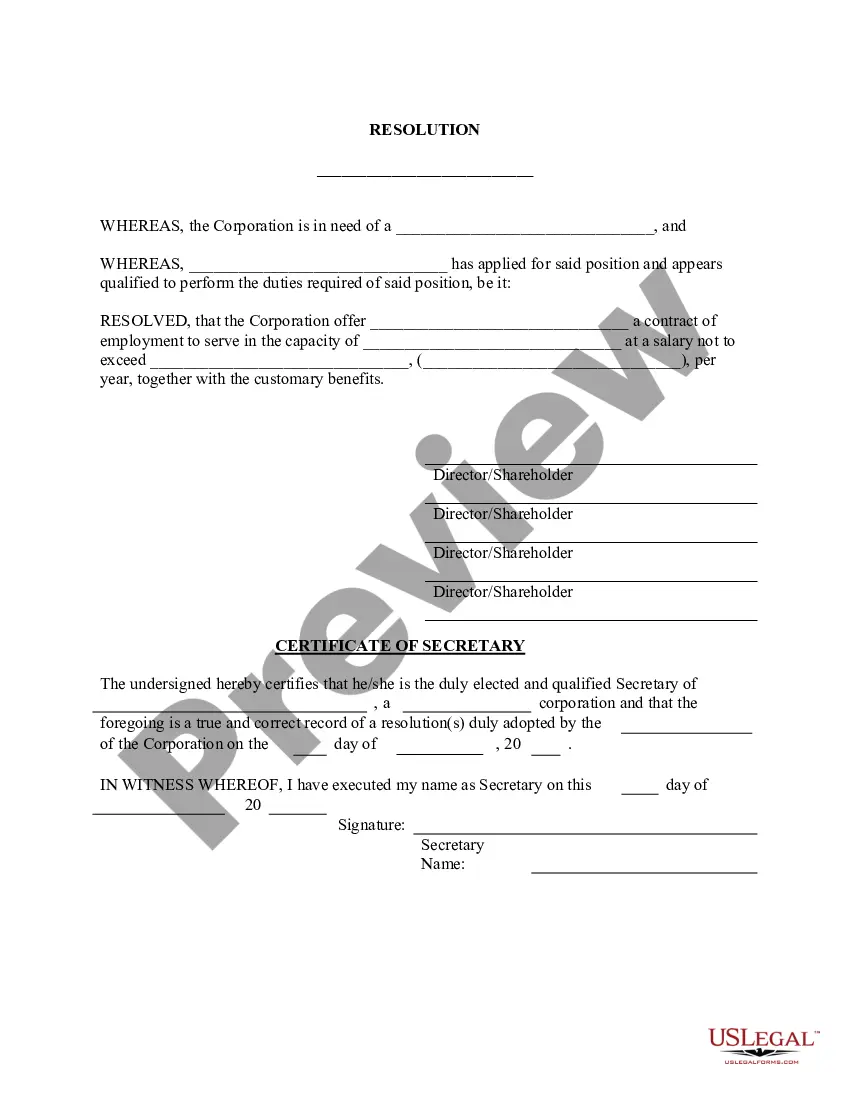
Chief Officer For Business
Description

Get your form ready online
Our built-in tools help you complete, sign, share, and store your documents in one place.
Make edits, fill in missing information, and update formatting in US Legal Forms—just like you would in MS Word.
Download a copy, print it, send it by email, or mail it via USPS—whatever works best for your next step.
Sign and collect signatures with our SignNow integration. Send to multiple recipients, set reminders, and more. Go Premium to unlock E-Sign.
If this form requires notarization, complete it online through a secure video call—no need to meet a notary in person or wait for an appointment.
We protect your documents and personal data by following strict security and privacy standards.

Make edits, fill in missing information, and update formatting in US Legal Forms—just like you would in MS Word.

Download a copy, print it, send it by email, or mail it via USPS—whatever works best for your next step.

Sign and collect signatures with our SignNow integration. Send to multiple recipients, set reminders, and more. Go Premium to unlock E-Sign.

If this form requires notarization, complete it online through a secure video call—no need to meet a notary in person or wait for an appointment.

We protect your documents and personal data by following strict security and privacy standards.
Looking for another form?

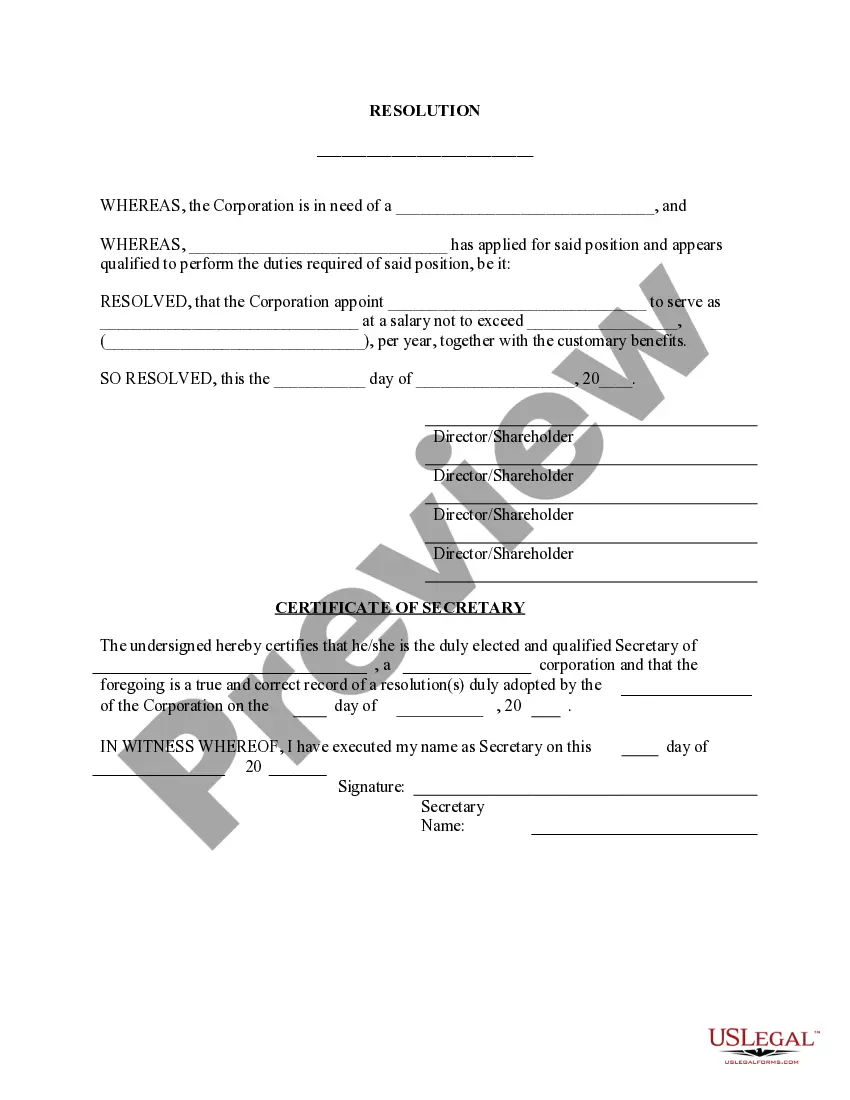
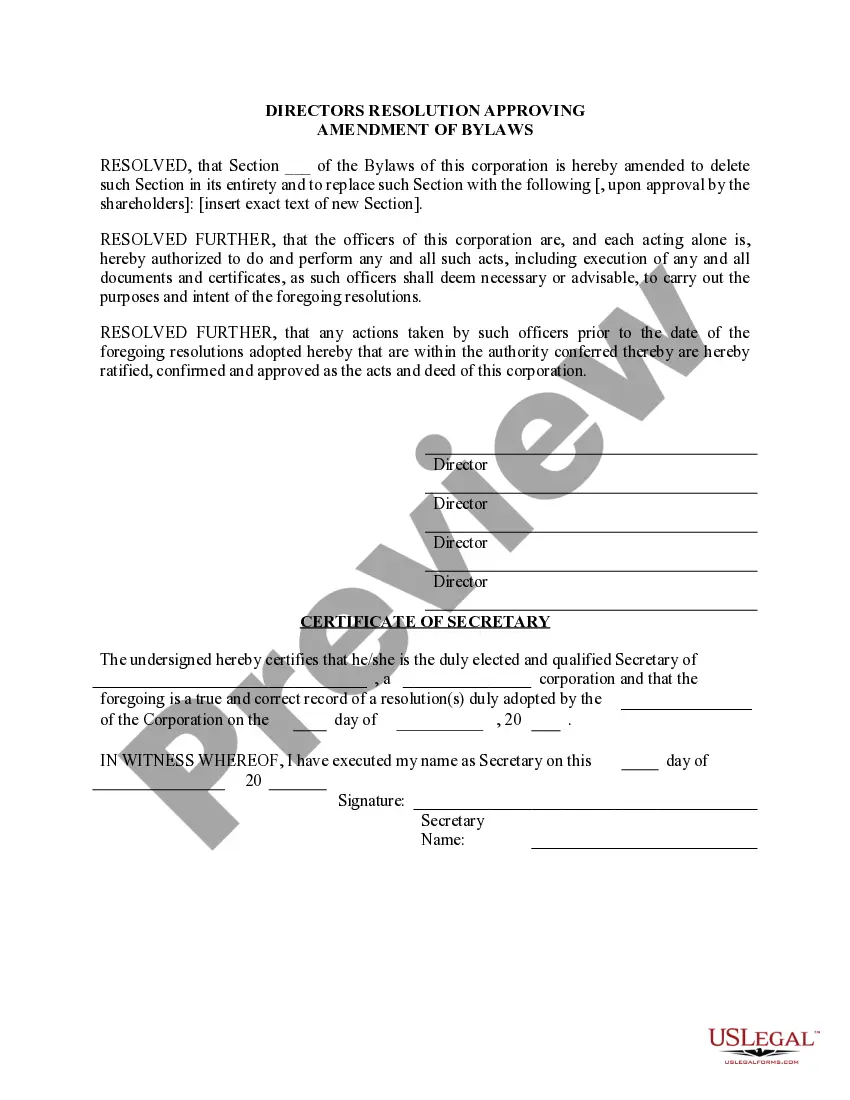
How to fill out Appointment Of Director Or Officer - Resolution Form - Corporate Resolutions?
The Chief Officer For Business you see on this page is a versatile legal template crafted by expert lawyers in accordance with federal and local laws and regulations. For over 25 years, US Legal Forms has supplied individuals, organizations, and attorneys with more than 85,000 validated, state-specific forms for any business and personal situation. It’s the quickest, simplest and most reliable way to acquire the documentation you require, as the service ensures bank-level data security and anti-malware safeguards.
Acquiring this Chief Officer For Business will require just a few easy steps.
Subscribe to US Legal Forms to have validated legal templates for all of life’s scenarios at your fingertips.
- Search for the document you need and review it. Browse through the sample you searched and preview it or examine the form description to ensure it meets your requirements. If it does not, utilize the search bar to find the correct one. Click Buy Now once you have found the template you need.
- Subscribe and Log In. Select the pricing option that works for you and create an account. Use PayPal or a credit card to make a rapid payment. If you already possess an account, Log In and verify your subscription to proceed.
- Obtain the fillable template. Choose the format you desire for your Chief Officer For Business (PDF, Word, RTF) and save the sample on your device.
- Fill out and sign the paperwork. Print the template to complete it manually. Alternatively, employ an online multifunctional PDF editor to quickly and accurately fill out and sign your form with a legally-binding electronic signature.
- Download your paperwork again. Use the same document again whenever necessary. Access the My documents tab in your profile to redownload any previously saved forms.
Form popularity
FAQ
Chief officer positions, also called C-level or C-suite positions, are senior executive roles in an organization. These positions are at the top of a company's hierarchy. Professionals in these roles make important business decisions related to a company's growth and success.
This executive professional is responsible for the company's overall success. They may create strategies, set goals and collaborate with an executive board. They may also be a part of the board of directors, which means they can vote on the company's direction and growth strategies.
level executives, or ?chief? executives, hold the highest strategic roles within a company. These roles include the EO (hief Executive Officer), OO (hief Operating Officer), FO (hief Financial Officer), and others. They are responsible for overseeing major company decisions, operations, and overall direction.
CBOs and COOs use their strategic thinking abilities to make decisions that positively impact the company. A major difference between these roles is that a CBO focuses on a company's financial aspects, while a COO oversees its daily operations. Consequently, CBOs may require strong financial and accounting skills.
Is CBO the same as CEO? The chief business officer is responsible for the sales and marketing aspects of the business while the CEO takes care of the overall operations of the company.