General Partner
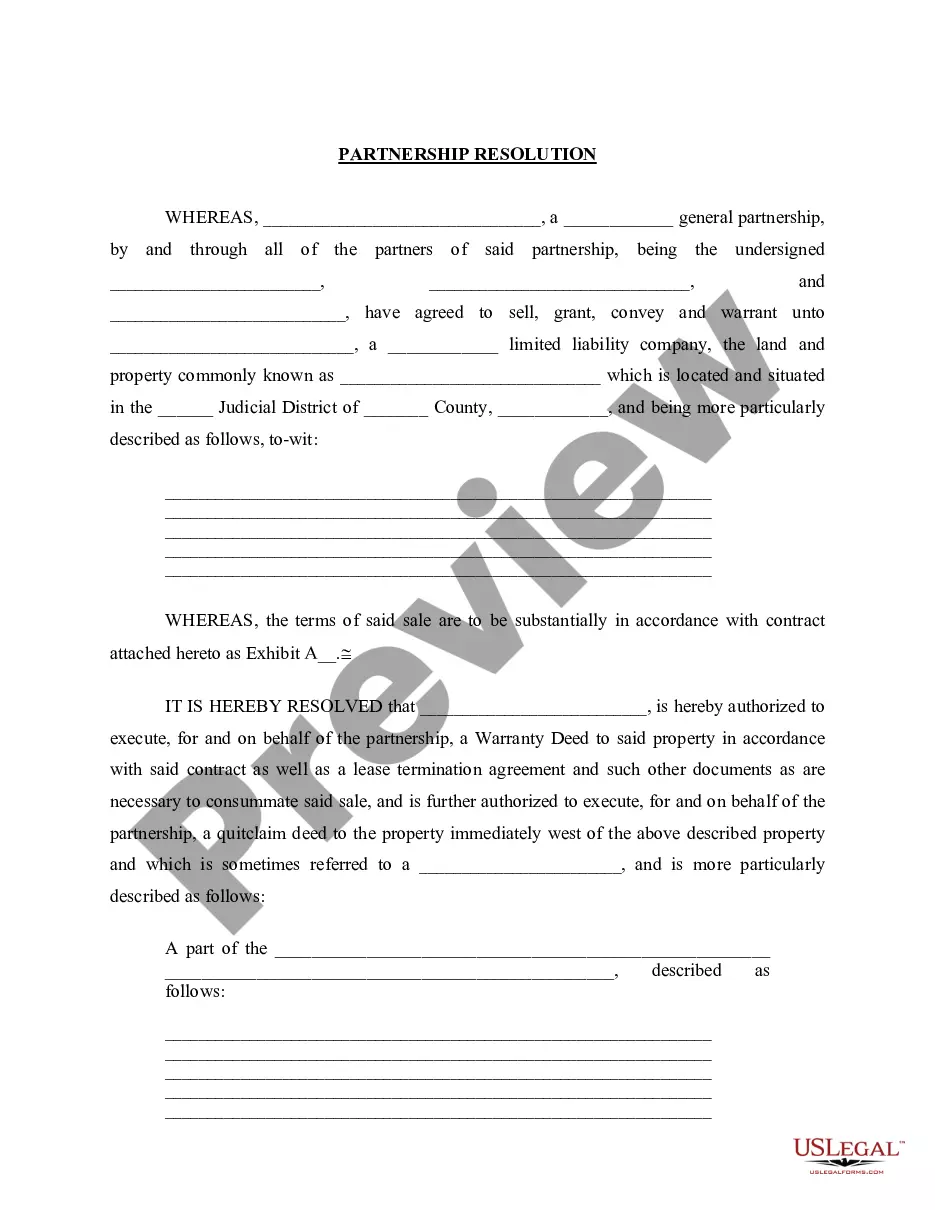
Description

Get your form ready online
Our built-in tools help you complete, sign, share, and store your documents in one place.
Make edits, fill in missing information, and update formatting in US Legal Forms—just like you would in MS Word.
Download a copy, print it, send it by email, or mail it via USPS—whatever works best for your next step.
Sign and collect signatures with our SignNow integration. Send to multiple recipients, set reminders, and more. Go Premium to unlock E-Sign.
If this form requires notarization, complete it online through a secure video call—no need to meet a notary in person or wait for an appointment.
We protect your documents and personal data by following strict security and privacy standards.

Make edits, fill in missing information, and update formatting in US Legal Forms—just like you would in MS Word.

Download a copy, print it, send it by email, or mail it via USPS—whatever works best for your next step.

Sign and collect signatures with our SignNow integration. Send to multiple recipients, set reminders, and more. Go Premium to unlock E-Sign.

If this form requires notarization, complete it online through a secure video call—no need to meet a notary in person or wait for an appointment.

We protect your documents and personal data by following strict security and privacy standards.
Looking for another form?
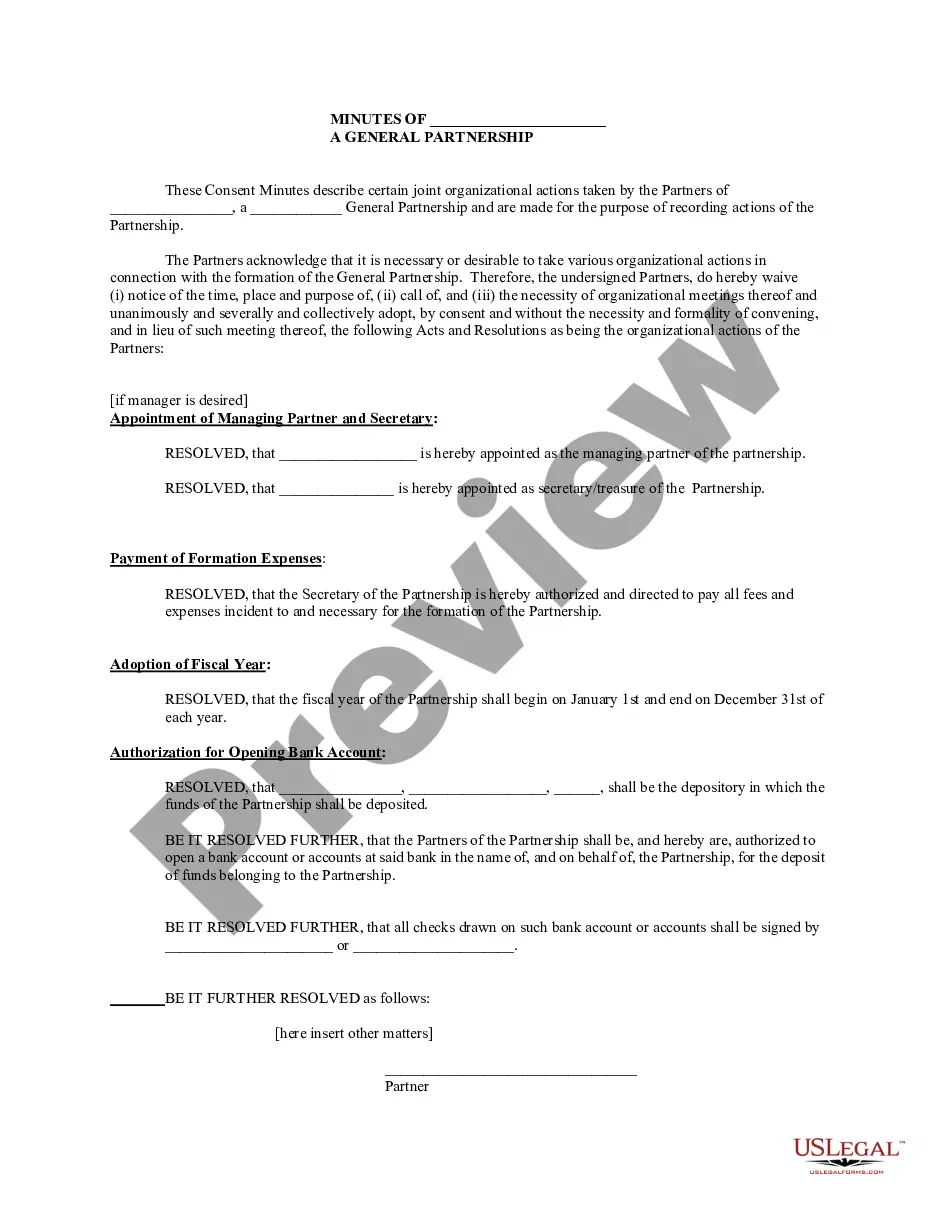
How to fill out Minutes For Partnership?
- Log in to your US Legal Forms account. Ensure your subscription is active; if not, renew it according to your payment plan.
- Preview the document. Thoroughly review the form description to confirm it aligns with your specific needs and local jurisdiction.
- Search for additional documents if necessary. If the selected form doesn’t fit your criteria, use the search bar to find alternatives.
- Purchase the document. Click the Buy Now button and select a subscription plan that suits you. Create an account to gain access to all resources.
- Complete your purchase. Input your credit card details or utilize your PayPal account to finalize the transaction.
- Download your form. Save the document on your device for easy access and find it anytime in the My Forms section of your profile.
Once you've completed these steps, you'll gain instant access to a vast collection of more than 85,000 fillable legal forms. US Legal Forms empowers both individuals and attorneys to execute legal documentation quickly and accurately.
Start using US Legal Forms today to ensure you have all the resources at your fingertips. Your efficient legal solutions are just a click away!
Form popularity
FAQ
The term 'managing partner' often describes a general partner who has been assigned specific managerial duties within the partnership. While both positions carry significant responsibility, a managing partner typically focuses on operational aspects and leadership. Therefore, while all managing partners are general partners, not all general partners hold the title of managing partner.
Being a general partner means you actively participate in managing the business and share responsibility for its debts and obligations. This role requires a hands-on approach and a commitment to the partnership's success. Additionally, as a general partner, you typically have a greater say in strategic decisions and operations.
GP, or general partner, specifically refers to a partner who has unlimited liability and has a significant role in managing the business. In simpler terms, all general partners are partners, but not all partners are general partners. This distinction helps clarify roles and responsibilities within the partnership.
The choice between being a general or limited partner depends on your willingness to assume liability and control within the partnership. A general partner enjoys more operational control but also faces greater risk due to unlimited liability. On the other hand, a limited partner has protection from personal liability but typically has less influence over business decisions.
A general partner operates within a partnership structure, often taking on personal liability for business debts. In contrast, a Limited Liability Company (LLC) offers a distinct legal structure that limits the liability of its members. Therefore, while a general partner has a direct stake and responsibility in the business, LLC members typically enjoy protection from personal liability.
A partner may refer to any individual involved in a partnership, while a general partner specifically indicates a member who has unlimited liability. In other words, general partners assume full responsibility for the debts and obligations of the partnership. This distinction is crucial for understanding liability and control within the business structure.
A general partner has broader responsibilities compared to a regular partner in a business. This role involves making decisions and managing the day-to-day operations of the partnership. While both positions are important, the general partner typically holds more authority in guiding the overall direction of the partnership.
Yes, general partnerships are generally easy to establish. They require minimal formalities compared to limited liability companies or corporations. However, creating a partnership agreement is essential to outline roles and responsibilities clearly. This proactive step can prevent misunderstandings later, and platforms like US Legal Forms can simplify the process by providing templates and guidance.
A general partner typically includes various responsibilities and rights within the partnership. This can encompass decision-making authority, management of operations, and sharing in the profits and losses of the business. Moreover, general partners hold unlimited liability, meaning they are personally responsible for the partnership's debts. It’s crucial for prospective general partners to understand their commitments and benefits.
You can form a general partnership by drafting a partnership agreement with your co-partner. Include key details, such as each partner's contributions, management duties, and how profits will be shared. Additionally, you may need to register your business name and obtain any necessary permits in your state. The US Legal Forms platform offers resources that can help you create a comprehensive partnership agreement smoothly.