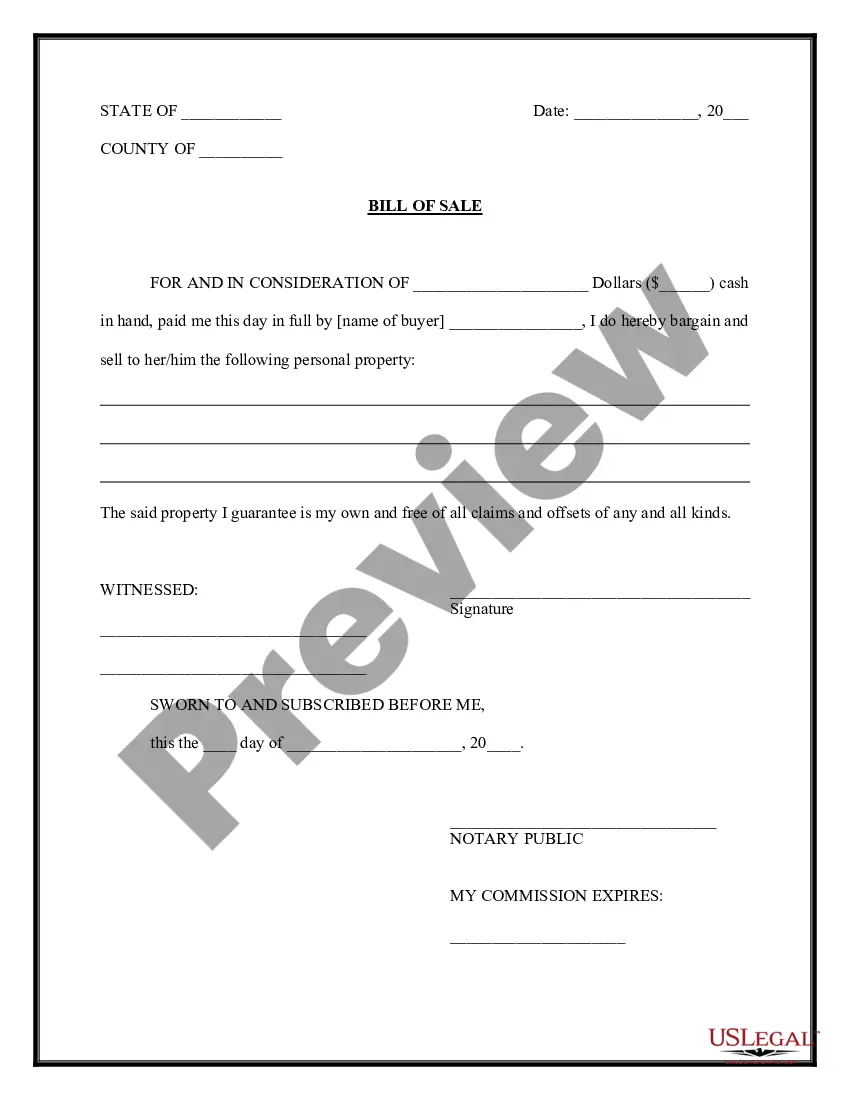
Building Contract For A Home Owner/occupier In Contra Costa
Description

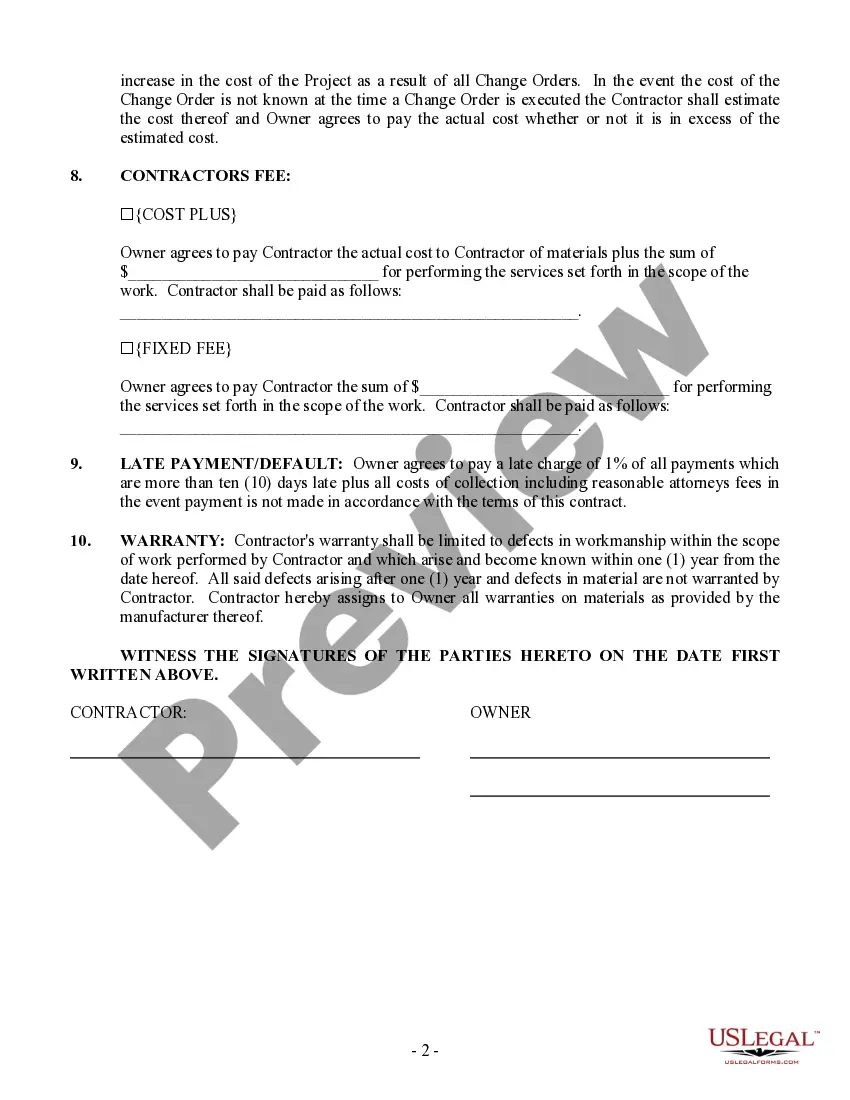
Get your form ready online
Our built-in tools help you complete, sign, share, and store your documents in one place.
Make edits, fill in missing information, and update formatting in US Legal Forms—just like you would in MS Word.
Download a copy, print it, send it by email, or mail it via USPS—whatever works best for your next step.
Sign and collect signatures with our SignNow integration. Send to multiple recipients, set reminders, and more. Go Premium to unlock E-Sign.
If this form requires notarization, complete it online through a secure video call—no need to meet a notary in person or wait for an appointment.
We protect your documents and personal data by following strict security and privacy standards.

Make edits, fill in missing information, and update formatting in US Legal Forms—just like you would in MS Word.

Download a copy, print it, send it by email, or mail it via USPS—whatever works best for your next step.

Sign and collect signatures with our SignNow integration. Send to multiple recipients, set reminders, and more. Go Premium to unlock E-Sign.

If this form requires notarization, complete it online through a secure video call—no need to meet a notary in person or wait for an appointment.

We protect your documents and personal data by following strict security and privacy standards.
Looking for another form?
Form popularity
FAQ
Contracts don't need to be in legal language, but they do need to outline exactly who is responsible for what from obtaining various permissions (such as building control approval) to timings, tidying up, materials, insurance and how payments will be made. A written contract will protect you and reduce risks.
To be legally enforceable, an agreement must contain all of the following criteria: An offer and acceptance; Certainty of terms; Consideration; An intention to create legal relations; Capacity of the parties; and, Legality of purpose.
A contract will only be legally binding upon the contracting parties if the following requirements are complied with: consensus, contractual capacity, certainty, possibility, legality and formalities. 39 The above requirements will be discussed next. 39Para 1 1 above.
Lesson Summary. A contract is a legal agreement between two or more parties in which they agree to each other's rights and responsibilities. Offer, acceptance, awareness, consideration, and capacity are the five elements of an enforceable contract.
The JCT HO/O is best for simpler projects, but if you plan to appoint specific companies for tasks like a low energy heating system or specialist glazing, the RIBA DBC is preferable as it accommodates their involvement. The JCT HO/O does not offer this flexibility.
How To Write A Construction Contract With 7 Steps Step 1: Define the Parties Involved. Step 2: Outline the Scope of Work. Step 3: Establish the Timeline. Step 4: Determine the Payment Terms. Step 5: Include Necessary Legal Clauses. Step 6: Address Change Orders and Modifications. Step 7: Sign and Execute the Contract.
Can I pull my permit myself as an owner/builder or do I need a contractor? In California, most construction work is required to be performed by a licensed contractor. In certain instances, the owner of the property may secure a permit as an owner-builder, but there are strict limitations on when this may occur.
These include, but are not limited to, new structures, demolitions, additions, alterations, interior/exterior remodels, running new electrical, water or gas lines, repairs, outdoor kitchens, pergolas, pavilions, decks, carports, garages, docks, pools, foundation repairs, ADUs, and Junior ADUs, solar, energy storage ...
Projects that DO NOT need a building permit are simple surface (cosmetic) projects; minor repairs and replacements; and minor site improvements or small structures.
New property owners will usually receive an exemption application enclosed with their notice of supplemental assessment, approximately 90 to 120 days after the deed is recorded. If you acquired the property more than 120 days ago, and have not received an application, please call (925) 313-7481 for an application. 9.