S Corporation With Two Shareholders In Pennsylvania
Description

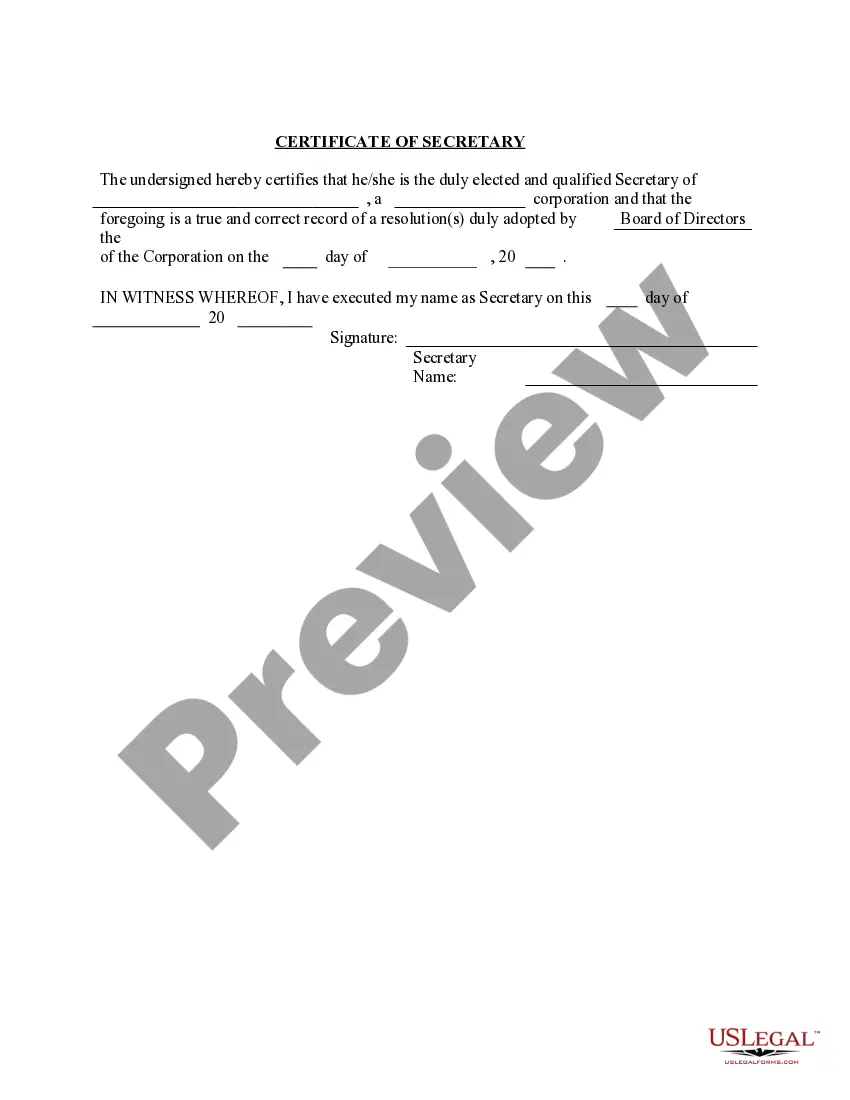

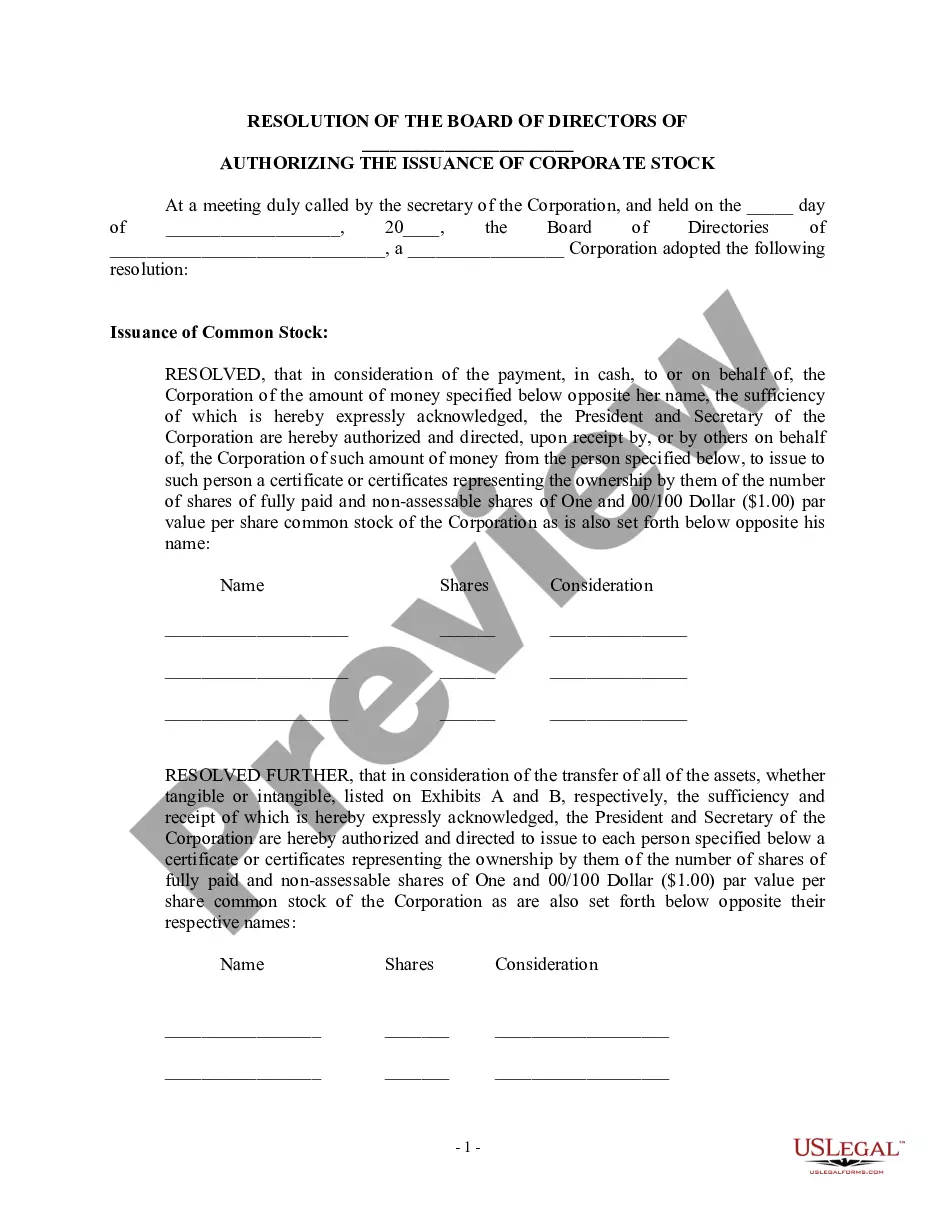
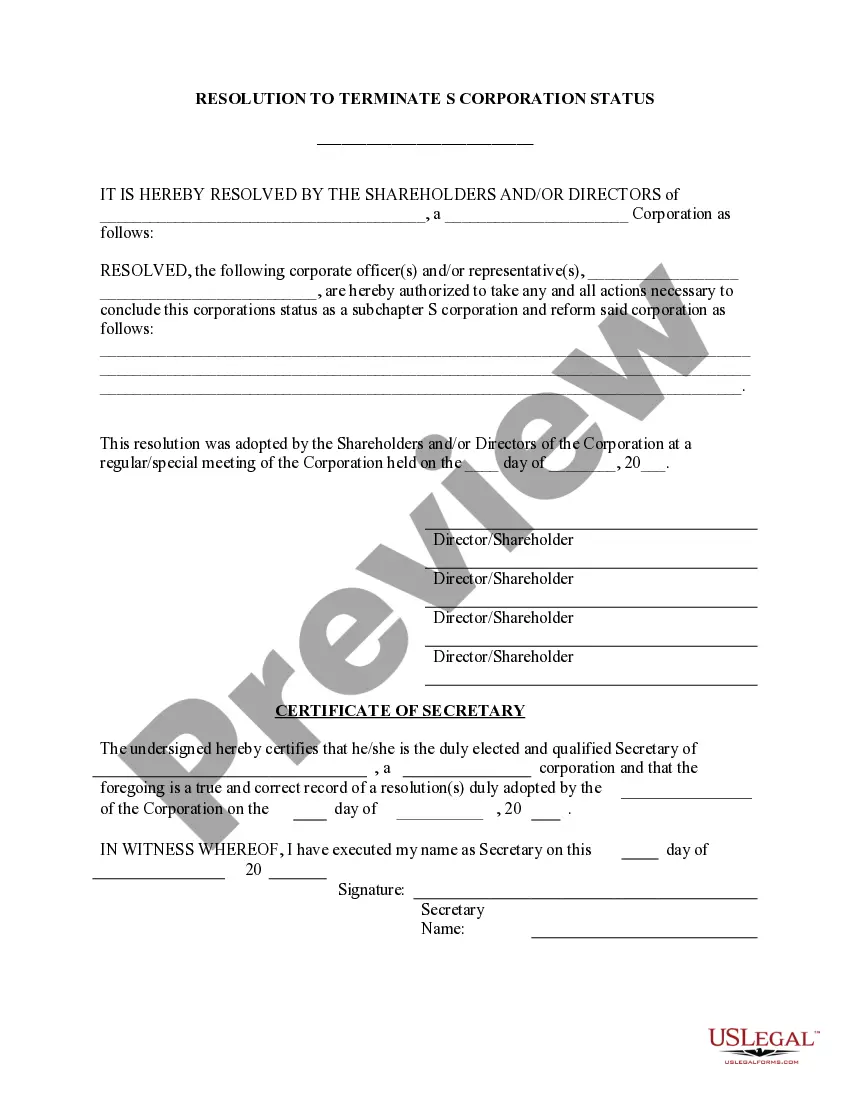
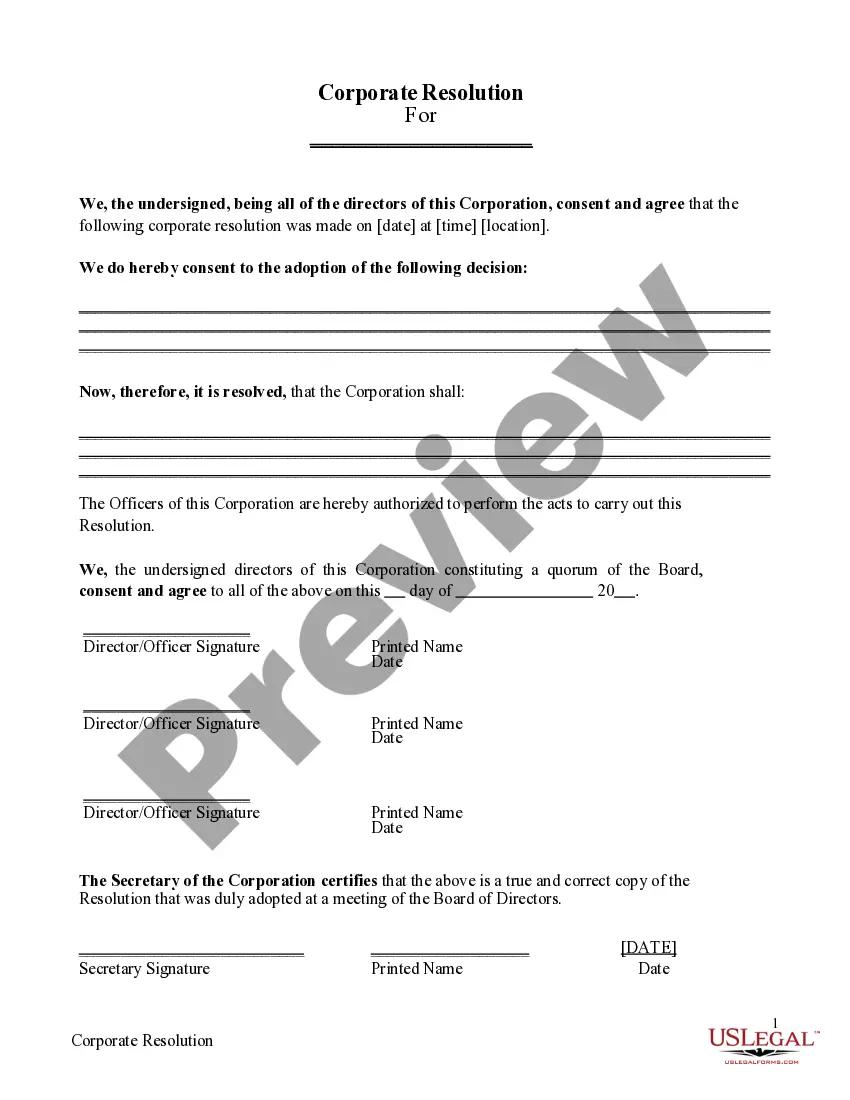
Get your form ready online
Our built-in tools help you complete, sign, share, and store your documents in one place.
Make edits, fill in missing information, and update formatting in US Legal Forms—just like you would in MS Word.
Download a copy, print it, send it by email, or mail it via USPS—whatever works best for your next step.
Sign and collect signatures with our SignNow integration. Send to multiple recipients, set reminders, and more. Go Premium to unlock E-Sign.
If this form requires notarization, complete it online through a secure video call—no need to meet a notary in person or wait for an appointment.
We protect your documents and personal data by following strict security and privacy standards.

Make edits, fill in missing information, and update formatting in US Legal Forms—just like you would in MS Word.

Download a copy, print it, send it by email, or mail it via USPS—whatever works best for your next step.

Sign and collect signatures with our SignNow integration. Send to multiple recipients, set reminders, and more. Go Premium to unlock E-Sign.

If this form requires notarization, complete it online through a secure video call—no need to meet a notary in person or wait for an appointment.

We protect your documents and personal data by following strict security and privacy standards.
Looking for another form?

Form popularity
FAQ
Pennsylvania residents, part-year residents and nonresidents must file a state tax return if one of the following applies: Your Pennsylvania gross taxable income exceeds $33 even if no taxes are due.
Every resident, part-year resident or nonresident individual must file a Pennsylvania Income Tax Return (PA-40) when he or she realizes income generating $1 or more in tax, even if no tax is due (e.g., when an employee receives compensation where tax is withheld).
Domestic and foreign corporations are subject to the corporate net income tax for the privilege of doing business; carrying on activities; having capital or property employed or used in Pennsylvania; or owning property in Pennsylvania.
An S corporation can have only one class of stock, although it can have both voting and non-voting shares. Therefore, there can't be different classes of investors who are entitled to different dividends or distribution rights. Also, there cannot be more than 100 shareholders.
Start an S corp in Pennsylvania Step 1 – Choose a name. Step 2 – Designate a Pennsylvania registered office. Step 3 – File Pennsylvania Certificate of Organization. Step 4 – Create an operating agreement. Step 5 – Apply for an EIN. Step 6 – Apply for S Corp status with IRS Form 2553.
Start an S corp in Pennsylvania Step 1 – Choose a name. Step 2 – Designate a Pennsylvania registered office. Step 3 – File Pennsylvania Certificate of Organization. Step 4 – Create an operating agreement. Step 5 – Apply for an EIN. Step 6 – Apply for S Corp status with IRS Form 2553.
Start an S corp in Pennsylvania Step 1 – Choose a name. Step 2 – Designate a Pennsylvania registered office. Step 3 – File Pennsylvania Certificate of Organization. Step 4 – Create an operating agreement. Step 5 – Apply for an EIN. Step 6 – Apply for S Corp status with IRS Form 2553.
A PTET election allows PTEs, which are not subject to the SALT cap, to deduct the state income taxes on the PTE's activities for federal income tax purposes. Pennsylvania is one of only five states, along with Delaware, Maine, North Dakota, and the District of Columbia, to have a PIT but no PTET election.
Every resident, part-year resident or nonresident individual must file a Pennsylvania Income Tax Return (PA-40) when he or she realizes income generating $1 or more in tax, even if no tax is due (e.g., when an employee receives compensation where tax is withheld).
Attachments. Pennsylvania requires a valid federal return in the electronic file. Therefore, if the federal return isn't supported for electronic filing by the IRS, you can't e-file the state return.
