S Corporation For Llc In Pennsylvania
Description


Get your form ready online
Our built-in tools help you complete, sign, share, and store your documents in one place.
Make edits, fill in missing information, and update formatting in US Legal Forms—just like you would in MS Word.
Download a copy, print it, send it by email, or mail it via USPS—whatever works best for your next step.
Sign and collect signatures with our SignNow integration. Send to multiple recipients, set reminders, and more. Go Premium to unlock E-Sign.
If this form requires notarization, complete it online through a secure video call—no need to meet a notary in person or wait for an appointment.
We protect your documents and personal data by following strict security and privacy standards.

Make edits, fill in missing information, and update formatting in US Legal Forms—just like you would in MS Word.

Download a copy, print it, send it by email, or mail it via USPS—whatever works best for your next step.

Sign and collect signatures with our SignNow integration. Send to multiple recipients, set reminders, and more. Go Premium to unlock E-Sign.

If this form requires notarization, complete it online through a secure video call—no need to meet a notary in person or wait for an appointment.

We protect your documents and personal data by following strict security and privacy standards.
Looking for another form?


Form popularity
FAQ
Wondering how to form an S-corp if you have an LLC? It may take a few steps, but it is by no means complicated. You need to file a specialized tax form to make an S-corp election. This form, called the S-corp Form 2553, must be completed by all shareholders involved.
Yes, one person can form an S corporation and serve as its sole board member and employee. Note, however, that you'll still need to hold annual board of directors meetings and take minutes at those meetings, even if you're the only attendee.
Because of the one-class-of-stock restriction, an S corporation cannot allocate losses or income to specific shareholders. Allocation of income and loss is governed by stock ownership, unlike partnerships or LLCs taxed as partnerships where the allocation can be set in the partnership agreement or operating agreement.
Starting in tax year 2023, the bill reduced Pennsylvania's corporate net income tax rate from 9.99 percent to 8.99 percent, with further 0.5 percentage point reductions each year until 2031, when the rate will be 4.99 percent.
Start an S corp in Pennsylvania Step 1 – Choose a name. Step 2 – Designate a Pennsylvania registered office. Step 3 – File Pennsylvania Certificate of Organization. Step 4 – Create an operating agreement. Step 5 – Apply for an EIN. Step 6 – Apply for S Corp status with IRS Form 2553.
There are many options available for starting an LLC, but few outweigh the benefits of an LLC in PA. Pennsylvania is one of the most prosperous North American states as one of the original 13 U.S. colonies—offering multitudes of tax incentives, credits, and programs for entrepreneurs to use.
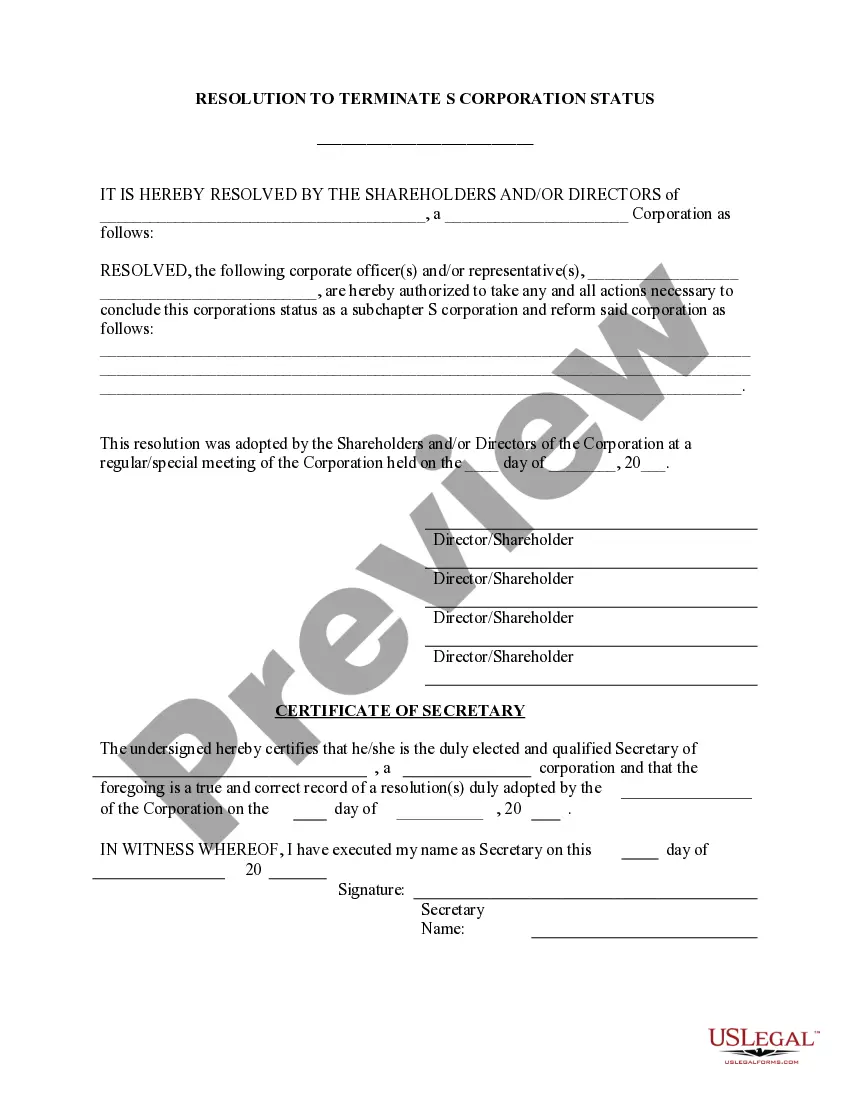
A Pennsylvania S Corporation election may be made by the shareholders of any small corporation that is subject to the Pennsylvania corporate net income tax or that owns directly, or through a wholly owned subsidiary, 100% of the stock of a qualified Subchapter S subsidiary that is subject to the Pennsylvania corporate ...
Businesses that elect federal subchapter S status are considered Pennsylvania S corporations, unless they opt to be taxed as a C corporation in Pennsylvania by filing the REV-976, Election Not to be Taxed as a Pennsylvania S Corporation PDF(opens in a new tab).
Filing as an S Corp in Pennsylvania Step 1: Choose a Business Name. Step 2: Appoint Directors and a Registered Agent. Step 3: File Articles of Organization. Step 4: Create an S Corp Operating Agreement. Step 5: Apply for an Employer Identification Number. Step 6: File Form 2553 for S Corporation Election.
A Pennsylvania limited liability company is formed by filing a Certificate of Organization DSCB:15-8821, accompanied by a docketing statement DSCB:15-134A, with the Bureau of Corporations and Charitable Organizations.
