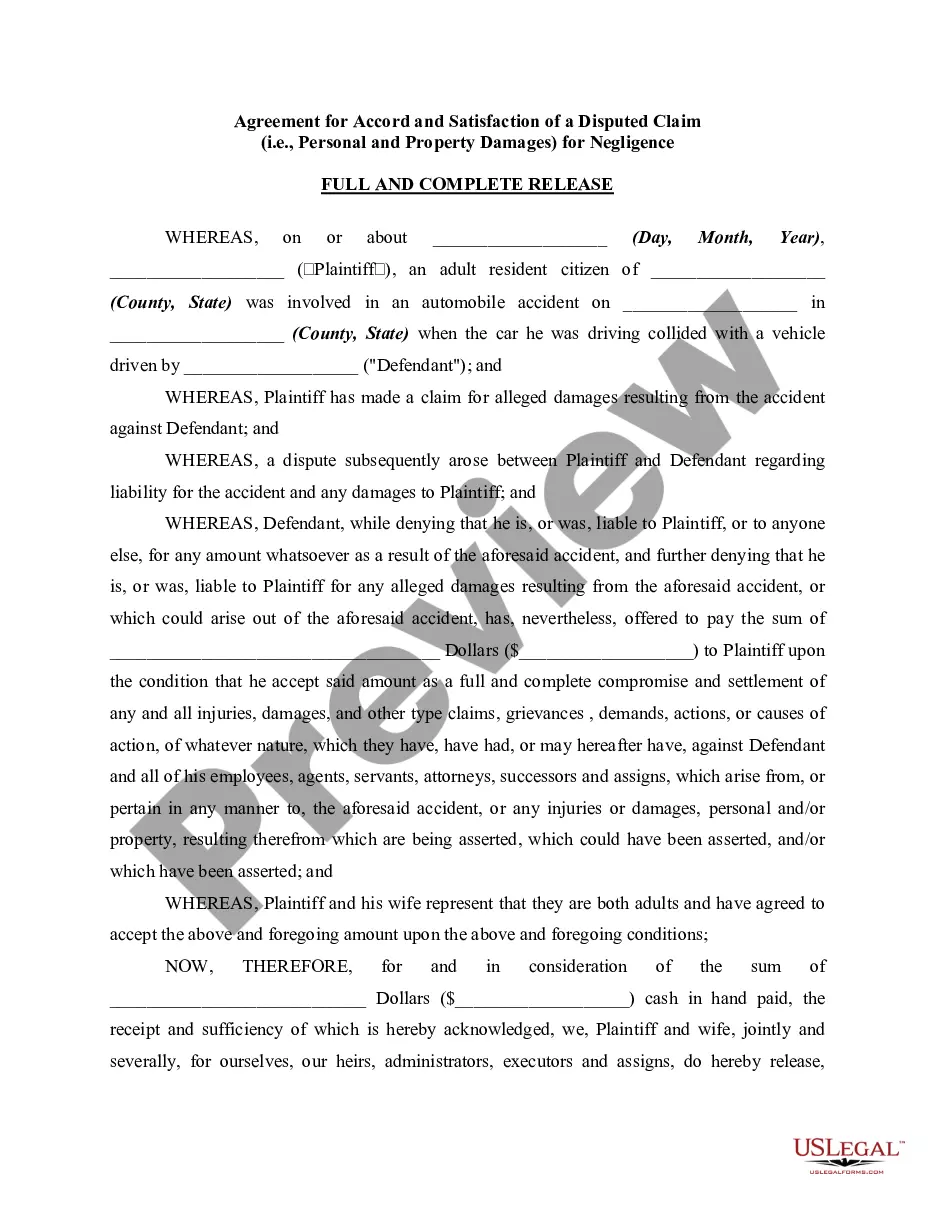
The parties may agree to a different performance. This is called an accord. When the accord is performed, this is called an accord and satisfaction. The original obligation is discharged. In order for there to be an accord and satisfaction, there must be a bona fide dispute; an agreement to settle the dispute; and the performance of the agreement. An example would be settlement of a lawsuit for breach of contract. The parties might settle for less than the amount called for under the contract.
Dispute Claim Form Without Attorney In Hennepin
State:
Multi-State
County:
Hennepin
Control #:
US-00435BG
Format:
Word;
Rich Text
Instant download
Description
Get your form ready online
Our built-in tools help you complete, sign, share, and store your documents in one place.
Built-in online Word editor
Make edits, fill in missing information, and update formatting in US Legal Forms—just like you would in MS Word.
Export easily
Download a copy, print it, send it by email, or mail it via USPS—whatever works best for your next step.
E-sign your document
Sign and collect signatures with our SignNow integration. Send to multiple recipients, set reminders, and more. Go Premium to unlock E-Sign.
Notarize online 24/7
If this form requires notarization, complete it online through a secure video call—no need to meet a notary in person or wait for an appointment.
Store your document securely
We protect your documents and personal data by following strict security and privacy standards.

Make edits, fill in missing information, and update formatting in US Legal Forms—just like you would in MS Word.

Download a copy, print it, send it by email, or mail it via USPS—whatever works best for your next step.

Sign and collect signatures with our SignNow integration. Send to multiple recipients, set reminders, and more. Go Premium to unlock E-Sign.

If this form requires notarization, complete it online through a secure video call—no need to meet a notary in person or wait for an appointment.

We protect your documents and personal data by following strict security and privacy standards.
Looking for another form?




Form popularity
FAQ
Generally, claims of $20,000 or less can be filed in Conciliation Court. If you want to file a claim that is for more than $20,000, you must start a civil case in District Court. You cannot split your claim into multiple smaller claims to get around the limit and file in Conciliation Court.
Don't say you expect to recover any more than £10,000 - if you do, your case won't be treated as a small claim. If you're making a claim for something your landlord hasn't repaired, the maximum amount you can get in a small claims case is £1,000.
You must first give written notice to the judgment debtor of your intent to collect from their earnings. To give written notice, you need to complete the Execution Exemption Notice and Notice of Intent to Levy on Earnings.
Individuals can represent themselves or be represented by a lawyer in Conciliation Court and District Court. However, an individual may not be represented by a non-lawyer. A business or association may be represented by a non-lawyer, such as an officer or manager, only in Conciliation Court.
Civil actions (except family cases) need to be filed with the court within one year after service of the summons and complaint on the defendant. See Rule 5.04 of the MN Rules of Civil Procedure.
In most cases, you have six years from the date of an accident to file a personal injury lawsuit in Minnesota. If you miss the filing deadline set by the statute of limitations, your case will most likely be dismissed in court.
Rule 521 - Removal (Appeal) to District Court (a)Trial de novo. Any person aggrieved by an order for judgment entered in conciliation court after contested trial may remove the cause to district court for trial de novo (new trial). An "aggrieved person" may be either the judgment debtor or creditor.
In Minnesota, as in other states, the statute of limitations vary for different types of crimes. For example, misdemeanors carry a three-year time limit, while the time limits for some felonies range from three to nine years.
The Minnesota statutes of limitations for civil cases range from two years for personal injury to 10 years for judgments and liens. Other claims, such as personal property damage and trespass, have a six-year statute of limitations. The same is true for breach of contract.

