Joint Tenancy Definition In Business
Description

Get your form ready online
Our built-in tools help you complete, sign, share, and store your documents in one place.
Make edits, fill in missing information, and update formatting in US Legal Forms—just like you would in MS Word.
Download a copy, print it, send it by email, or mail it via USPS—whatever works best for your next step.
Sign and collect signatures with our SignNow integration. Send to multiple recipients, set reminders, and more. Go Premium to unlock E-Sign.
If this form requires notarization, complete it online through a secure video call—no need to meet a notary in person or wait for an appointment.
We protect your documents and personal data by following strict security and privacy standards.

Make edits, fill in missing information, and update formatting in US Legal Forms—just like you would in MS Word.

Download a copy, print it, send it by email, or mail it via USPS—whatever works best for your next step.

Sign and collect signatures with our SignNow integration. Send to multiple recipients, set reminders, and more. Go Premium to unlock E-Sign.

If this form requires notarization, complete it online through a secure video call—no need to meet a notary in person or wait for an appointment.

We protect your documents and personal data by following strict security and privacy standards.
Looking for another form?
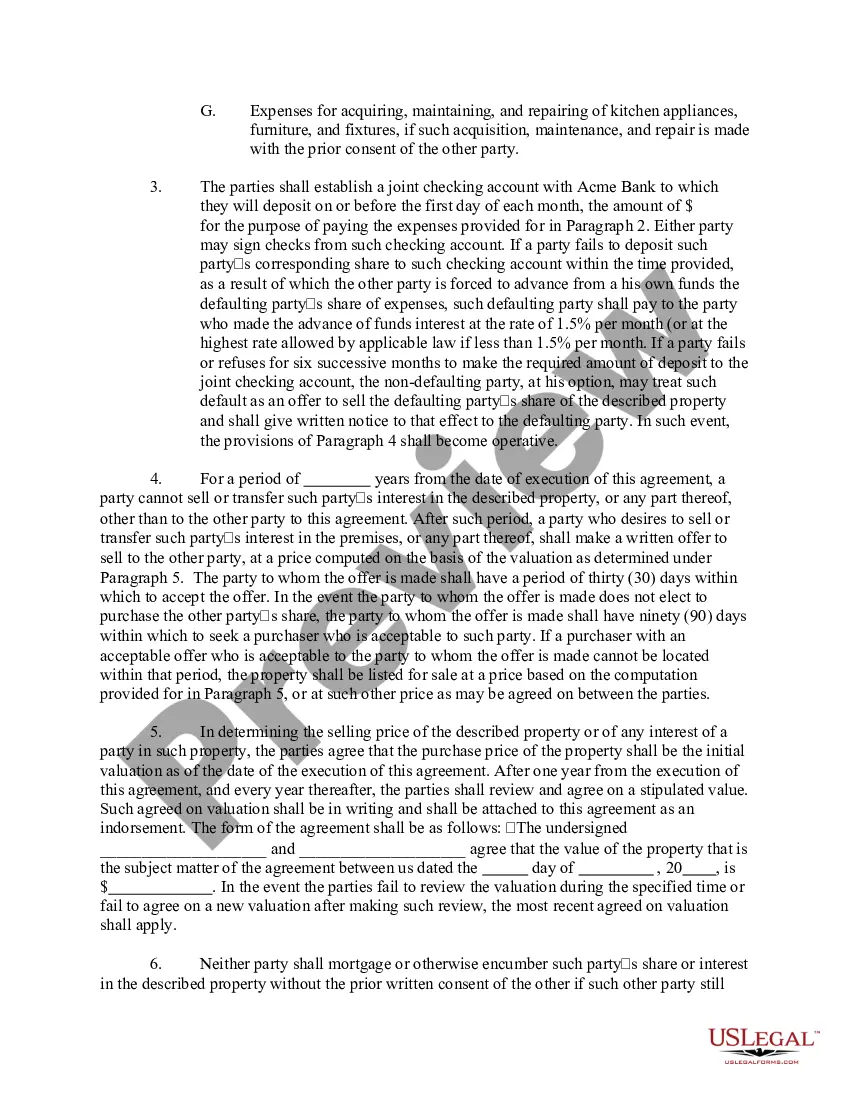
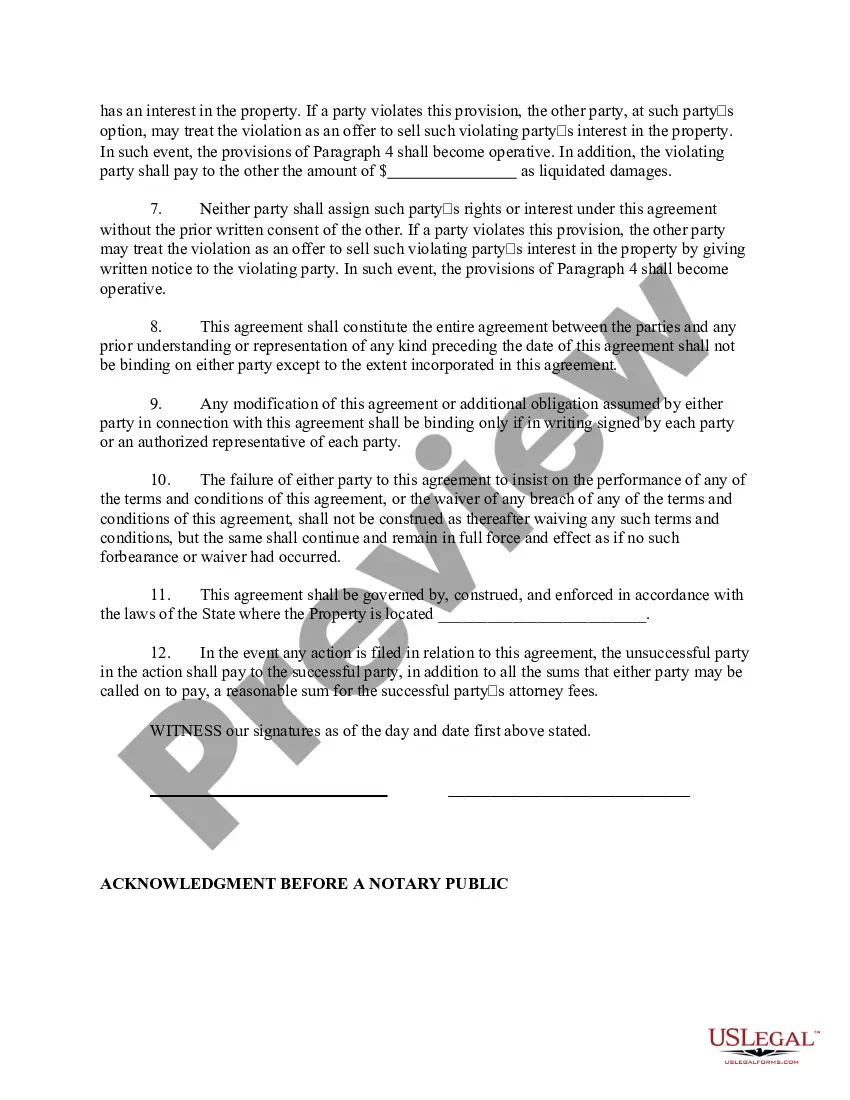
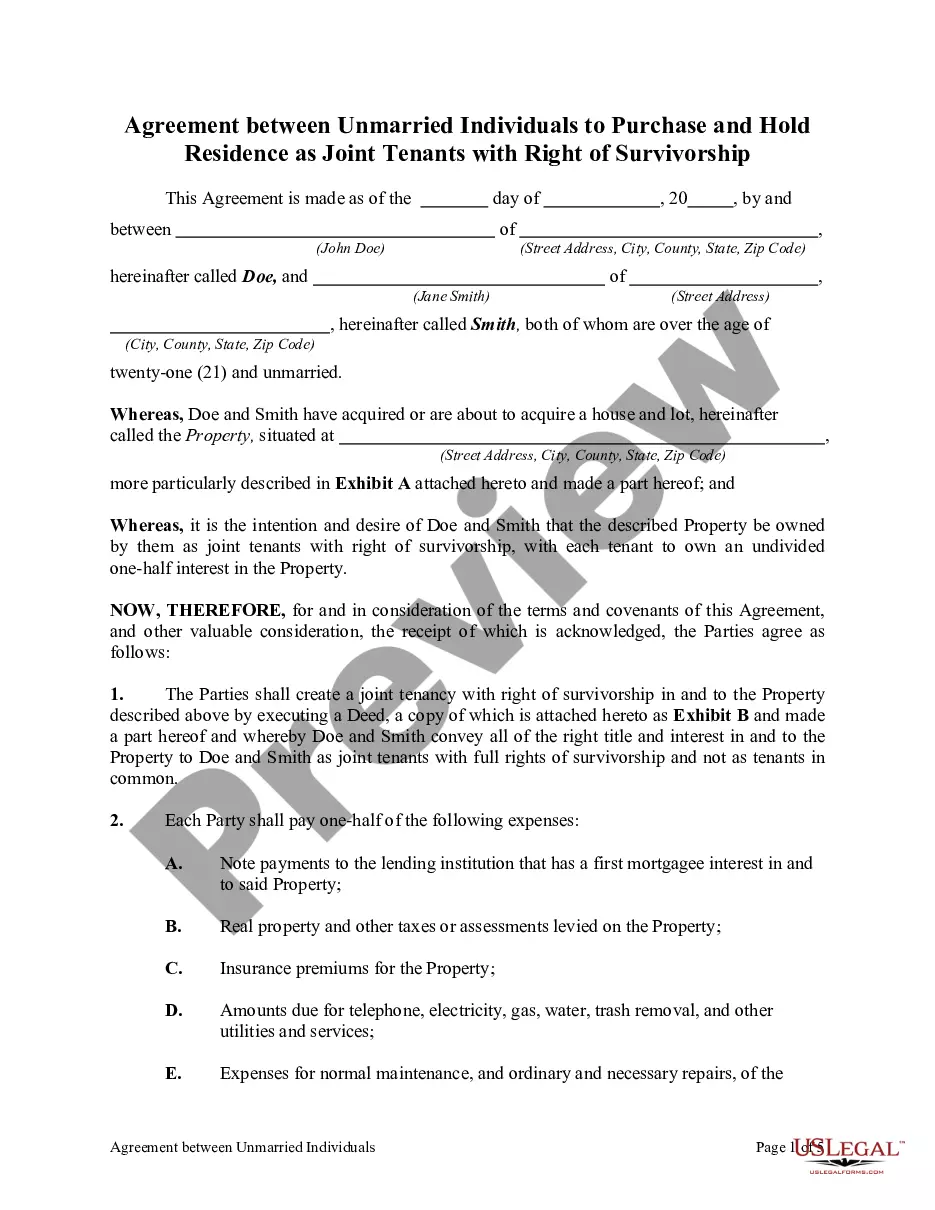
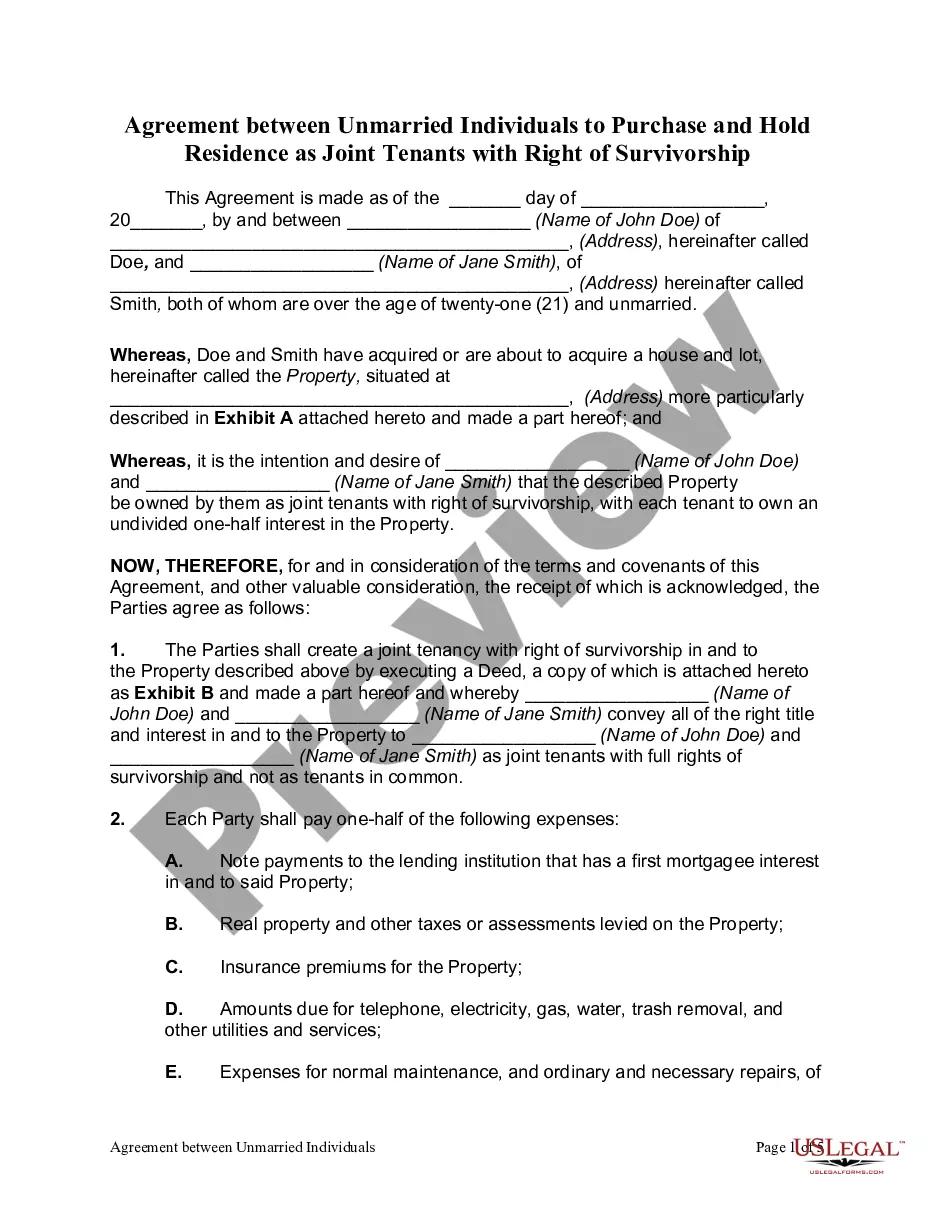
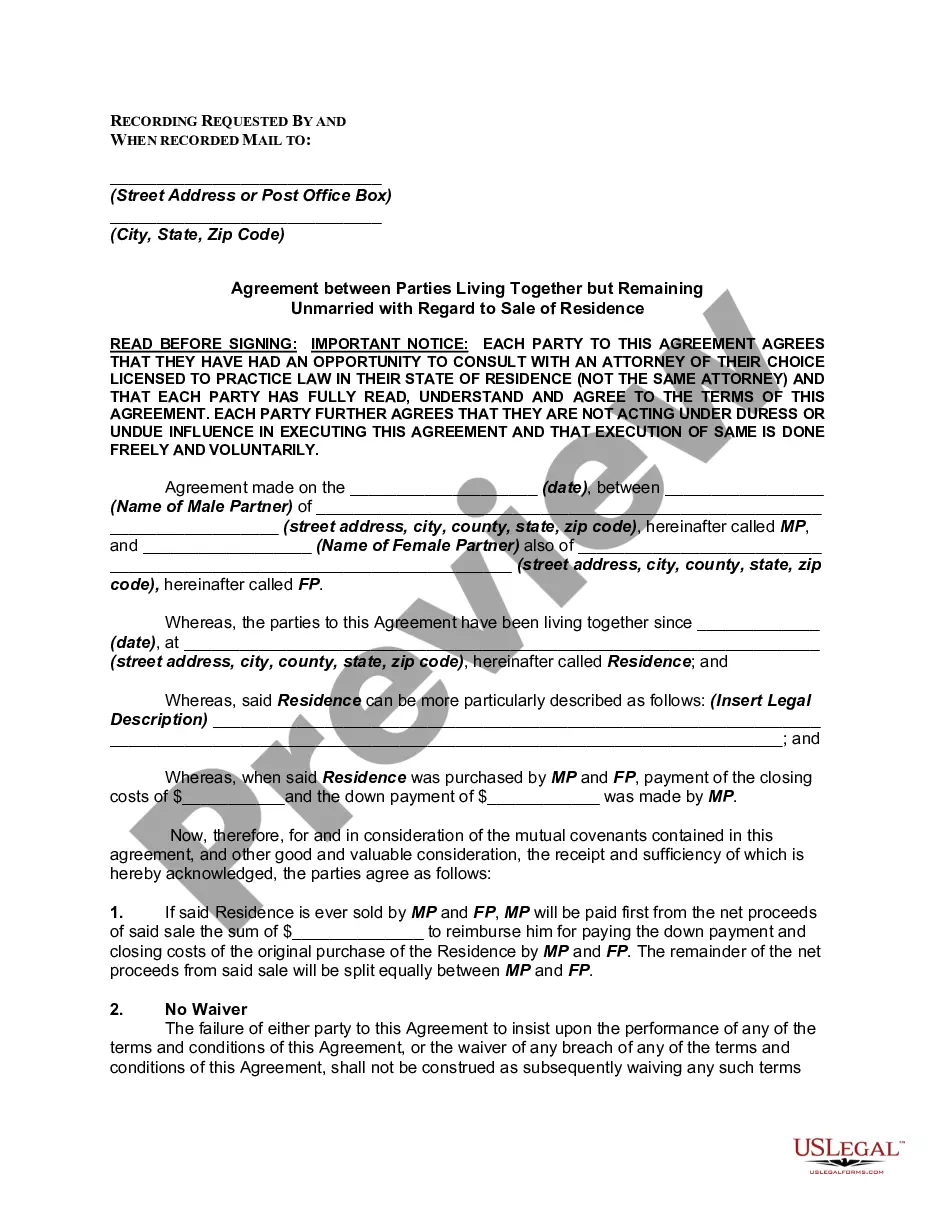
How to fill out Agreement By Unmarried Individuals To Purchase And Hold Residence As Joint Tenants?
Securing a reliable source for accessing the latest and applicable legal templates is a significant portion of navigating bureaucracy.
Acquiring the appropriate legal documents necessitates precision and meticulousness, which highlights the importance of obtaining samples of Joint Tenancy Definition In Business exclusively from reputable providers, such as US Legal Forms. An incorrect template will squander your time and delay your situation.
Eliminate the hassles associated with your legal documents. Explore the extensive US Legal Forms collection to discover legal templates, verify their applicability to your situation, and download them instantly.
- Utilize the library navigation or search feature to find your template.
- Review the form’s details to ensure it meets the requirements of your state and region.
- Access the form preview, if available, to confirm that it is indeed the document you need.
- Return to the search and seek the suitable template if the Joint Tenancy Definition In Business does not meet your expectations.
- Once you are confident in the form’s suitability, download it.
- If you are a registered user, click Log in to verify and access your chosen templates in My documents.
- If you do not have an account yet, click Buy now to obtain the template.
- Choose the pricing plan that suits your requirements.
- Proceed with the registration to finalize your purchase.
- Complete your transaction by selecting a payment method (credit card or PayPal).
- Choose the file format for downloading Joint Tenancy Definition In Business.
- Once you have the form on your device, you can modify it with the editor or print it out to fill it in manually.
Form popularity
FAQ
All joint tenants must derive their interest from the same document or via the same act. Each joint tenant has legal possession over the whole of the land. One of the co-owners is not entitled to exclusive possession of any part of the land. Each co-owner has the same interest in the land (an undivided equal interest).
The four unities can be thought of as four requirements that need to exist simultaneously for a true joint tenancy estate to be created. Those four requirements are interest, time, title, and possession.
Joint tenancy is a legal term for an arrangement that defines the ownership interests and rights among two or more co-owners of real property. In a joint tenancy, two or more people own property together, each with equal rights and responsibilities.
Depending on the jurisdiction, the following phrases will create a joint tenancy: "As joint tenants" "As joint tenants with rights of survivorship" "As joint tenants with rights of survivorship and not as tenants in common" "As husband and wife" (unless otherwise stated).
If you own or co-own assets, you should know the subtle distinction that some states make between them. JTWROS stands for Joint Tenancy with Right of Survivorship. JT TEN stands for Joint Tenants with Right of Survivorship.