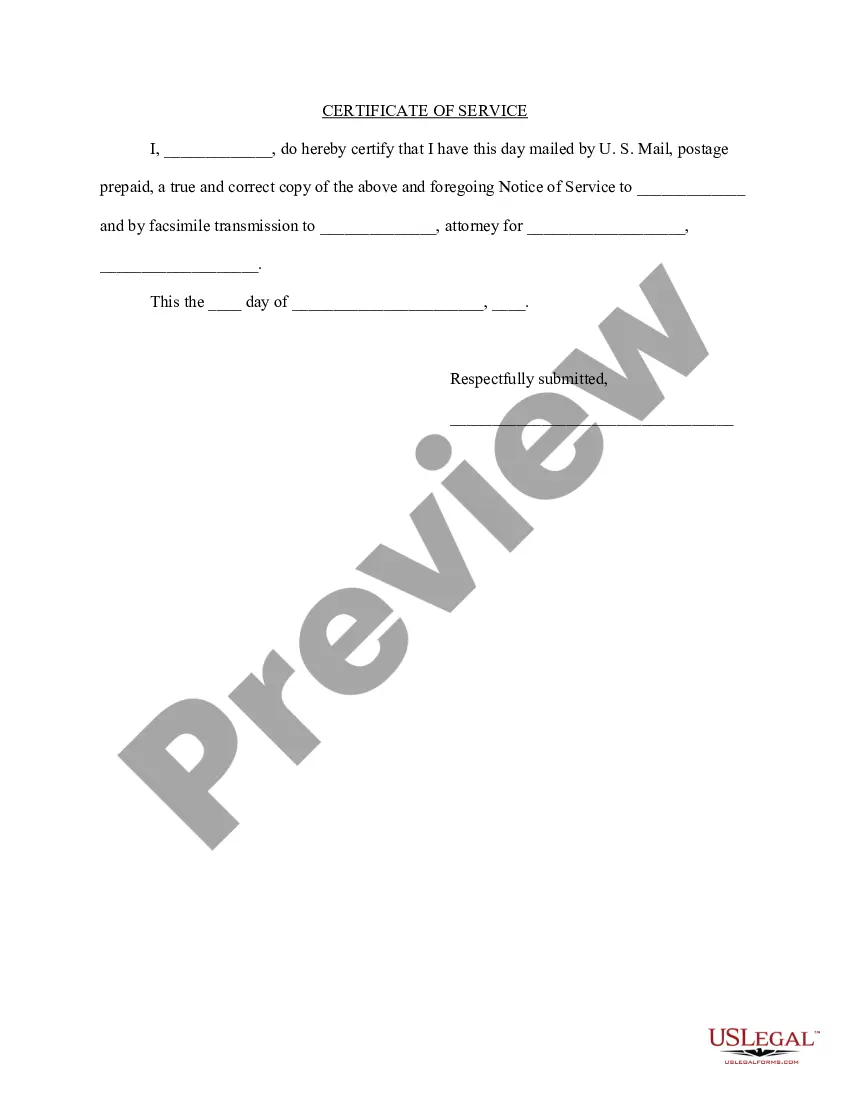
Notice Of Service Example In North Carolina
Description


Get your form ready online
Our built-in tools help you complete, sign, share, and store your documents in one place.
Make edits, fill in missing information, and update formatting in US Legal Forms—just like you would in MS Word.
Download a copy, print it, send it by email, or mail it via USPS—whatever works best for your next step.
Sign and collect signatures with our SignNow integration. Send to multiple recipients, set reminders, and more. Go Premium to unlock E-Sign.
If this form requires notarization, complete it online through a secure video call—no need to meet a notary in person or wait for an appointment.
We protect your documents and personal data by following strict security and privacy standards.

Make edits, fill in missing information, and update formatting in US Legal Forms—just like you would in MS Word.

Download a copy, print it, send it by email, or mail it via USPS—whatever works best for your next step.

Sign and collect signatures with our SignNow integration. Send to multiple recipients, set reminders, and more. Go Premium to unlock E-Sign.

If this form requires notarization, complete it online through a secure video call—no need to meet a notary in person or wait for an appointment.

We protect your documents and personal data by following strict security and privacy standards.
Looking for another form?
Form popularity
FAQ
The District Court division handles civil cases involving a claim for $25,000 or less, all family and juvenile cases, misdemeanor criminal cases, and infractions such as traffic tickets. Who are the “plaintiff” and “defendant”? A “plaintiff” is a person who files a lawsuit.
G.S. 1A-1, Rule 4. (a) Summons - Issuance; who may serve. - Upon the filing of the complaint, summons shall be issued forthwith, and in any event within five days. The complaint and summons shall be delivered to some proper person for service.
Service of process is giving the other parties in the court case the documents that were filed in the case so that they have notice that a lawsuit was filed against them and they have the opportunity to respond.
You start a lawsuit by filing a complaint. In some circumstances, you file a petition or a motion. The court has several complaint forms that you may use in drafting your complaint. The forms are available online and at the Pro Se Intake Unit.
Timeline of How to File a Lawsuit Step 1: File a Complaint. Plaintiff files a complaint and summons with the local county court. Step 2: Answer Complaint. Step 3: Discovery. Step 4: Failing to Respond to Discovery. Step 5: Conclusion of Lawsuit.
B) Service of an original summons, without extension, after 60 days from issuance, is untimely and may be challenged as improper.
The individual accepting papers must be at least 18 years old and not a party to the case. He or she must also be authorized to accept such documents.
Service may also be made on the party by electronic mail (e-mail) if the party has consented to receive e-mail service in the case at a particular e-mail address, and a copy of the consent is filed with the court by any party. Such e-mail must be sent by P.M. Eastern Time on a regular business day.
For service by mail, the person who mails the document signs the affidavit of service. It may also be permissible for the party or attorney who files the document to simply add a statement called a certificate of service. Generally, an affidavit or certificate of service by mail does not need to be notarized.