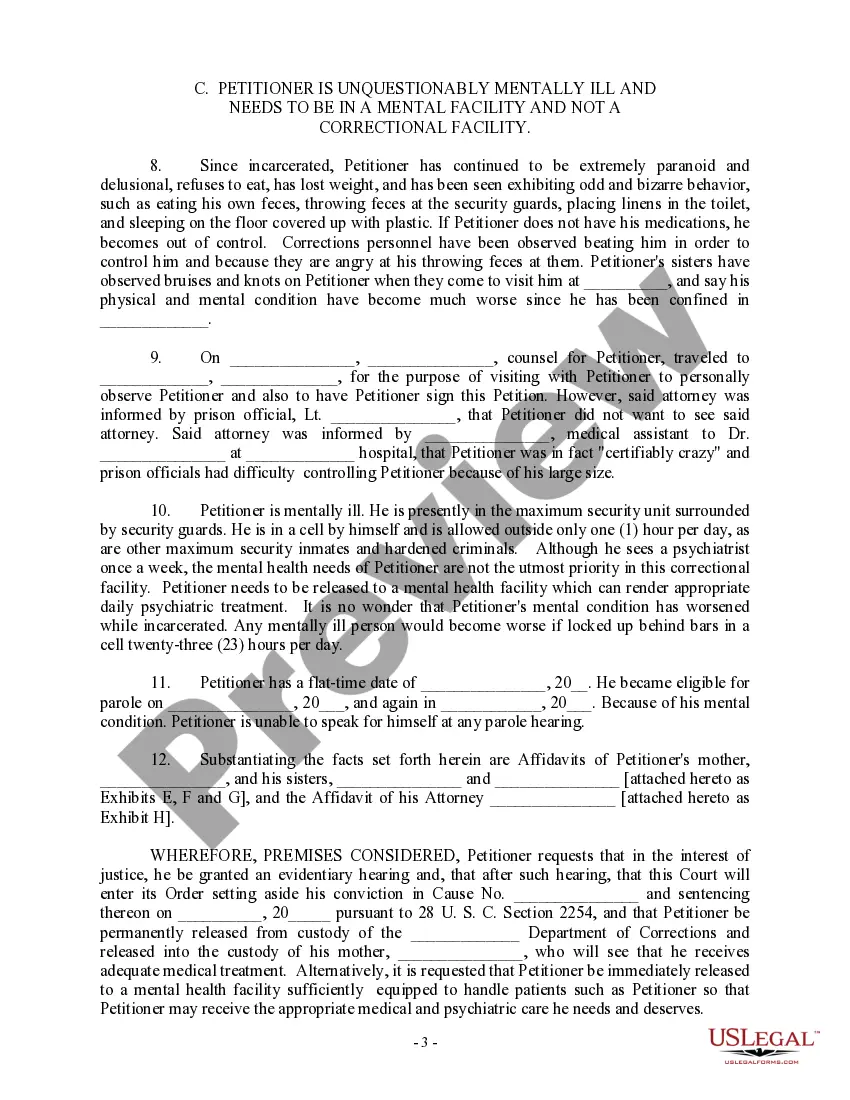
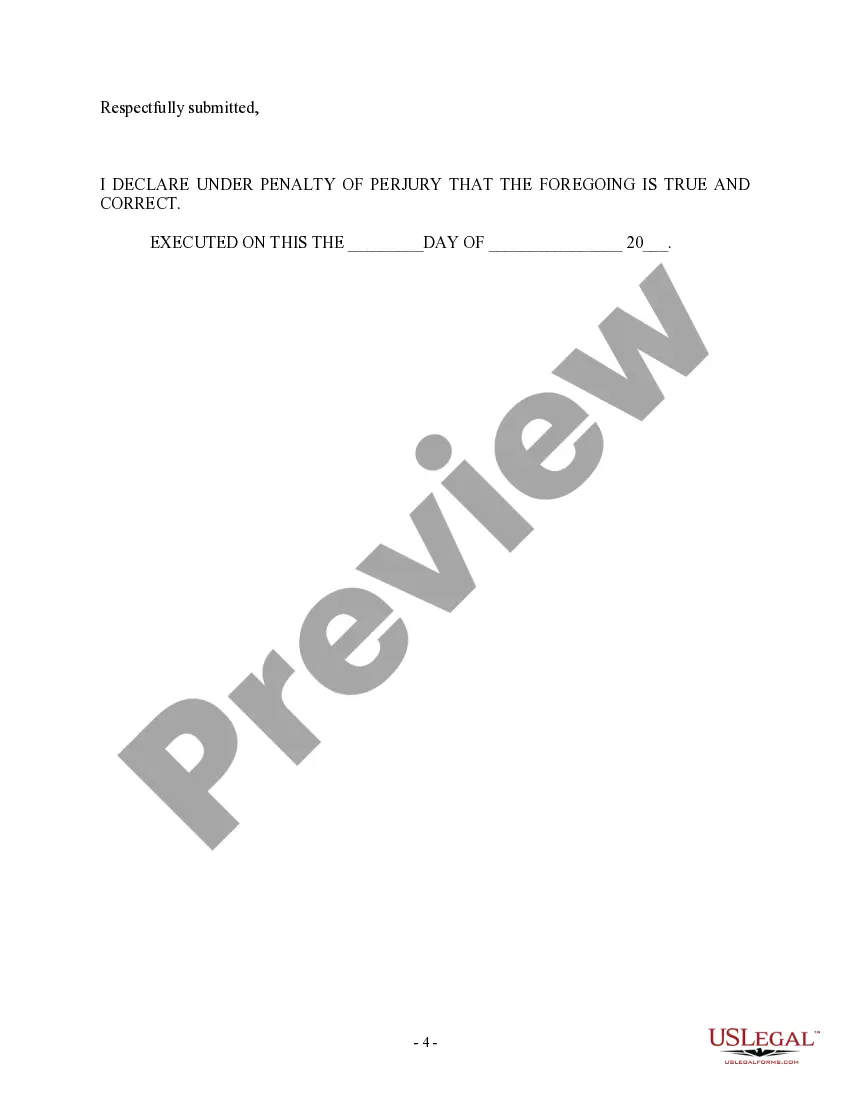
Federal Rules For Habeas Corpus In Fairfax
Description

Get your form ready online
Our built-in tools help you complete, sign, share, and store your documents in one place.
Make edits, fill in missing information, and update formatting in US Legal Forms—just like you would in MS Word.
Download a copy, print it, send it by email, or mail it via USPS—whatever works best for your next step.
Sign and collect signatures with our SignNow integration. Send to multiple recipients, set reminders, and more. Go Premium to unlock E-Sign.
If this form requires notarization, complete it online through a secure video call—no need to meet a notary in person or wait for an appointment.
We protect your documents and personal data by following strict security and privacy standards.

Make edits, fill in missing information, and update formatting in US Legal Forms—just like you would in MS Word.

Download a copy, print it, send it by email, or mail it via USPS—whatever works best for your next step.

Sign and collect signatures with our SignNow integration. Send to multiple recipients, set reminders, and more. Go Premium to unlock E-Sign.

If this form requires notarization, complete it online through a secure video call—no need to meet a notary in person or wait for an appointment.

We protect your documents and personal data by following strict security and privacy standards.
Looking for another form?

Form popularity
FAQ
A federal petition for writ of habeas corpus under 28 U.S.C. § 2254 is used by a (1) state prisoner (2) being held in state custody (3) to challenge the validity of a state criminal conviction or sentence (4) for the purpose of obtaining release from custody.
Unlike capital cases, there is no prescribed, fixed time period in which to seek state habeas corpus relief in a non-capital criminal case. Instead, the general rule is that such relief must be sought in a “timely fashion,” “reasonably promptly.”
Rule 11. Before entering the final order, the court may direct the parties to submit arguments on whether a certificate should issue. If the court issues a certificate, the court must state the specific issue or issues that satisfy the showing required by 28 U.S.C. § 2253(c)(2).
§ 2254 deals specifically with state custody, providing that habeas corpus shall apply only “in behalf of a person in custody pursuant to a judgment of a state court .” In Preiser v.
Unlike many other statutes of limitation, the one-year federal habeas corpus statute of limitations can start and stop several times, depending on whether state court collateral filings are pending or concluded. However, when it starts again, it does not start over with a full year remaining.
A Writ of Habeas Corpus usually addresses claims of ineffective assistance of counsel, prosecutorial misconduct, newly discovered evidence, jury misconduct, and claims of actual innocence.
If an inmate meets all the requirements to file a petition for writ of habeas corpus, they will file their petition in the superior court in the court of conviction. Within 60 days, the court will review the petition to determine if the inmate raised a prima facie case entitling them to relief.
In sum, in order for you, as a state prisoner, to obtain federal habeas relief, you must show that your rights were violated, that the violation was not harmless, and that the state court's ruling that your rights weren't violated and/or any violation was harmless was unreasonable.
The federal habeas corpus action is not an opportunity to re-litigate your criminal case. See 28 U.S.C. § 2241, et seq. You bear the burden to show that your conviction or sentence violates the federal Constitution, United States Supreme Court case law, federal law, or a treaty of the United States.
Generally, a habeas petition must allege: (1) the identity of the petitioner and the location of his custody; (2) the court order which led to the petitioner's restraint; (3) an illegal restraint on the petitioner's liberty; (4) why the petition is being filed in the appellate court; (5) there is no plain, speedy, and ...