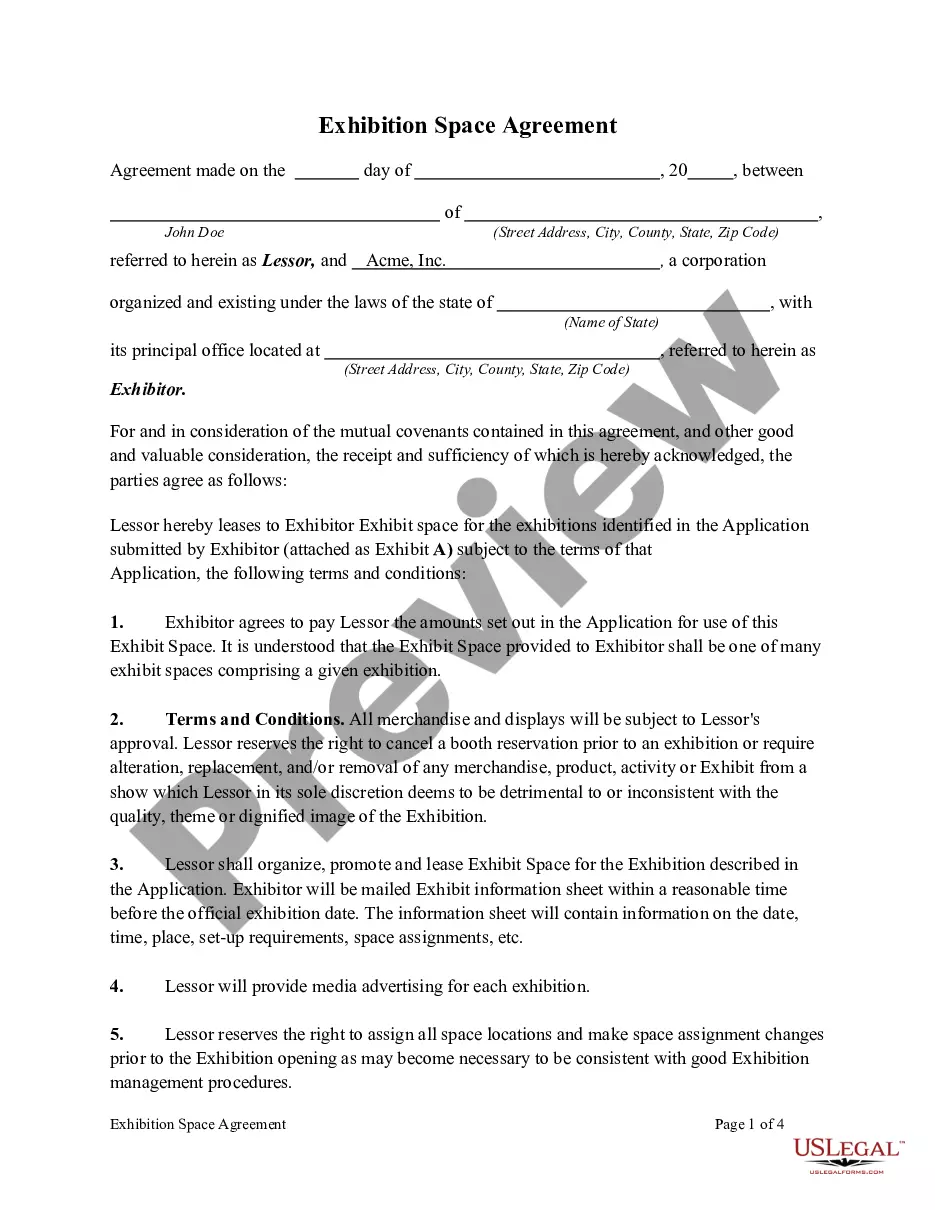
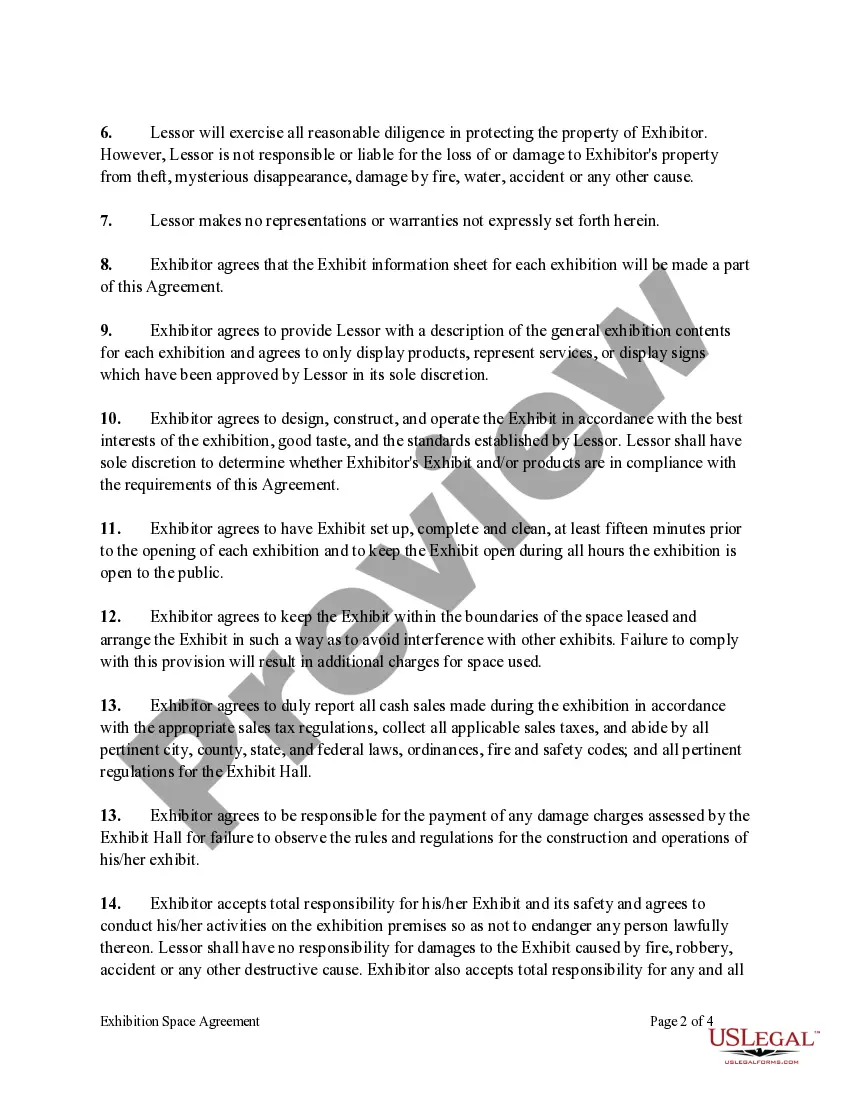
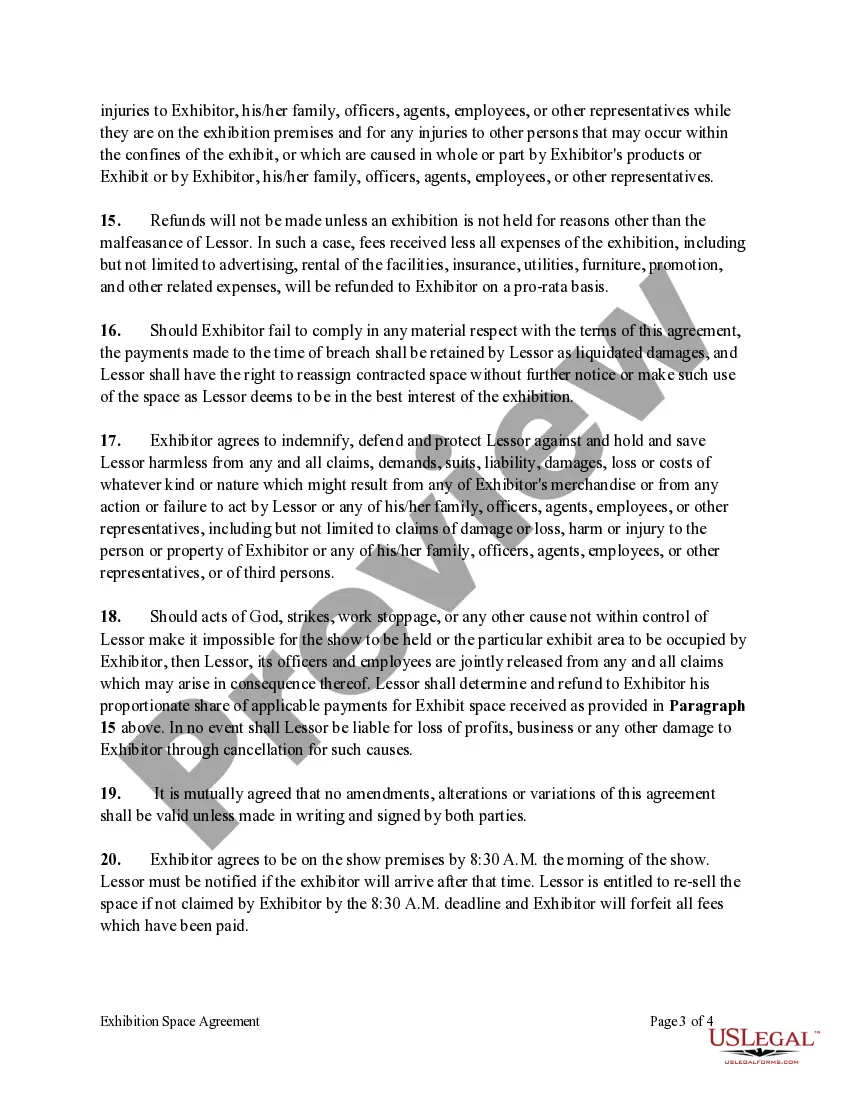
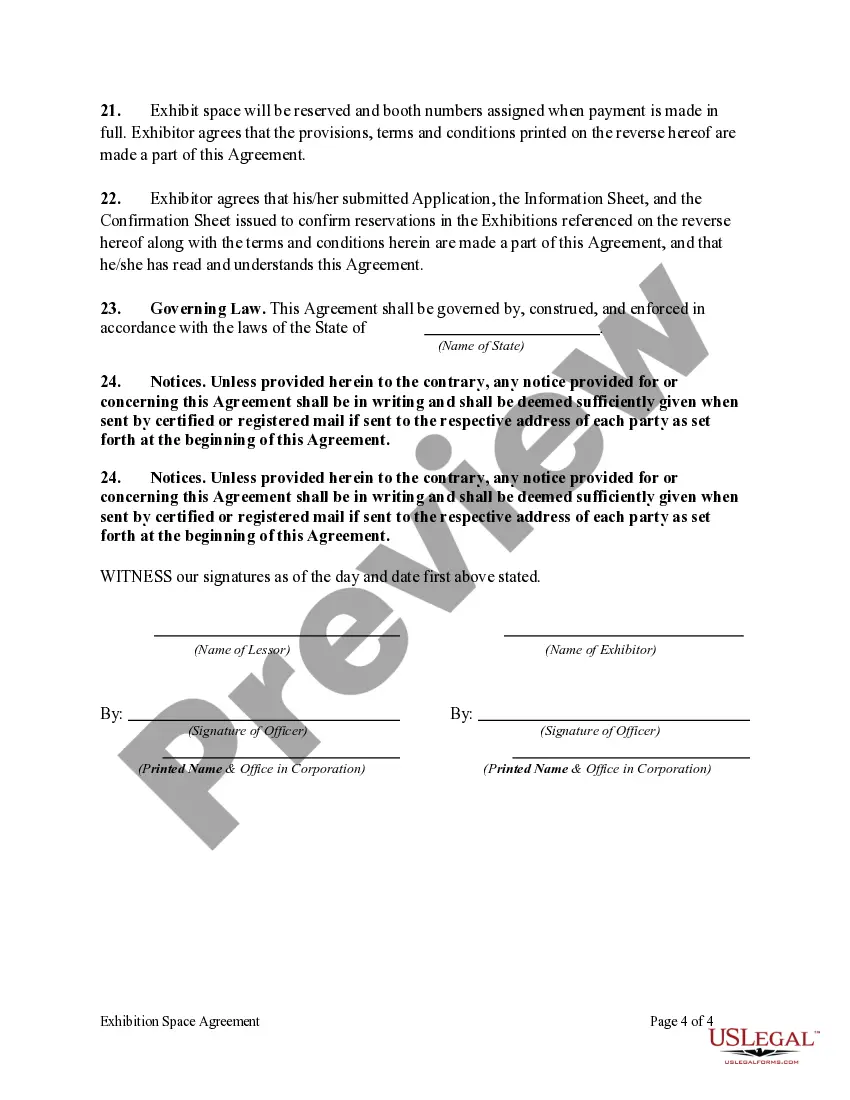
Exhibition Contract Template With Contractor In Ohio
Description

Get your form ready online
Our built-in tools help you complete, sign, share, and store your documents in one place.
Make edits, fill in missing information, and update formatting in US Legal Forms—just like you would in MS Word.
Download a copy, print it, send it by email, or mail it via USPS—whatever works best for your next step.
Sign and collect signatures with our SignNow integration. Send to multiple recipients, set reminders, and more. Go Premium to unlock E-Sign.
If this form requires notarization, complete it online through a secure video call—no need to meet a notary in person or wait for an appointment.
We protect your documents and personal data by following strict security and privacy standards.

Make edits, fill in missing information, and update formatting in US Legal Forms—just like you would in MS Word.

Download a copy, print it, send it by email, or mail it via USPS—whatever works best for your next step.

Sign and collect signatures with our SignNow integration. Send to multiple recipients, set reminders, and more. Go Premium to unlock E-Sign.

If this form requires notarization, complete it online through a secure video call—no need to meet a notary in person or wait for an appointment.

We protect your documents and personal data by following strict security and privacy standards.
Looking for another form?


Form popularity
FAQ
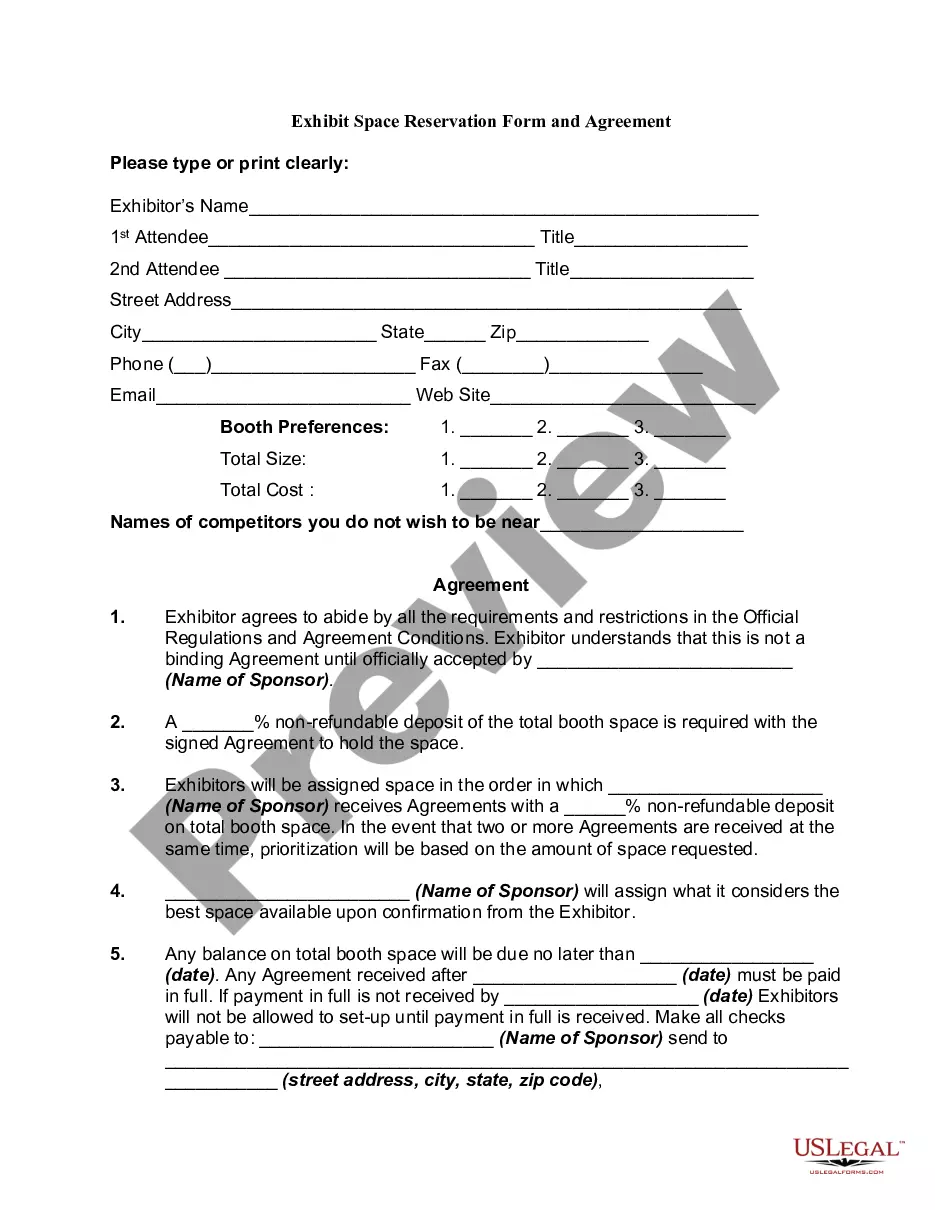
Exhibits, schedules, and addenda all can be attached to contracts. They usually are agreed to before the contract is signed. Amendments usually are negotiated and signed after the contract. To properly use each type of contract, parties must understand the unique function of each document.
An exhibit supplements a contract by providing additional information and context. Both addendums and exhibits are essential and serve various purposes across various industries.
Exhibits, though often included by reference, may also require signatures depending on the contract's terms.
Addendums should clearly identify the original contract, specify the changes being made, and obtain the signatures of both parties to be legally bound.
An exhibition agreement is a contract between an exhibition institution and an artist that allows the institution to display art temporarily. The contract identifies the institution and the artist and mentions which works of art are applicable to the contract.
Summary. To summarize, a contract can be considered legally binding even if all signatures are not present, as long as the actions and intentions of the parties involved align with what was agreed upon. While verbal contracts hold legal weight, they often pose challenges in terms of providing evidence in court.
Reference in the Contract: Integrate a clause within the contract that specifies the incorporation of the exhibits. For example: “The specifications detailed in Exhibit A are hereby incorporated into and made a part of this agreement as if fully set forth herein.”
Exhibits provide additional context for agreements. Sometimes, a contract will reference a separate document. The contract will thus inform the reader of the document they need to refer to, e.g., exhibits A, B, etc. Contract exhibits can be split into two groups — boilerplate documents and standalone agreements.
Exhibits accompanying a brief should be cited by alphabetic tab or page number. For example: Respondent's Pre-Hearing Brief, Tab A. For OCAHO, exhibits to a brief should be cited by party and alphabetic or numeric tab and page, e.g., Respondent's Exhibit 3 at 5.
Include a typed notation within the body of the legal document where the exhibit should be referenced. Thereafter, assign the exhibit with an identifying number or letter. For instance, this notation can state either "See Exhibit A" or "See Exhibit 1". Label the exhibit with the assigned identifying number or letter.
