Annual Meeting Resolutions With Boss In Utah
Description



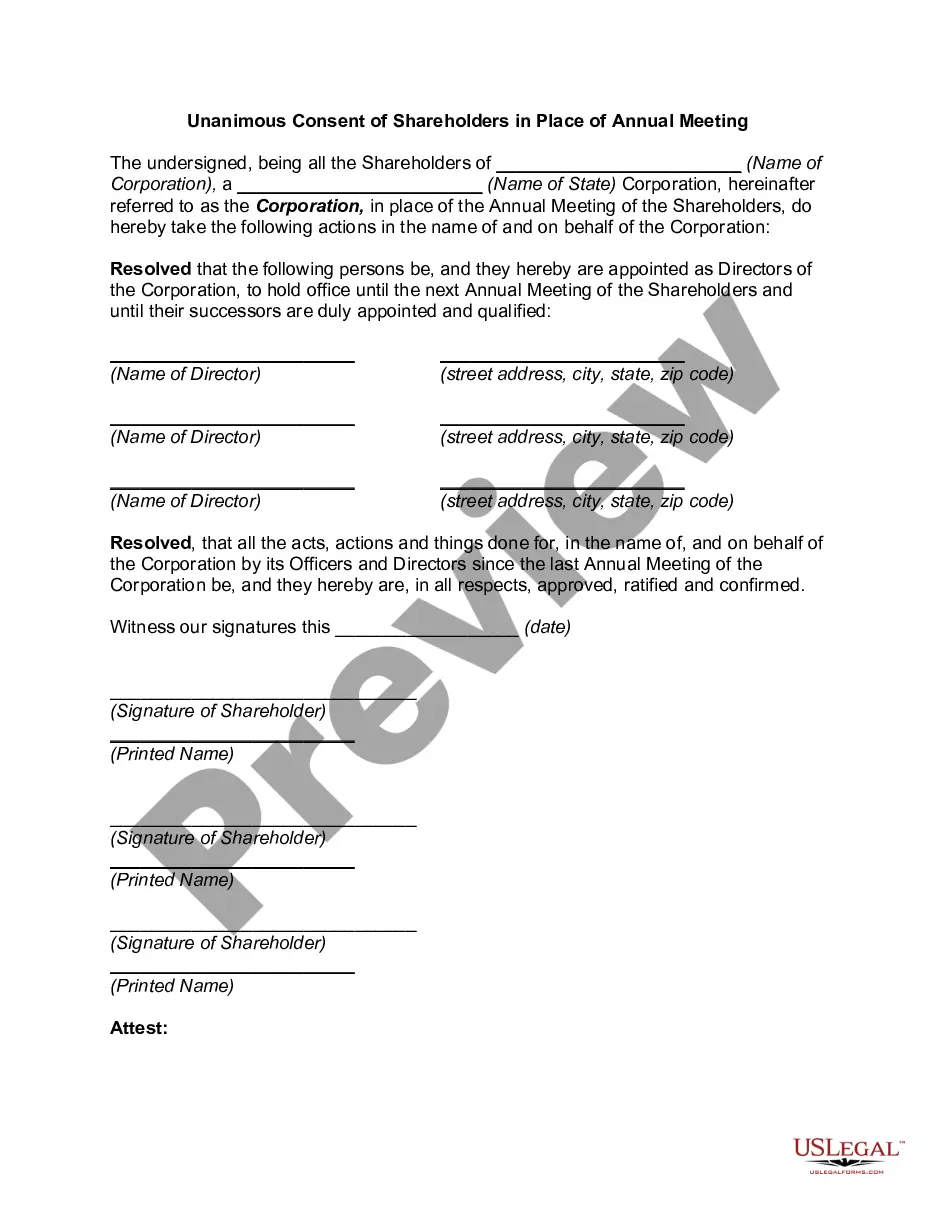
Get your form ready online
Our built-in tools help you complete, sign, share, and store your documents in one place.
Make edits, fill in missing information, and update formatting in US Legal Forms—just like you would in MS Word.
Download a copy, print it, send it by email, or mail it via USPS—whatever works best for your next step.
Sign and collect signatures with our SignNow integration. Send to multiple recipients, set reminders, and more. Go Premium to unlock E-Sign.
If this form requires notarization, complete it online through a secure video call—no need to meet a notary in person or wait for an appointment.
We protect your documents and personal data by following strict security and privacy standards.

Make edits, fill in missing information, and update formatting in US Legal Forms—just like you would in MS Word.

Download a copy, print it, send it by email, or mail it via USPS—whatever works best for your next step.

Sign and collect signatures with our SignNow integration. Send to multiple recipients, set reminders, and more. Go Premium to unlock E-Sign.

If this form requires notarization, complete it online through a secure video call—no need to meet a notary in person or wait for an appointment.

We protect your documents and personal data by following strict security and privacy standards.
Looking for another form?


Form popularity
FAQ
OPMA's stated goal is to ensure that the state, its agencies, and its political subdivisions deliberate and take action openly (Section 52-4-102). A public body is required to provide public notice of a meeting at least 24 hours before the meeting.
Open meeting laws, also called sunshine laws, require that, with notable exceptions, most meetings of federal and state government agencies and regulatory bodies be open to the public, along with their decisions and records.
It requires government to take actions openly. Ensures deliberations allow for an open public process. However, the Utah Supreme Court has held that deliberations in a judicial or quasi-judicial matter may be held in private and are exempt from the Open Meetings Act.
The law states that a meeting is a gathering of a quorum of the members of a public body, either in person or through electronic methods, with the intention of discussing or deciding on public policy. The law requires that all meetings must be open to the public, unless exempted under executive sessions.
It requires government to take actions openly. Ensures deliberations allow for an open public process. However, the Utah Supreme Court has held that deliberations in a judicial or quasi-judicial matter may be held in private and are exempt from the Open Meetings Act.
Special meeting in lieu of an annual meeting means a special meeting of Shareholders called by Trustees for the purpose of electing Trustees in the event that an annual meeting is not held on or before such date as may be required by the 1940 Act, the NYSE or such other exchange or trading system on which shares are ...
Record of closed meetings. may keep detailed written minutes that disclose the content of the closed portion of the meeting. A recording of a closed meeting shall be complete and unedited from the commencement of the closed meeting through adjournment of the closed meeting.
AN ACT to enable the people of Utah to form a constitution and State government, and to be admitted into the Union on an equal footing with the original States.
In contrast, a special board meeting is a meeting that is not scheduled well in advance and is called by someone – authorized either under the law or the organization's bylaws – for a special purpose.
In lieu of is a preposition that means instead of or in place of. It is often used to describe a substitution or replacement for something else. For example, if someone is unable to attend an event, they might send a gift in lieu of their attendance.

