Annual General Meeting Corporate Governance Checklist For Shareholders In Ohio
Description



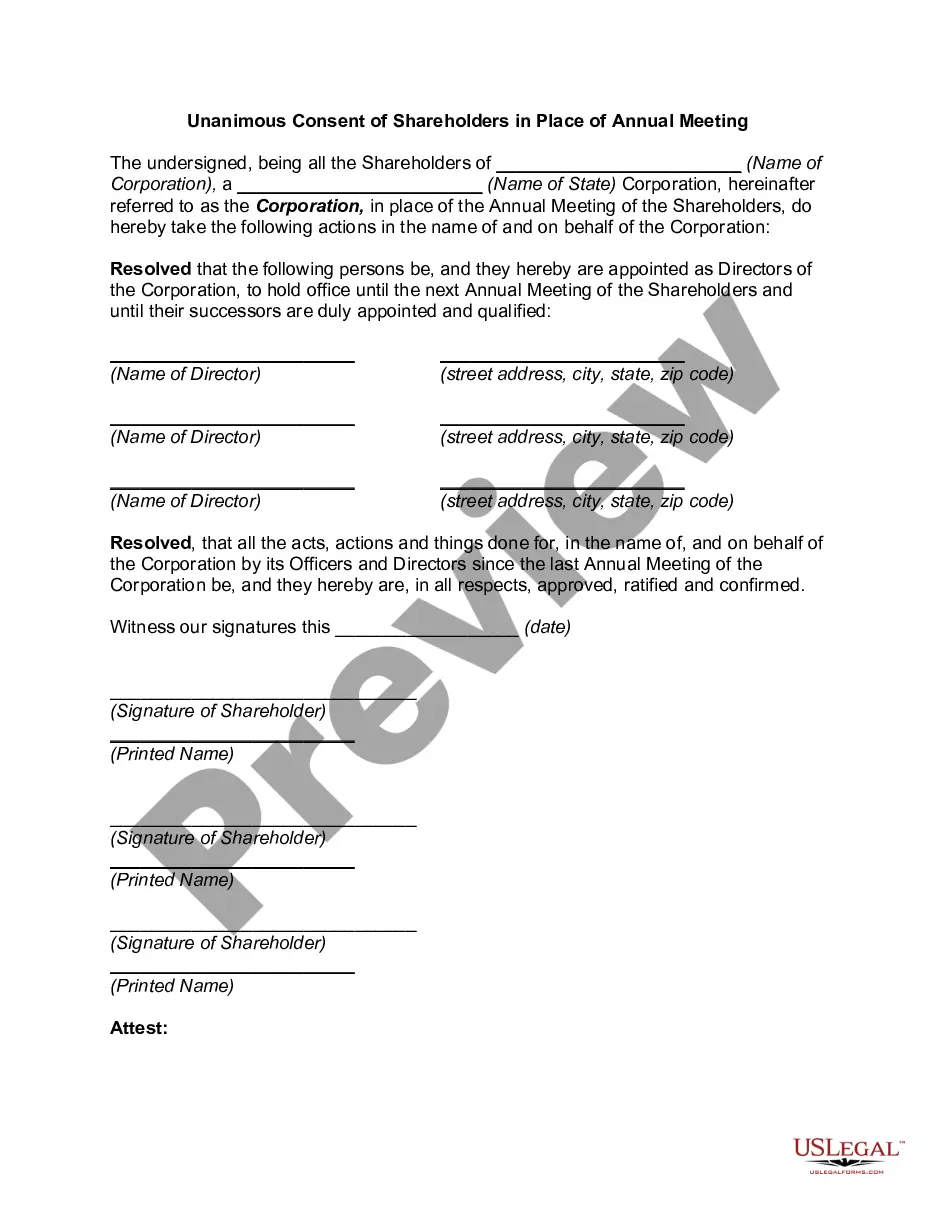
Get your form ready online
Our built-in tools help you complete, sign, share, and store your documents in one place.
Make edits, fill in missing information, and update formatting in US Legal Forms—just like you would in MS Word.
Download a copy, print it, send it by email, or mail it via USPS—whatever works best for your next step.
Sign and collect signatures with our SignNow integration. Send to multiple recipients, set reminders, and more. Go Premium to unlock E-Sign.
If this form requires notarization, complete it online through a secure video call—no need to meet a notary in person or wait for an appointment.
We protect your documents and personal data by following strict security and privacy standards.

Make edits, fill in missing information, and update formatting in US Legal Forms—just like you would in MS Word.

Download a copy, print it, send it by email, or mail it via USPS—whatever works best for your next step.

Sign and collect signatures with our SignNow integration. Send to multiple recipients, set reminders, and more. Go Premium to unlock E-Sign.

If this form requires notarization, complete it online through a secure video call—no need to meet a notary in person or wait for an appointment.

We protect your documents and personal data by following strict security and privacy standards.
Looking for another form?
Form popularity
FAQ
Business The annual financial report. The Director's report. Auditors report. Voting: Election of directors. Passing of resolutions. The appointing of the auditor.
Again, this must be 21 days' notice. Only the business left unfinished at the adjourned AGM can be transacted at the adjourned meeting. Who runs the AGM?
An AGM requires 14 clear days' notice for a non-traded company. Traded companies require 21 clear days' notice, although public companies subject to the UK Corporate Governance Code must provide 20 working days' notice.
The company must give a clear 21 days' notice to its members for calling the AGM. The notice should mention the place, the date and day of the meeting, and the hour at which the meeting is scheduled. The notice should also mention the business to be conducted at the AGM.
The legal requirements for an AGM can vary by jurisdiction but will often include the following: Notice of meeting. Quorum. Voting. Filing requirements. Election of directors. Financial and auditor reports. Shareholder proposals.
A shareholders' meeting cannot commence without a quorum, typically at least 25% of voting rights present. Specific matters require the presence of attendees representing at least 25% of the voting rights for that item. Meetings cannot start or proceed unless at least three shareholders are present.
That the meeting is the AGM (if appropriate) the place, date and time of the meeting. the nature of the business to be transacted at the meeting, and. if a special resolution is proposed, the notice must also set out the terms of the resolution and a statement that it is intended to be passed as a special resolution.
Notice of meeting Produce a notice giving details about the AGM and mail all your members. This should include date, time, duration, venue, and information about the elections of officers. You could include the whole agenda or just highlight one or two items.
Key Takeaways While AGMs focus on routine governance and accountability, EGMs provide a mechanism for addressing urgent or significant issues that arise between annual meetings.
An AGM is a mandatory annual meeting of shareholders. At the AGM, your company will present its financial statements (also known as "accounts") before the shareholders (also known as "members") so that they can raise any queries regarding the financial position of the company.

